
Small Apartment Look Luxury With These Designer Rules
July 19, 2026
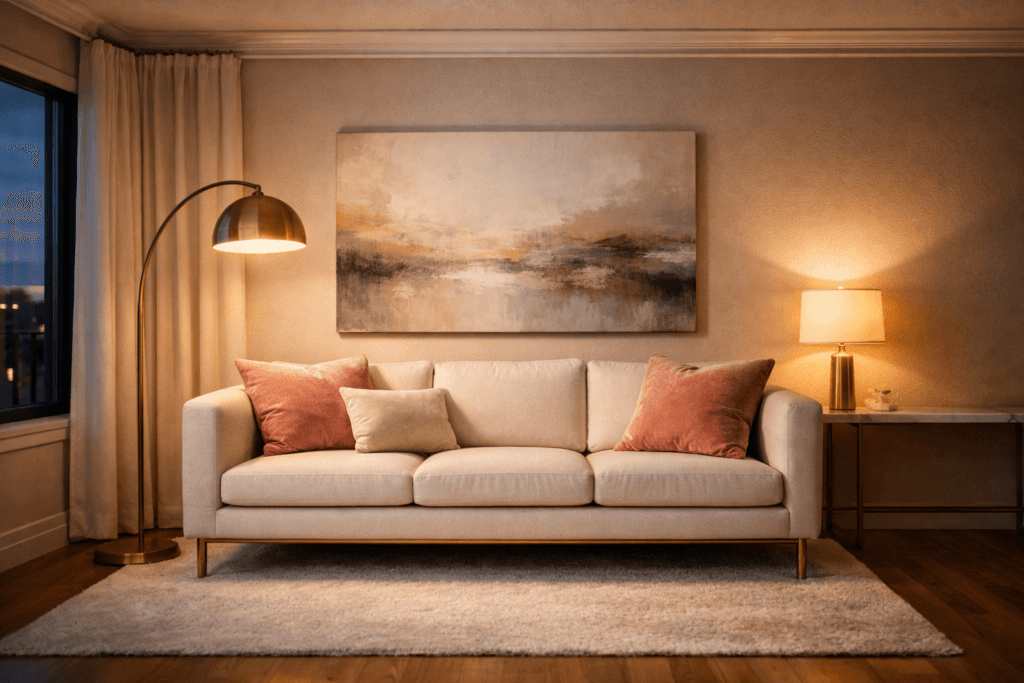
Luxury Is Not About Size — It Is About Structure
Trending Finds Readers Are Loving
Explore affordable luxe discoveries people are clicking on right now.
See What's TrendingSmall apartments do not feel inexpensive because of their square footage.
They feel inexpensive when structure is missing.
Luxury is built through proportion, lighting, scale, and restraint. When those elements are aligned, even the smallest studio can feel elevated. When they are not, even a larger apartment can appear crowded and unfinished.
The difference is architectural, not financial.
1. Control the Layout Before You Add Decor
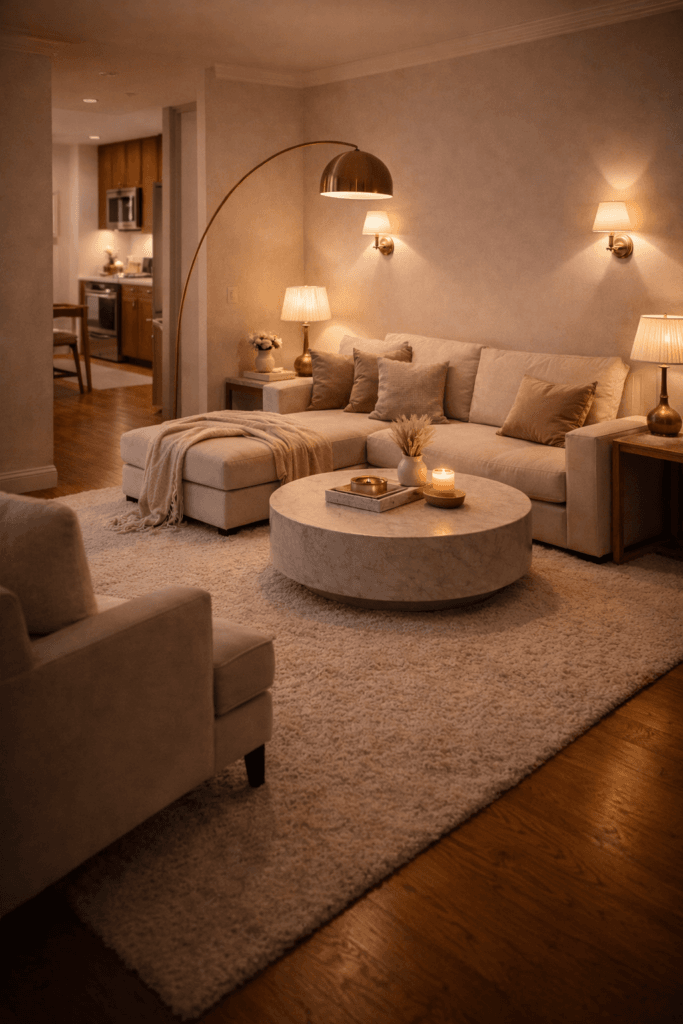
In small spaces, layout is everything.
Pushing every piece of furniture against the wall may seem logical, yet it often creates visual emptiness in the center and imbalance along the perimeter. Luxury interiors prioritize intentional placement rather than maximum floor clearance.
Instead of spreading pieces thin, create defined zones.
A properly scaled rug should anchor your seating area, even in a studio. At minimum, the front legs of the sofa and chairs should sit on the rug. When furniture floats without grounding, the room feels temporary.
Proportion creates permanence.
If rug scale feels confusing, revisit our guide on things that quietly make a home look cheap, where undersized rugs are one of the most common issues.
2. Elevate With Vertical Emphasis
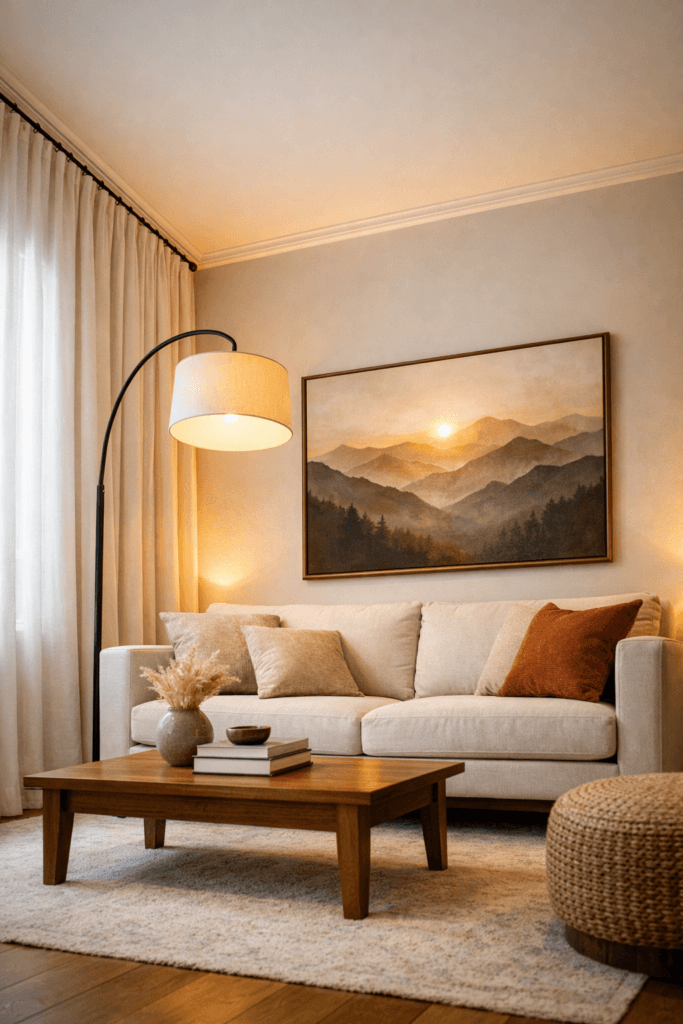
Horizontal sprawl makes small apartments feel compressed. Vertical emphasis expands them.
Mount curtain rods close to the ceiling line rather than directly above window frames. Use full-length panels that graze the floor. Install art at appropriate eye level, ensuring pieces are scaled proportionally to furniture.
Height creates elegance.
Floor lamps also contribute to vertical structure. A 6-foot arc floor lamp draws the eye upward while introducing warmth at eye level. Lighting positioned only at the ceiling flattens the room.
Layering light at multiple heights remains one of the most powerful upgrades you can make. For a deeper breakdown, explore the Designer Lighting Rule That Makes Any Home Look Expensive.
3. Limit the Color Palette
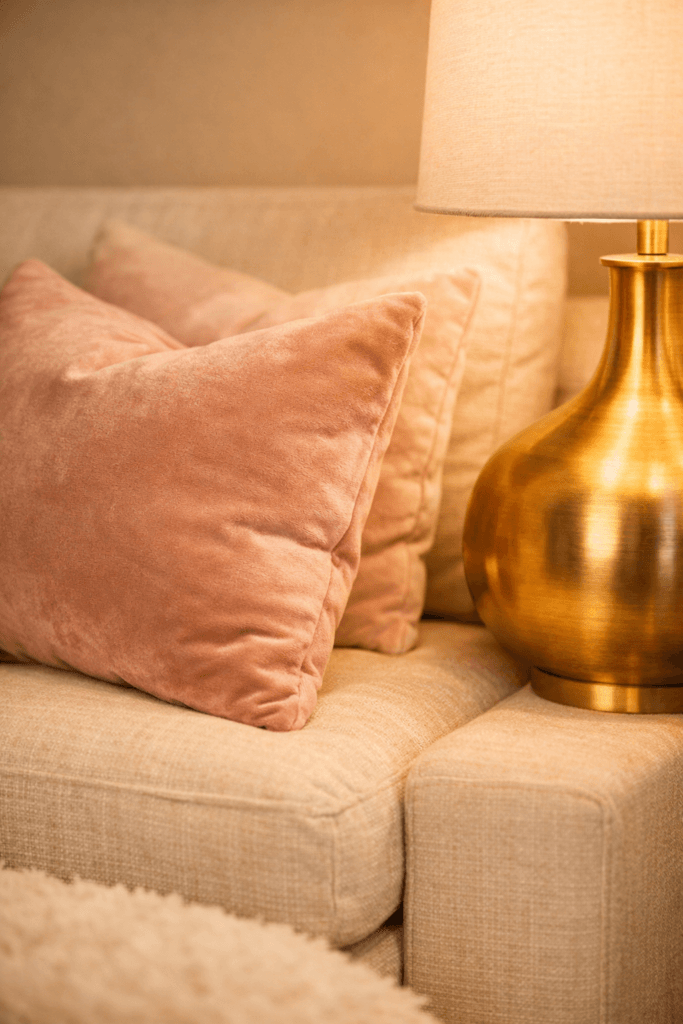
Small apartments benefit from cohesion.
Too many competing tones create visual fragmentation. Fragmentation makes the room feel busy. Busy spaces appear smaller.
Select two to three primary tones and repeat them intentionally.
For example, a soft ivory base paired with blush accents and brushed gold finishes creates warmth without visual noise. Repetition builds rhythm, and rhythm builds refinement.
Luxury interiors rarely rely on excessive color variation. Instead, they layer texture within a controlled palette.
4. Choose Fewer, Larger Pieces
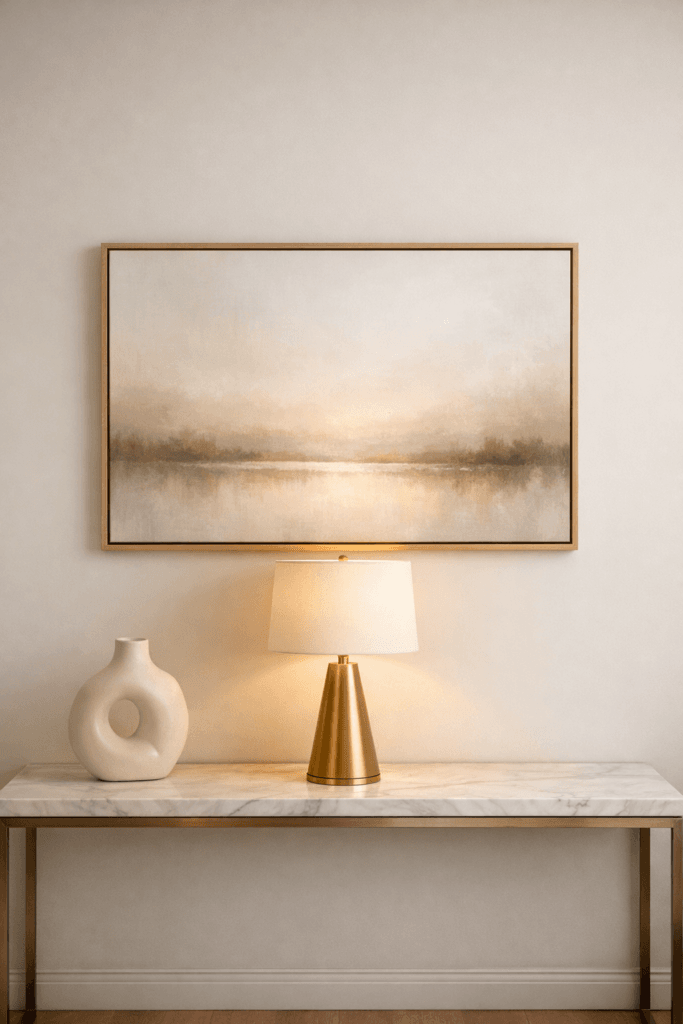
Small does not mean miniature.
Multiple tiny decor pieces scattered throughout a room create clutter. A single larger art piece makes a stronger statement. One sculptural vase carries more authority than five small accessories.
Scale should feel intentional, not cautious.
When artwork is too small or rugs are undersized, the apartment feels hesitant. Hesitation lowers perceived value.
If you want a full foundation strategy, revisit how to make a home look expensive on a budget, where proportion is the core principle.
5. Define Spaces With Lighting, Not Walls
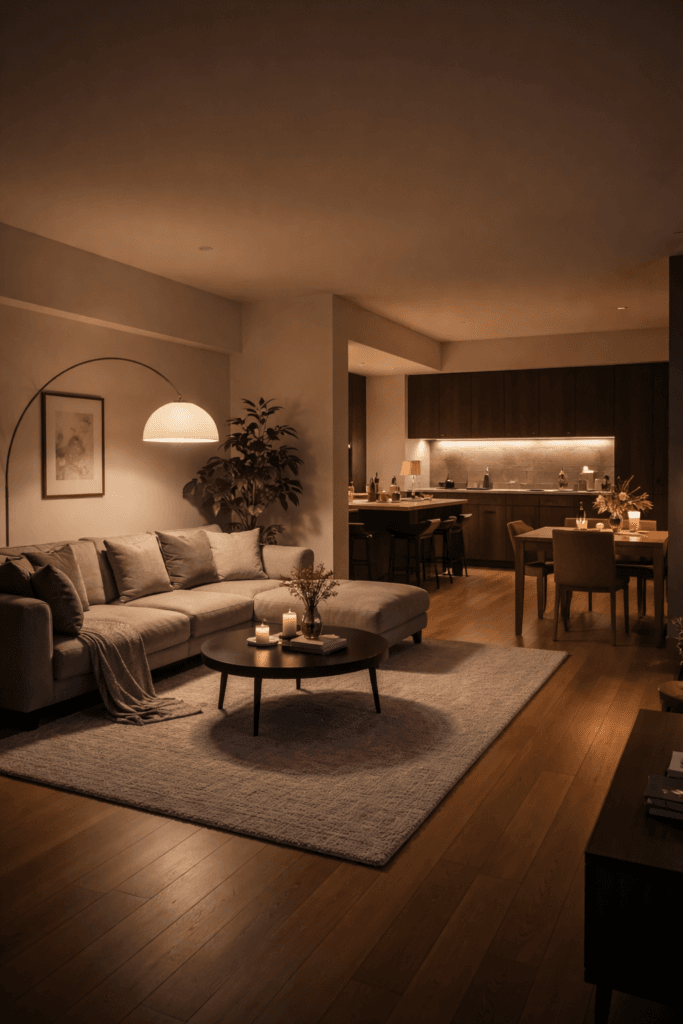
Open-plan apartments often lack architectural separation.
Instead of relying on physical dividers, use lighting to define zones. A floor lamp beside the sofa creates a living area boundary. A table lamp on a console signals a dining zone. Warm layered lighting subtly separates functions without adding visual bulk.
Lighting is spatial architecture.
When properly layered, it adds depth and dimension that makes a small apartment feel designed rather than improvised.
The Foundation of Small-Space Luxury
Luxury in compact living is never accidental.
It is disciplined.
A well-structured layout sets the foundation.
Controlled color prevents visual fragmentation.
Lighting placed at intentional heights adds dimension.
Thoughtful editing completes the space.
When these principles align, square footage becomes secondary.
The apartment begins to feel intentional.
Depth, Reflection, and Visual Breathing Room
Once layout and color discipline are established, depth becomes the next priority.
Small apartments feel confined when every surface absorbs light instead of reflecting it. They feel elevated when dimension is introduced intentionally.
6. Use Mirrors to Expand Perception
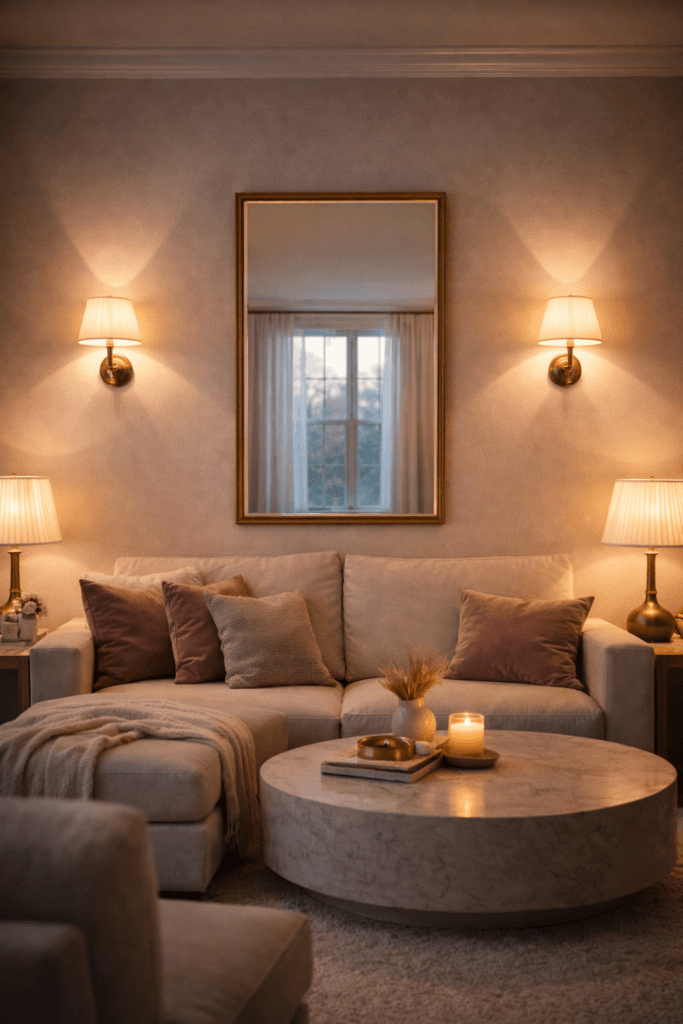
Mirrors are not decorative afterthoughts. They are spatial tools.
When placed opposite a window or near a light source, a mirror amplifies natural and artificial light. Reflection increases brightness without adding visual bulk.
Scale matters here as well.
A large mirror mounted above a console creates architectural presence. A full-length mirror leaning vertically draws the eye upward, reinforcing height. Small mirrors grouped awkwardly on a wall rarely achieve the same effect.
Reflection creates perceived square footage.
When paired with layered lighting, mirrors enhance warmth and depth rather than producing glare. If lighting feels flat, revisit the Designer Lighting Rule to ensure warmth and placement are aligned.
7. Make Storage Disappear
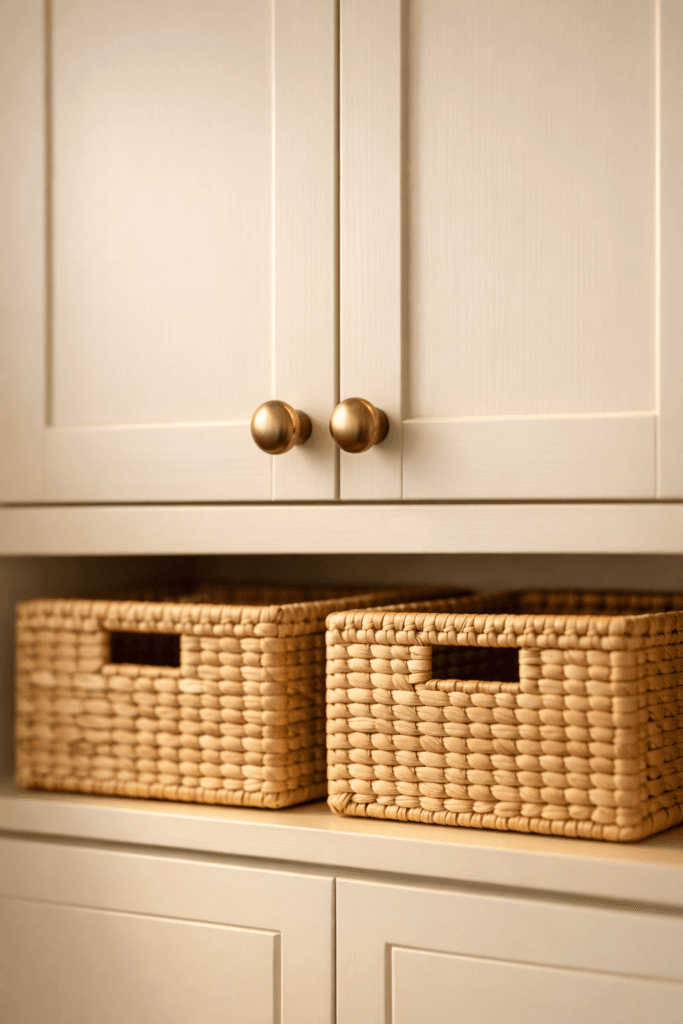
Visible clutter is amplified in compact spaces.
Open shelving stacked with miscellaneous items, exposed storage bins, and mismatched containers create visual noise. Noise reduces refinement.
Luxury apartments conceal functionality.
Closed storage with consistent finishes maintains cohesion. Matching woven baskets or fabric bins soften visual lines while hiding practical items. Uniformity signals intention.
When storage blends into the design, the apartment feels curated rather than crowded.
8. Let Furniture Breathe
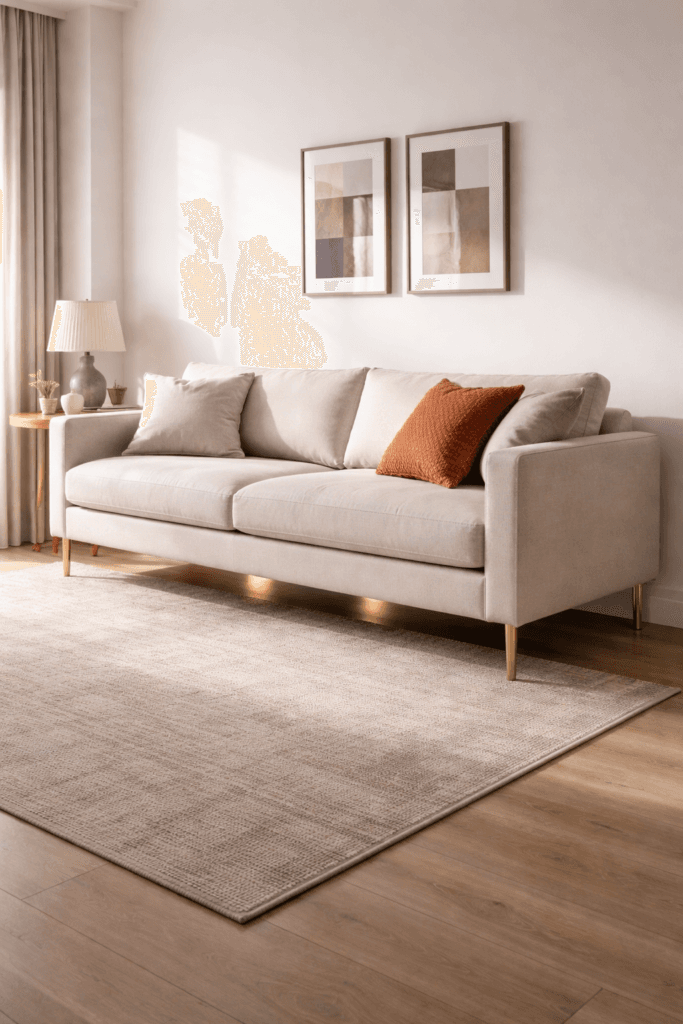
Oversized furniture is not the problem. Poor spacing is.
When pieces are pushed tightly together or directly against walls, the room feels compressed. Leaving small pockets of breathing room between furniture and walls allows light to move around the pieces.
Visible furniture legs create additional lift.
Sofas and chairs that sit directly on the floor without leg visibility can make a space feel heavy. Elevated pieces introduce air underneath, visually expanding the room.
Light should be able to pass beneath furnishings.
This subtle lift enhances dimension and keeps the floor plane continuous.
9. Layer Texture Instead of Color
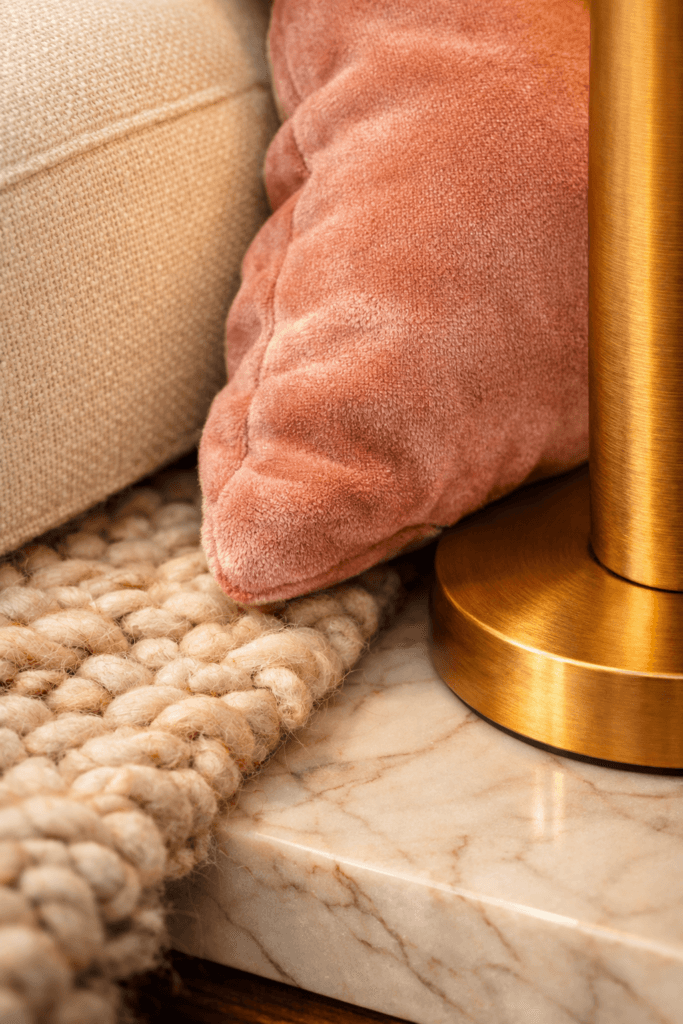
In small apartments, excessive color shifts can fragment the space.
Texture offers richness without visual clutter. Linen, velvet, wool, marble, and brushed metal add depth while maintaining cohesion.
A blush velvet pillow layered over an ivory linen sofa introduces softness. A wool rug under a marble coffee table adds contrast. Brushed gold finishes echo warmth without overwhelming the palette.
Luxury interiors often appear monochromatic at first glance.
Closer inspection reveals layered textures creating interest. That restraint is what elevates the room.
10. Define Negative Space
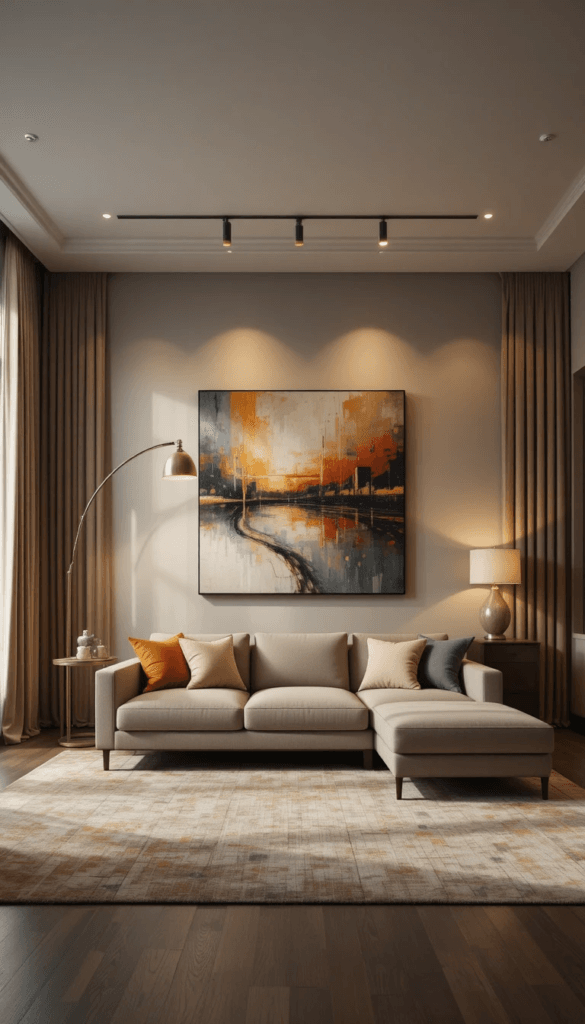
Empty space is not wasted space.
In compact living, negative space allows the eye to rest. When every surface is filled, the room feels smaller.
Luxury embraces restraint.
Leave intentional gaps on shelves. Avoid filling every wall. Allow one side of a console to remain clear. Editing surfaces was explored further in things that quietly make a home look cheap, where clutter dilution lowers perceived value.
Breathing room communicates confidence.
Depth Over Decoration
Small apartments benefit more from dimensional layering than from additional decor purchases.
Mirrors expand perception. Hidden storage reduces noise. Elevated furniture creates lift. Textural layering adds richness. Negative space restores balance.
Each element works together to create depth.
Depth signals design intention.
And intention signals luxury.
The Final Luxury Layer in Small Spaces
When layout, lighting, proportion, and depth are aligned, a small apartment begins to feel intentional. The final layer of refinement determines whether it feels elevated or merely organized.
Luxury in compact living is defined by clarity.
11. Introduce One Statement Piece
Small apartments do not require many focal points. They require one strong one.
A sculptural floor lamp, a large-scale art piece, or an oversized mirror can anchor the room visually. Without a focal point, the eye moves aimlessly. When the eye moves without direction, the space feels unsettled.
Presence builds authority.
Choose one element that carries weight and allow it to lead. Surrounding pieces should support rather than compete. Too many statement items create tension instead of impact.
Luxury feels composed, not crowded.
12. Keep Sightlines Clear
Visual pathways influence perceived size.
When furniture blocks natural walkways or obstructs window views, the apartment feels smaller. Clear sightlines create openness even when square footage is limited.
Arrange seating to allow natural flow.
Keep taller furniture pieces along walls when possible. Use lower-profile coffee tables or transparent materials like glass to reduce visual heaviness.
Openness enhances refinement.
13. Maintain Lighting Discipline at Night
Even beautifully styled apartments can feel underwhelming after sunset.
Turn off overhead lights and observe the atmosphere. Rely on floor lamps, table lamps, and accent lighting positioned at different heights. Warm bulbs between 2700K and 3000K will enhance undertones and create softness.
If the room feels flat or cold, revisit the Designer Lighting Rule to ensure layering is correct.
Evening lighting reveals the truth of a space.
14. Avoid “Temporary” Visual Signals
Small apartments often suffer from subtle cues that make them feel transitional.
Exposed cords, temporary storage bins, ill-fitting curtains, and undersized rugs communicate impermanence. Permanence communicates luxury.
Conceal cords whenever possible. Invest in correctly scaled textiles. Choose finishes that feel cohesive rather than improvised.
These adjustments were discussed further in things that quietly make a home look cheap, where minor inconsistencies lower perceived value.
15. Use Repetition to Create Cohesion
Luxury spaces repeat elements deliberately.
If brushed gold appears in lighting, allow that finish to echo in hardware or mirror frames. If blush is introduced through textiles, repeat it subtly in artwork or accessories.
Repetition builds rhythm.
Rhythm builds cohesion.
Cohesion builds refinement.
The Small-Space Luxury Checklist
- Furniture anchored properly on a correctly scaled rug
- Lighting layered at multiple heights
- Warm bulb temperature (2700K–3000K)
- Vertical emphasis through curtain placement and art scale
- Controlled color palette with repeated finishes
- Visible breathing room on surfaces
- One intentional focal point
If these principles are aligned, square footage becomes secondary.
Luxury Is Discipline, Not Size
A small apartment can feel more elevated than a large home when structure is respected.
Luxury is not defined by excess, but by balance.
Correct proportion creates confidence in a space.
Layered lighting introduces depth and warmth.
Cohesive repetition builds visual rhythm.
Thoughtful editing is what ultimately elevates the room.
When layout is intentional, finishes are consistent, lighting is warm, and scale is correct, the apartment feels permanent.
And permanence feels expensive.
Bellencinista Notes
Anchor furniture with a properly scaled rug, layer warm lighting at multiple heights, hang curtains higher, repeat finishes intentionally, and edit surfaces with restraint. Luxury in small spaces comes from proportion, cohesion, and disciplined layout.