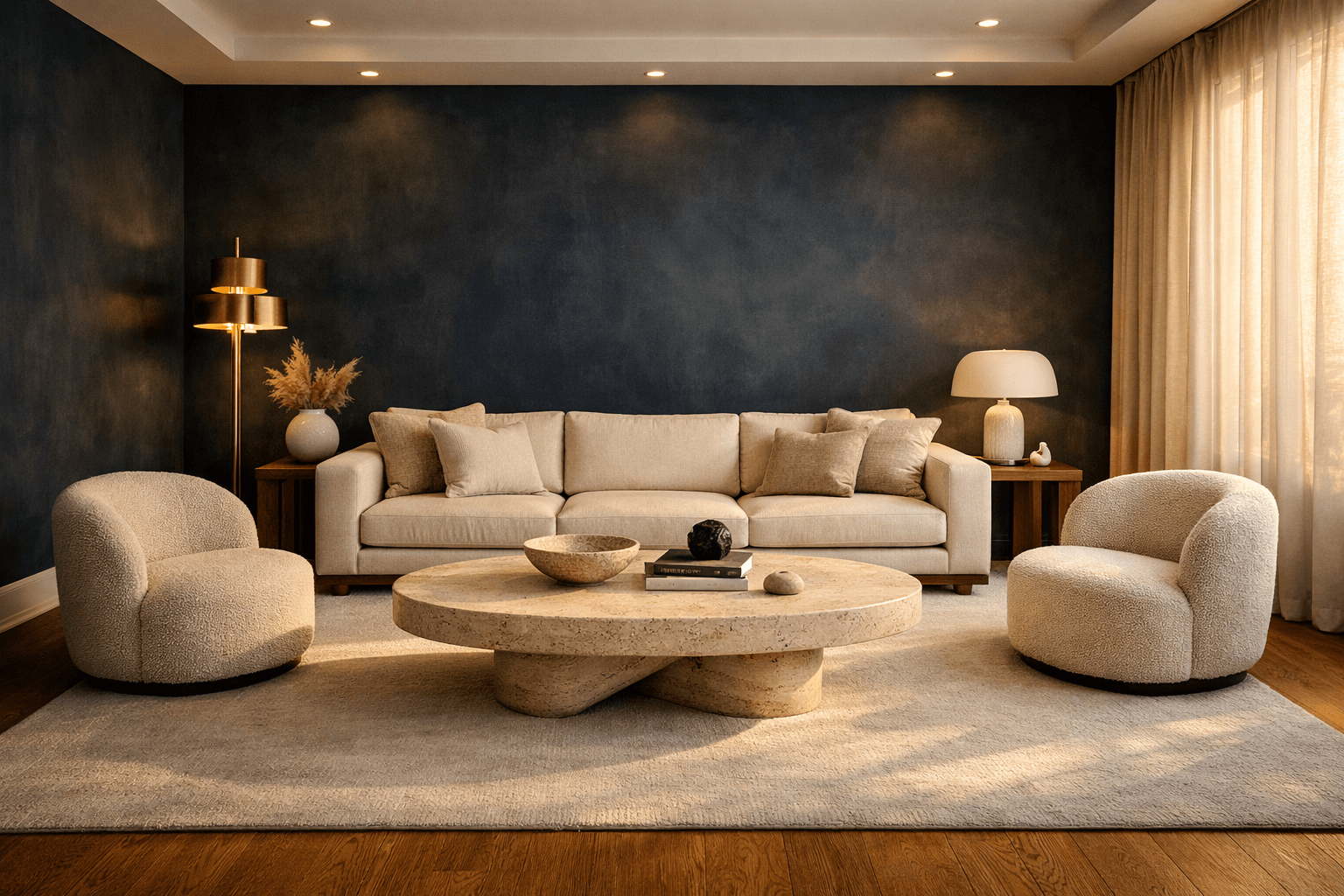
Why Rug Size Determines Whether a Room Feels Expensive or Awkward
Trending Finds Readers Are Loving
Explore affordable luxe discoveries people are clicking on right now.
See What's TrendingThere is one detail that quietly determines whether a room feels expansive and intentional or cramped and disconnected.
It isn’t the sofa, the wall color or the lighting.
It’s the rug size.
Most rooms that feel “off” are not actually poorly designed. They are incorrectly scaled. And scale is what separates beginner styling from designer-level interiors.
If the rug is too small, the entire room shrinks with it.
If the rug is properly sized, the space suddenly feels cohesive, elevated, and balanced — even if nothing else changes.
This is why rug sizing fixes everything.
The Hidden Psychology of Floor Anchoring
When we enter a room, our eyes do not immediately register furniture first. They register boundaries.
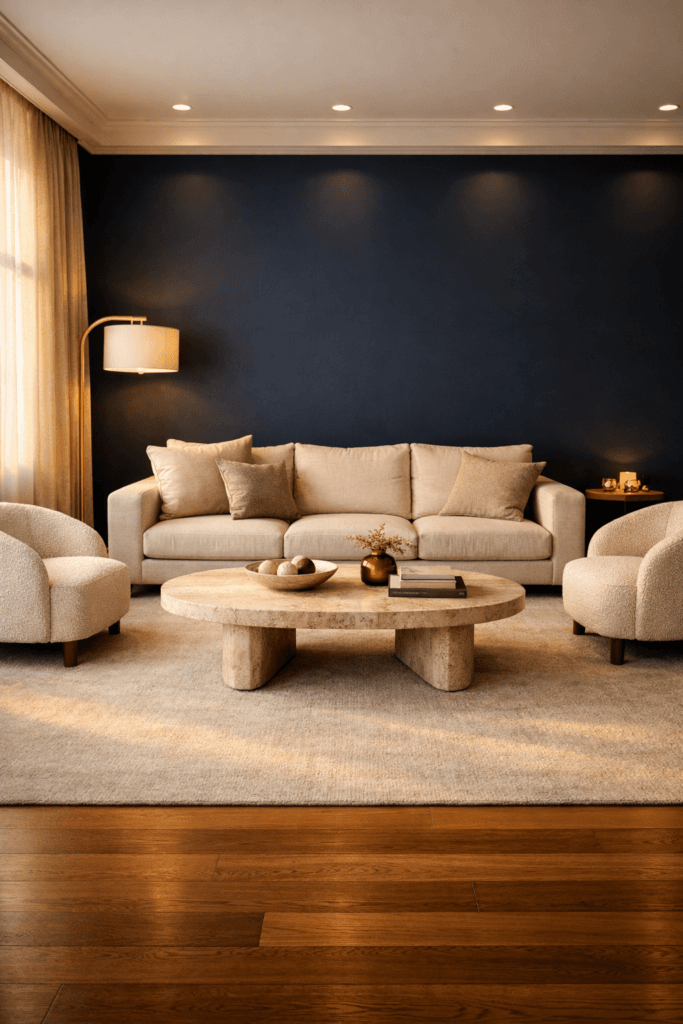
The floor plane acts as the visual foundation. It defines where a space begins and ends. If that foundation is too small, everything sitting on top of it feels unstable.
A tiny rug floating under only the coffee table visually fractures the layout. It creates separation instead of connection. The seating arrangement appears disconnected, and the room feels smaller than it actually is.
Designers understand this instinctively:
Furniture should sit on the rug, not hover around it.
A properly scaled rug creates a unified visual island. It tells the brain:
“This area belongs together.”
That sense of unity creates calm. And calm reads as luxury.
The Most Common Rug Mistake (That Shrinks the Room Instantly)
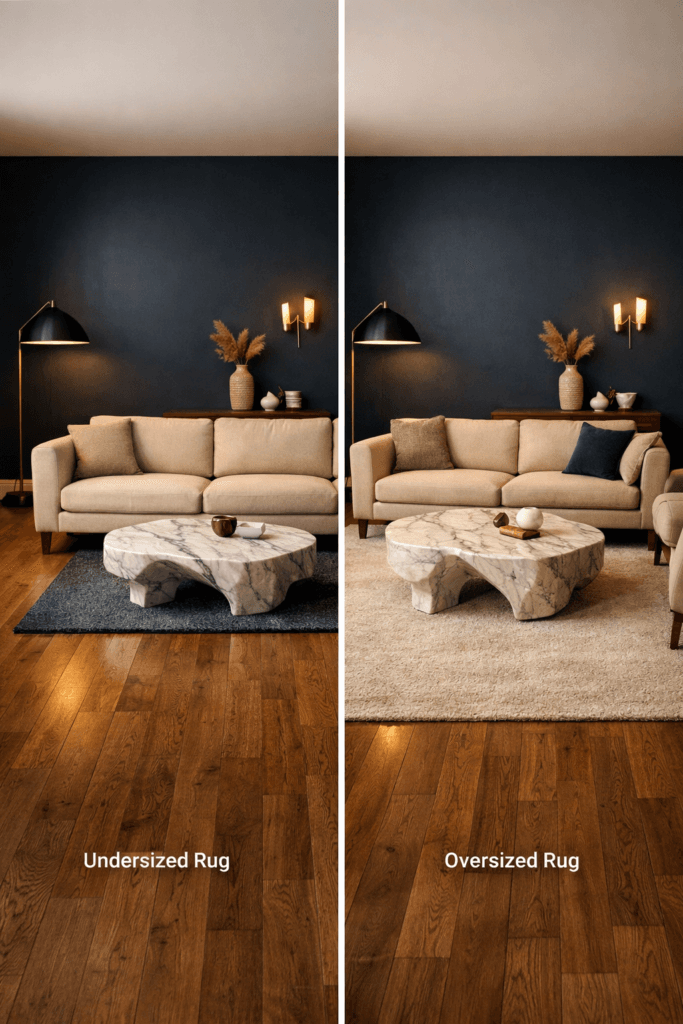
The number one mistake homeowners make is choosing a rug that is “just big enough.”
A 5×7 rug under a full sofa.
A 6×9 rug in a large living room.
A rug that stops at the coffee table.
This is almost always too small.
When the rug doesn’t extend under the primary seating pieces, it makes the furniture look oversized and the space look constrained. The edges of the rug become hard visual stop points, and the eye interprets that as a boundary.
Small boundary = small room.
Instead, the rug should extend under:
• At least the front legs of all major seating pieces
• Ideally the entire sofa and chairs
• With visible floor space remaining beyond the rug perimeter
This creates proportion.
And proportion creates elegance.
Living Room Rug Sizing Rules (Designer Standards)
Here is the foundational rule for living rooms:
Rule 1: Bigger Than You Think
In most standard living rooms:
• 8×10 is the minimum for medium spaces
• 9×12 is ideal for larger living rooms
• 10×14 works beautifully in open concept layouts
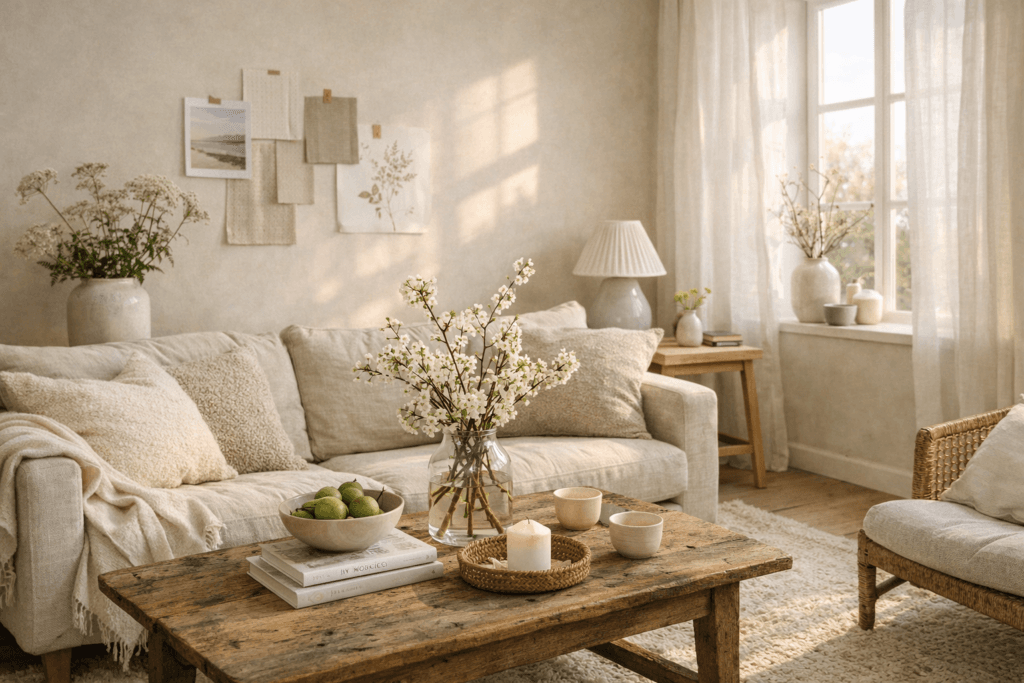
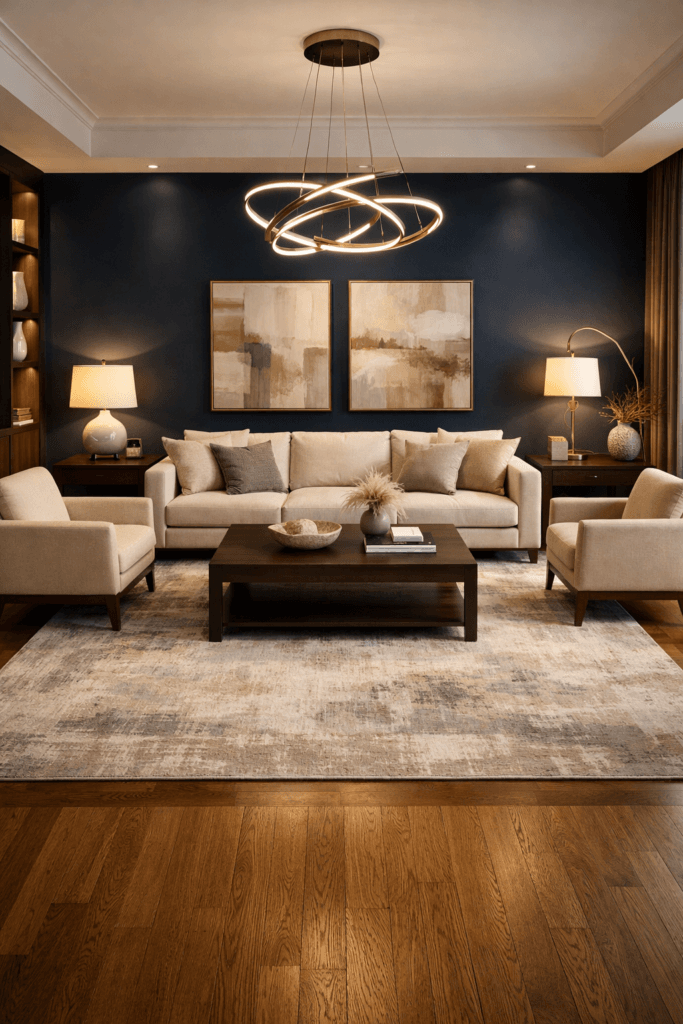
The rug should anchor the entire seating arrangement.
The sofa and chairs should either:
- Sit fully on the rug
or - At minimum have their front legs fully on the rug
Never allow only the coffee table to touch the rug. That creates fragmentation.
Rule 2: Leave a Border of Floor
A rug should not wall-to-wall in most living rooms unless the room is extremely small.
Instead, aim for:
• 8–18 inches of visible floor between rug edge and walls
That border frames the rug like artwork on a canvas. It adds balance and keeps the room from feeling boxed in.
Rule 3: Match Rug Size to Furniture Footprint — Not Room Size
This is where people get confused.
They measure the room.
They should be measuring the seating layout.
The rug must match the footprint of the furniture grouping — not the entire room’s square footage.
Your sofa + chairs define the island.
The rug defines that island.
Everything else is secondary.
Why Oversized Rugs Look More Expensive
Luxury interiors almost always use larger rugs.
Why?
Because larger rugs create:
• Visual calm
• Fewer harsh edges
• Stronger symmetry
• Cohesion between pieces
Small rugs break the room into parts.
Large rugs unify it.
That unification makes even budget furniture look higher end.
It’s not about spending more money.
It’s about correcting scale.
When You Can’t Size Up
There are situations where a full oversized rug isn’t possible.
Maybe it’s a rental, the layout is awkward or the budget is limited.
In those cases:
• Choose flatwoven rugs for flexibility
• Layer a smaller rug over a larger neutral base
• Float furniture slightly off walls to create balance
• Use raised-leg furniture to maintain light flow
Even when working small, the goal remains the same:
Create one cohesive visual field.
The Designer Mindset Shift
The moment you stop thinking of a rug as decor and start thinking of it as architecture, your entire layout improves.
The rug is not an accessory.
It is the foundation.
When the foundation is scaled correctly:
• The sofa looks intentional
• The chairs feel balanced
• The coffee table aligns proportionally
• The room feels larger
And the best part?
You didn’t knock down a single wall.
Bedroom, Dining & Office Rug Formulas Designers Actually Use
We established the foundation:
Rug size determines whether a room feels cohesive or fragmented.
Now we move beyond the living room.
Because rug mistakes don’t just shrink living areas — they quietly undermine bedrooms, dining rooms, home offices, and even commercial spaces.
The rules change slightly depending on function.
But the principle remains the same:
The rug must support movement, proportion, and balance.
Let’s break it down by room.
Bedroom Rug Sizing: The Comfort + Proportion Formula
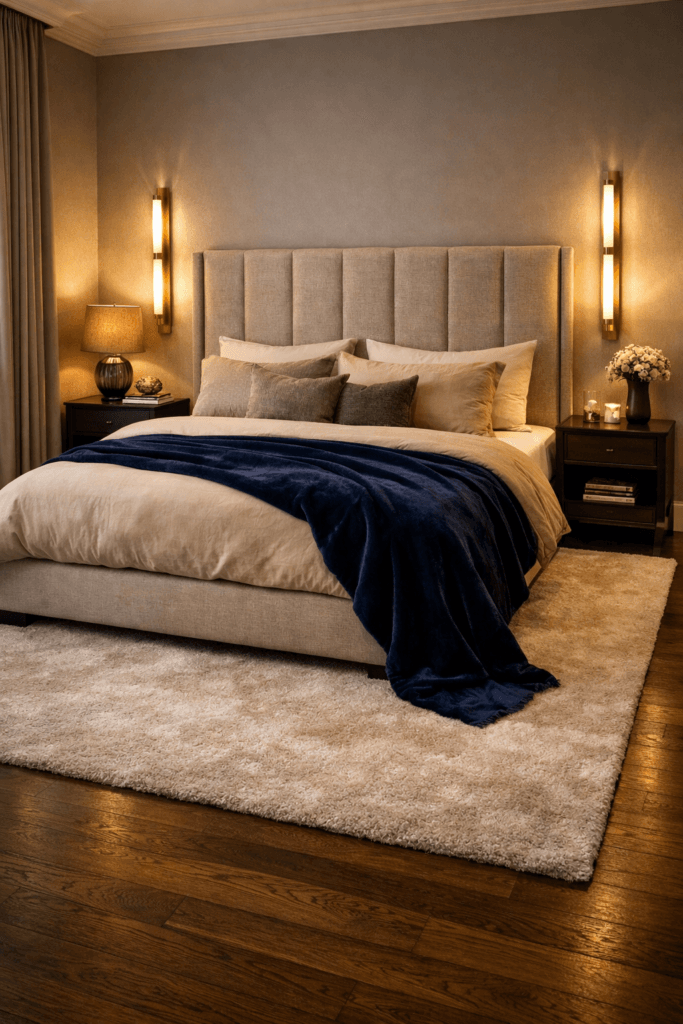
Bedrooms are where rug mistakes become painfully obvious.
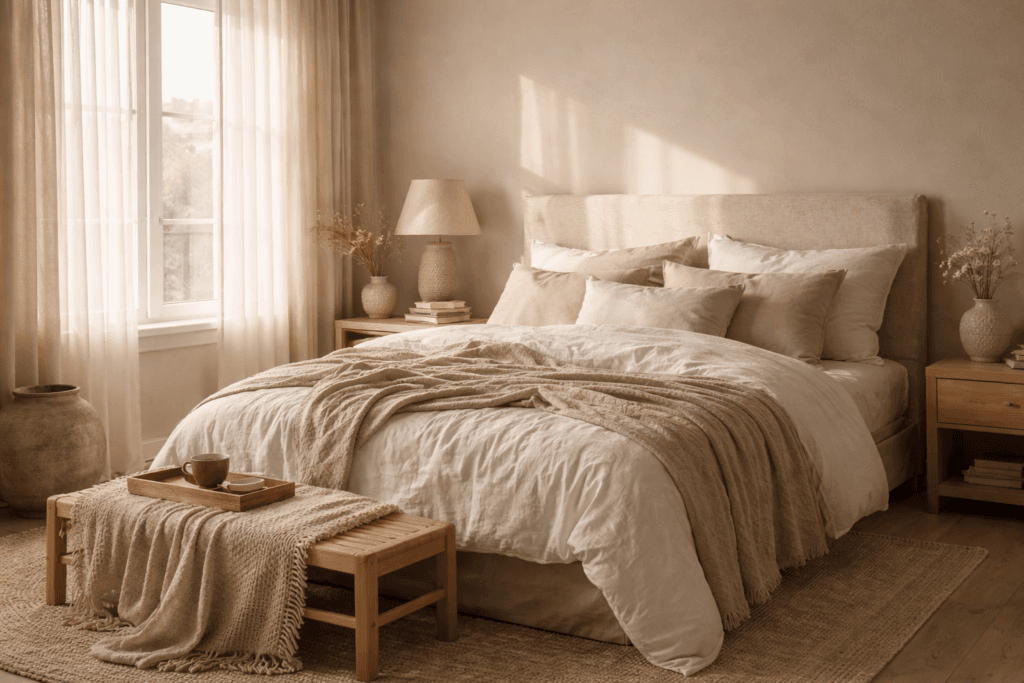
A rug that barely peeks out from under the bed makes the entire room feel visually stunted. It creates imbalance and makes the bed appear oversized for the space.
Designers follow a simple formula:
The 24–36 Inch Rule
For queen and king beds, the rug should extend:
• At least 24 inches beyond both sides of the bed
• 18–24 inches beyond the foot of the bed
• Ideally extend under the entire bed frame and nightstands
This creates breathing room.
When you step out of bed, your feet land on softness — but visually, what matters more is proportion.
Rug Size by Bed Type
Here’s the designer standard:
• Full Bed → 6×9 minimum
• Queen Bed → 8×10 ideal
• King Bed → 9×12 recommended
Yes, many people place a 5×7 under a queen bed.
And yes, it almost always looks wrong.
Because the rug stops too soon.
That early stop point creates a visual cutoff that shrinks the room and exaggerates the bed size.
A larger rug makes the bed feel intentionally centered — not crowded.
Alternative Bedroom Layouts (When Space Is Tight)
If the bedroom is very small:
Option 1: Place a large rug horizontally under the bottom two-thirds of the bed.
Option 2: Use two runner rugs along both sides of the bed.
Option 3: Layer a smaller patterned rug over a larger neutral base.
The key is this:
The rug should extend past the bed footprint enough to feel intentional.
Anything that feels like an afterthought will visually cheapen the room.
Dining Room Rug Sizing: The Pull-Out Rule
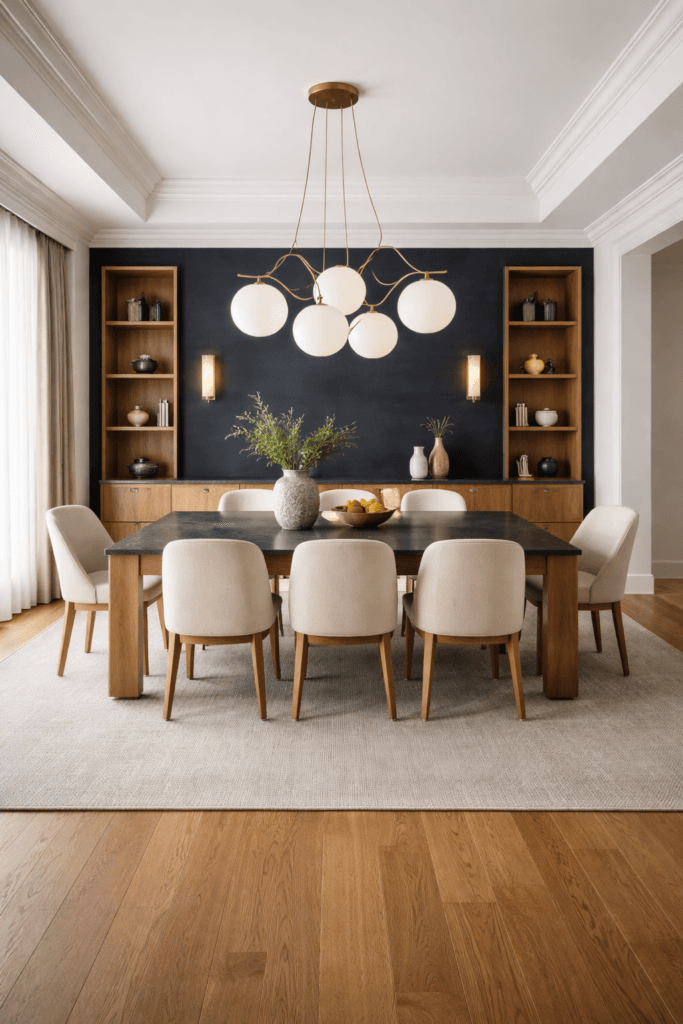
Dining rooms have one non-negotiable rule.
The rug must accommodate chairs — even when pulled out.
If chairs catch the rug edge, the space immediately feels poorly planned.
Designers use what I call:
The 36-Inch Expansion Rule
The rug should extend at least 30–36 inches beyond all sides of the dining table.
This allows:
• Chairs to remain fully on the rug when pulled out
• Movement without awkward edge catching
• Visual proportion between table and floor
For example:
A 72-inch rectangular dining table typically requires at least a 9×12 rug.
Anything smaller interrupts functionality and breaks flow.
Round Tables Require Round Rugs
This sounds obvious, but many ignore it.
Round table + rectangular rug creates tension.
Round table + round rug creates harmony.
The rug shape should mirror the table shape whenever possible.
This keeps geometry aligned and prevents visual chaos.
Home Office Rug Sizing: Executive Proportion
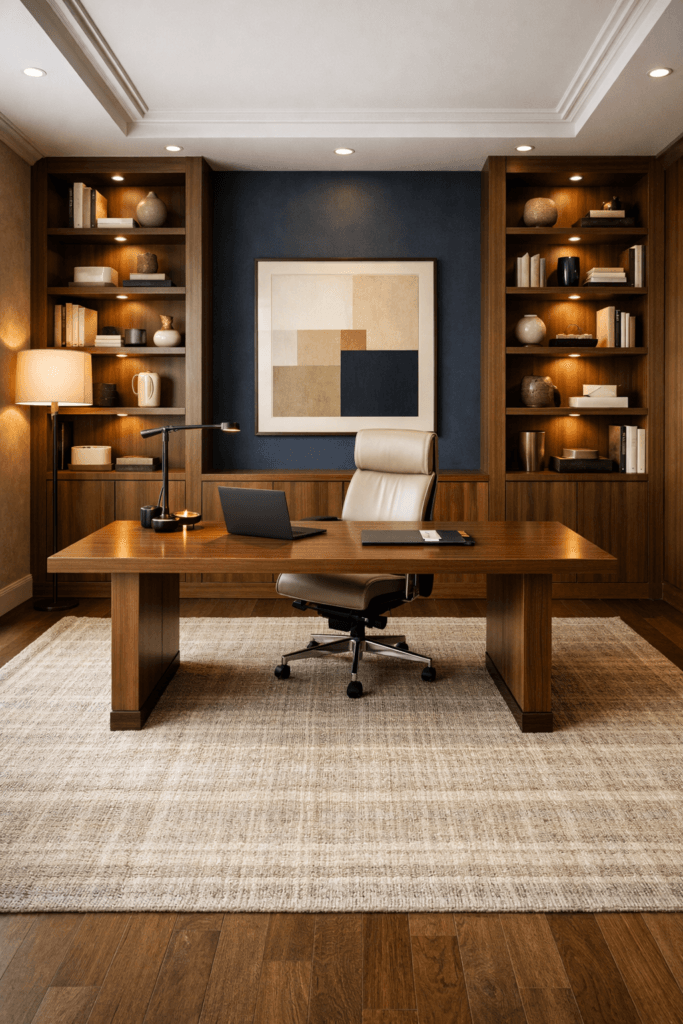
Home offices are often overlooked — and it shows.
A tiny rug under just the desk chair visually isolates the desk and makes the room feel temporary.
Designers approach office rugs differently.
Instead of just anchoring the desk, they anchor the entire work zone.
Office Rule:
The rug should extend beyond:
• The desk footprint
• The chair movement radius
• At least 12–18 inches behind the chair
This ensures that when you roll backward, the chair remains on the rug.
But more importantly:
It creates a grounded visual foundation.
Executive offices often use oversized rugs for this reason. It signals permanence and authority.
Commercial Spaces & Reception Areas
In offices, lobbies, or boutique commercial environments, rug scale communicates brand perception.
A rug that is too small makes the seating arrangement feel temporary.
A large rug:
• Grounds lounge chairs
• Aligns seating symmetrically
• Creates visual structure in open spaces
• Makes small waiting areas feel premium
In commercial design, scale equals credibility.
The same rule applies at home.
Thickness & Texture: The Hidden Perception Shift
Rug thickness also impacts perception.
High-pile rugs add softness but can visually compress space if too bulky.
Flatwoven rugs:
• Keep visual lines clean
• Feel more modern
• Allow furniture legs to sit stable
In small rooms, low to medium pile rugs often perform better visually.
Texture adds warmth.
Bulk adds heaviness.
There’s a difference.
The Common Thread Across All Rooms
Living room.
Bedroom.
Dining room.
Office.
The rule is consistent:
The rug must be large enough to anchor the primary function of the space.
If the rug only touches part of the layout, the room feels incomplete.
If it fully supports the layout, the room feels intentional.
And intention is what reads as luxury.
Zoning Open Concepts, Small Apartments & Awkward Layouts
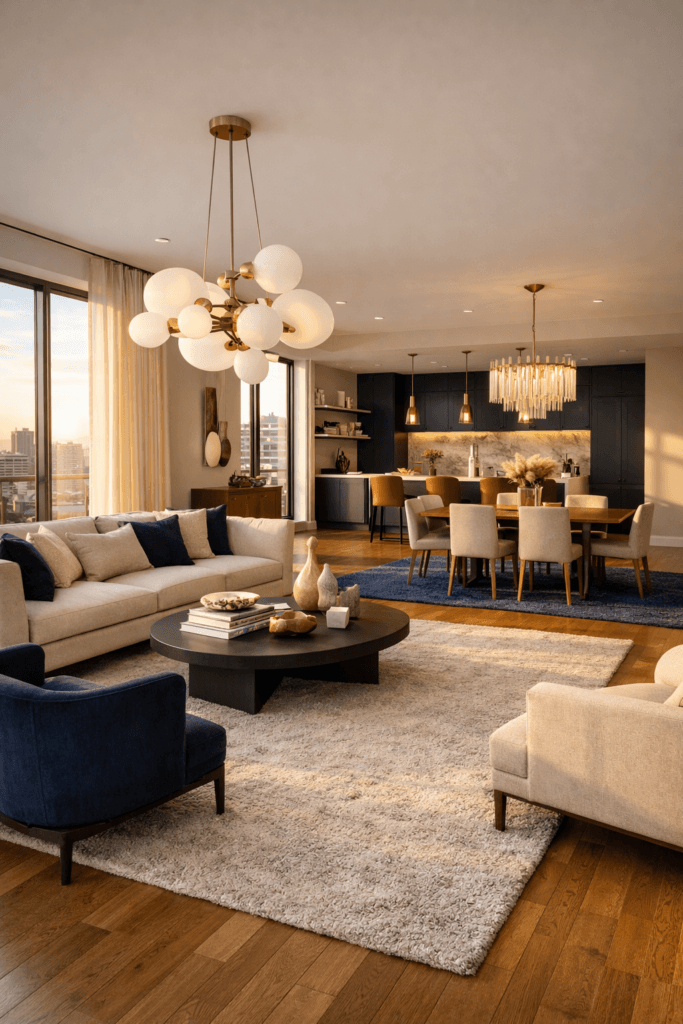
By now you understand something most people don’t:
Rugs are not decor.
They are spatial architecture.
And nowhere is this more important than in open concept homes, studio apartments, and awkward floor plans where walls don’t define rooms.
When walls disappear, rugs become the boundaries.
If the rug is scaled incorrectly in an open space, everything floats.
If the rug is scaled correctly, the entire layout suddenly makes sense.
Open Concept Living: The Zoning Strategy Designers Use
Open layouts are beautiful — but they’re also the easiest to get wrong.
Without clear visual separation, rooms bleed into each other. Furniture feels scattered. The space looks large but somehow chaotic.
The fix?
Rug-defined zones.
Designers treat each functional area as its own island:
• Living area
• Dining area
• Reading nook
• Workspace
Each island needs its own rug — properly scaled to that specific function.
Rule: One Rug Per Zone
The mistake most people make is trying to use one small rug to “cover” a large open area.
That creates visual fragmentation.
Instead:
• The living area gets one oversized rug anchoring sofa + chairs
• The dining area gets a separate rug sized for table + chairs
• A workspace gets its own defined rug footprint
This creates invisible walls.
The room feels organized — not busy.
How Close Should Rugs Be in Open Layouts?
This is subtle, but important.
Rugs should not overlap.
They should also not sit awkwardly far apart.
The sweet spot:
• Leave 12–24 inches of visible flooring between zones
• Keep alignment intentional (parallel edges where possible)
• Maintain similar texture weight for visual consistency
When rugs feel coordinated but separate, the layout feels deliberate.
And deliberate design always reads as high-end.
Studio Apartments: Making 500 Square Feet Feel Intentional
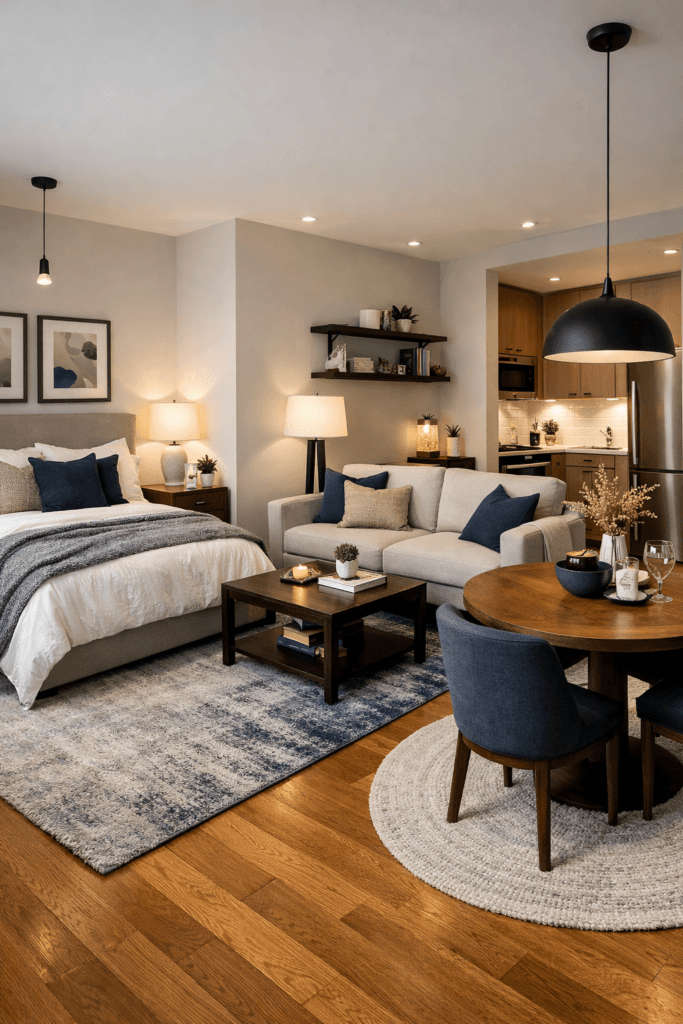
Studio apartments rely heavily on rug placement.
Because the entire space is technically one room.
Without zoning, everything blends together:
• Bed next to sofa
• Sofa next to dining table
• Dining table next to desk
The result feels cramped — even if the square footage is decent.
The solution is psychological separation.
Studio Layout Formula
Use three rugs:
- A bedroom rug (large enough to anchor the bed area)
- A living area rug (scaled to sofa footprint)
- A smaller dining or desk rug
Even if these rugs are neutral and subtle, they create spatial distinction.
And spatial distinction creates perceived space.
It sounds contradictory — adding rugs to make a room feel bigger.
But when used strategically, they create clarity.
Clarity feels spacious.
Awkward Rooms: Fixing Strange Angles & Dead Space
Some rooms are challenging by nature.
• Angled walls
• Off-center fireplaces
• Windows in odd positions
• L-shaped layouts
In these situations, rug placement becomes corrective.
Instead of aligning rugs strictly to walls, designers align rugs to furniture.
Let the furniture define the axis.
Not the architecture.
The Alignment Rule
If the room is crooked, but the furniture grouping is straight — align the rug to the furniture.
This creates visual stability.
The eye follows the rug edge as the dominant line.
Everything outside of that becomes secondary.
That’s how you override awkward architecture.
Layering Rugs Without Making a Room Look Cluttered
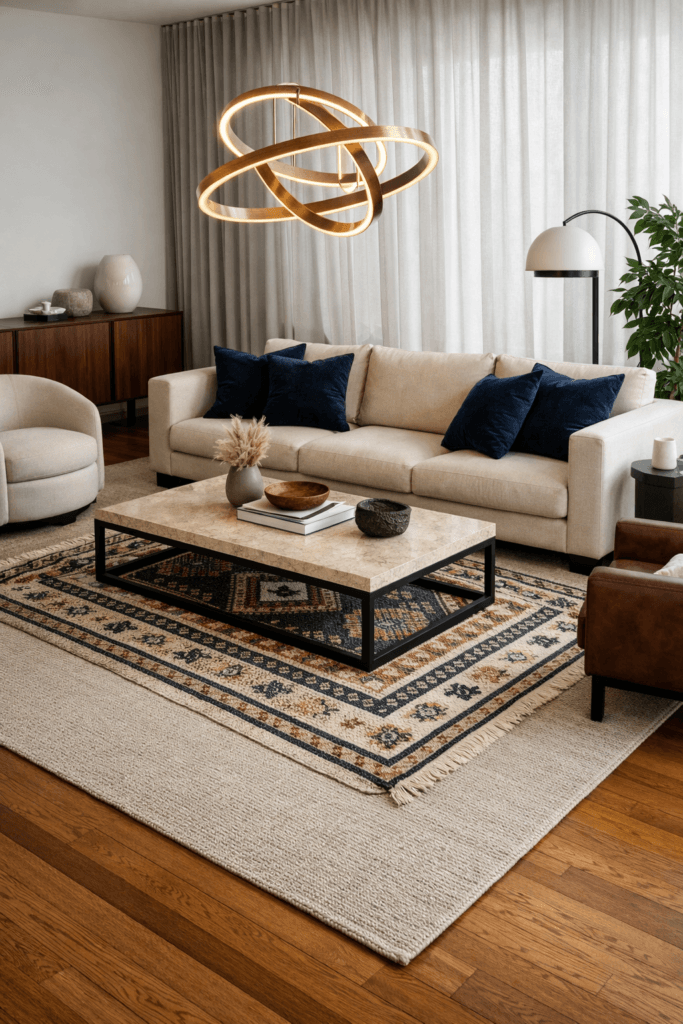
Layering is powerful — but easy to overdo.
Designers use layering for:
• Adding scale without replacing a base rug
• Introducing texture
• Creating dimension in neutral spaces
The correct layering formula:
• Base layer: Large, neutral, flatwoven rug
• Top layer: Smaller, patterned or textured rug
• Center alignment with primary furniture
The key is proportion.
The base rug must be large enough to support the entire seating arrangement.
The top rug should sit comfortably within it — not overwhelm it.
If layering feels chaotic, the base rug is usually too small.
The Illusion of More Space
When rugs are sized correctly in open or awkward layouts, something subtle happens:
The space feels calmer.
There are fewer visual breaks.
The furniture feels anchored.
Movement feels intentional.
And that emotional calm translates to:
“This feels bigger.”
Even though nothing physically changed.
That’s the power of proportion.
What Designers Notice Immediately
If you walk into a room and something feels slightly off, look down.
Ask:
• Does the rug fully anchor the space?
• Are chairs partially hanging off?
• Does the dining rug support pull-out movement?
• Are zones clearly defined?
Nine times out of ten, the answer lies at your feet.
Luxury Scaling Secrets, Budget Fixes & The Designer Checklist
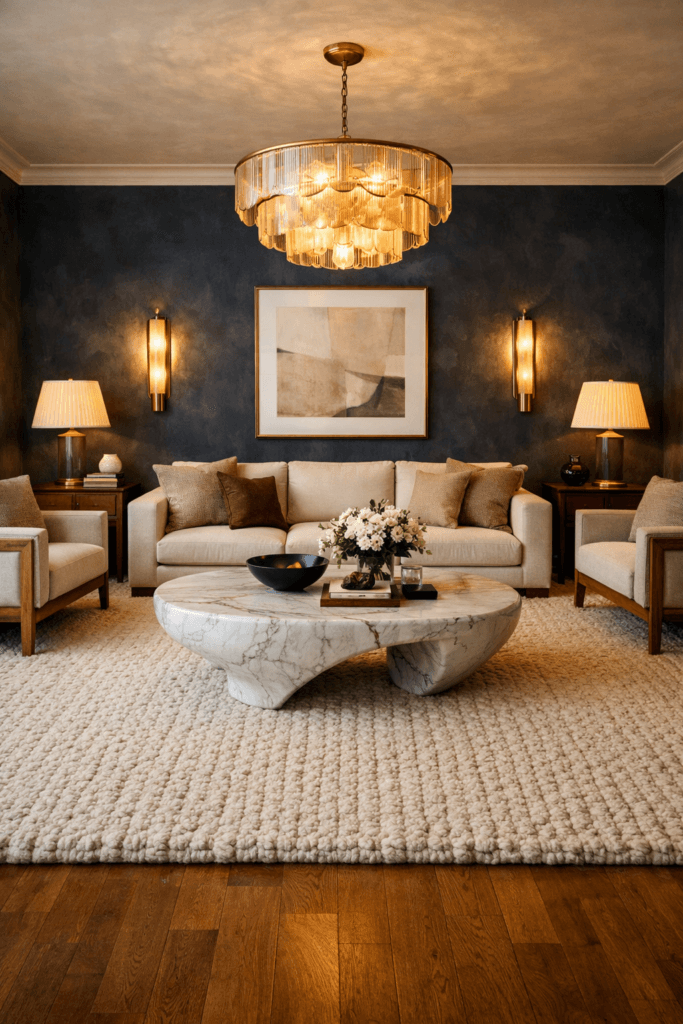
By now, you understand something most homeowners never fully grasp:
Rug size determines visual power.
But to finish this properly, we need to talk about luxury perception.
Because properly sized rugs don’t just make rooms feel bigger.
They make rooms feel expensive.
And expensive has very little to do with price.
The Luxury Scaling Secret Designers Use
Luxury interiors are almost never cautious with scale.
They go bold.
• Larger rugs
• Wider seating arrangements
• More breathing room
• Fewer hard visual stop points
Small rugs create tension.
Large rugs create calm.
And calm is what high-end spaces always have.
When a rug is generously scaled, the room feels:
• Stable
• Grounded
• Balanced
• Intentional
That intention reads as confidence.
And confidence reads as luxury.
When Wall-to-Wall Rugs Work
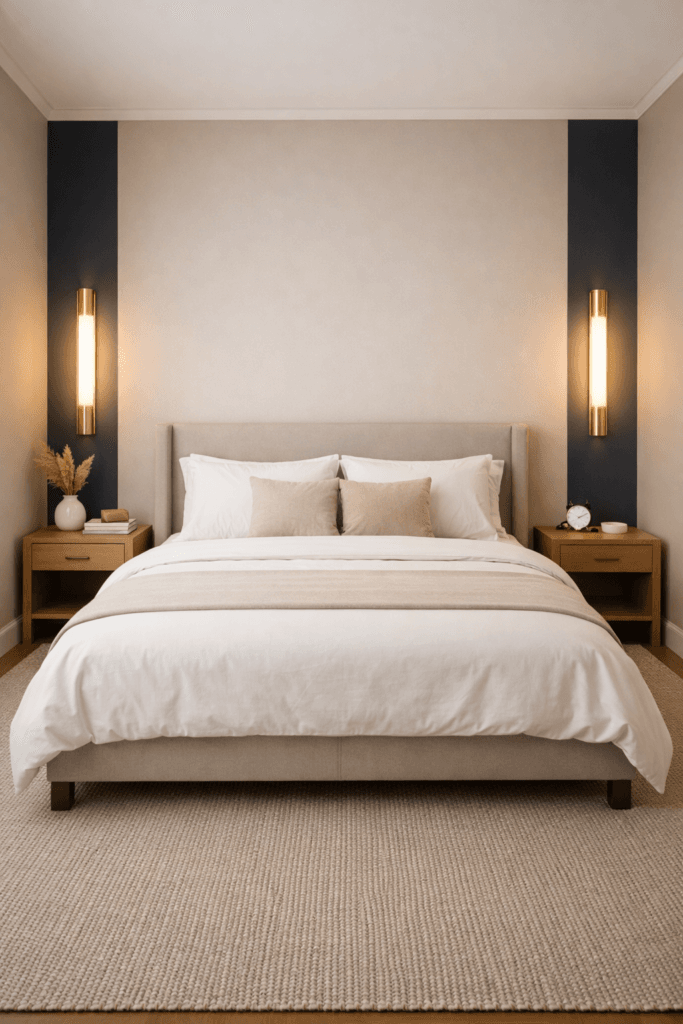
In certain situations, going even bigger than “oversized” can be powerful.
Wall-to-wall rugs or nearly full-room coverage can work beautifully in:
• Very small bedrooms
• Compact living rooms
• Cozy libraries or offices
• Boutique hospitality spaces
The key difference?
The rug becomes flooring — not an accent.
When done intentionally with the right texture (usually flatwoven or low pile), this approach eliminates edge interruptions entirely.
The result:
A seamless visual plane.
But this only works when furniture placement is precise.
If the layout is sloppy, wall-to-wall rugs amplify mistakes.
Budget-Friendly Ways to Achieve Designer Scale
Let’s address the real concern.
Large rugs cost more.
But there are strategic ways to get the look without overspending.
1. Choose Flatwoven Rugs
They’re typically more affordable than high-pile or wool options. They also look cleaner in modern spaces.
2. Layer Intelligently
Place a large neutral base rug (even a simple jute or flatwoven) and layer a smaller patterned rug on top. This creates depth without paying premium for oversized statement rugs.
3. Prioritize Size Over Pattern
If budget forces a choice, always choose the larger neutral rug over a smaller dramatic one.
Scale impacts perception more than print.
4. Raise Furniture
Furniture with visible legs allows more of the rug to show. That visibility enhances proportion and makes the rug appear even more intentional.
The “Expensive Room” Illusion Formula
Here’s what high-end interiors consistently have:
• All seating pieces touching the rug
• Symmetrical alignment where possible
• Clear walkways around rug perimeter
• Proper dining pull-out clearance
• Defined zones in open spaces
There are no awkward half-on / half-off placements.
There are no tiny rugs floating in large rooms.
Everything looks deliberate.
And that deliberateness is what makes a space feel curated instead of assembled.
When Smaller Rugs Actually Work
There are exceptions.
Small accent rugs can work in:
• Entryways
• Beside bathtubs
• Under small console tables
• Layered over large base rugs
But they must never try to anchor full furniture groupings.
The moment a rug attempts to define a major seating area and fails to reach far enough, it diminishes the entire room.
Small rugs are accents.
Large rugs are foundations.
Confuse the two, and the room suffers.
The Final Designer Checklist
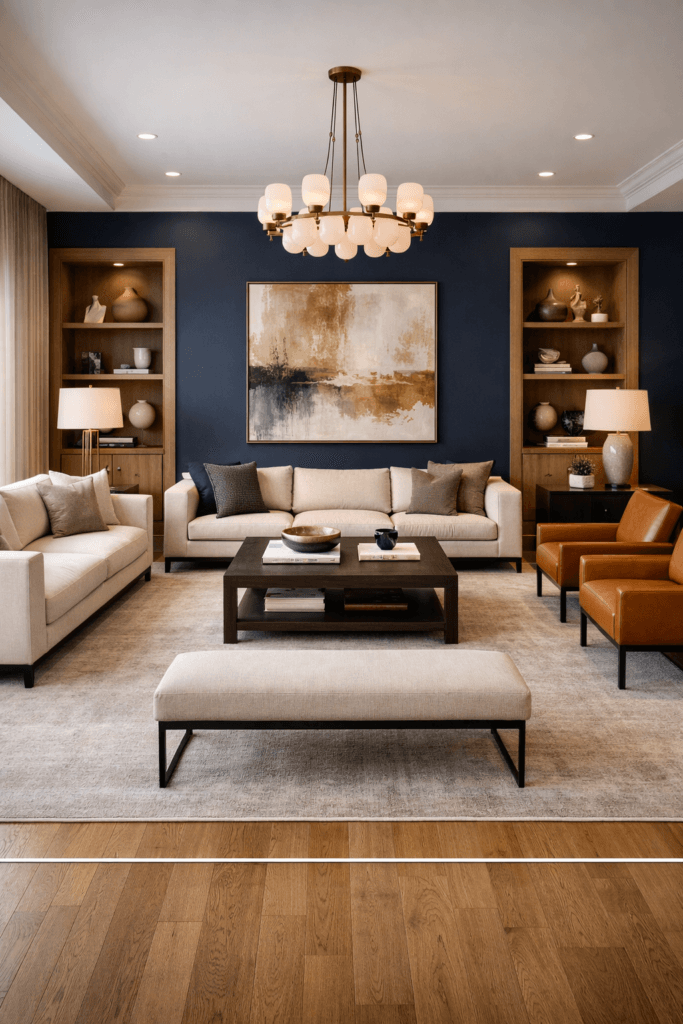
Before committing to a rug, ask:
• Does this rug fully anchor my main furniture grouping?
• Will chairs remain on the rug when pulled out?
• Is there 8–18 inches of floor framing the rug?
• Does the rug align with furniture — not just walls?
• Does it create a clear visual island?
If the answer is yes to all five, the room will feel cohesive.
If the answer is no to even one, reconsider the scale.
The Real Reason Rug Sizing Fixes Everything
Because scale is emotional.
When proportion feels correct, the brain relaxes.
When proportion feels off, the brain registers discomfort — even if you can’t explain why.
That discomfort shows up as:
• “The room feels small.”
• “Something feels awkward.”
• “It just doesn’t look finished.”
But often, nothing is wrong with the furniture.
The rug simply isn’t doing its job.
The Takeaway
You don’t need new walls.
You don’t need bigger square footage.
You don’t need a full renovation.
You need correct scale.
When the rug is sized properly:
• Rooms feel bigger
• Layouts feel balanced
• Furniture looks intentional
• The entire space feels elevated
Rug sizing doesn’t just improve a room.
It corrects the foundation beneath it.
And when the foundation is right, everything above it works.