
Frame Style TV Wall Ideas That Instantly Elevate Your Living Room
March 3, 2026
Trending Finds Readers Are Loving
Explore affordable luxe discoveries people are clicking on right now.
See What's TrendingFrame Style TV Wall ideas are quietly redefining what modern living rooms look like.
For years, televisions were treated as necessary eyesores — oversized black rectangles mounted too high, too exposed, or floating awkwardly above a fireplace. But the rise of the frame-style television has shifted that narrative entirely.
Now, your television can function as art.
And more importantly — as design architecture.
A Frame Style TV Wall is not about hiding technology. It’s about integrating it.
Brands like Samsung’s The Frame sparked the movement, but the real trend isn’t just the TV itself. It’s the full wall treatment around it.
When styled correctly, a frame-style television:
• Anchors the room
• Creates focal-point balance
• Elevates perceived home value
• Increases Pinterest saves dramatically
According to industry insights shared through outlets like Architectural Digest (https://www.architecturaldigest.com), built-in wall treatments and integrated media solutions consistently increase visual impact in living spaces.
That matters.
Because the difference between a “mounted TV” and a “designed TV wall” is intention.
Let’s break down what makes these installations look expensive.
1. The Gallery Grid Approach
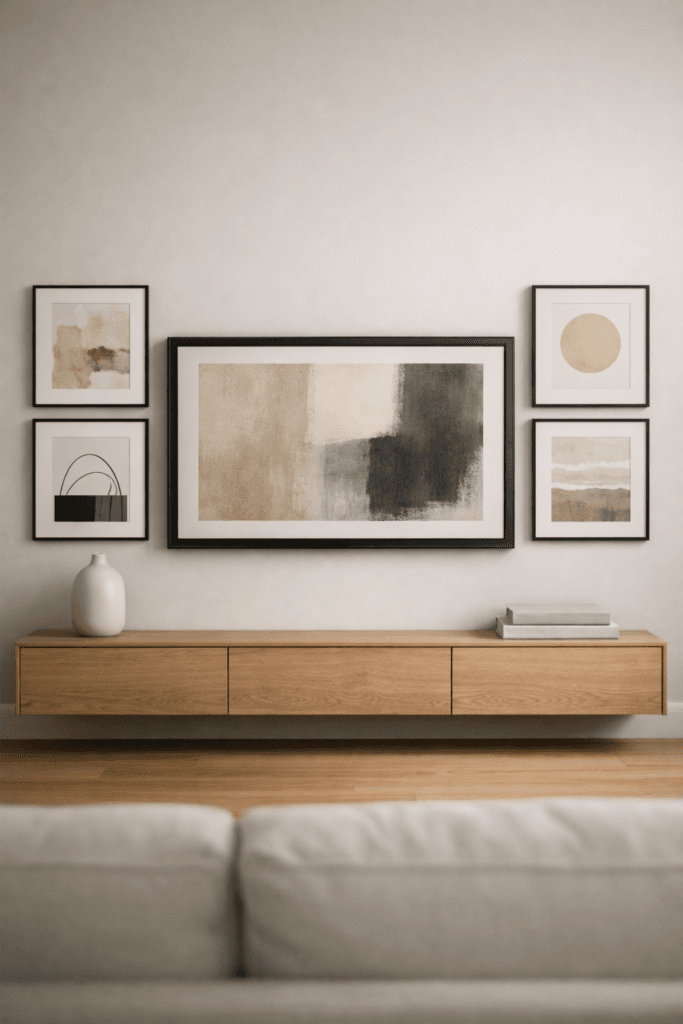
Instead of centering the television alone on a blank wall, designers treat it as one piece within a curated gallery wall.
The television becomes one “frame” among many.
This works especially well in neutral living rooms where contrast is subtle.
Key elements:
• Symmetrical art spacing
• Consistent black or brass frames
• Eye-level mounting (not fireplace height)
• Equal breathing room between pieces
Mount the TV so the center sits roughly 42 inches from the floor when seated. Not 60 inches. Not above a mantel unless eye-line corrected.
This single shift changes everything.
For mounting standards, resources like This Old House (https://www.thisoldhouse.com) emphasize correct viewing height for long-term comfort.
A gallery-grid Frame Style TV Wall creates cohesion instead of contrast.
And cohesion increases perceived luxury.
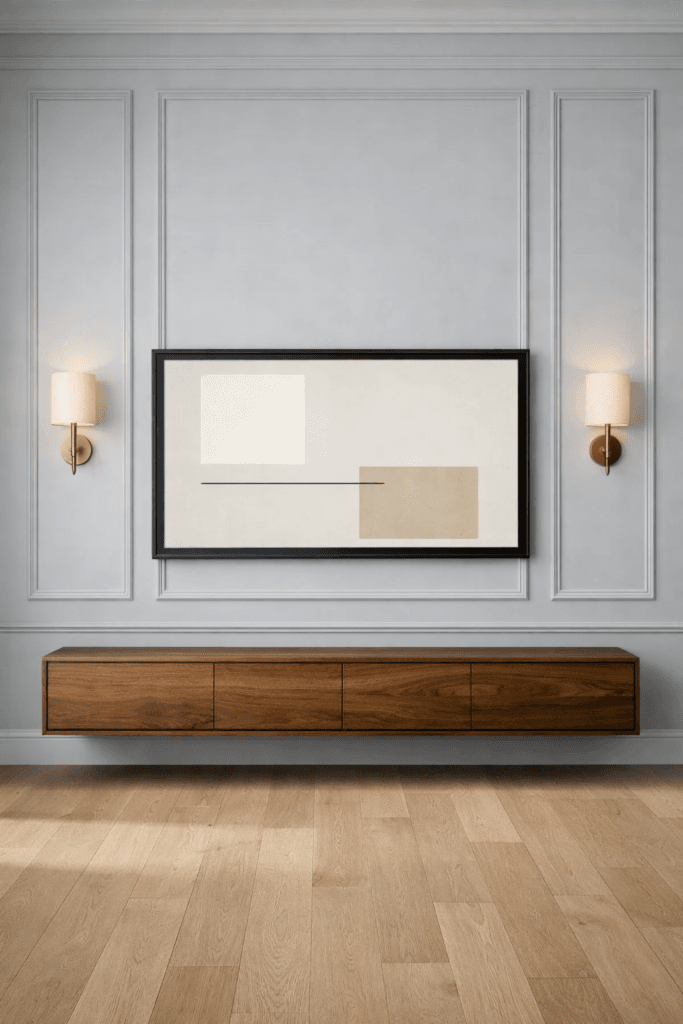
2. The Paneled Statement Wall
This is where monetization gets interesting.
Wall paneling behind the TV instantly upgrades the installation.
Options include:
• Vertical slat panels
• Board-and-batten
• Picture-frame molding
• Limewash texture
The TV should sit flush within the visual boundaries of the panel design — not randomly centered.
Proportion rule:
The panel frame should extend at least 8–12 inches beyond the television edges on all sides.
This creates architectural grounding.
When paired with:
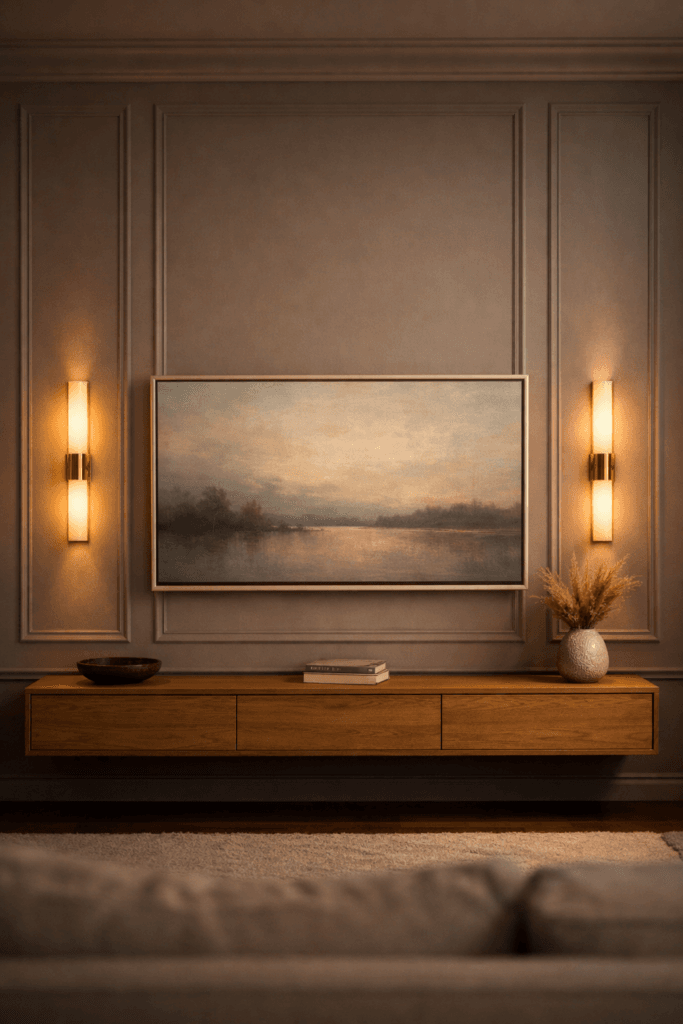
• A slim floating console
• Concealed cable management
• Subtle backlighting
The entire wall reads custom.
This is why the Frame Style TV Wall trend is scalable. You can build multiple related articles from this foundation:
– Floating Console Styling Ideas
– Slat Wall Living Room Trends
– Concealed Cable Solutions That Look Custom
For elevated lighting placement and symmetry rules, see our guide on modern living room lighting upgrades at www.bellencia.com/warm-modern-beige-living-room-ideas
The difference between a mounted television and a Frame Style TV Wall is intention.
And intention is what photographs well.
The difference between a basic mounted television and a true Frame Style TV Wall comes down to proportion, lighting, and restraint.
Most people get one of those wrong.
And when one element is off, the entire wall feels slightly unfinished.
In this section, we’re going to break down the details that separate a Pinterest-save-worthy installation from something that just looks “mounted.”
3. Backlighting Changes Everything
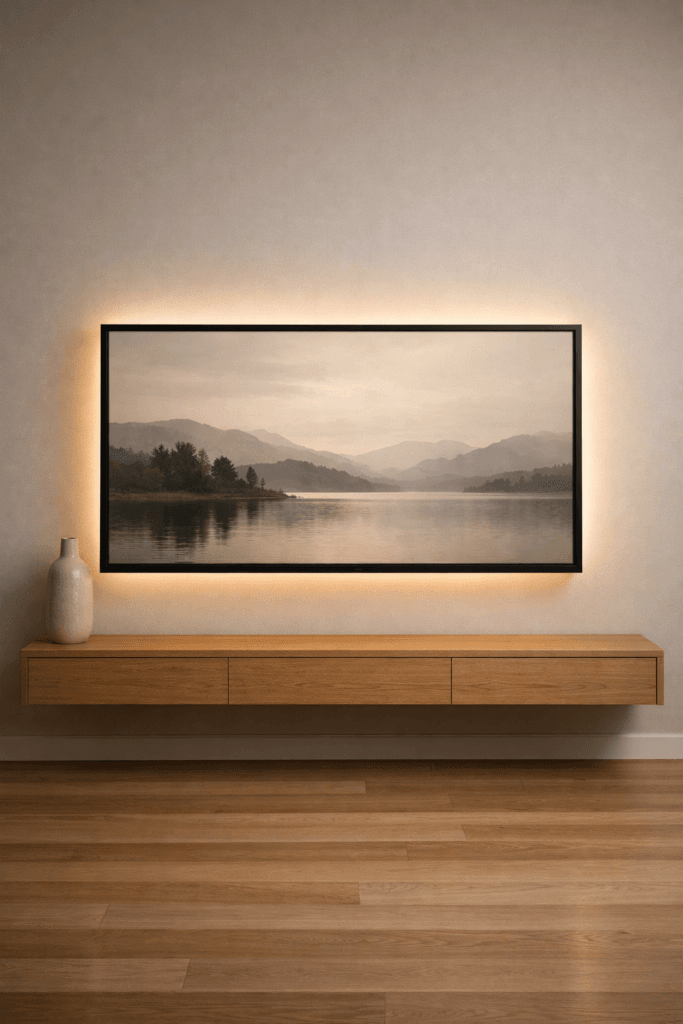
One of the most overlooked upgrades on a Frame Style TV Wall is subtle backlighting.
Not bright LED strips.
Not color-changing party lights.
Soft, warm bias lighting.
Placed correctly behind the television, this lighting:
• Reduces harsh contrast against darker walls
• Softens the black frame edge
• Adds dimension at night
• Makes the television feel intentionally integrated
The goal is not to see the light source.
The goal is to see the glow.
Placement rule:
Install LED bias lighting along the rear perimeter of the television frame, keeping the light temperature between 2700K–3000K for warm interiors and 3000K–3500K for cooler-toned spaces.
Avoid blue-white lighting unless your entire room leans cool.
This is where the Frame Style TV Wall connects beautifully to our previous article on cohesive color palettes. A cool-toned living room pairs seamlessly with warm-neutral lighting balance, as discussed in www.bellencia.com/cool-blue-aesthetic-amazon-finds.
That cross-linking builds topical authority while reinforcing design consistency.
And consistency is what makes a space feel intentional.
4. Console Width Is Non-Negotiable
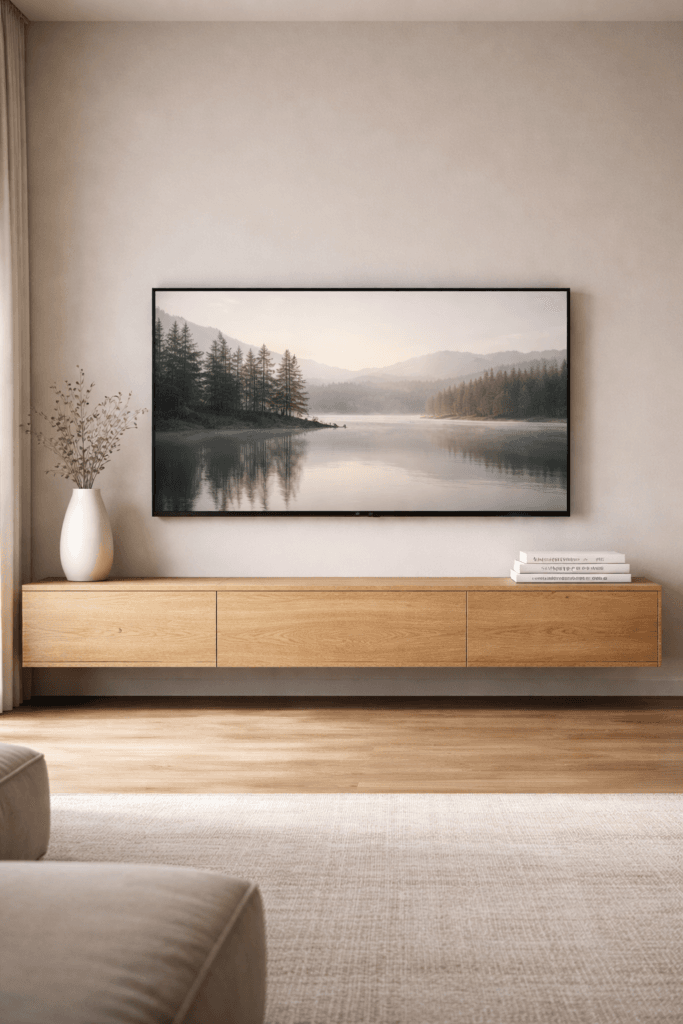
Here’s the rule designers don’t skip:
Your console should be wider than your television.
Minimum:
6–12 inches wider on each side.
If your TV is 55 inches wide, your console should measure at least 67 inches.
Anything smaller makes the wall feel top-heavy.
This is basic visual weight distribution.
A Frame Style TV Wall works because it balances vertical and horizontal lines.
When the console matches or exceeds the TV width, it grounds the wall.
Even floating consoles must follow this rule.
Additionally:
• Keep console height between 16–24 inches
• Leave 4–8 inches of breathing room between console top and TV bottom
• Hide visible wires completely
Cable concealment is not optional here.
Products like in-wall cable management kits or paintable cord covers are small upgrades that dramatically increase perceived value.
For proper concealment methods, guides from outlets like HGTV (https://www.hgtv.com) emphasize clean sightlines in modern media walls.
Clean lines equal expensive visuals.
5. The Styling Formula That Works Every Time
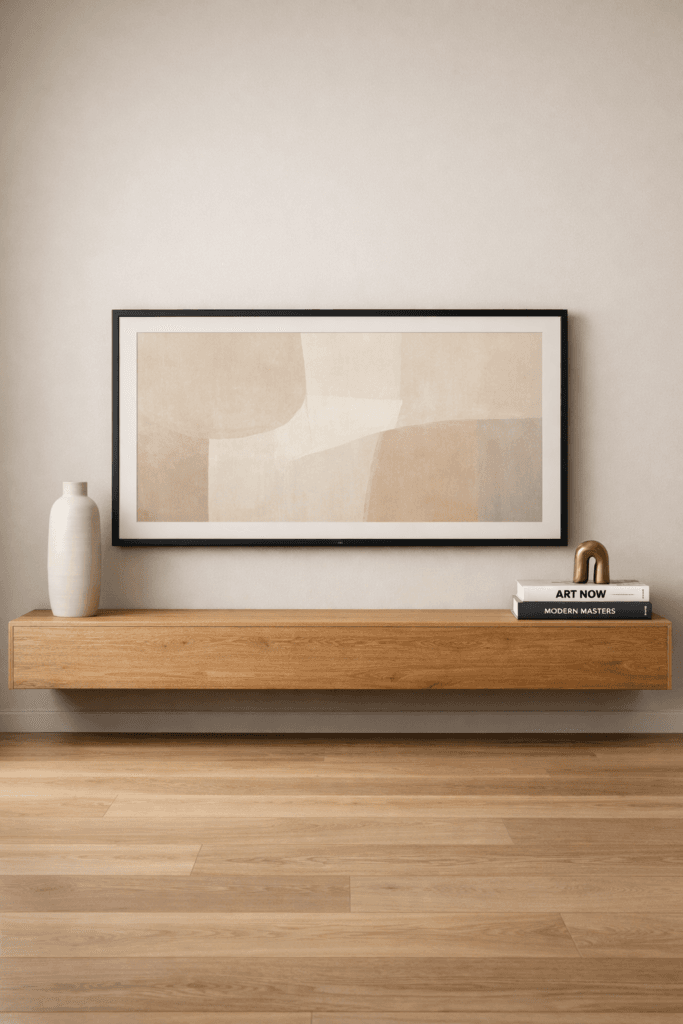
This is where most people over-style.
A Frame Style TV Wall should never compete with the television.
Instead, follow the 3-2-1 rule on the console:
• 3 varying-height objects
• 2 contrasting textures
• 1 negative space zone
Example combination:
– Tall ceramic vase
– Medium stack of art books
– Small sculptural object
Contrast linen texture with ceramic.
Contrast matte finishes with subtle shine.
Then leave one-third of the console intentionally empty.
That negative space is what keeps the wall from looking cluttered.
When the TV shifts into art mode, the entire installation reads as curated instead of functional.
That’s the power of the Frame Style TV Wall.
It blends technology into architecture.
6. Symmetry vs. Asymmetry (Choose One)
Do not mix both.
If your wall includes:
• Wall sconces
• Built-in shelving
• Vertical slat paneling
• Framed art
You must decide early whether the design will be symmetrical or intentionally asymmetrical.
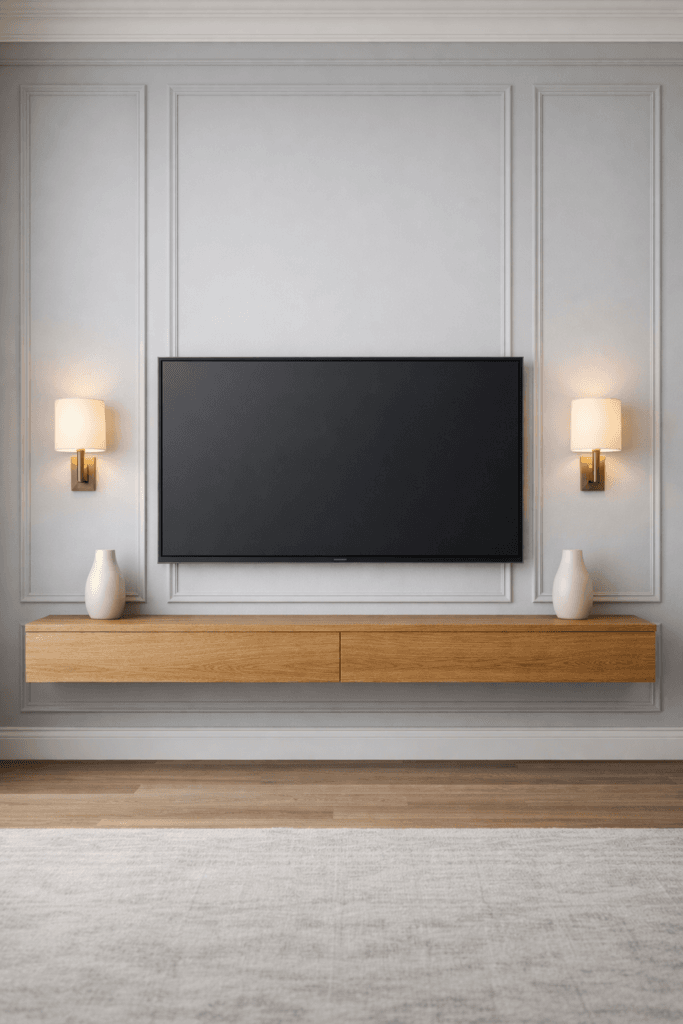
Symmetrical layouts:
– TV centered
– Equal sconces on both sides
– Console perfectly aligned
– Matching decor balance
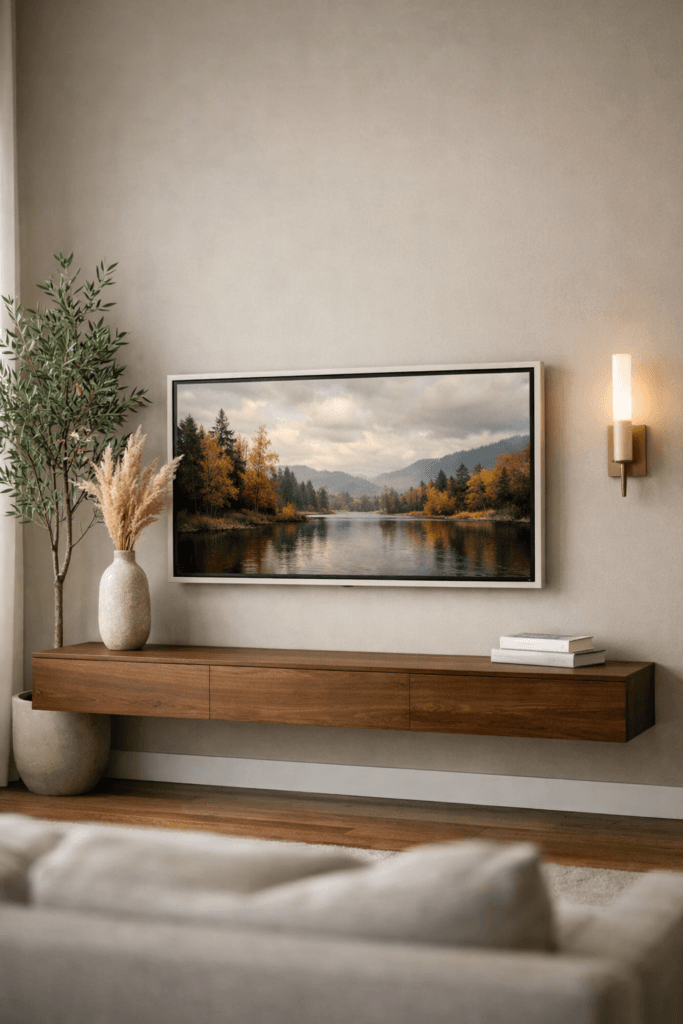
Asymmetrical layouts:
– TV offset within panel grid
– One tall plant balancing one lower stack
– Offset lighting
Both work.
But mixing approaches creates tension.
Pinterest-favored walls are decisive.
The Frame Style TV Wall trend is strong because it leans into intentional structure.
That structure photographs cleanly.
It saves well.
And it increases click-through behavior.
A Frame Style TV Wall only looks elevated when every surrounding decision supports it.
The frame color.
The wall undertone.
The fireplace alignment.
Even the mistake you don’t realize you’re making.
This final section is where most installations either look custom — or look almost custom.
And “almost” is what cheapens the effect.
7. Frame Color Selection Strategy
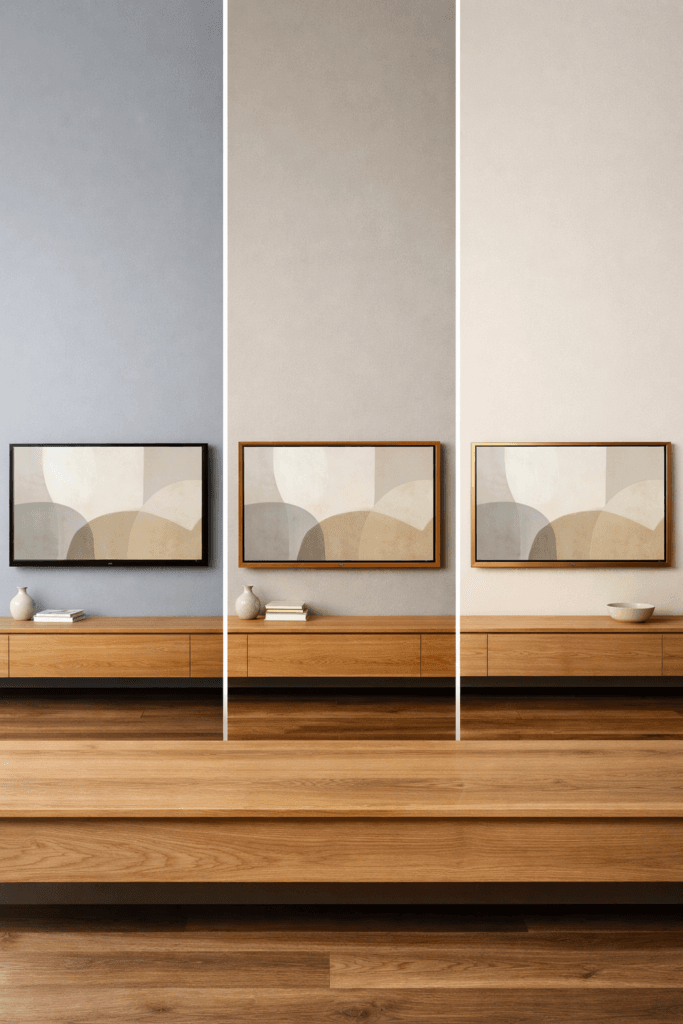
Your television frame should never feel accidental.
It should either:
• Blend seamlessly into the wall
• Echo another finish in the room
• Or create intentional contrast
There are three directions that consistently work.
1. Matte Black Frame
Best for:
– Modern rooms
– High-contrast interiors
– Gallery wall integration
Black disappears visually when paired with black picture frames, making the television look like part of the art grid.
2. Warm Wood Frame
Best for:
– Organic modern spaces
– Scandinavian interiors
– Light oak or walnut furniture
Match undertones carefully. If your console is warm oak, do not introduce a cool-toned ash frame.
Undertone conflict is subtle — but noticeable.
3. Brass or Gold Frame
Best for:
– Transitional spaces
– Rooms with brass lighting
– Elevated neutral palettes
But restraint matters.
If you choose brass, limit other metallic finishes on the wall to avoid visual noise.
For additional guidance on coordinating finishes, designers frequently emphasize material repetition as a cohesion rule, something highlighted in expert home features through Architectural Digest (https://www.architecturaldigest.com).
Consistency builds luxury perception.
8. Wall Paint Undertone Matching
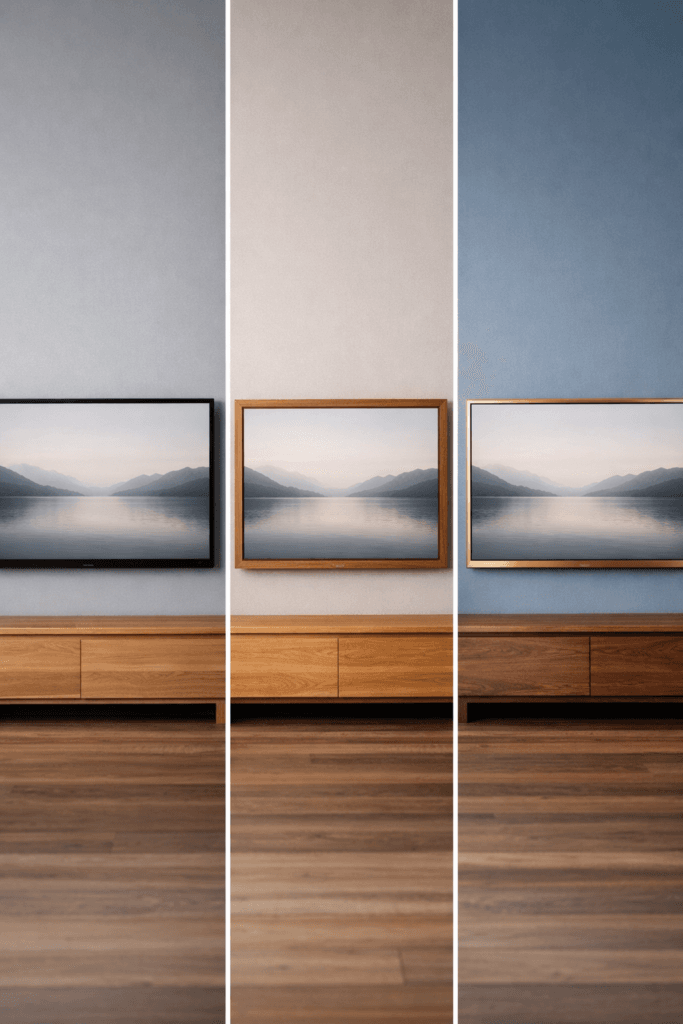
This is the mistake that quietly ruins a Frame Style TV Wall.
Undertones.
If your wall leans cool gray and your console leans warm beige, the TV will sit awkwardly between them.
To avoid that:
• Pair cool gray walls with black or silver frames
• Pair greige walls with warm wood frames
• Pair slate blue walls with matte black or brushed brass
If you’re leaning into cooler palettes, you may want to revisit our breakdown on cohesive cool interiors here: www.bellencia.com/cool-blue-aesthetic-amazon-finds
Color continuity across rooms strengthens perceived home value.
When a visitor can walk from your living room into your bedroom and see tonal consistency, the house feels designed.
Not decorated.
That difference matters.
9. Fireplace Integration Rules
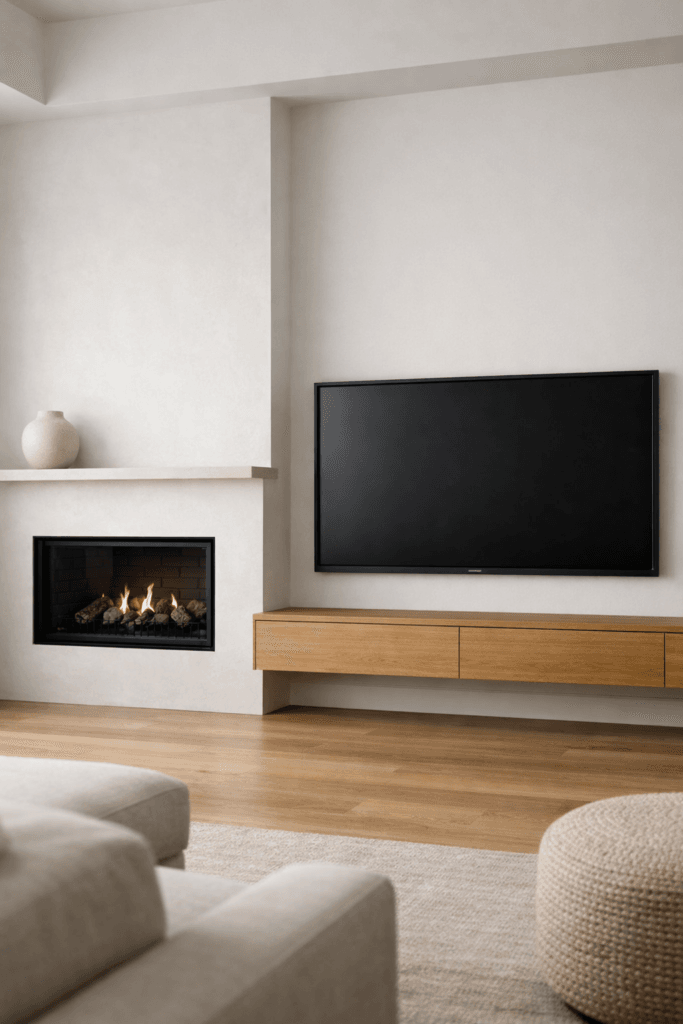
Mounting above a fireplace is still one of the most debated design decisions.
If you choose this route, follow strict rules:
• The TV center should not exceed comfortable seated eye level
• Use a tilt mount if above-mantel height is unavoidable
• Keep mantel decor minimal
• Avoid oversized mirrors competing with the frame
Better alternative?
Install the Frame Style TV Wall adjacent to the fireplace, not above it.
That preserves viewing comfort while keeping the focal wall intact.
Outlets like This Old House (https://www.thisoldhouse.com) consistently emphasize ergonomic placement for long-term comfort.
Design is not just aesthetic.
It’s functional alignment.
10. The Mistakes That Instantly Cheapen It
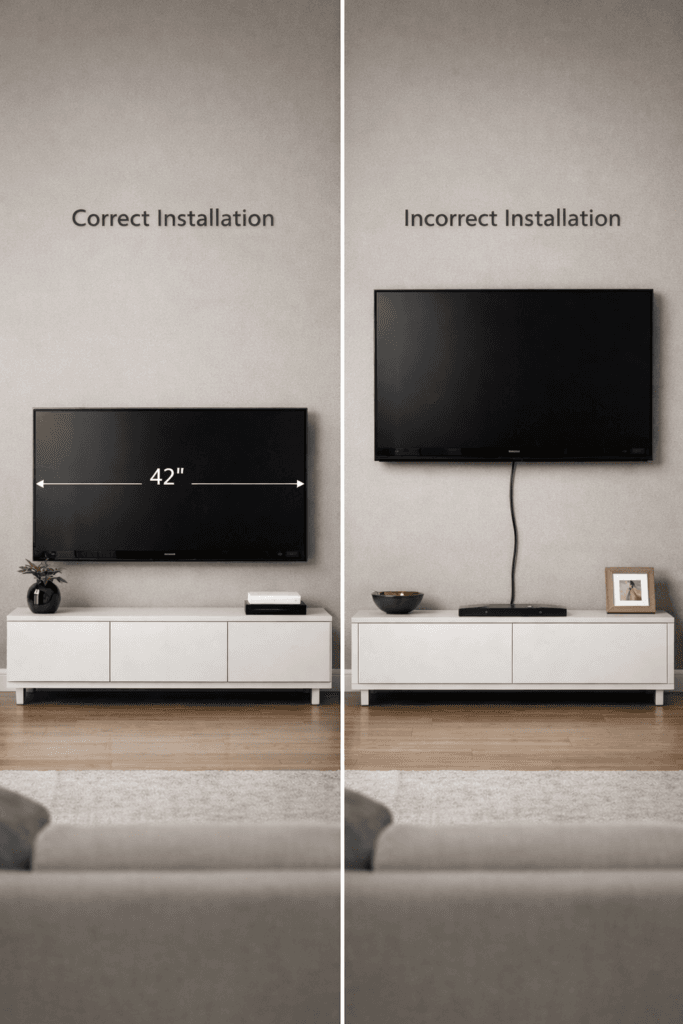
Even high-end televisions can look inexpensive if installation details are wrong.
Avoid:
• Visible cords
• Consoles narrower than the TV
• Mounting too high
• Cluttered decor
• Mixed metal finishes
• Bright white LED backlighting
Also avoid shrinking the wall visually with undersized art surrounding the television.
Proportion rule:
Surrounding frames should be at least one-third the size of the TV frame to maintain balance.
Tiny art makes the television dominate.
And domination is not the goal.
Integration is.
Why the Frame Style TV Wall Trend Is Monetization-Friendly
This trend spans multiple high-intent buying categories:
• Televisions
• Mounting hardware
• Cable management systems
• LED bias lighting
• Floating consoles
• Wall panel kits
• Sconces
• Art frames
• Paint
That cross-category potential allows layered affiliate integration without overlinking.
A single wall can justify 5–8 strategic product mentions naturally.
And because this installation photographs beautifully, it performs strongly on Pinterest.
High saves and dwell time.
High outbound click potential.
The Frame Style TV Wall is not a micro-trend.
It’s an architectural shift.
And architectural shifts have longevity.
If you want to continue upgrading the entire room, the next logical step is optimizing lighting symmetry and layout hierarchy — which we’ll cover in our next guide at www.bellencia.com/warm-modern-beige-living-room-ideas
Because once the wall is elevated, the rest of the room must follow.
This isn’t just about mounting a TV.
It’s about building a focal point that feels intentional, architectural, and expensive — without requiring a full renovation.
And when done correctly, it changes how the entire space is perceived.
Bellencinista Notes
Before mounting, tape the TV outline and console width directly on the wall for 24 hours. Live with the proportions. Most placement mistakes happen because people mount too high or choose consoles too narrow.