
Luxury Bathroom Vanity Ideas: How to Style Yours Like a Designer
June 4, 2026
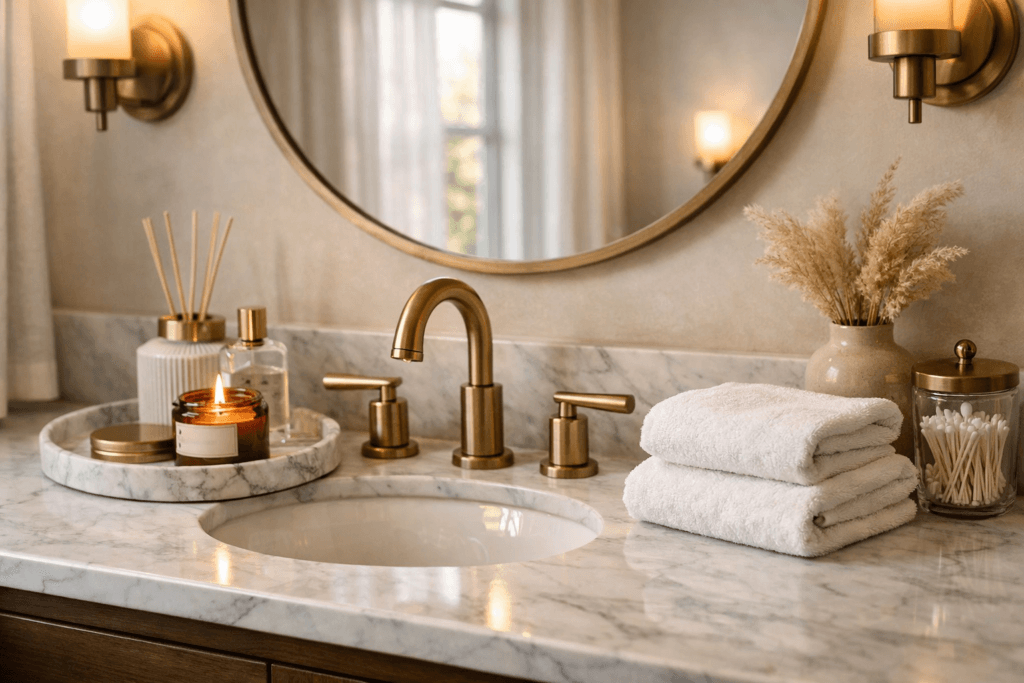
Trending Finds Readers Are Loving
Explore affordable luxe discoveries people are clicking on right now.
See What's TrendingThere’s a quiet transformation happening in bathrooms right now — and it’s showing up everywhere from Pinterest boards to high-end design magazines.
Bathroom vanities are no longer just functional counters with a sink and mirror. They’re becoming curated spaces that reflect lifestyle, taste, and intention.
Scroll Pinterest for even a few minutes and you’ll see it: marble counters styled with trays, warm lighting, neutral bottles, soft greenery, plush towels, and thoughtfully placed decor that looks more like a boutique hotel than a busy household.
The modern vanity isn’t about displaying everything you own.
It’s about displaying the right things.
That distinction is what separates a basic bathroom from one that feels calm, elevated, and expensive.
And the best part? You don’t need a renovation or a designer budget to achieve this look. Most of it comes down to styling, lighting, and editing what’s visible.
Let’s break down why luxury vanity styling is trending, what makes it feel high-end, and how to recreate it in a realistic, budget-aware way.
Why Bathroom Vanities Are Getting More Attention
For decades, bathrooms were treated as purely functional spaces. As long as they were clean and usable, they were considered “done.”
But modern homeowners view their spaces differently.
Today, bathrooms are part of wellness design. They are spaces where people begin and end their day, prepare themselves mentally, and unwind physically.
Design experts at Architectural Digest note that homeowners are increasingly investing in spa-like bathrooms because they contribute to daily well-being and stress reduction:
https://www.architecturaldigest.com/story/bathroom-design-trends
When you think about it, this makes sense.
Your vanity is where you:
• Get ready in the morning
• Do skincare routines
• Prepare for important days
• Wind down at night
• Take care of yourself
A thoughtfully styled vanity can:
• Encourage tidiness
• Reduce visual stress
• Create a calm environment
• Make routines feel intentional
• Increase perceived home value
• Add a subtle sense of luxury to daily life
Pinterest users love vanity styling because it blends beauty with practicality. It’s aspirational but achievable — which is exactly what drives saves and clicks.
The Psychology Behind a Beautiful Vanity
Design isn’t just visual — it’s emotional.
Cluttered spaces often create mental clutter.
Calm spaces promote calm minds.
Studies in environmental psychology have shown that organized, visually pleasing spaces can reduce stress and improve mood. While your vanity might seem small in the grand scheme of your home, it plays a daily role in how you feel.
When your vanity looks curated, your routine feels calmer.
When your vanity looks chaotic, your routine feels rushed.
Luxury styling isn’t about impressing others.
It’s about supporting your daily experience.
That’s a powerful shift in mindset.
The “Less but Better” Philosophy
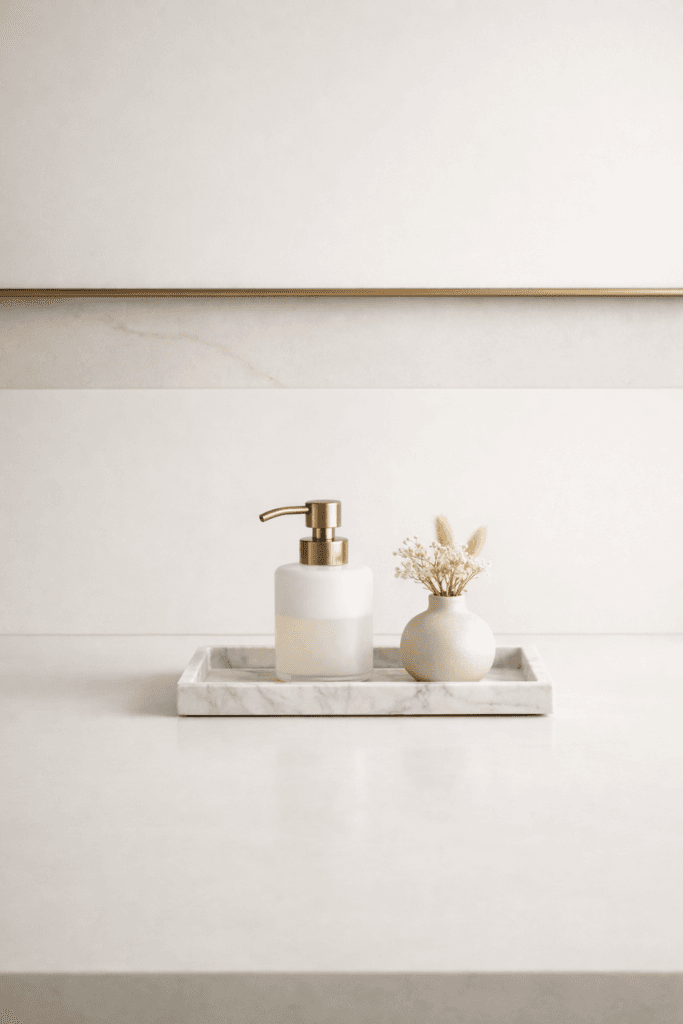
One of the biggest differences between an everyday vanity and a luxury-looking one is restraint.
Luxury vanities don’t display everything.
They curate.
Instead of showing 20 products, they show 4–6 intentional items.
That instantly signals:
✔ Calm
✔ Order
✔ Quality
✔ Intention
✔ Maturity in design
Interior stylists often emphasize editing your space rather than filling it. House Beautiful frequently highlights minimal, intentional styling as a hallmark of upscale interiors:
https://www.housebeautiful.com/design-inspiration/
Minimal doesn’t mean empty.
It means selective.
Designer spaces feel expensive because they remove distractions. Your eye focuses on a few beautiful elements instead of visual noise.
The Power of a Tray (The #1 Designer Trick)
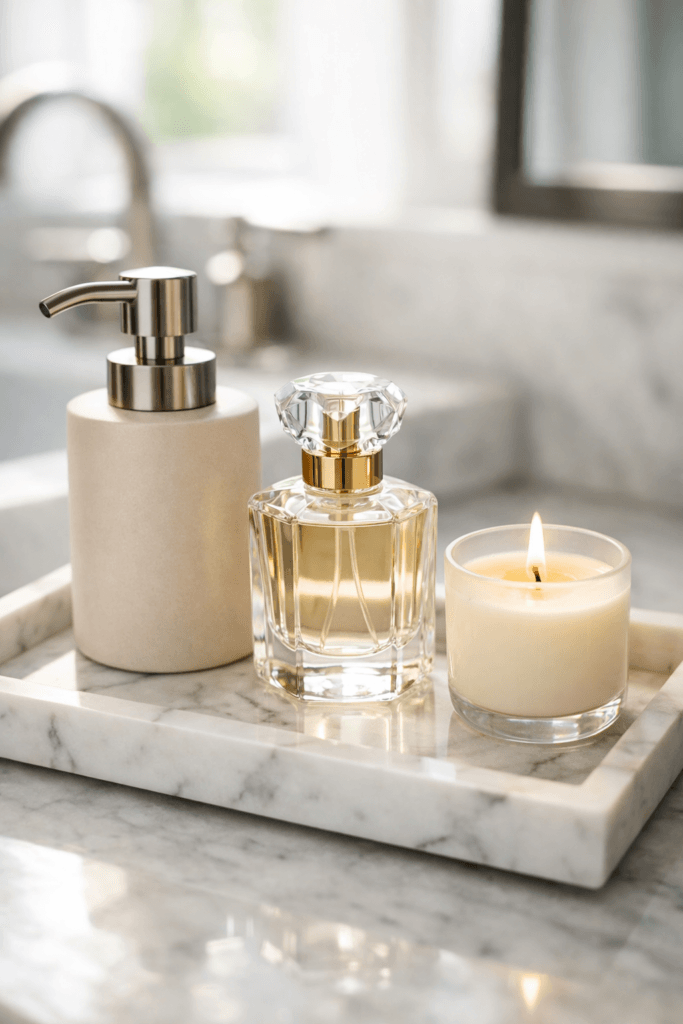
If there’s one simple upgrade that makes the biggest difference, it’s this:
Use a tray.
A tray visually groups items so they look styled instead of scattered. It creates a “zone” that tells the eye: this is intentional.
Designers use trays in kitchens, living rooms, and bathrooms to create visual structure. Better Homes & Gardens often recommends trays as an easy styling tool for beginners:
https://www.bhg.com/decorating/lessons/expert-advice/decorating-with-trays/
A tray becomes the stage for your essentials.
Great tray materials include:
• Marble
• Stone resin
• Ceramic
• Travertine-look finishes
• Light natural wood
Use a tray to hold:
• Soap dispenser
• Perfume
• Candle
• Small vase
• Skincare essentials
Suddenly, everyday items look curated.
Lighting: The Real Game Changer
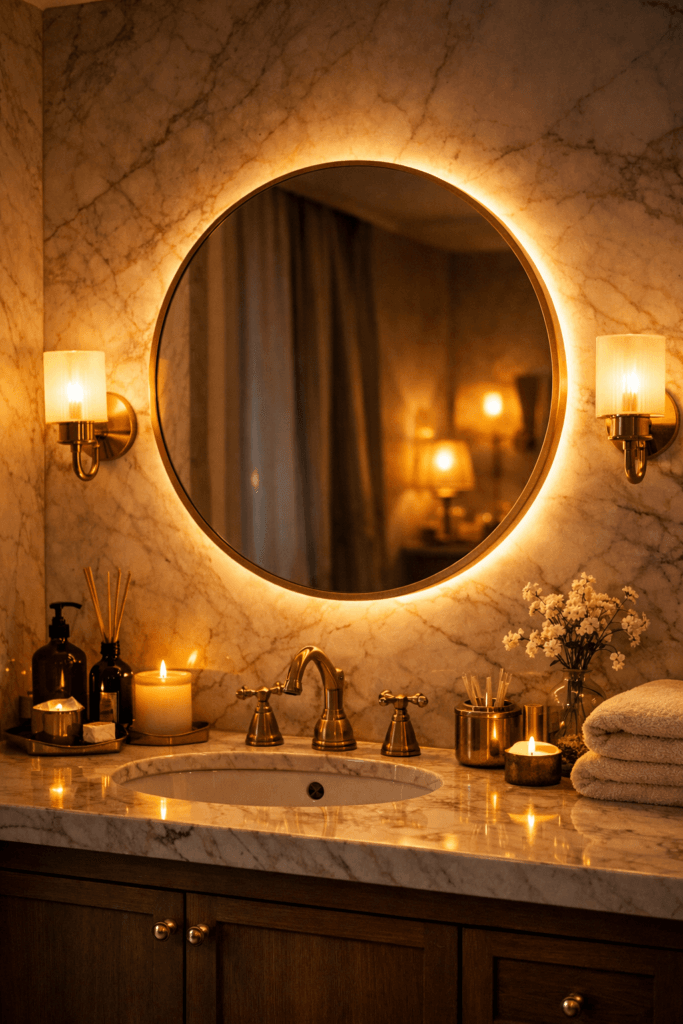
Many vanities look underwhelming not because of decor — but because of lighting.
Luxury bathrooms avoid harsh overhead lighting. Instead, they use layered, flattering light.
High-end spaces often rely on:
• Warm bulbs (2700K–3000K)
• Side sconces near mirrors
• Backlit mirrors
• Soft diffused lighting
• Dimmable fixtures
Lighting experts widely recommend warmer tones for bathrooms because they flatter skin and create a relaxing atmosphere. This Old House explains how layered lighting improves both function and mood:
https://www.thisoldhouse.com/lighting/21016482/how-to-light-a-bathroom
Warm lighting enhances marble and brass.
Cool lighting makes spaces feel clinical.
If your vanity feels underwhelming, lighting is often the missing piece.
The Rule of Three (Stylist Secret)
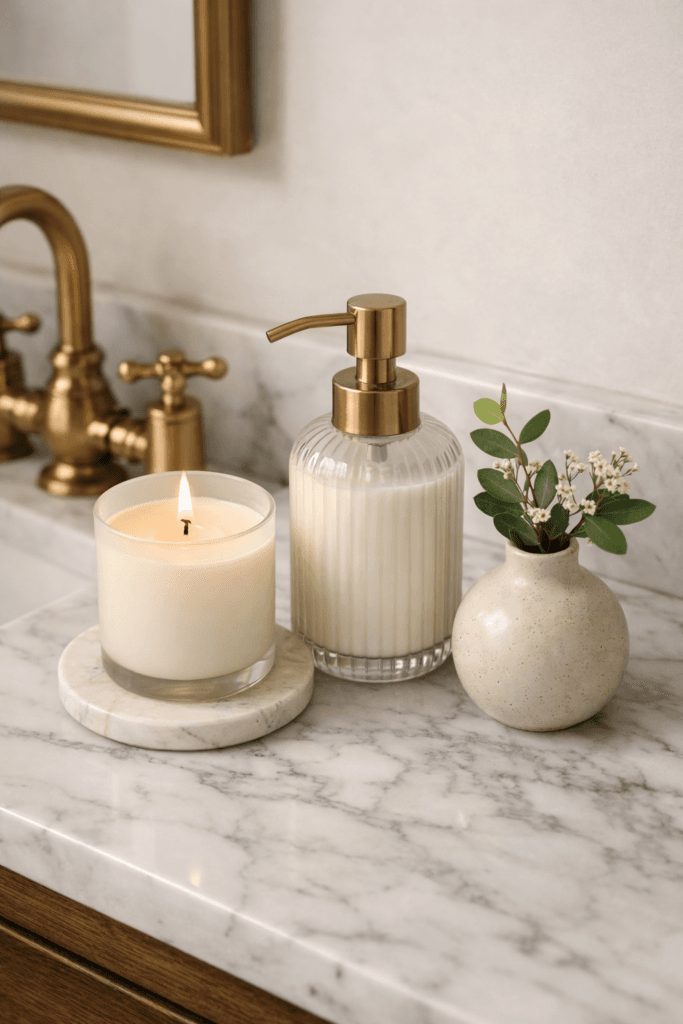
Stylists rarely arrange items randomly.
They use the “rule of three.”
Odd-number groupings feel natural and balanced to the eye.
Examples:
• Candle + soap + small vase
• Perfume + lotion + tray
• Plant + container + folded towel
This principle is widely used in photography and interior design because it creates visual rhythm.
It’s subtle, but it works.
Decluttering Without Losing Function
Luxury vanities don’t eliminate function.
They hide what isn’t pretty.
Store away:
• Toothpaste boxes
• Extra products
• Hair tools
• Refills
• Packaging-heavy items
• Loud branding
Display only what contributes to the aesthetic.
This one shift alone can transform a vanity from average to editorial.
Matching Bottles = Instant Upgrade
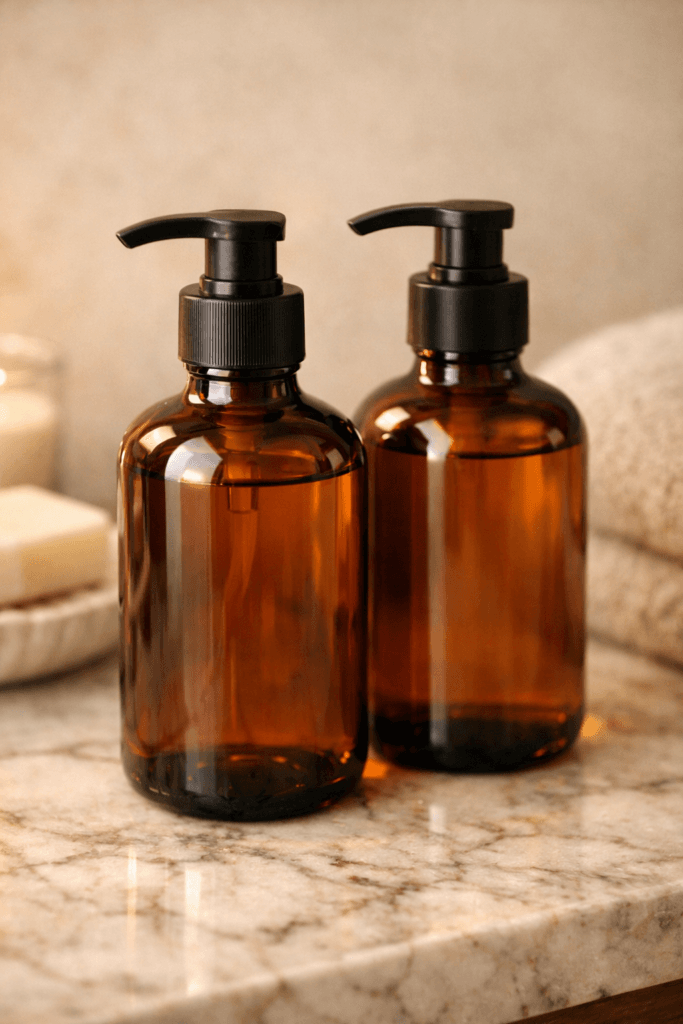
One underrated designer trick is decanting.
Matching bottles instantly remove label clutter and visual noise.
Neutral glass or amber bottles feel refined and cohesive.
Boutique hotels use this technique to maintain visual calm and consistency.
This is a small change with a big visual payoff.
Adding a Touch of Nature
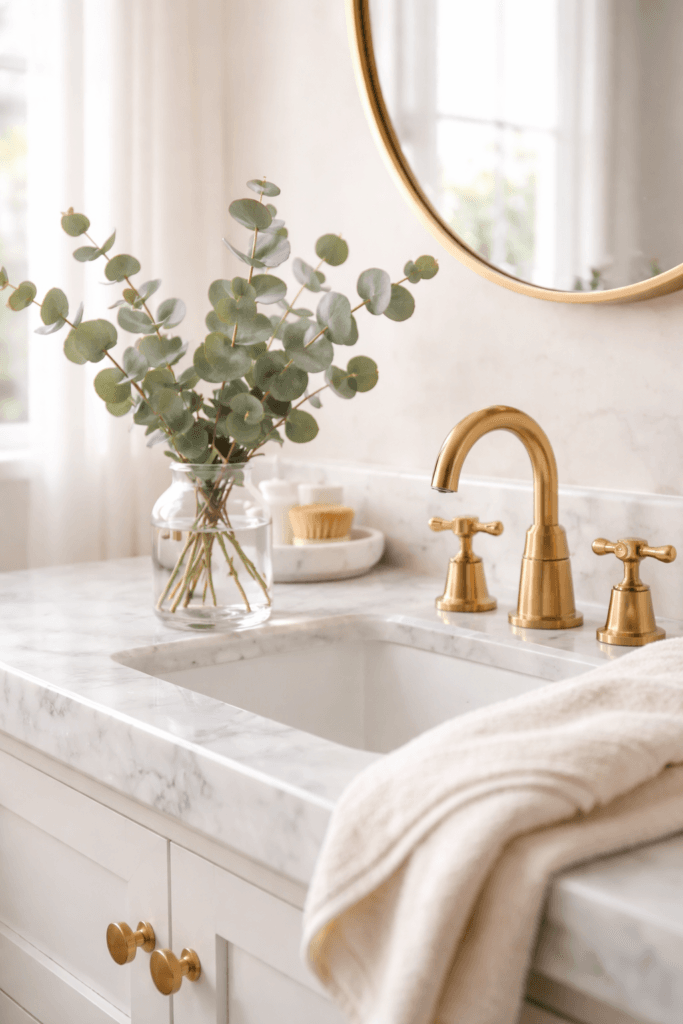
Bathrooms contain many hard surfaces: tile, glass, metal, and stone.
A natural element softens the space.
Options include:
• Eucalyptus stems
• Olive branches
• Faux greenery
• Small floral arrangements
• Mini potted plants
Nature adds warmth and contrast without clutter.
Even a single stem in a small vase can shift the mood.
Mirror Styling Matters More Than People Think
A mirror is not just functional.
It’s a design anchor.
Mirrors:
• Reflect light
• Expand space
• Double visual impact
• Add softness to a room
Round and arched mirrors are trending because they break up sharp lines and feel calming.
They also photograph beautifully — which matters for Pinterest.
Towels as Decor (Hotel Secret)
Luxury hotels treat towels as decor.
Thick, plush white towels instantly signal spa energy.
Roll or stack two to three neatly.
White feels:
• Clean
• Calm
• Timeless
• High-end
Avoid bright colors or busy patterns if your goal is a designer look.
The Color Palette That Always Looks Expensive
Luxury vanities rarely use many colors.
They rely on:
• White
• Cream
• Beige
• Soft gray
• Warm brass
• Natural wood tones
These tones reflect light and feel calming.
Too many colors compete for attention.
Luxury spaces avoid that.
Small Vanity? You Can Still Do This
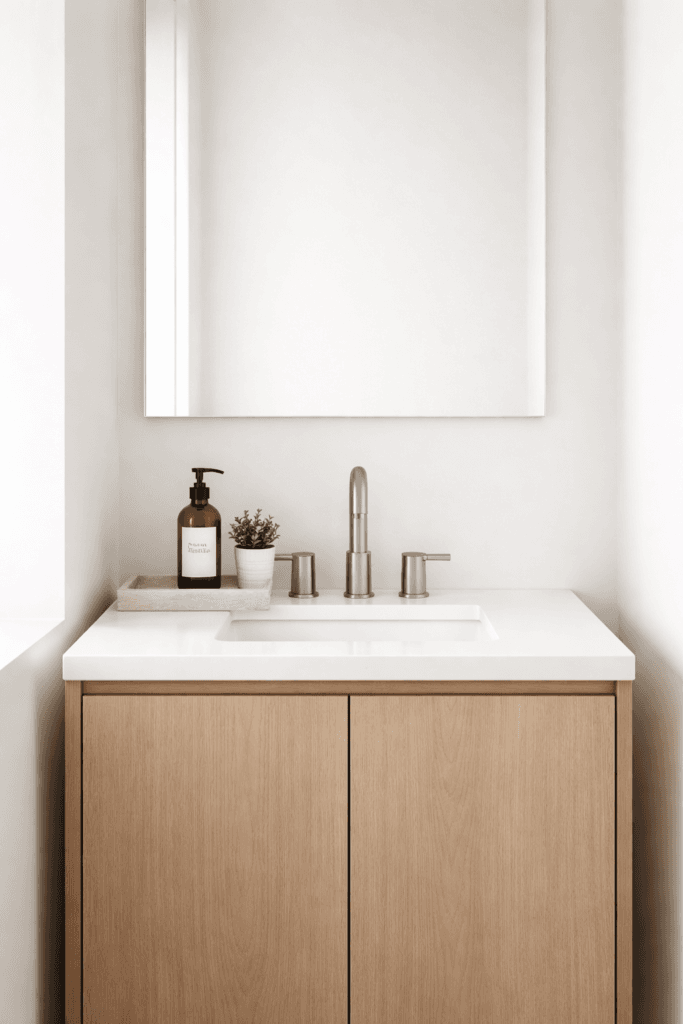
You don’t need a large vanity to achieve this look.
Small vanities benefit even more from editing.
Try:
• One tray
• One candle
• One soap dispenser
• One small plant
Negative space makes small areas feel larger and more refined.
Budget vs. Splurge
Smart styling is about balance.
Splurge On:
• Lighting
• Mirror
• Countertop material
Save On:
• Decor
• Containers
• Styling accessories
High impact doesn’t require high spending.
Why This Trend Has Staying Power
This isn’t a fast trend.
It’s rooted in:
• Minimalism
• Spa aesthetics
• Intentional living
• Timeless materials
These principles don’t expire.
That’s why this look ages well.
Bellencinista Notes
Designer trick: leave about 30% of your vanity empty. Negative space makes displayed items feel curated, intentional, and far more expensive.
Final Thoughts
A luxury vanity isn’t about price.
It’s about curation.
When your vanity feels intentional, your routines feel elevated.
And those small daily upgrades?
They quietly improve your everyday life.
That’s real luxury.