
The Designer Rug Rule That Instantly Elevates Any Room
July 21, 2026
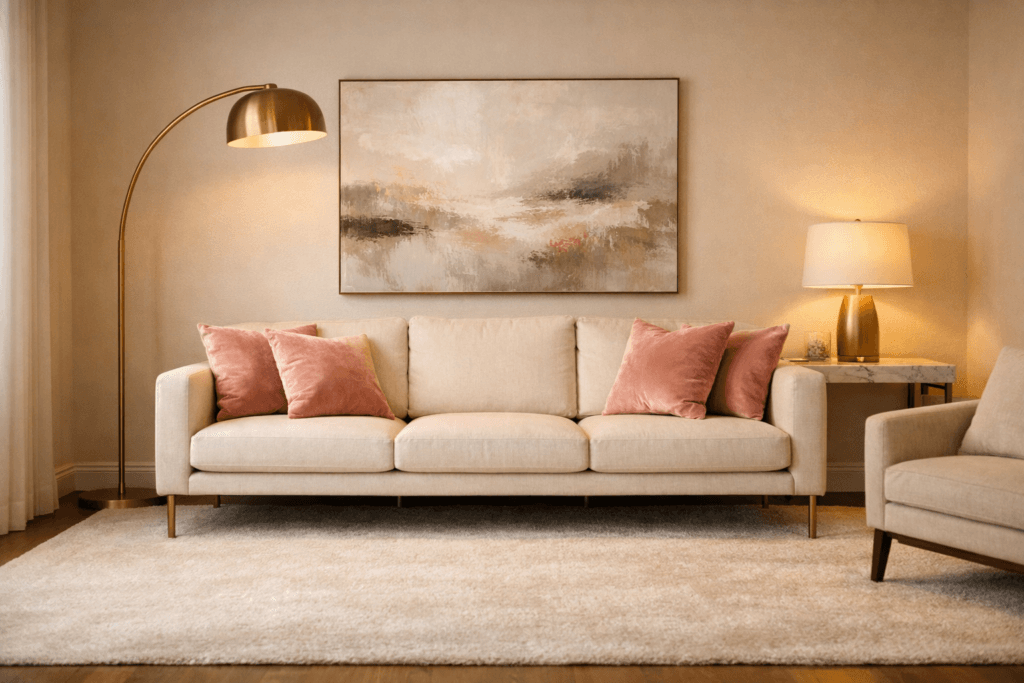
The Rug Is Not Decor — It Is Architecture
Trending Finds Readers Are Loving
Explore affordable luxe discoveries people are clicking on right now.
See What's TrendingA rug is not the finishing touch. In a well-designed room, it is the foundation.
When a space feels “off,” the problem is often not the sofa, the table, or the styling. Proportion is usually the issue, and the rug is the fastest way to correct it. Designers treat rugs as architectural anchors because they define the footprint of the room, organize furniture, and control visual scale.
The core designer rug rule is simple: the rug must be large enough to hold the seating arrangement, not just the coffee table.
Why “Postage Stamp” Rugs Lower the Entire Room
Undersized rugs create a floating effect. Furniture looks disconnected. The room loses cohesion, and cohesion is the visual signal of refinement.
Architectural Digest has repeatedly emphasized that rug size should be determined by furniture placement, not by the empty floor area around it. That framing matters because it shifts your decision-making from “what fits” to “what looks designed.” See their sizing guidance here: Architectural Digest rug size guide. :contentReference[oaicite:0]{index=0}
The Front-Leg Rule That Fixes Most Living Rooms
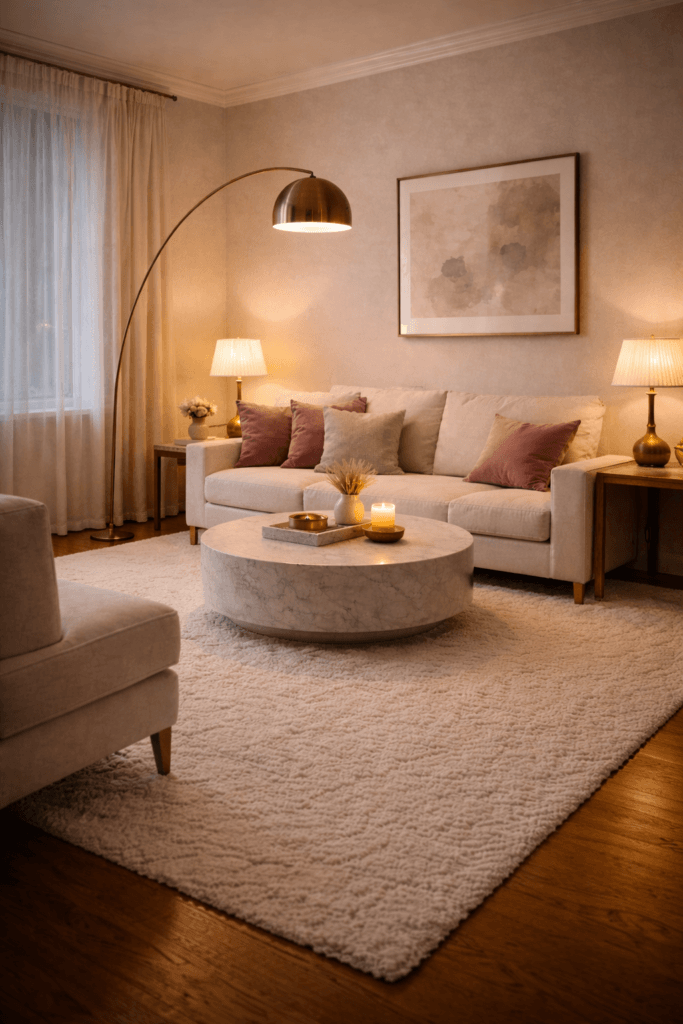
If you implement only one rug rule in a living room, use this: place the rug so the front legs of the main seating pieces sit on it.
This instantly makes the layout feel intentional because the furniture shares one “platform.” The room reads as a single composition rather than separate objects placed near each other.
House Beautiful’s placement advice aligns with this proportional approach and stresses choosing a larger rug when possible. Their room-by-room placement guide is a helpful reference point: House Beautiful rug placement guide. :contentReference[oaicite:1]{index=1}
Rug Size Is a Visual Multiplier
A correctly scaled rug makes a room appear larger, not smaller.
Many homeowners fear “covering too much floor,” but that instinct often backfires. More visible flooring does not automatically read as more spacious. A larger rug creates a continuous foundation, which reduces visual fragmentation and increases perceived scale.
If you want to connect this rug strategy to your broader interior framework, keep your internal linking clean and consistent. Reference the pillar article naturally within your sections, such as: How to Make a Home Look Expensive on a Budget.
Soft Glam Translation: Blush + Gold Needs a Stable Base
Blush and gold can read elevated or overly decorative depending on grounding.
An ivory, warm beige, or soft greige rug stabilizes the palette. Texture then becomes the luxury signal: a dense wool blend, a low-pile woven pattern, or a subtle hand-knotted look. With a stable base, gold finishes appear intentional instead of flashy.
In Part II, we will apply the rug rule room-by-room and simplify decision-making with measurement logic that stays designer-correct.
The Room-by-Room Rug Rule Designers Actually Use
The most effective rug strategy is consistent methodology, not guessing.
Designers measure the seating footprint first, then select rug size to support it. That approach protects you from the two most common mistakes: rugs that stop short of furniture and rugs that ignore circulation.
Living Room: Anchor the Entire Conversation Zone
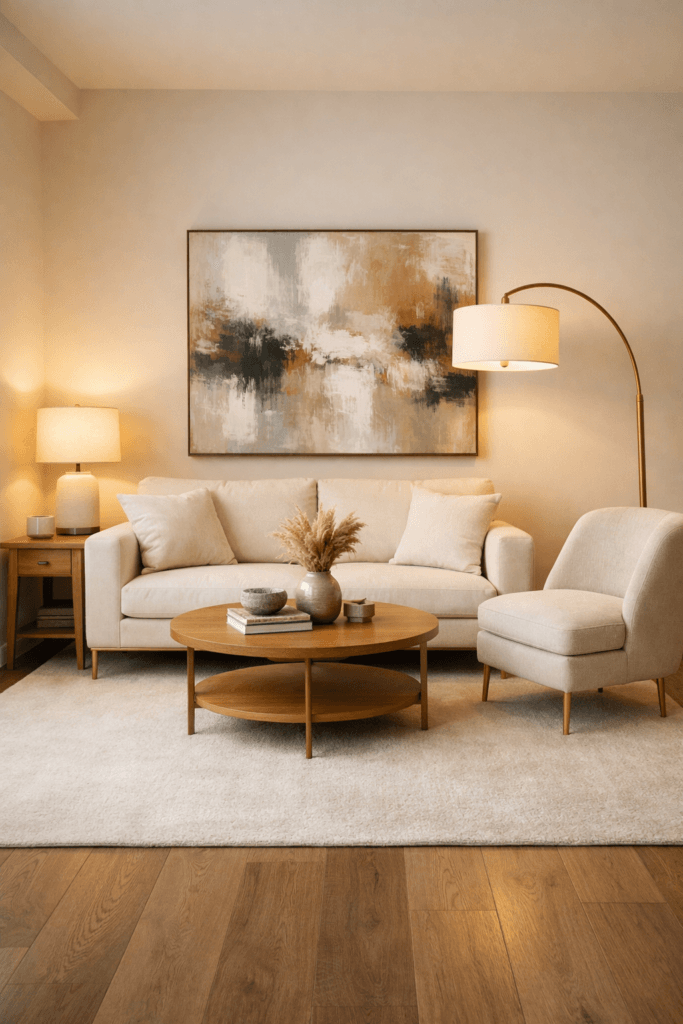
Start with your largest piece, usually the sofa.
The rug should extend beyond the sofa on both sides and sit under the front legs at minimum. In many standard layouts, 8×10 or 9×12 becomes the practical “designer default,” which is also noted in popular sizing references. The Spruce summarizes common living room sizes and planning considerations in its rug guides, including the frequent use of 8×10 and 9×12 for typical spaces: The Spruce: Ultimate Rug Size Guide. :contentReference[oaicite:2]{index=2}
If your room is small, the rule still holds. Scale does not disappear just because square footage is limited. A properly sized rug often makes compact rooms feel more premium because it creates one unified base.
Dining Room: The Chair-Pull Rule
Dining rugs are not sized to the tabletop. They are sized to the chair movement.
When chairs pull back, all legs should remain on the rug. That prevents wobble, protects flooring, and maintains visual alignment. The Spruce recommends adding at least 24 inches around a rectangular dining table to accommodate chair pull-back. Use this as a reliable planning benchmark: The Spruce: Dining Room Rug Size Rule. :contentReference[oaicite:3]{index=3}
Bedroom: Frame the Bed, Not the Floor
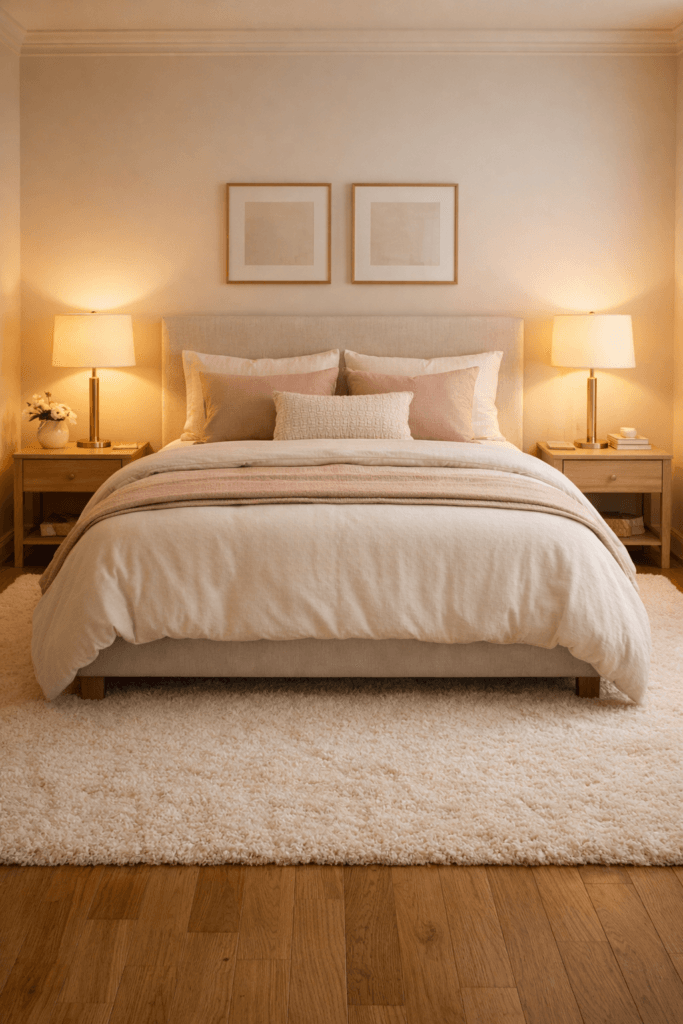
A bedroom rug should create a soft landing zone.
Two designer-friendly layouts work well: place a large rug under the bed so it extends at least 18–24 inches on the sides, or use runners on both sides if a large rug is not viable. The key is that your feet land on softness, and the bed feels anchored rather than floating.
Hallways and Entry: Use Rhythm, Not Random Sizes
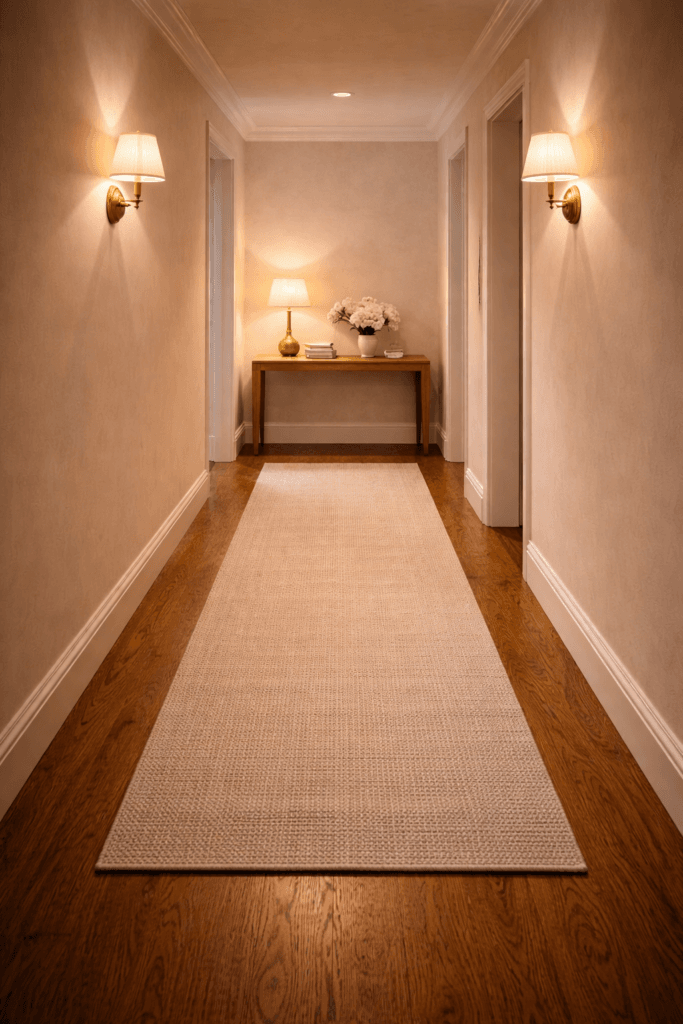
In narrow spaces, runners work because they reinforce direction.
Leave a small border of floor visible on both sides to keep the runner centered and crisp. Consistency matters more than pattern complexity here, especially if the rest of the home is soft glam and cohesive.
Internal Linking That Builds Cluster Authority
This article should reinforce your connected topics, not compete with them.
Place a strategic internal link where it naturally supports the reader’s next step, such as lighting structure: Designer Lighting Rule That Instantly Makes a Home Look Expensive. The visual payoff is strong because rugs and lighting work together to create depth.
Part III will cover the finishing layer: texture, pads, layering, and the evening “luxury test” that reveals whether your rug choice is truly working.
The Luxury Finish — Texture, Layering, and the Evening Test
A rug can be the correct size and still feel underwhelming if the finishing decisions are weak.
Luxury is signaled by texture, stability, and cohesion. Those three factors determine whether the rug reads as intentional or temporary.
Texture: The Upgrade That Does Not Require More Color
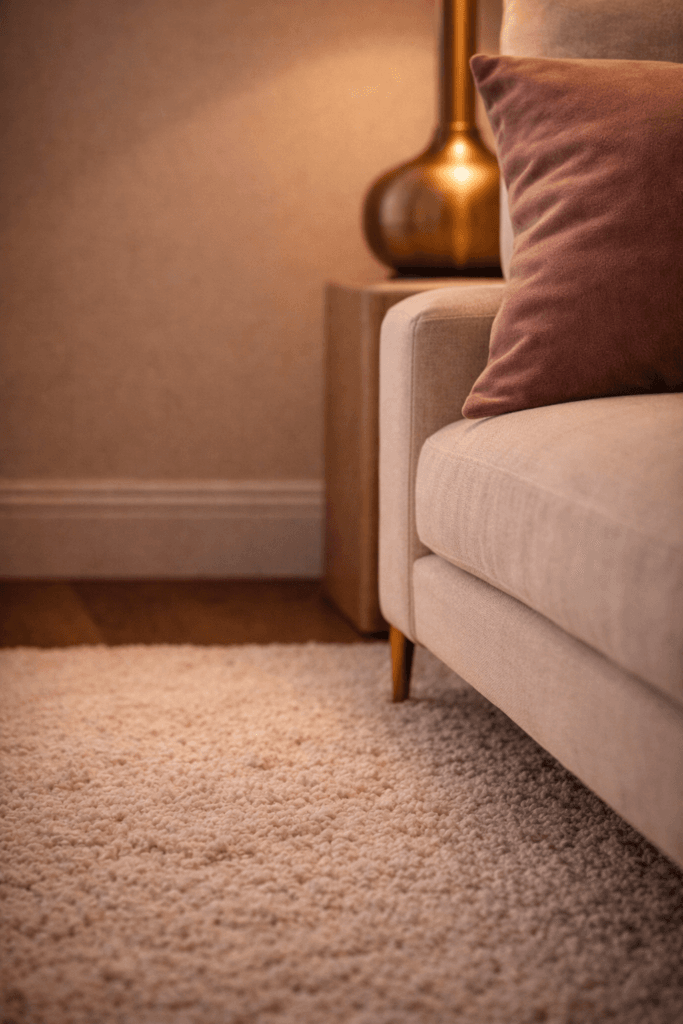
Texture creates richness without visual noise.
In a blush and gold palette, texture is what prevents the room from feeling overly styled. Wool blends, subtle woven patterns, and low-contrast tonal designs photograph beautifully and feel grounded. High contrast patterns can work, but they must align with the overall system of repetition across the home.
Rug Pads: The Quiet Detail Designers Always Include
A rug that shifts is a rug that looks cheap.
Stability is part of perceived quality. A proper rug pad improves grip, reduces wrinkling, and adds underfoot density. That density changes how the room “feels,” which influences how it is perceived.
Layering Rugs Without Creating Clutter
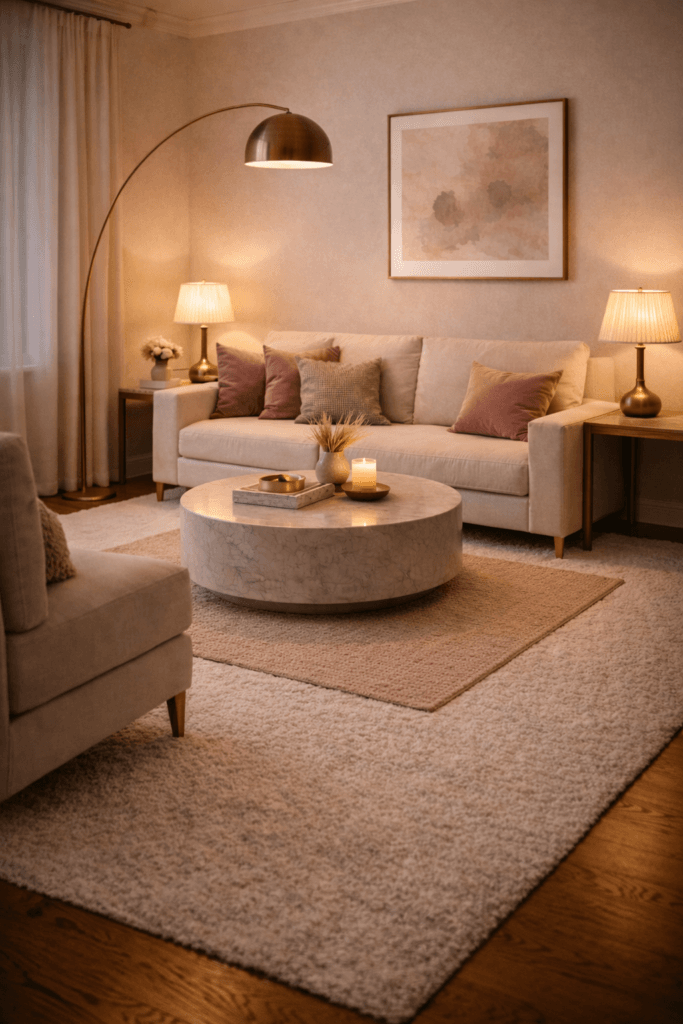
Layering is effective when the base rug is neutral and the top layer is controlled.
Use a large foundational rug for scale, then add a smaller accent for texture contrast. Keep the palette disciplined. If the layered rug introduces a new tone, repeat that tone elsewhere so it feels integrated rather than accidental.
The Evening Luxury Test
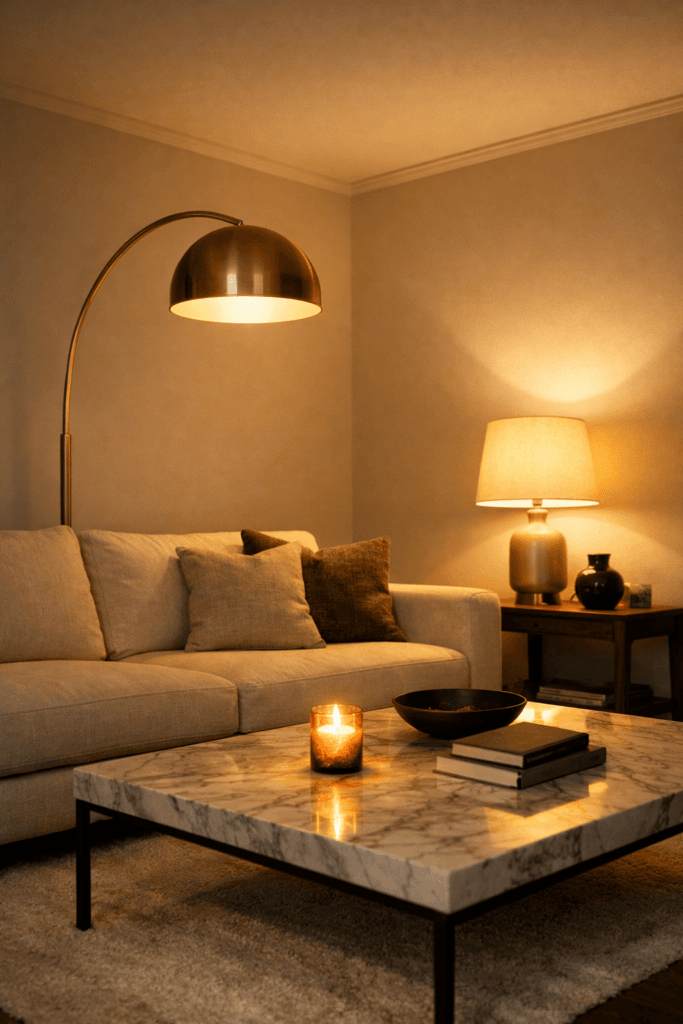
Run this test after your rug is placed.
Turn off overhead lighting. Use only layered lamps and accent sources. Observe whether the room feels calm and dimensional. Pay attention to how the rug absorbs or reflects warm light and whether the seating zone looks unified.
If the space still reads flat, the rug may be too small, too thin, or too high-contrast for the room’s lighting structure. When depth is missing, scale and lighting are usually the culprits working together.
For a broader principles framework that connects proportion and rhythm, Homes & Gardens’ discussion of interior design principles is a useful reference: Homes & Gardens: Principles of Interior Design. :contentReference[oaicite:4]{index=4}
The Rug Rule in One Line
Choose the rug that supports the furniture layout, then let texture and cohesion do the luxury work.
When the rug is scaled correctly, the room becomes quieter. When the room becomes quieter, it reads more expensive.
That is the designer advantage: not more decor, but better structure.
Bellencinista Notes
Choose the rug based on your seating footprint, not empty floor space. Anchor front legs, scale up when unsure, and prioritize texture over bold contrast. A properly sized rug creates cohesion, and cohesion is what makes a room feel expensive.