
TV Height Rule Designers Use to Make a Living Room Look Expensive
August 9, 2026

Trending Finds Readers Are Loving
Explore affordable luxe discoveries people are clicking on right now.
See What's TrendingA television can quietly determine whether a living room feels refined or chaotic.
When mounted too high, the entire seating area shifts out of alignment. When positioned correctly, the room feels calm and intentional.
Most mounting mistakes happen because homeowners center the television on the wall instead of centering it on the viewer.
The Eye-Level Rule
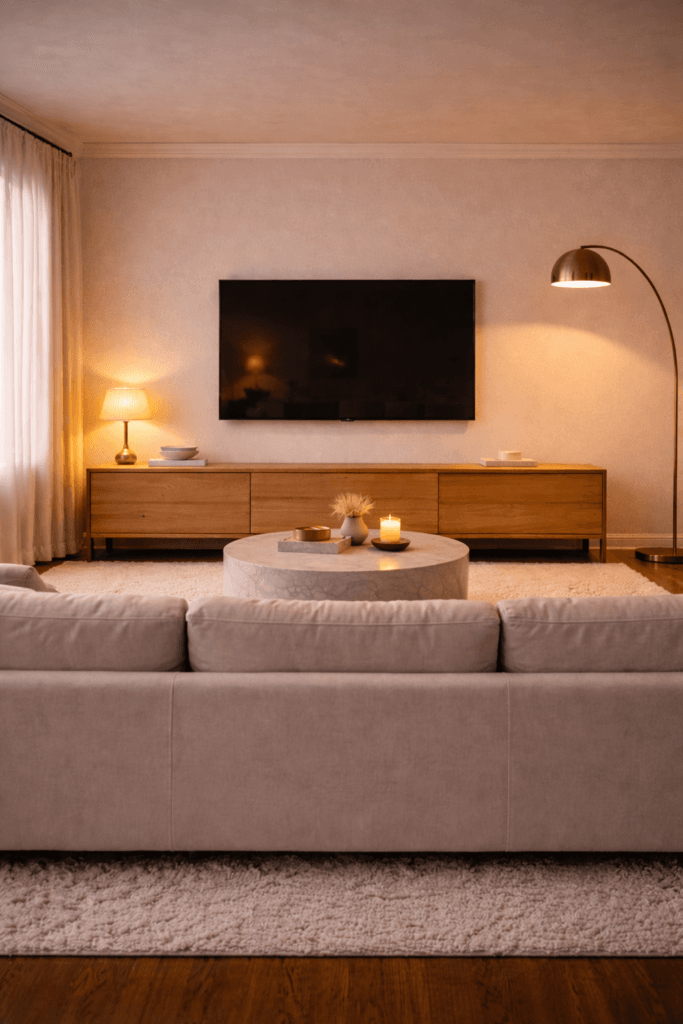
Designers mount televisions so the center of the screen sits at seated eye level.
For most sofas, seated eye height falls between 40 and 42 inches from the floor.
That measurement becomes the anchor point.
If the center of the TV sits dramatically above that range, viewers must tilt their heads upward. Subtle strain follows. The room feels slightly off.
Comfort influences perception. When the body relaxes, the space feels better designed.
Why Mounting Too High Looks Cheap
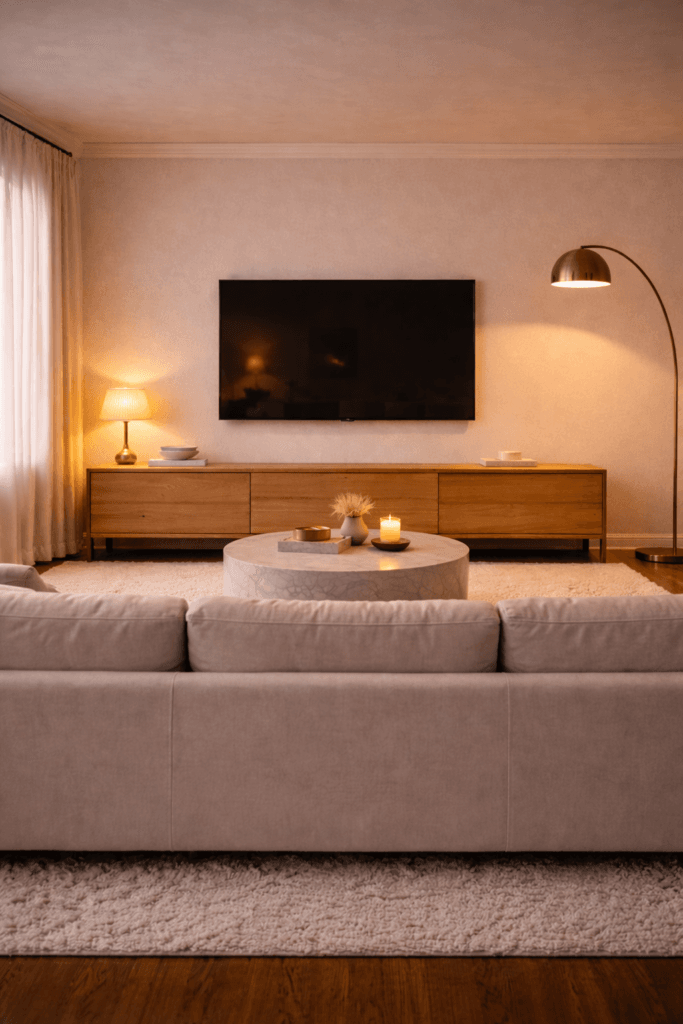
Mounting a television too high creates visual imbalance.
The vertical weight shifts upward, leaving the lower half of the wall visually empty. This imbalance disconnects the screen from the seating zone.
Designers treat the TV as part of the furniture composition rather than as separate wall decor.
If it floats above the seating arrangement without structural grounding, the room feels disjointed.
This principle mirrors the proportional logic explained in the sofa placement rule, where alignment and anchoring define refinement.
The Fireplace Problem
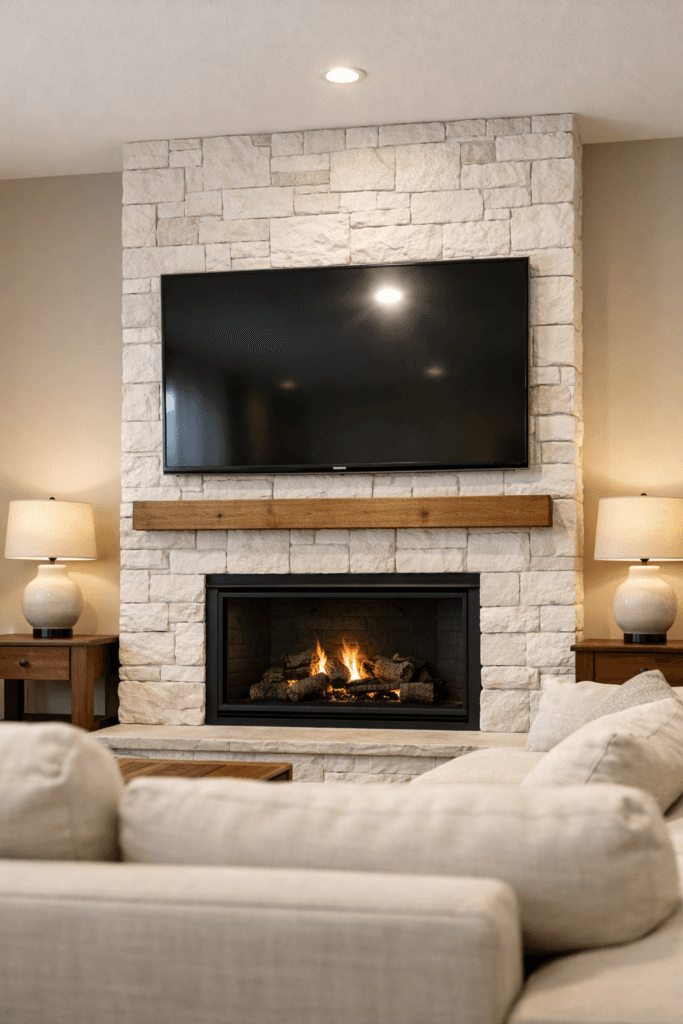
Many mounting errors occur above fireplaces.
While visually convenient, fireplaces often sit too high for ideal viewing alignment.
When a television is placed significantly above eye level, comfort declines and proportion suffers.
Designers either lower the mantel visually, use a mount that tilts downward, or position the television on an adjacent wall when scale demands it.
Structure should never be sacrificed for symmetry alone.
The Console Anchor
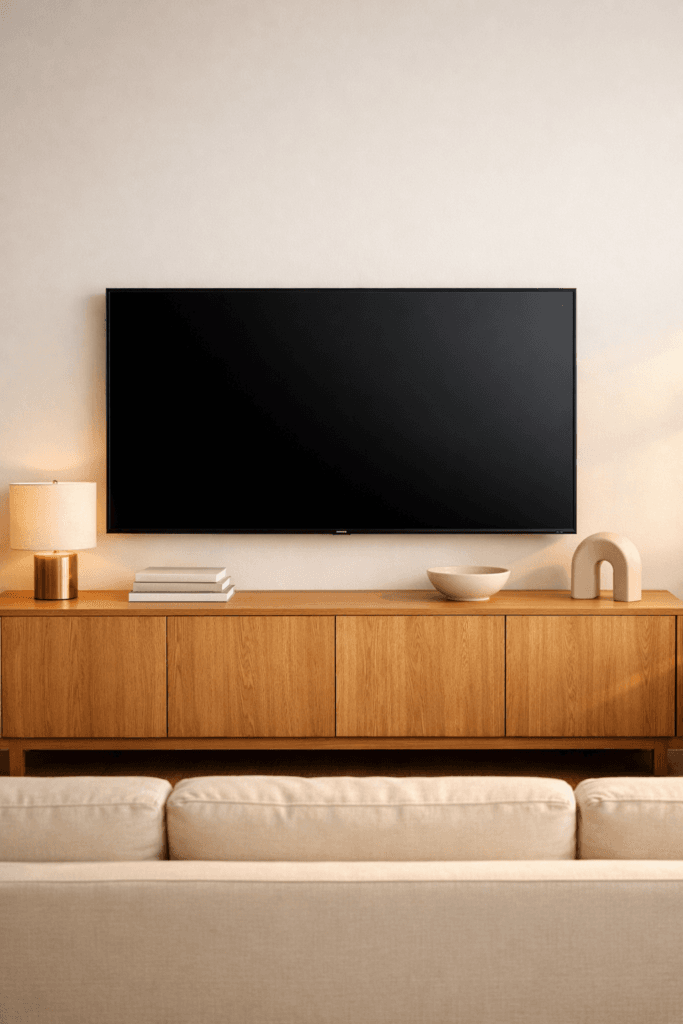
Even wall-mounted televisions benefit from visual anchoring.
A properly scaled console beneath the screen grounds the composition.
The console should measure wider than the television and align proportionally with surrounding furniture.
This anchoring approach reflects the logic outlined in the coffee table size rule, where central proportion stabilizes the room.
Floating screens without grounding elements often feel temporary rather than tailored.
Spacing Between Console and TV
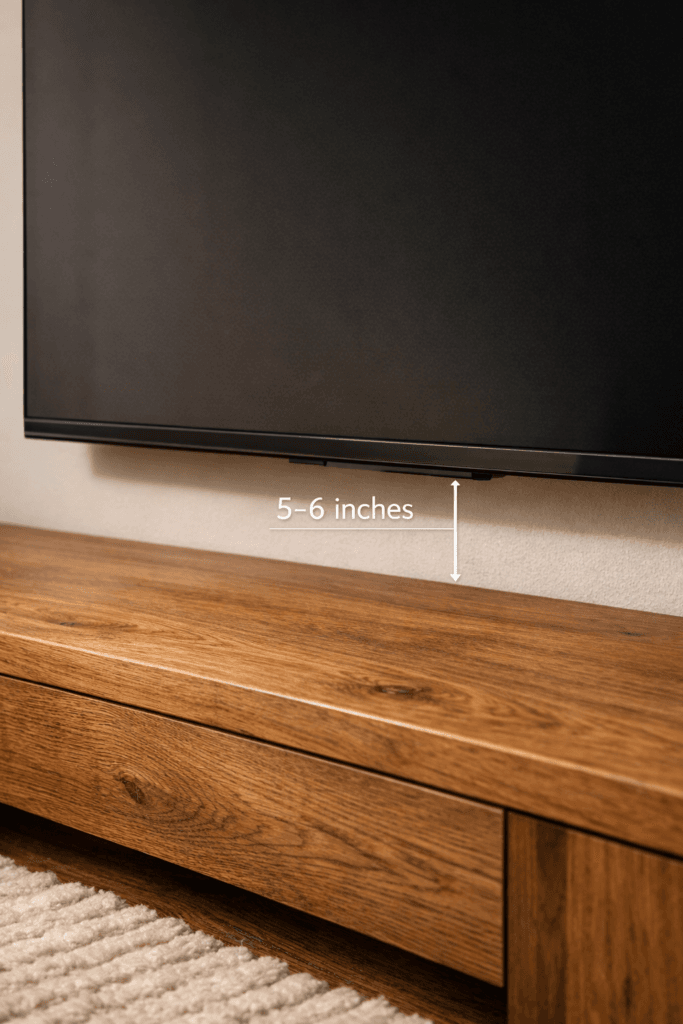
The vertical gap between the console and the television should feel intentional.
Excessive space creates fragmentation. Too little clearance feels cramped.
A balanced gap — often between 4 and 8 inches when mounted — maintains cohesion without visual congestion.
Small adjustments in spacing dramatically influence perception.
The Viewing Distance Rule
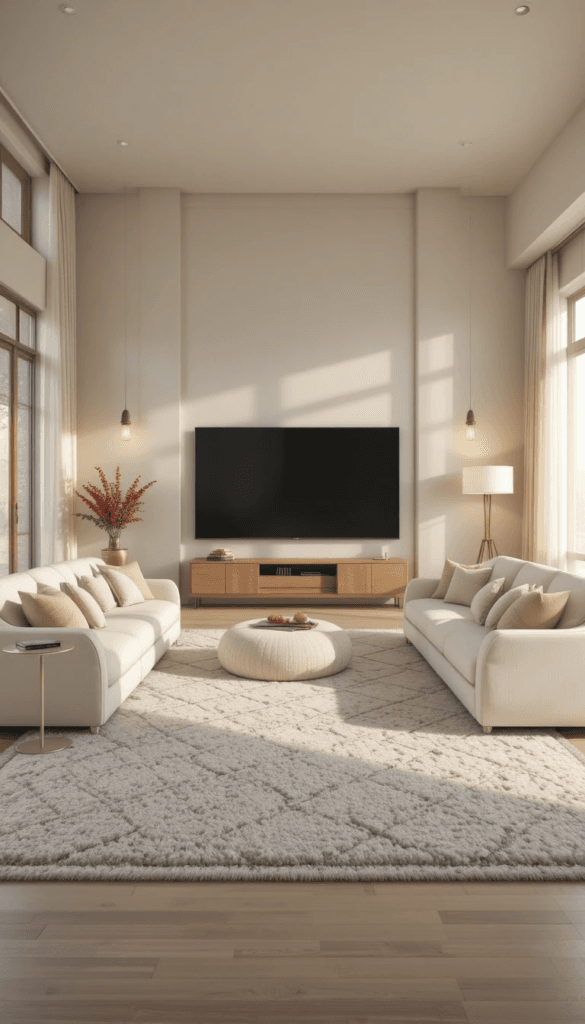
Screen size and seating distance must align.
A television that is too large for the room overwhelms the wall. One that is too small feels insignificant.
According to viewing guidelines referenced by organizations such as RTINGS, optimal viewing distance depends on screen size and resolution.
Designers factor these ratios into placement decisions.
The Structural Reset
Before upgrading furniture or repainting walls, evaluate television height.
Measure seated eye level. Check alignment with the sofa. Assess console proportion.
Stop centering the screen on the wall.
Center it on the viewer instead.
That adjustment alone can transform the living room’s balance.
Sectionals Change the Math
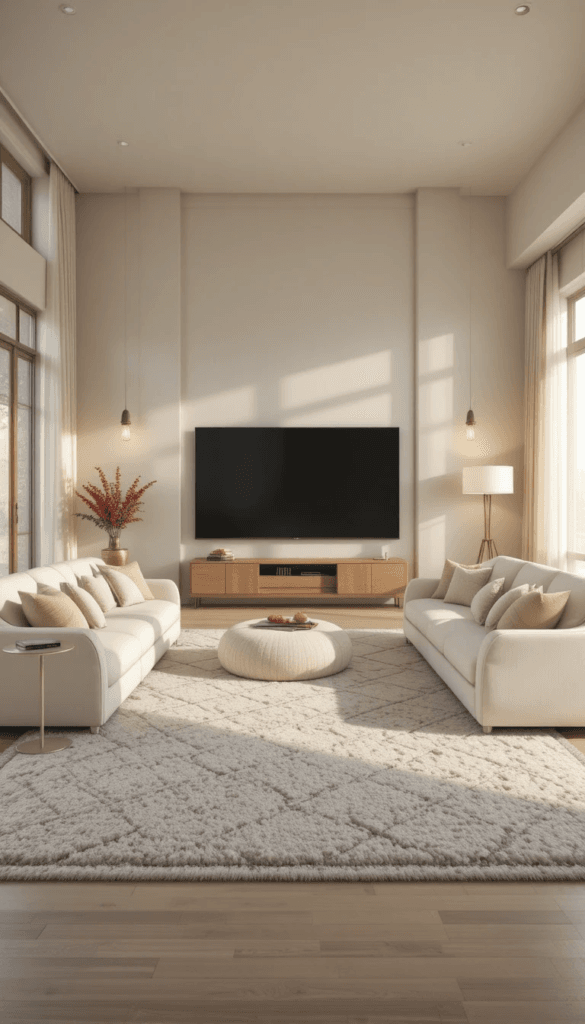
Not every living room is built around a straight three-seat sofa.
Sectionals alter viewing angles and seated eye alignment. When a sectional wraps the corner of a room, viewers may sit farther back than in traditional layouts. That additional distance slightly adjusts ideal screen height and size.
The key principle remains consistent: measure from the primary seated position, not from the floor upward in isolation.
If the majority of viewers recline or lounge lower into cushions, the television should drop slightly to maintain eye-level alignment.
Designers always measure the human body first. Furniture is secondary.
Recliners and Deep Seating
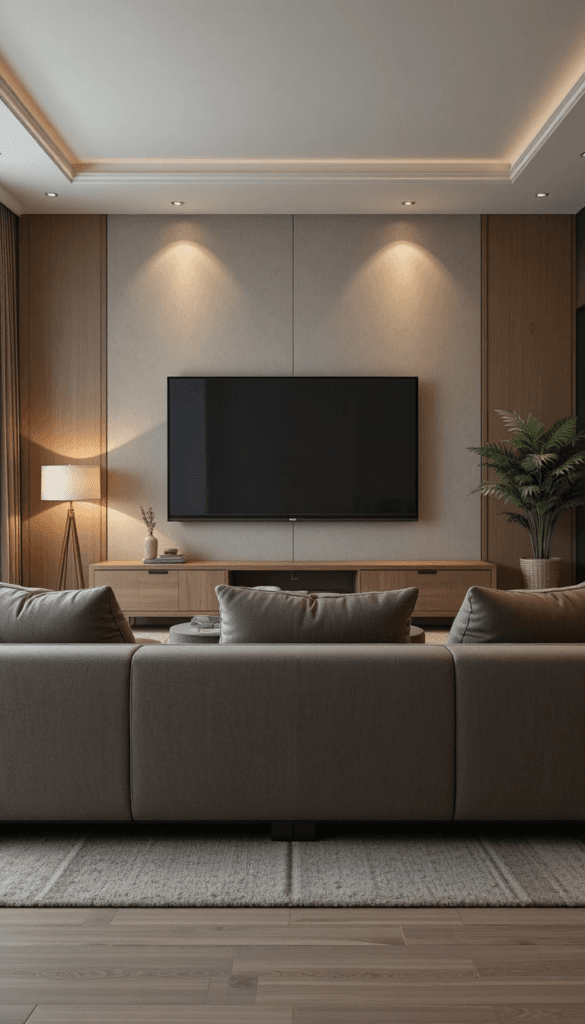
Deep modern sofas and recliners subtly shift the angle of vision.
When seated lower and leaning back, the eye line tilts upward. In those cases, a slightly higher mount may feel comfortable. The adjustment, however, should be minimal.
Extreme elevation still breaks proportion and causes visual top-heaviness.
Balance depends on comfort, not guesswork.
Open Concept Living Rooms
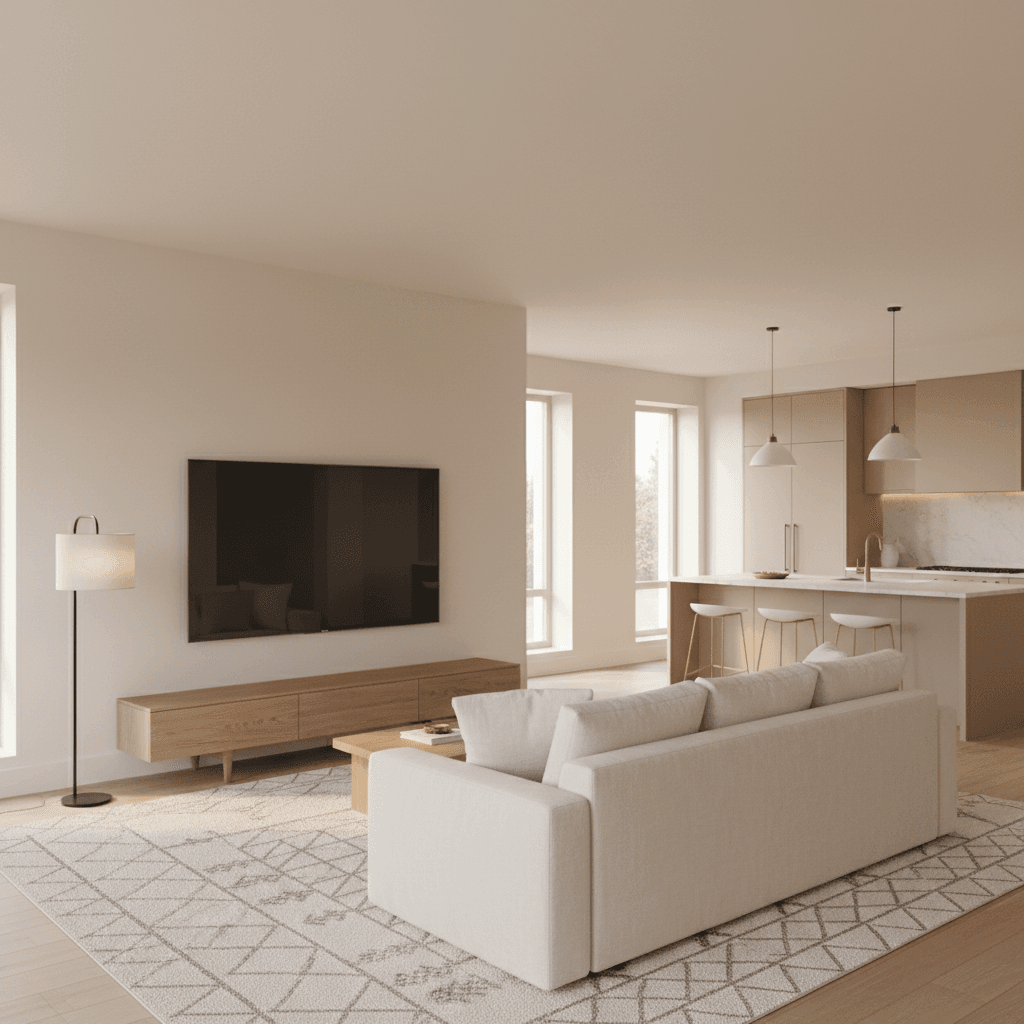
Open layouts introduce another challenge: the television often shares visual space with kitchens, dining areas, or entryways.
In these environments, mounting too high exaggerates the sense of vertical emptiness beneath the screen.
A well-scaled console grounds the entire wall composition and visually ties the media wall to the seating zone.
This anchoring logic mirrors the structural alignment principles discussed in the rug size rule, where scale connects furniture pieces into one cohesive footprint.
Even in expansive rooms, the TV should feel integrated, not elevated like signage.
The Frame TV Illusion
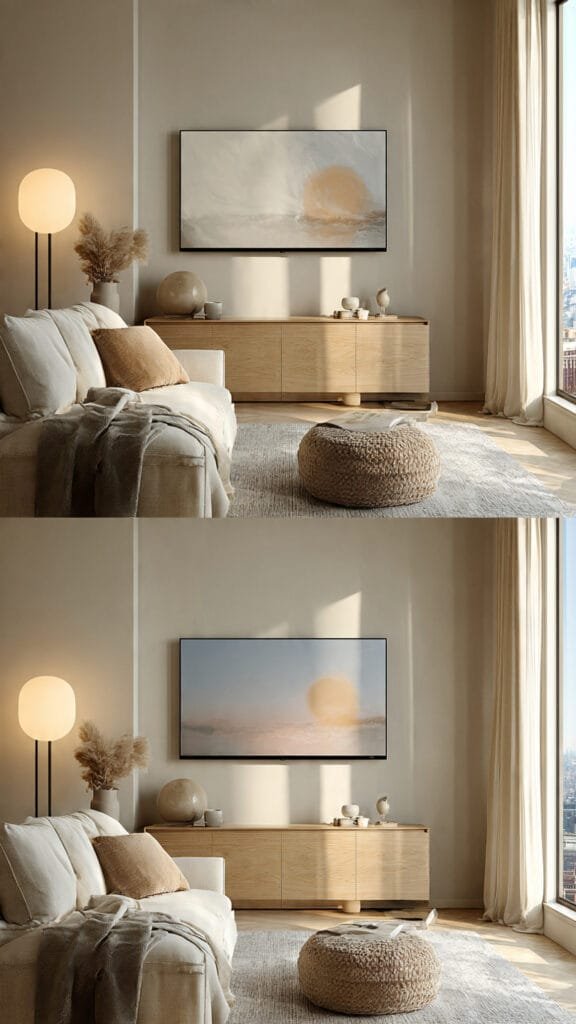
Many homeowners attempt to disguise televisions as artwork.
Frame-style screens can work beautifully — but only when mounted at art-level height appropriate for seated viewing.
Hanging a television high because “art hangs higher” confuses two different design logics.
Art is viewed while standing. Television is viewed while seated.
Designers never blend those two rules without adjusting proportion.
Publications such as House Beautiful consistently emphasize alignment with lifestyle function over aesthetic trend.
Built-Ins and Media Walls
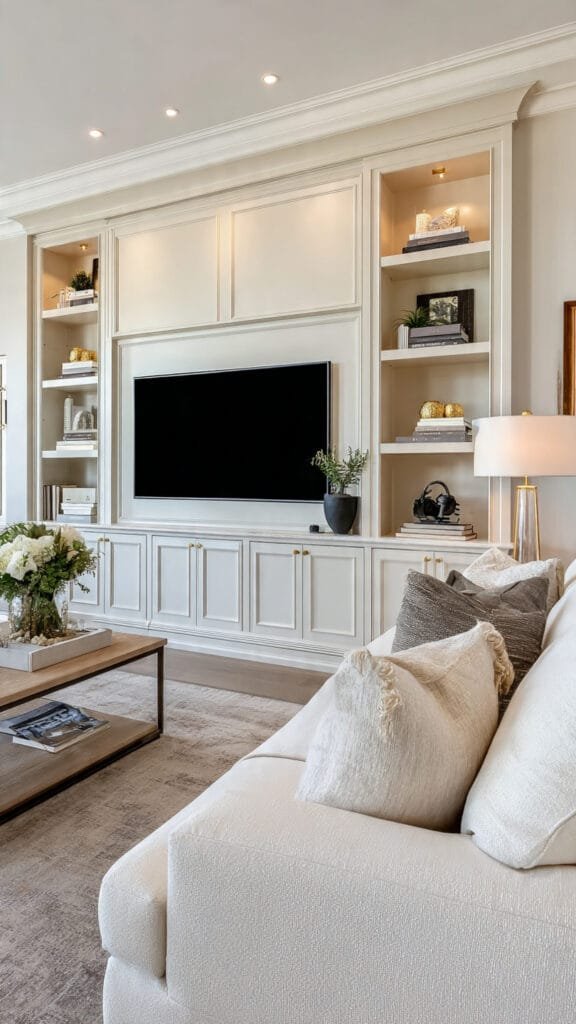
Custom built-ins often create the illusion that the television must sit in the exact vertical center of cabinetry.
In reality, cabinetry should be designed around correct screen height — not the other way around.
When millwork forces the television upward, the entire wall begins to feel imbalanced.
The most refined media walls place the television at seated eye level and adjust shelving, paneling, or art above accordingly.
Structure leads. Decor follows.
The Mantel Conflict Solution
Fireplaces continue to cause proportion errors.
If the mantel height forces the screen too high, designers explore alternatives:
- Mounting on a side wall
- Using a low-profile tilt mount to correct viewing angle
- Reframing the fireplace wall with vertical paneling to visually lower the composition
- Choosing artwork above the fireplace instead of a screen
Comfort always outranks symmetry.
Wall Proportion and Vertical Weight
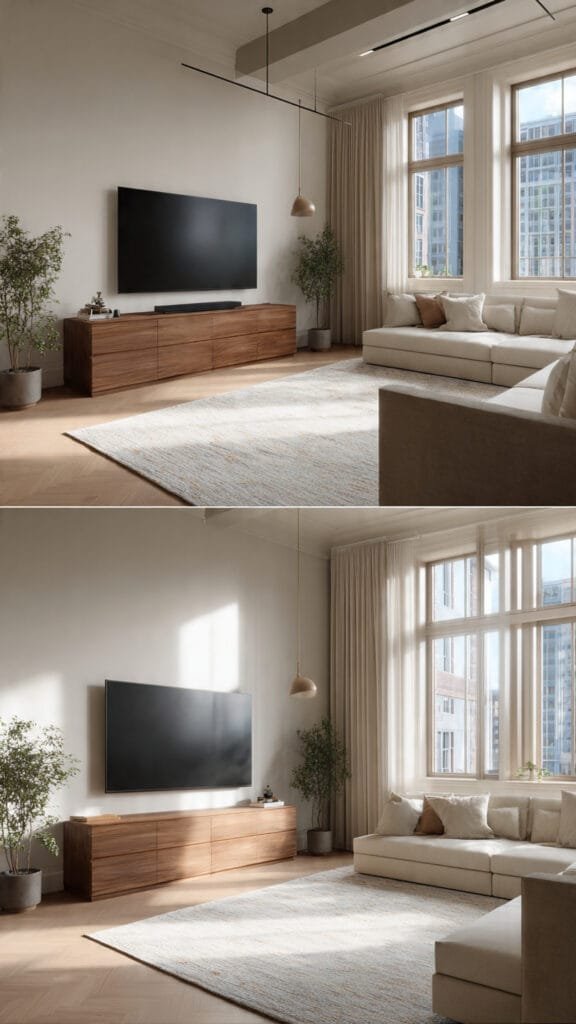
Mounting too high creates visual top-heaviness.
The upper half of the wall absorbs all the visual mass, leaving the lower half empty. That imbalance makes the room feel unfinished.
Designers distribute weight intentionally.
A correctly mounted television aligns with the sofa height, console width, and surrounding furniture proportions. The entire wall reads as one composition rather than separate floating pieces.
This same vertical control principle appears in the curtain height rule, where rod placement influences perceived ceiling height.
Vertical decisions quietly determine whether a space feels elevated or improvised.
Lighting and Screen Placement
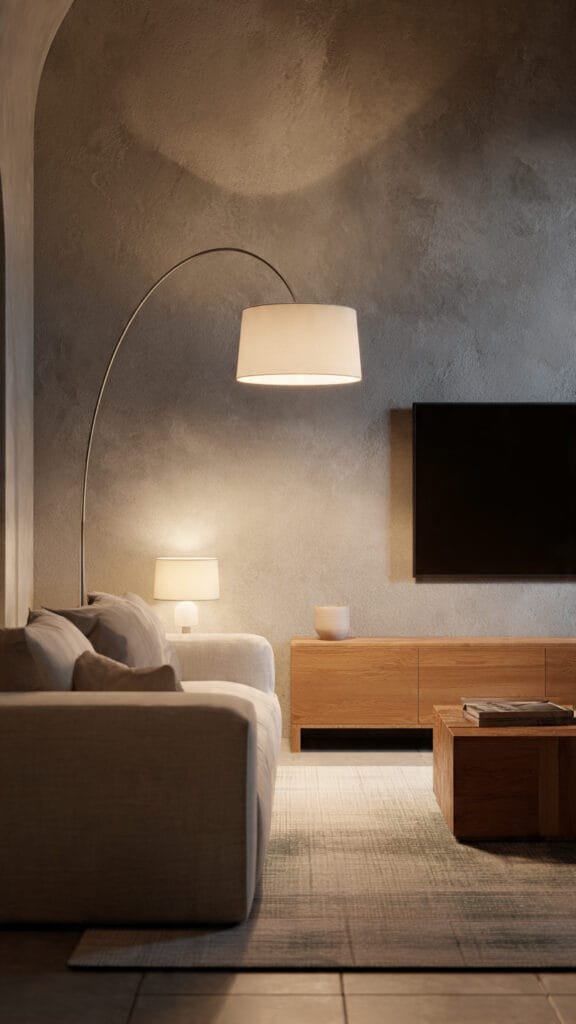
Television height also interacts with lighting.
If mounted too high, glare from ceiling fixtures increases. Reflections from windows become more noticeable.
Lower placement reduces glare and aligns better with layered lamp lighting at sofa height.
For deeper insight into layered lighting structure, review the designer lighting rule, which explains how height variation affects atmosphere.
Television placement should integrate into that lighting plan — not disrupt it.
The Real Test
Sit down.
Relax naturally.
Look straight ahead.
If your gaze meets the center of the screen without lifting your chin, the height is correct.
If your head tilts upward, the mount is too high.
Small corrections create large perception shifts.
7 Common TV Mounting Mistakes That Quietly Lower Perceived Value
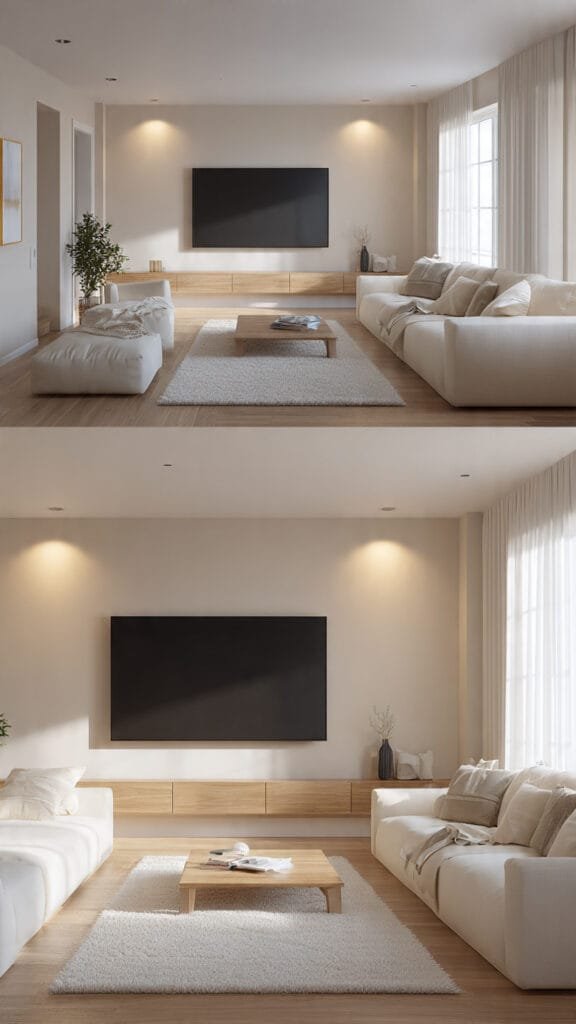
Television placement rarely feels dramatic in the moment. The mistake often appears subtle. Over time, however, proportion errors accumulate and begin to affect the entire room.
Designers tend to spot these issues instantly.
1. Mounting Above Natural Eye Level
The most frequent error remains vertical elevation.
When the screen center sits well above 42 inches from the floor in a standard living room, seated viewing becomes strained. The body compensates by lifting the chin. That tension translates into visual discomfort.
Comfort influences perception. Spaces that feel physically relaxed appear more refined.
2. Ignoring Console Proportion
A television without a properly scaled console beneath it feels unsupported.
The console should be wider than the screen and visually substantial enough to anchor it. If the base feels too narrow, the composition loses balance.
This anchoring principle aligns with the logic explained in the coffee table size rule, where proportion stabilizes the room’s center.
3. Leaving Excessive Vertical Gap
Large empty space between the console and the screen creates fragmentation.
A controlled gap — typically between four and eight inches — keeps the arrangement cohesive. Too much space causes the television to feel detached from the furniture below.
4. Choosing the Wrong Screen Size for the Wall
Scale matters in both directions.
An oversized screen overwhelms a modest wall. A small screen floats awkwardly inside a large composition.
Designers consider viewing distance, wall width, and surrounding furniture before finalizing screen dimensions. Reference viewing ratio guidelines from sources such as RTINGS to calculate appropriate sizing.
5. Centering the Screen on the Wall Instead of the Sofa
Walls are architectural elements. Sofas define the human experience.
If the screen aligns perfectly with the wall but sits off-center from the seating zone, the imbalance becomes noticeable. Designers align to the seating footprint first, not to drywall edges.
6. Mounting Above the Fireplace Without Adjustment
Fireplace installations often elevate screens too high.
Unless mantel height aligns with seated eye level, the television will sit above its ideal zone. In those situations, designers either relocate the screen or use tilt mounts to correct the viewing angle.
7. Ignoring Lighting Reflection
Glare can quietly reduce comfort and visual polish.
Mounting at improper height increases reflection from ceiling lights and windows. Lower placement integrates more seamlessly with layered lighting plans.
For a deeper breakdown of lighting height variation, revisit the designer lighting rule.
The Evening Comfort Test
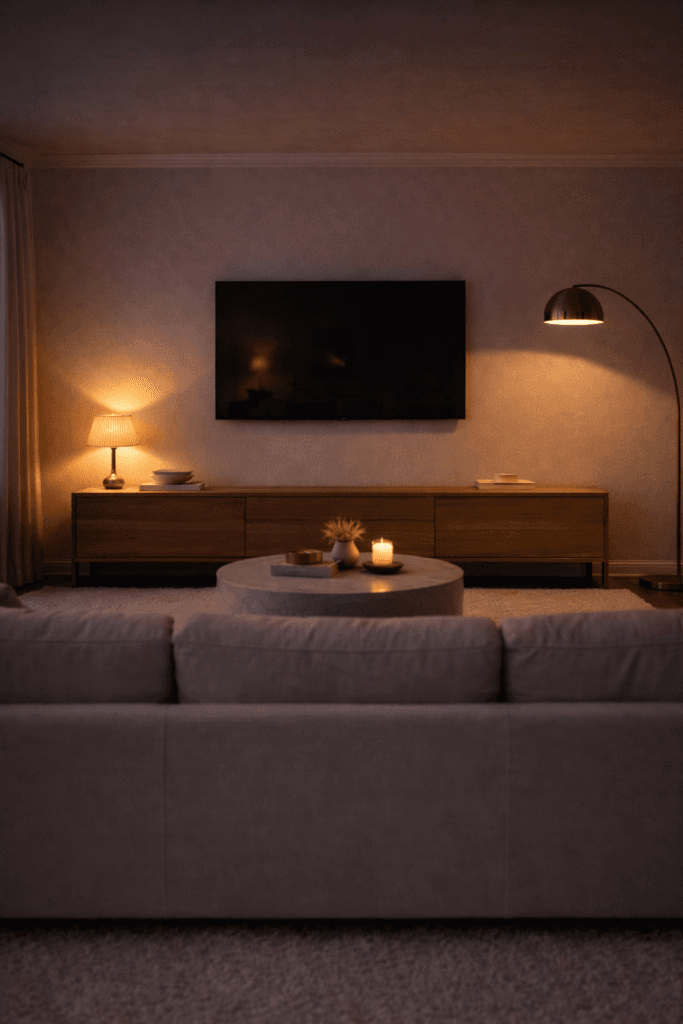
Design evaluation changes after sunset.
Turn off overhead fixtures. Leave only lamps and ambient lighting active. Sit naturally in your primary seat.
If your eyes align effortlessly with the screen center and glare remains minimal, the height works.
If your chin lifts or reflections distract, adjustment is necessary.
Proportion Checklist Before You Re-Mount
- Center of screen at seated eye level (approximately 40–42 inches)
- Console wider than television
- Four to eight inch vertical gap between console and screen
- Screen aligned with sofa footprint
- Viewing distance proportional to screen size
- Minimal glare from primary light sources
These guidelines may appear technical, yet the outcome feels intuitive. Rooms aligned to human scale always appear more expensive than rooms aligned to arbitrary wall symmetry.
Why This Rule Changes Everything
Televisions often act as the visual focal point of the living room.
When the focal point feels misplaced, the entire environment reads as slightly unsettled. When it aligns properly, the structure stabilizes.
Before replacing furniture, reconsider placement. Before purchasing new decor, verify proportion. Before repainting walls, measure seated eye level.
Structural refinement always precedes decoration.
The television height rule designers use is not complicated. It requires discipline, measurement, and respect for human comfort.
Mount to the viewer. Anchor to the furniture. Balance the wall.
The transformation feels immediate.
Bellencinista Notes
Mount to the viewer, not the wall. The center of your screen should meet seated eye level, with a console wide enough to anchor it visually. When proportion aligns with comfort, the entire room feels intentional rather than improvised.