
Stop Pushing Your Sofa Against the Wall (Designer Placement Rule)
August 4, 2026
Trending Finds Readers Are Loving
Explore affordable luxe discoveries people are clicking on right now.
See What's TrendingPushing a sofa against the wall feels logical.
It appears to create more space. It seems to open the center of the room. Many homeowners assume that perimeter placement makes a living room look larger.
In reality, it often has the opposite effect.
When a sofa is pressed flat against a wall, the seating area loses depth. The room becomes perimeter-heavy, meaning visual weight is concentrated along the edges rather than balanced across the floor plan.
Luxury interiors rarely hug the walls. Instead, designers float furniture strategically to create structure and proportion.
Why Wall-Hugging Shrinks a Room
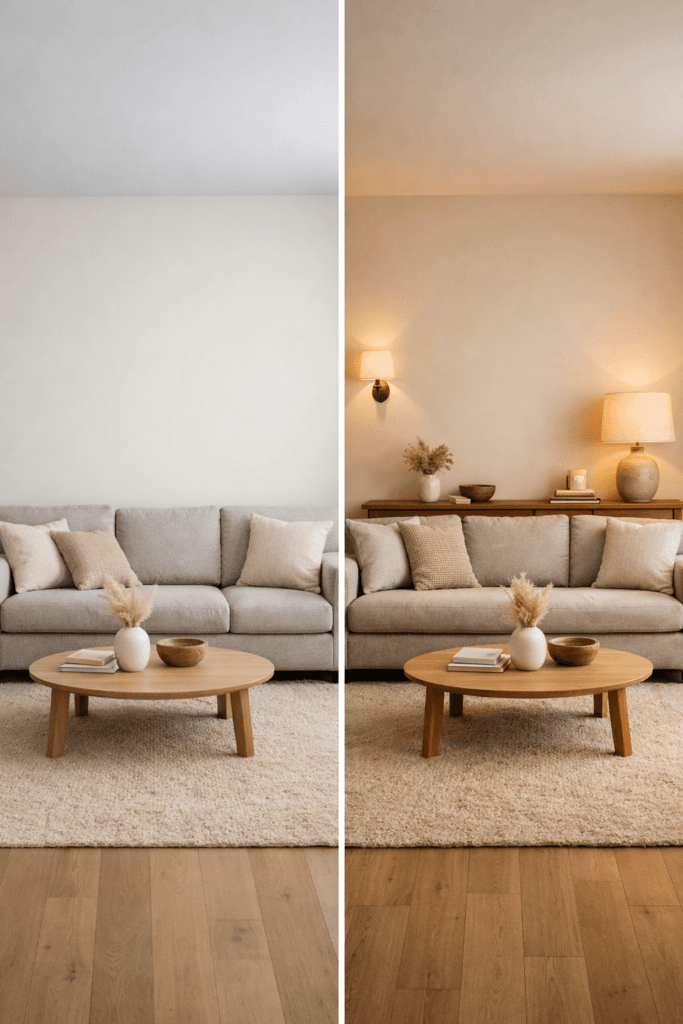
Rooms feel expansive when depth is layered.
When furniture lines the perimeter, the center becomes an empty void rather than an intentional zone. That void does not read as spacious. It reads as unfinished.
The eye travels from sofa to wall immediately without encountering dimension. Without layering, the room flattens visually.
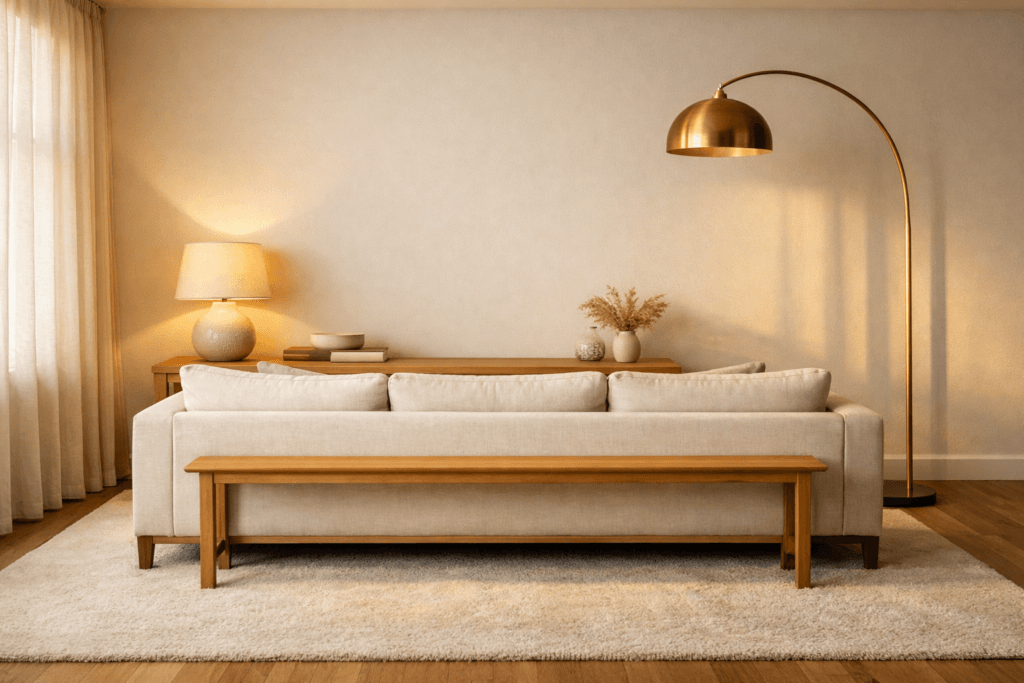
Floating a sofa even 6–12 inches away from the wall introduces shadow. Shadow introduces depth. Depth creates visual richness.
Publications such as Architectural Digest consistently feature living rooms where seating is intentionally pulled forward to create conversation areas and layered sight lines.
Scale and placement communicate intention more than square footage ever could.
The Perimeter Illusion
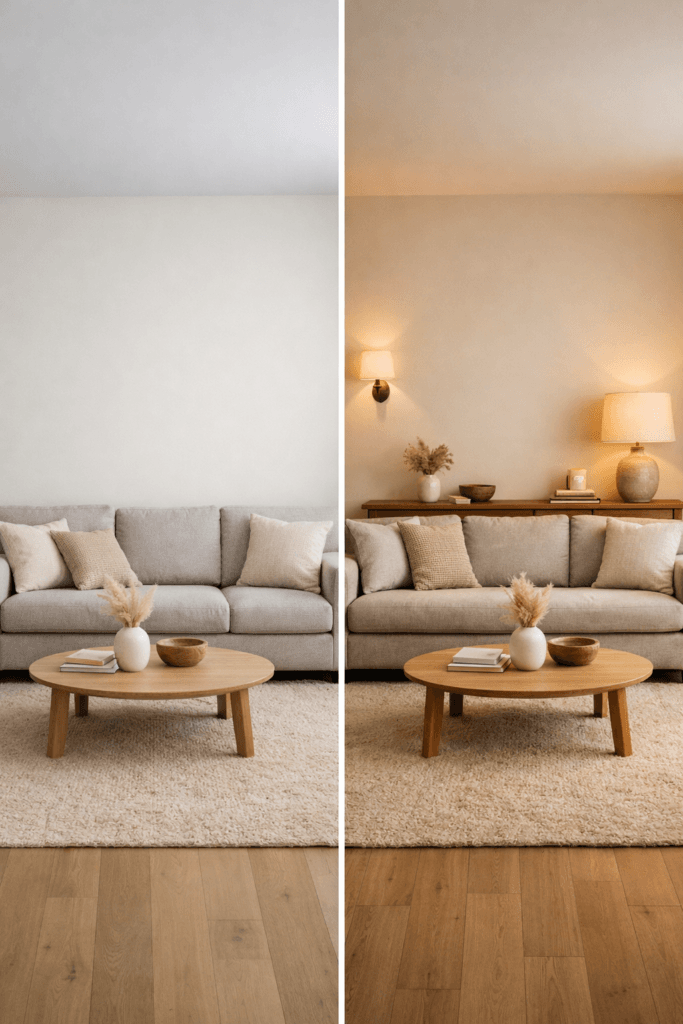
Many homeowners believe that pushing furniture outward increases usable space.
What actually happens is perimeter crowding. Walls become visually heavy while the center feels disconnected from the layout.
In Warm Modern Beige interiors, where softness and cohesion matter, perimeter crowding disrupts balance. Cream linen upholstery pressed tightly against a wall eliminates the breathing room necessary for refined composition.
Luxury design relies on controlled spacing.
Spacing is not emptiness. It is structure.
Conversation Zone Theory
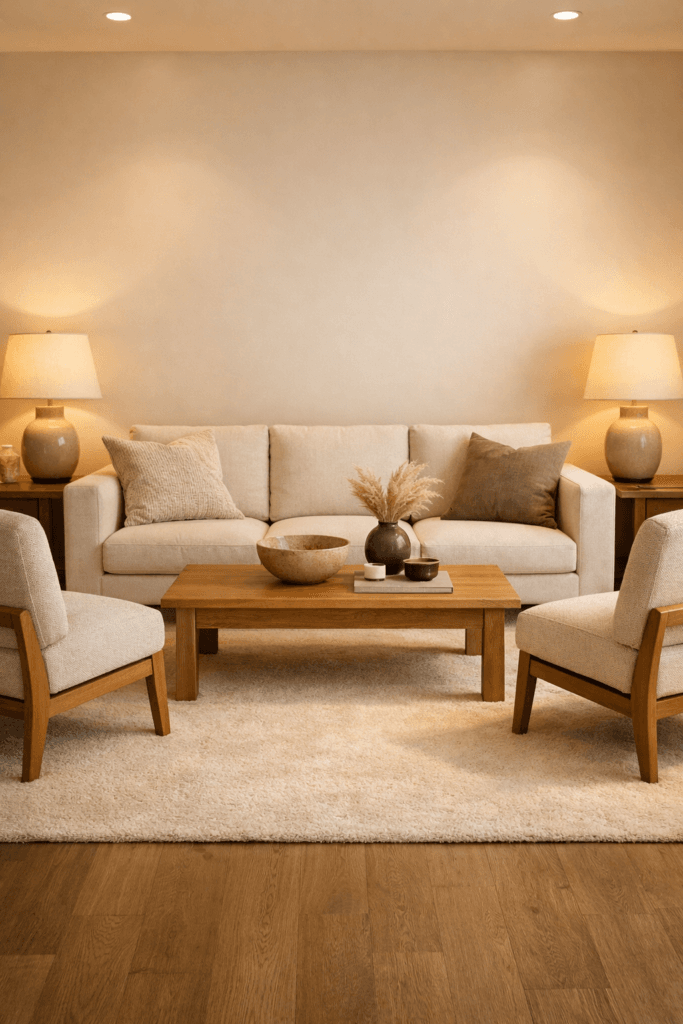
A living room is not a storage container for furniture.
It is a conversation zone.
When seating pieces are too far apart, interaction becomes awkward. Voices must travel across excessive distance. The arrangement feels disconnected rather than intimate.
Designers create a central anchor using a rug, coffee table, and floating seating configuration. That anchor defines the room’s functional core.
This principle connects directly to the rug size rule designers use, where the rug establishes the foundation beneath the seating footprint.
Without that foundation, floating furniture appears random. With proper proportion, it feels architectural.
The Depth Rule
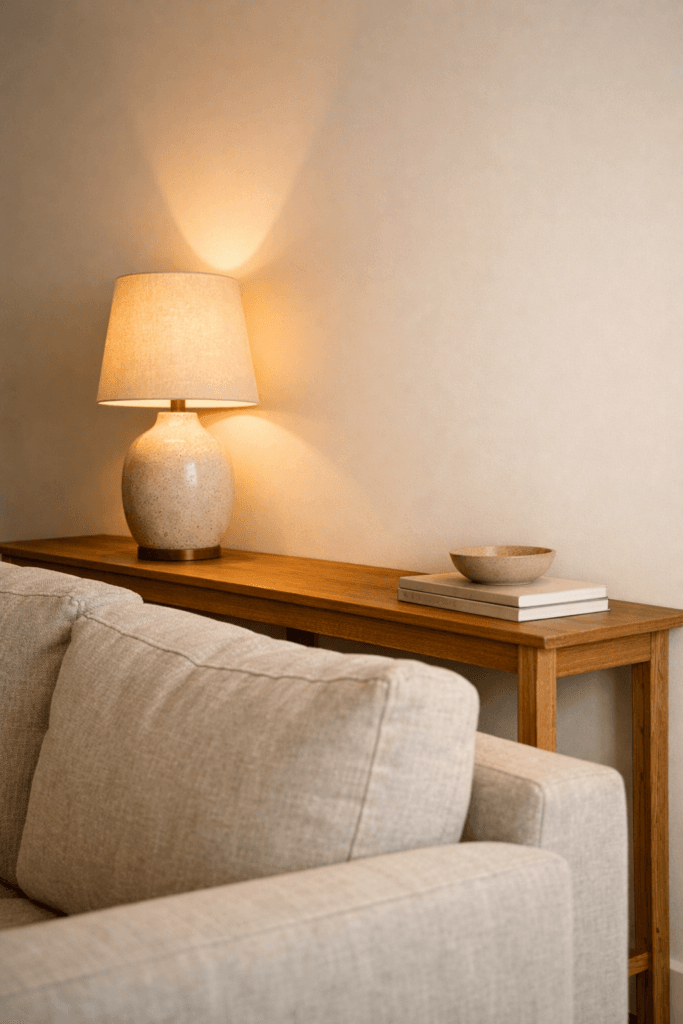
Allowing space behind a sofa creates depth layers.
Even a narrow console table placed behind a floated sofa introduces dimension. That dimension softens the wall boundary and prevents the room from appearing compressed.
When a sofa touches the wall, the wall becomes a hard stop. Hard stops reduce visual expansion.
Depth, on the other hand, encourages the eye to move through the space gradually.
Lighting Interaction
Furniture placement affects lighting performance.
When a sofa sits directly against a wall, wall sconces and floor lamps may cast flat illumination. Pulling the sofa forward allows light to wrap behind it, creating shadow gradients that enhance texture and softness.
This interaction mirrors the principles outlined in the designer lighting rule, where layered lighting introduces depth across surfaces.
Light requires space to create dimension.
Warm Modern Beige Application
In a Warm Modern Beige palette, softness depends on balance.
Ivory walls (#F6F2EB), cream linen sofas, oat-toned wool rugs, and brushed brass lighting work best when spacing feels intentional. When the sofa presses against the wall, the composition becomes rigid rather than relaxed.
Pulling the sofa slightly forward introduces breathing room, which enhances calm and refinement.
Luxury is not about filling every inch.
It is about placing each piece deliberately.
The Audit
Stand at the entry of your living room.
Does the sofa sit flush against the wall?
Does the center of the room feel empty instead of anchored?
If so, the layout may be perimeter-heavy rather than proportionally balanced.
Before buying new furniture, reconsider placement.
Moving a sofa forward by even a few inches can transform how expansive the room feels.
The Exact Placement Math Designers Use
Furniture placement is not guesswork.
Designers rely on specific measurements to ensure that a living room feels cohesive, functional, and visually balanced.
Without structure, floating furniture can appear random. With proper spacing, it reads as intentional architecture.
The Sofa-to-Coffee-Table Formula
The ideal distance between a sofa and coffee table ranges from 14 to 18 inches.
This measurement allows comfortable reach while maintaining circulation space.
When the gap exceeds 24 inches, the seating area begins to feel disconnected. When it falls below 12 inches, movement becomes cramped.
Correct spacing strengthens the conversation zone and keeps furniture from drifting apart.
The 3-Foot Traffic Flow Rule
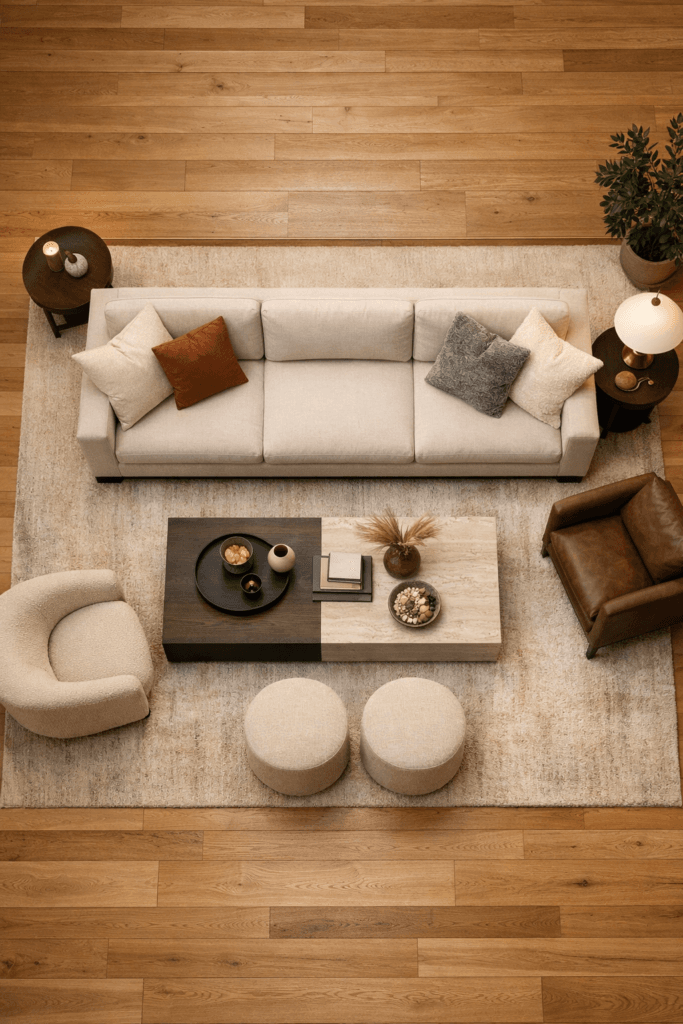
Clear pathways define luxury layouts.
Designers maintain approximately 30 to 36 inches of walking space in primary traffic areas.
When sofas are pushed tightly against walls in small rooms, the center often becomes oversized and undefined while walkways feel accidental rather than structured.
Floating the sofa slightly forward allows traffic paths to develop naturally around the seating area instead of cutting awkwardly through it.
Floating in Small Rooms
Many homeowners assume that floating furniture only works in large spaces.
Even compact living rooms benefit from pulling the sofa forward by several inches.
In smaller layouts, a narrow console table placed behind the sofa can visually bridge the gap between wall and seating. This technique introduces depth without sacrificing function.
Depth creates dimension. Dimension increases perceived square footage.
This same principle applies in the rug size rule, where extending scale outward makes rooms appear larger rather than smaller.
Open Concept Anchoring
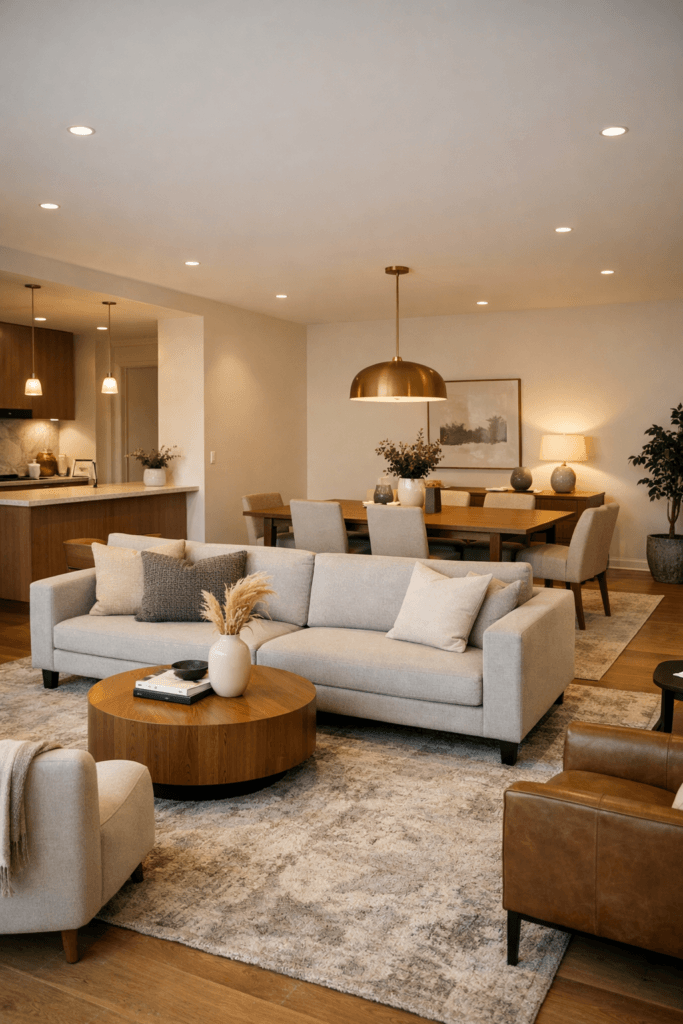
Open-concept spaces require invisible boundaries.
When a sofa sits directly against the wall in an open layout, the living zone lacks definition. The space may bleed awkwardly into dining or kitchen areas.
Floating the sofa creates a physical anchor that visually separates zones without constructing barriers.
A properly scaled rug beneath the seating area reinforces this anchor and prevents the room from feeling scattered.
Without anchoring, open spaces appear undefined rather than expansive.
The Weight Distribution Principle
Luxury interiors balance visual weight across the floor plan.
If all heavy furniture hugs the perimeter, the room’s center feels hollow. When seating is pulled inward, weight redistributes more evenly.
Balanced distribution allows lighting, art, and architectural elements to interact harmoniously with furniture placement.
This balance complements the proportional guidelines outlined in the wall art size rule, where scale must relate to surrounding elements.
Console Tables and Layering
Placing a console behind a floated sofa introduces a transitional layer.
That layer softens the wall boundary and provides space for lamps, books, or subtle decor.
Layering surfaces increases depth and prevents flat compositions.
Flat rooms feel basic. Layered rooms feel curated.
Lighting and Placement Alignment
Sofa placement directly influences how light behaves in a room.
When seating floats, floor lamps can cast elongated shadow gradients behind the sofa, enhancing texture and warmth.
This layered effect mirrors the principles explained in the designer lighting rule, where lighting height variation creates architectural depth.
Without space behind furniture, light cannot perform effectively.
The Layout Audit
Measure the distance from your sofa to the coffee table.
Evaluate traffic flow along main walkways.
Observe whether the seating area feels anchored by a rug or isolated in an oversized void.
Small adjustments often produce dramatic visual improvement.
Luxury is not achieved through quantity. It is achieved through proportion and placement discipline.
Why Wall-Hugging Layouts Feel Cheap — And the Designer Reset
When a living room feels slightly off, the issue is often structural rather than decorative.
Throw pillows may be beautiful. Lighting may be layered correctly. The rug may be properly sized. Yet the room still lacks refinement.
Placement is usually the missing piece.
This Is Why It Feels Cheap
Luxury interiors feel grounded and intentional.
When a sofa presses tightly against a wall, the center of the room becomes an undefined gap rather than a functional zone. That gap does not communicate spaciousness. It communicates uncertainty.
Uncertainty lowers perceived value.
Intentional placement, on the other hand, signals confidence.
Confidence signals design authority.
The Rental Layout Habit
Pushing furniture against walls is a common habit in rental spaces.
Many people adopt this layout instinctively because it appears safe and space-saving.
In reality, it often creates perimeter crowding while leaving the center unsupported.
Perimeter-heavy rooms feel temporary rather than tailored.
Floating a sofa even slightly transforms the environment from reactive placement to proactive design.
The Visual Compression Effect
When large furniture pieces line the edges of a room, walls visually dominate the space.
Dominant walls compress perspective and shorten sight lines.
Floating the sofa inward reintroduces layered depth between wall and seating, allowing the eye to travel gradually rather than stopping abruptly.
This layered depth mirrors the continuity principles outlined in the curtain height rule, where vertical extension enhances scale perception.
Depth enhances expansion.
The Evening Layout Test
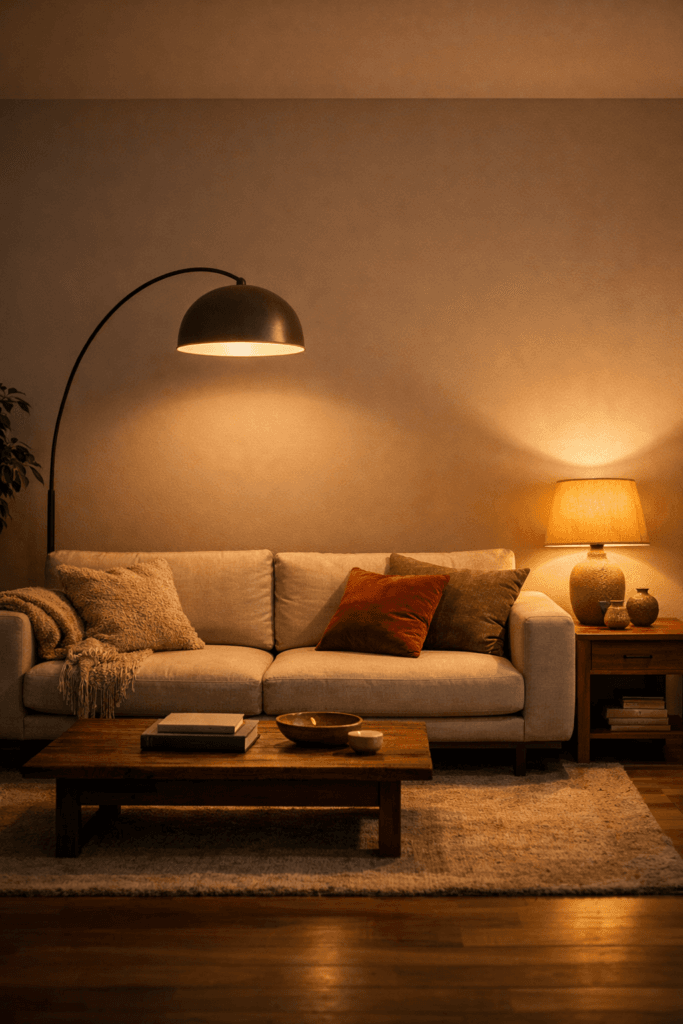
Evaluate your seating arrangement at night.
Turn off overhead lights and rely on floor lamps and table lamps.
Observe how shadows fall behind the sofa.
If the sofa touches the wall, light may flatten against the surface rather than wrapping around it.
When seating floats, light creates gradient depth and subtle dimension behind the frame.
Dimension adds richness.
Anchor Before You Decorate
Many homeowners attempt to elevate a living room by adding more accessories.
Additional decor cannot compensate for misaligned placement.
Designers correct structure before styling.
Placement determines whether rugs, artwork, and lighting function cohesively.
The sofa acts as the largest visual mass in most living rooms. Its position influences everything around it.
When aligned correctly with a properly scaled rug and proportional art, the entire room gains clarity.
Open Concept Revisited
In open-concept homes, floating furniture defines zones without building walls.
A sofa positioned inward establishes a boundary that visually separates living from dining areas.
Without that boundary, large spaces feel undefined rather than expansive.
Defined zones create order. Order supports calm.
The Designer Checklist
- Sofa pulled at least 6–12 inches away from the wall when possible
- 14–18 inches between sofa and coffee table
- 30–36 inches for primary traffic flow paths
- Rug anchoring all front legs of major seating
- Lighting layered at multiple heights to enhance depth
If several of these conditions are missing, placement may be weakening the layout.
The Structural Philosophy
Luxury is not excess.
It is disciplined proportion, layered depth and It is controlled spacing.
It is intentional anchoring.
Before purchasing new furniture, adjust placement.
Before adding more decor, refine structure.
Moving a sofa forward requires no budget increase. Yet the transformation can feel dramatic.
Stop pushing your sofa against the wall.
The room will feel instantly more expensive.
Bellencinista Notes
A sofa should anchor the room, not cling to the wall. Pull it forward to create depth, define conversation zones, and allow lighting to layer properly. Spacing introduces dimension, and dimension is what makes a living room feel expensive.