
The Coffee Table Size Rule Designers Use (Stop Guessing the Scale)
August 6, 2026
Trending Finds Readers Are Loving
Explore affordable luxe discoveries people are clicking on right now.
See What's TrendingA coffee table appears secondary to a sofa.
In reality, it determines whether the entire seating arrangement feels intentional or accidental.
Because it sits at the center of the conversation zone, its proportion influences balance, spacing, lighting behavior, and circulation.
When the size is wrong, the layout feels subtly off. When it is correct, the room feels composed and expensive.
Designers do not select coffee tables by trend. They select them by proportion formulas.
The 2/3 Width Rule
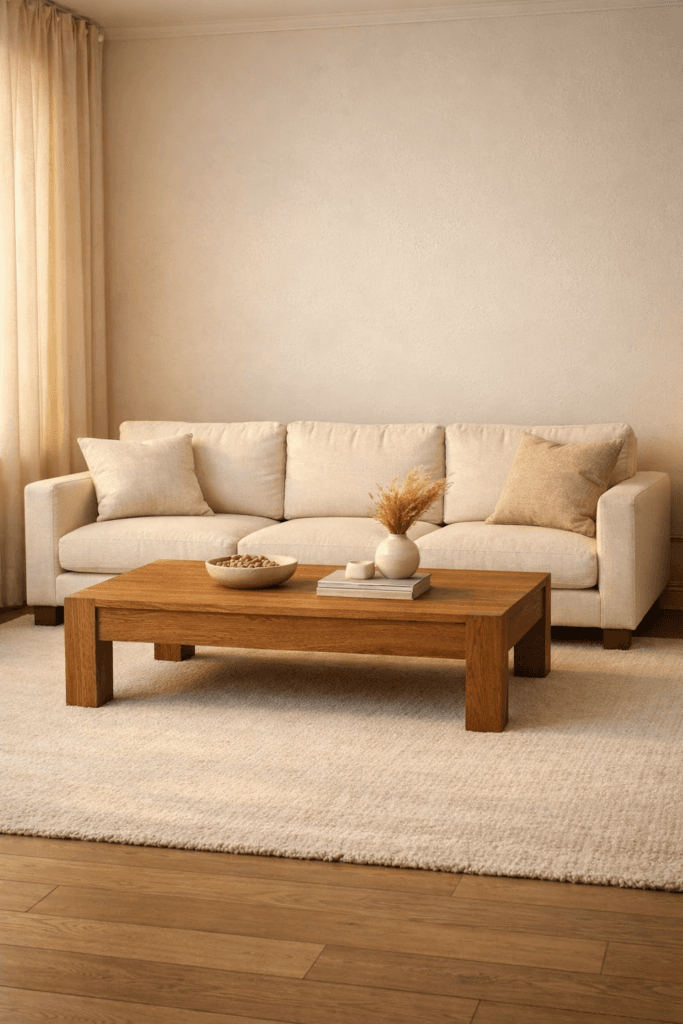
The most important guideline is the two-thirds rule.
A coffee table should measure approximately two-thirds the width of the sofa it anchors. This ratio creates visual balance between the largest upholstered piece and the central surface.
If a sofa measures 90 inches wide, an ideal coffee table length would land near 60 inches. A loveseat measuring 72 inches would pair well with a 45–50 inch table.
This proportion prevents the center from appearing undersized while also preserving breathing room at the edges.
When the table is too short, negative space accumulates on either side, causing the seating zone to feel fragmented. When it stretches too wide, the composition becomes heavy and visually compressed.
This logic mirrors the rug size rule designers use, where foundational scale determines cohesion. Both rules rely on proportional harmony rather than guesswork.
Proportion communicates structure. Structure communicates value.
Height Alignment Matters More Than You Think
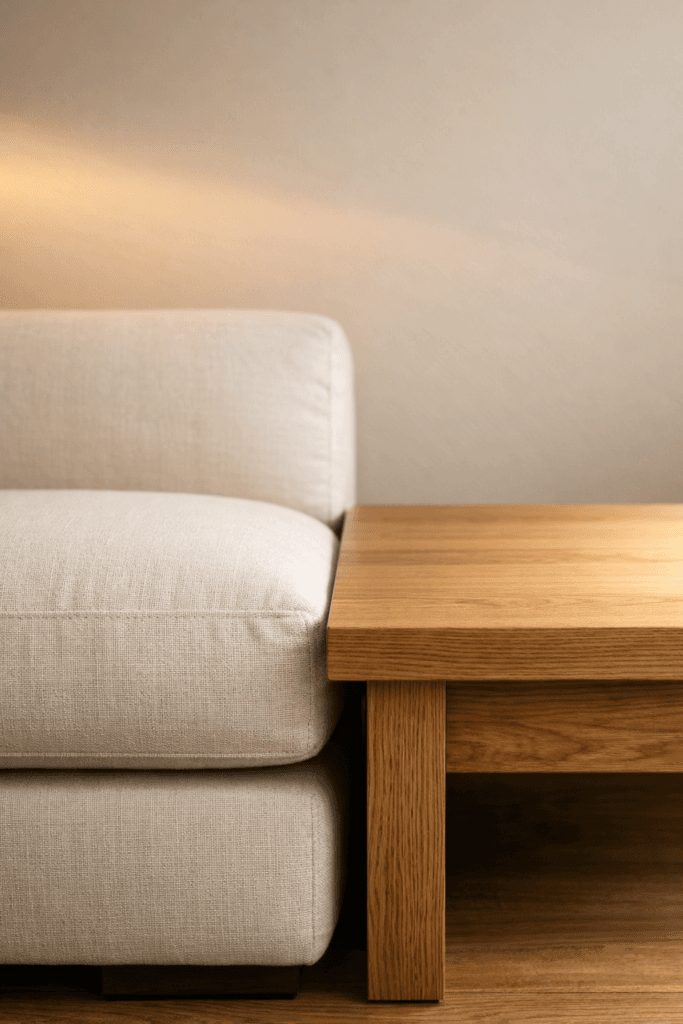
Height alignment is often overlooked, yet it directly affects visual flow.
A coffee table should sit at the same height as the sofa seat cushions or slightly lower — typically within 1–2 inches.
When the table rises too high, it disrupts sight lines and creates a barrier between seated guests. When it sits dramatically lower, it feels disconnected from the seating plane.
Matching or slightly lowering the height ensures continuity across horizontal surfaces. That continuity allows the eye to move smoothly from sofa to table without abrupt elevation shifts.
In Warm Modern Beige interiors, where subtle layering and softness matter, abrupt height differences introduce unnecessary tension.
Height alignment also affects lighting reflection. A table that sits too high may block light from wrapping across its surface. A properly scaled height allows illumination to glide across materials, enhancing depth and texture.
The 14–18 Inch Spacing Rule
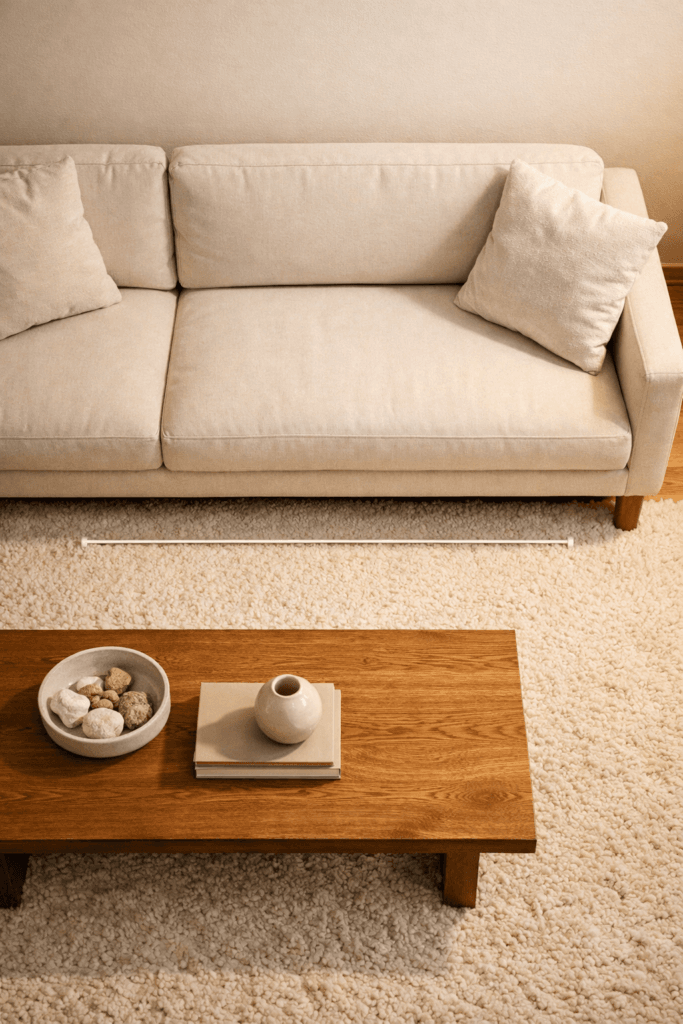
Spacing determines usability and perception simultaneously.
Designers maintain approximately 14 to 18 inches between the sofa edge and the coffee table. This distance allows comfortable reach while preserving leg clearance.
Spacing beyond 24 inches can cause the table to feel detached from the seating zone. When it sits closer than 12 inches, circulation becomes awkward.
This measurement also ensures the conversation area feels intimate rather than scattered.
The spacing rule complements the placement logic outlined in the sofa placement rule, where traffic flow and distance formulas define refinement.
Luxury layouts prioritize both movement and proportion. Neither element should overpower the other.
Shape Logic: Round vs Rectangular
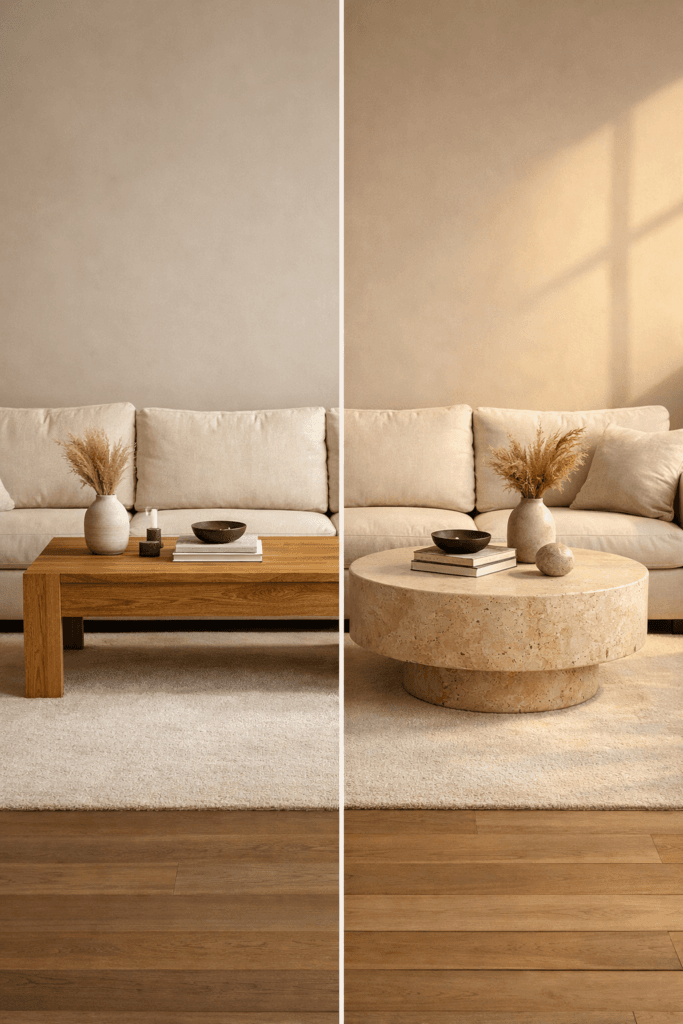
Shape selection responds to architecture.
Rectangular coffee tables reinforce linear sofas and long seating arrangements. They provide generous surface area and align with traditional layouts.
Round or oval tables soften angular spaces and improve circulation in tighter rooms. They also prevent sharp corner interruptions in high-traffic zones.
In compact living rooms, a round table can make the area feel more fluid because it reduces visual rigidity.
In larger rooms, rectangular tables may better anchor extended sofas and sectional configurations.
Shape should never be random. It must respond to the room’s geometry and traffic patterns.
Why Tiny Tables Look Cheap
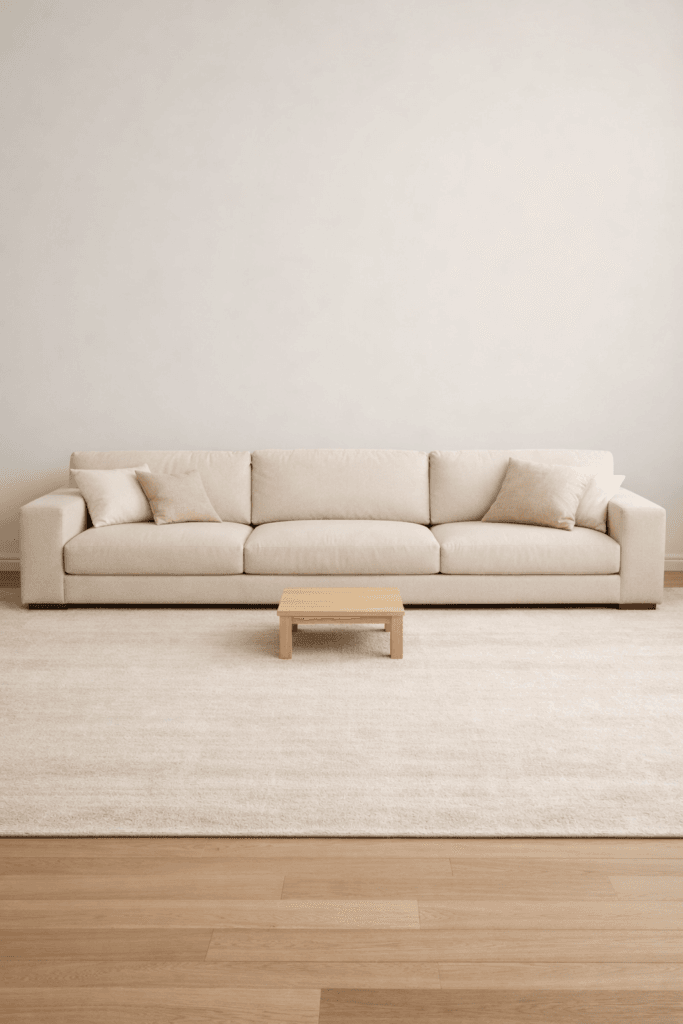
A coffee table that feels too small weakens the entire seating zone.
When the central anchor lacks presence, the sofa appears disproportionately large. That imbalance signals temporary or incomplete design.
Tiny tables also reduce usable surface area, leading to clutter accumulation elsewhere.
Luxury interiors avoid weak focal points. The center must feel intentional.
Correct scale distributes weight evenly between sofa, rug, and table, strengthening cohesion.
Oversized Tables Create a Different Problem
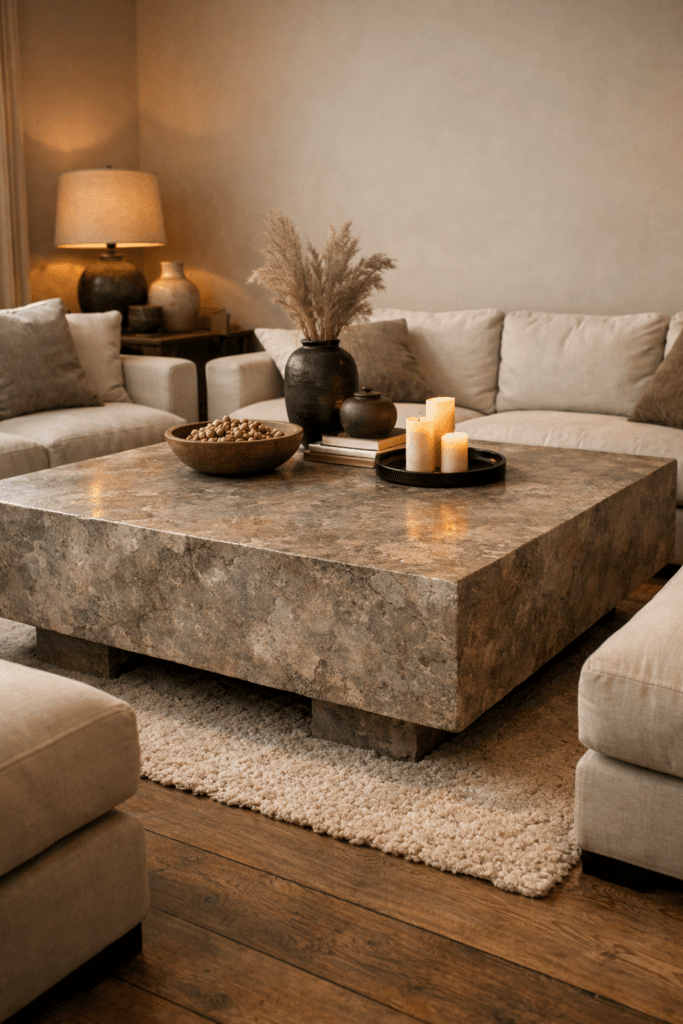
While undersized tables feel inadequate, oversized tables create compression.
When the table dominates the seating zone, circulation suffers. Guests may feel constrained when navigating around it.
Oversized tables also interrupt conversation lines, making the room feel crowded even when square footage is generous.
Refined interiors balance presence with breathing room.
Movement should feel effortless.
Lighting Interaction

Coffee tables influence how light behaves in the center of the room.
Under layered 2700K lighting, properly scaled tables allow shadow gradients to form softly across surfaces. These gradients add dimension and visual richness.
Glass tables reflect light differently than wood or stone. Matte finishes absorb glow and create subtle warmth. Glossy finishes reflect brightness and may amplify glare.
This lighting behavior aligns with the principles explained in the designer lighting rule, where layered illumination enhances perceived value.
Scale and surface work together to shape atmosphere.
The Structural Anchor
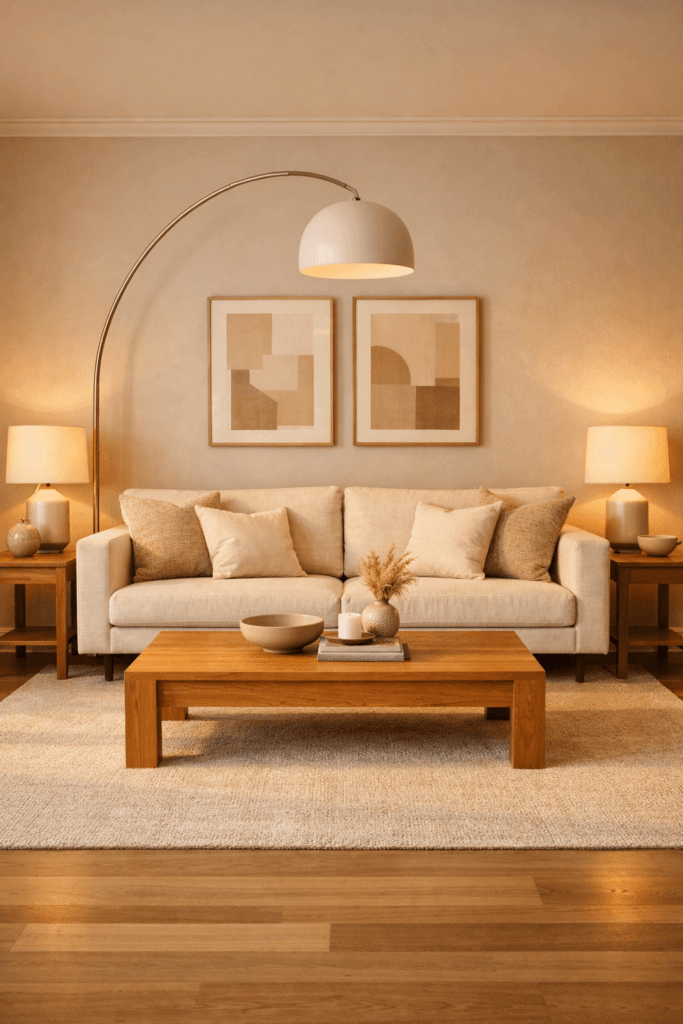
The coffee table acts as the midpoint between seating pieces.
Its dimensions determine whether the conversation zone feels unified or fragmented.
Before replacing the sofa, evaluate the table’s proportion.
Before adding decorative trays or books, confirm that width, height, and spacing follow structural guidelines.
Luxury is not achieved through decoration alone.
It is built through disciplined proportion.
Advanced Proportion Rules Designers Apply
Once width, height, and spacing are understood, proportion becomes more nuanced.
Different room types require different scaling strategies.
Open concepts, sectionals, and layered seating arrangements all demand additional calculation.
Sectional Sofa Scaling
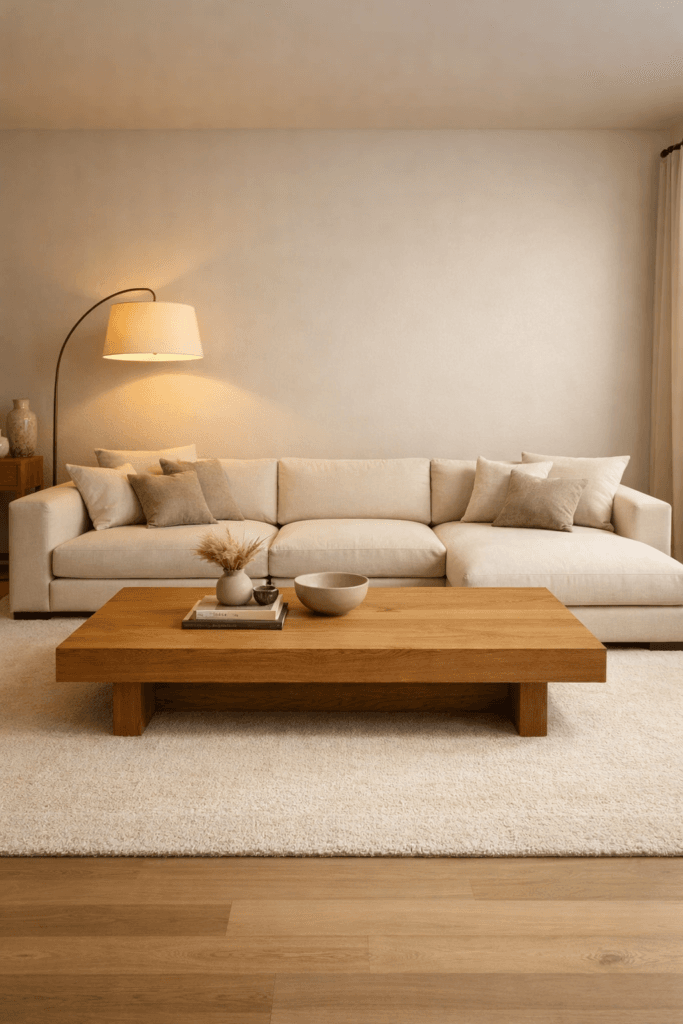
Sectionals change the math.
Because they extend deeper into the room, coffee tables must respond to both length and depth.
Instead of measuring only one side, designers consider the full footprint of the seating zone. The table should visually anchor the longest visible edge while still aligning proportionally with the depth of the chaise or extended section.
In many sectional layouts, a larger rectangular or square table works better than a narrow piece.
Insufficient scale in sectional arrangements creates excessive negative space in the center, weakening cohesion.
Proportion must reflect the total seating mass, not just one dimension.
Open-Concept Anchoring
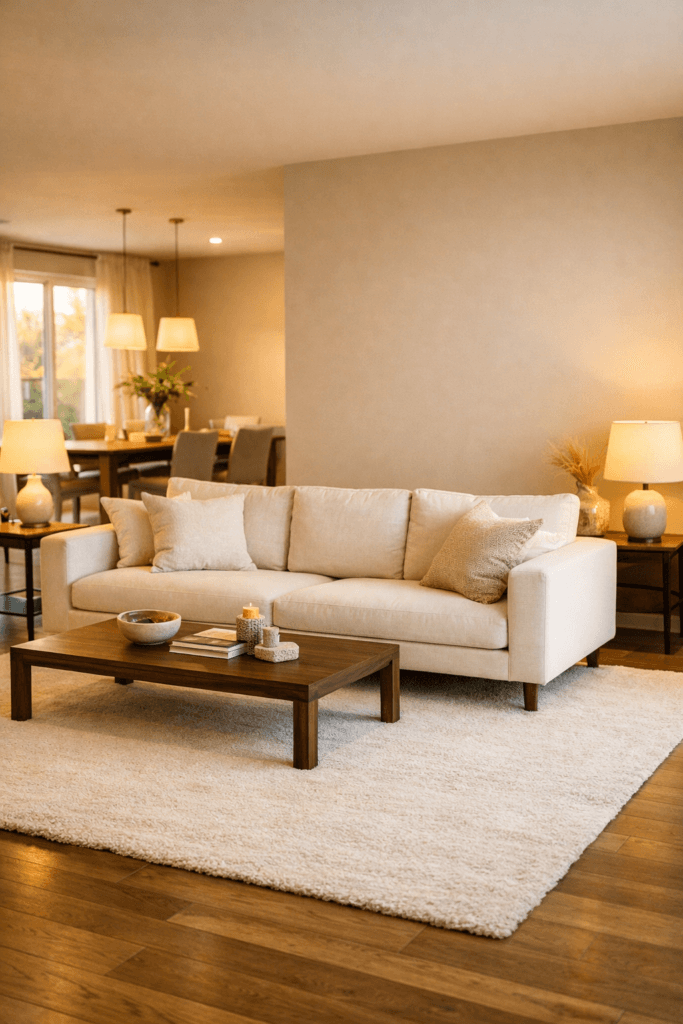
In open-concept spaces, the coffee table becomes a visual divider.
When a living area flows directly into dining or kitchen zones, the coffee table helps define the living footprint without building walls.
A table that is too small fails to anchor the zone. A properly scaled piece reinforces the boundaries established by the rug and sofa placement.
This anchoring principle connects directly to the sofa placement rule, where floating furniture establishes invisible architectural structure.
Without clear anchoring, large spaces feel undefined rather than expansive.
Nested Tables vs. Single Mass
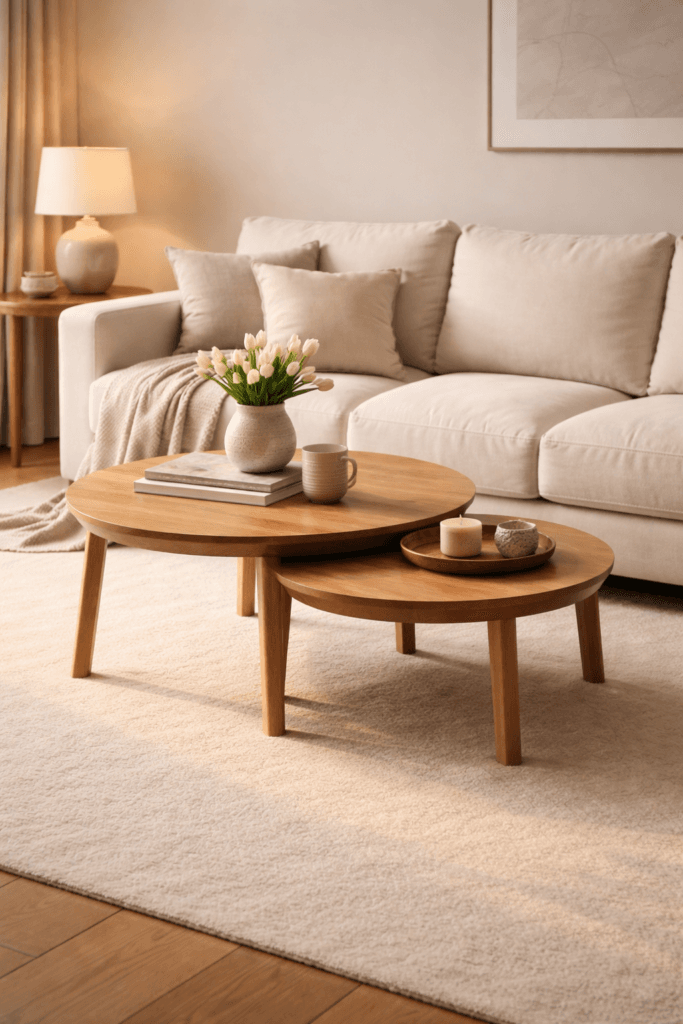
Some rooms benefit from nesting tables rather than one large central piece.
Nesting designs introduce flexibility, allowing surfaces to expand when needed and compress when circulation requires more space.
In smaller living rooms, this flexibility prevents visual overcrowding.
However, nested tables must still follow proportional discipline. Combined surface width should approximate two-thirds of the sofa’s length.
Randomly scaled small tables grouped together often feel accidental instead of intentional.
Flexibility should not compromise structure.
Ottoman vs. Hard Surface Logic
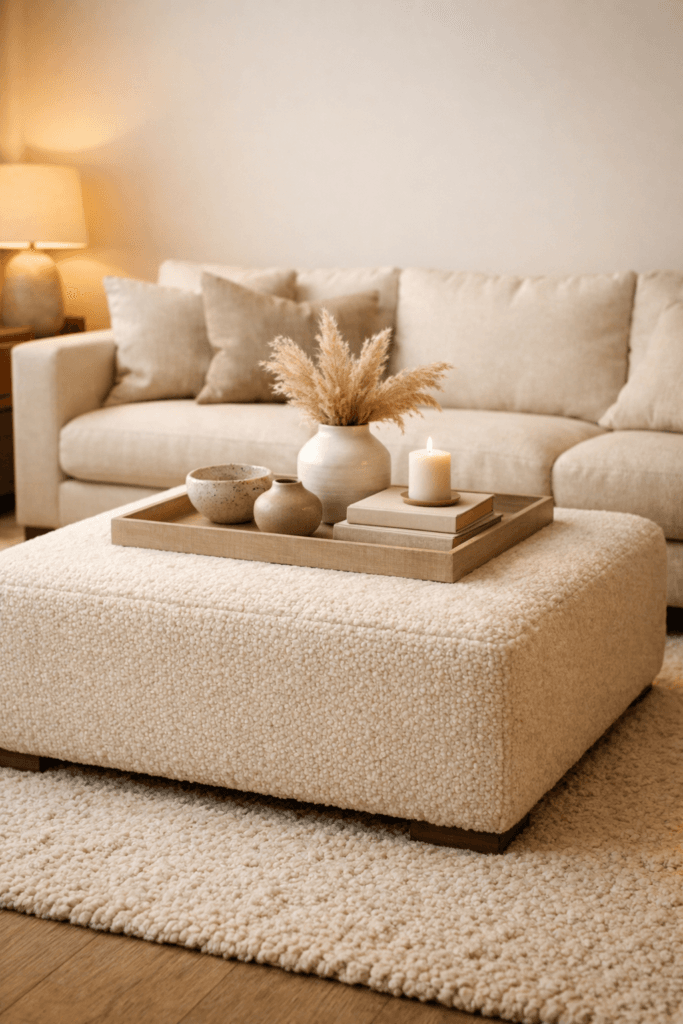
Ottomans used as coffee tables introduce softness and layered height variation.
In Warm Modern Beige interiors, upholstered ottomans can enhance warmth and reduce rigidity, especially when paired with neutral wool rugs and linen seating.
When selecting an ottoman, height alignment remains essential. It should sit level with or slightly below the sofa cushion height.
Trays can provide stable surface areas while preserving softness.
Hard tables, by contrast, create stronger visual presence and may better anchor larger rooms.
The decision should respond to the room’s tone and structural needs rather than trend alone.
Material Psychology
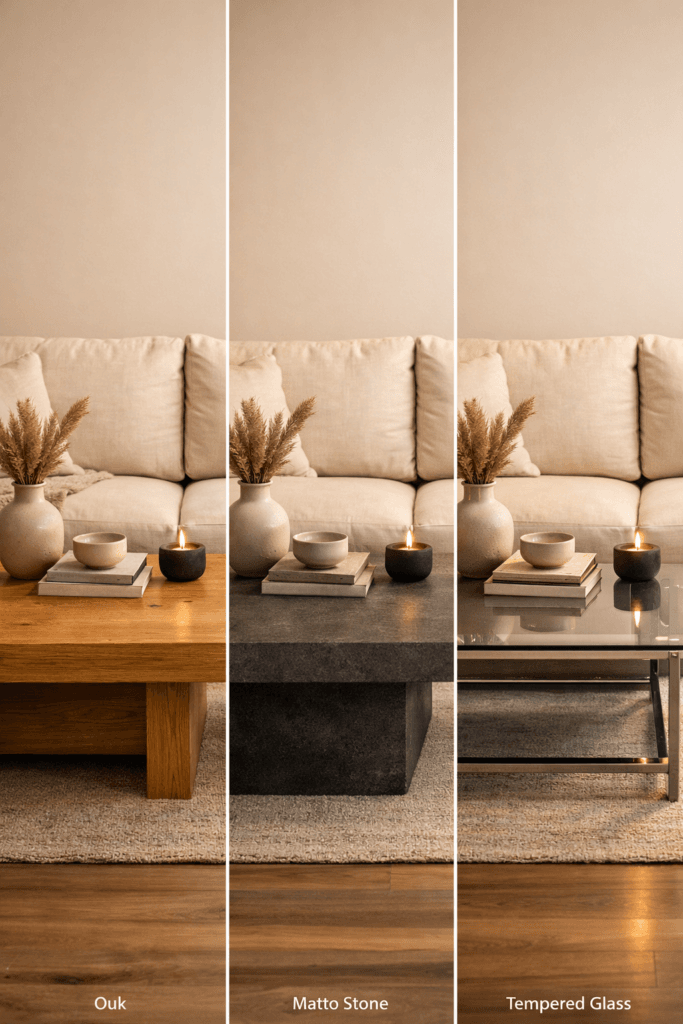
Material selection affects perceived value.
Solid wood tables introduce warmth and grounded stability. Stone surfaces add weight and permanence. Metal frames can lighten visual mass when used sparingly.
Glass tables create openness but may reduce perceived substance in larger spaces if not proportioned correctly.
Heavier materials often feel more architectural. Lightweight materials may require increased scale to achieve similar presence.
Under layered 2700K lighting, matte finishes absorb glow softly while high-gloss surfaces reflect brightness sharply.
This interaction mirrors the principles outlined in the designer lighting rule, where surface response to light determines depth.
The Perimeter Exposure Mistake
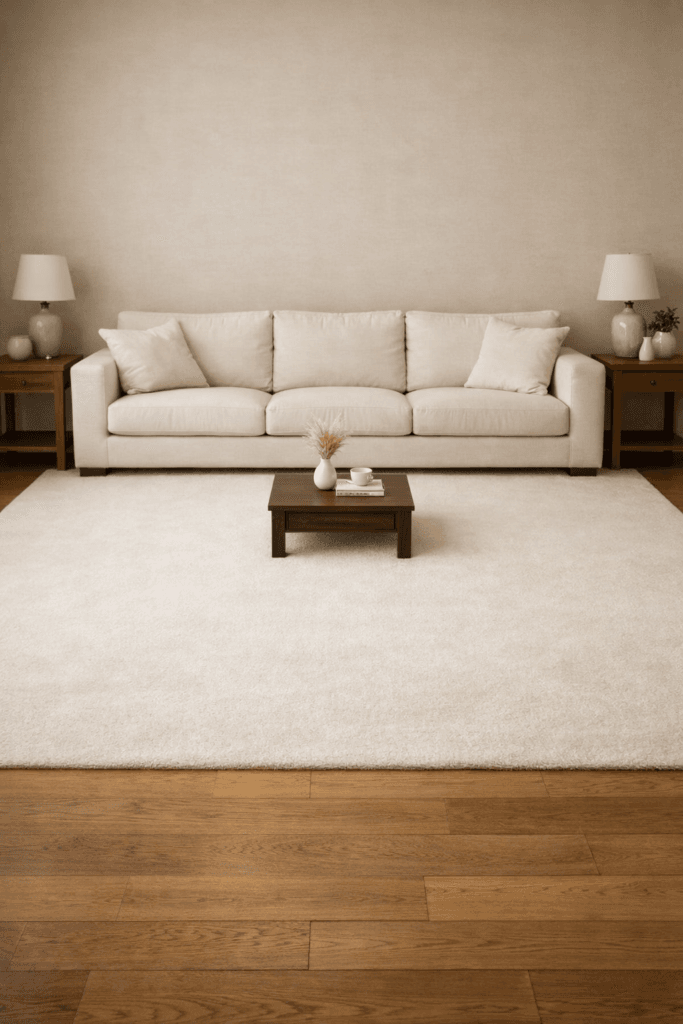
Just as undersized rugs create excessive perimeter flooring exposure, small coffee tables create center void exposure.
When too much empty space surrounds the table within the rug boundary, the seating area feels incomplete.
Designers ensure the coffee table occupies enough central footprint to visually ground the arrangement.
The center should feel anchored, not hollow.
Layered Height Strategy
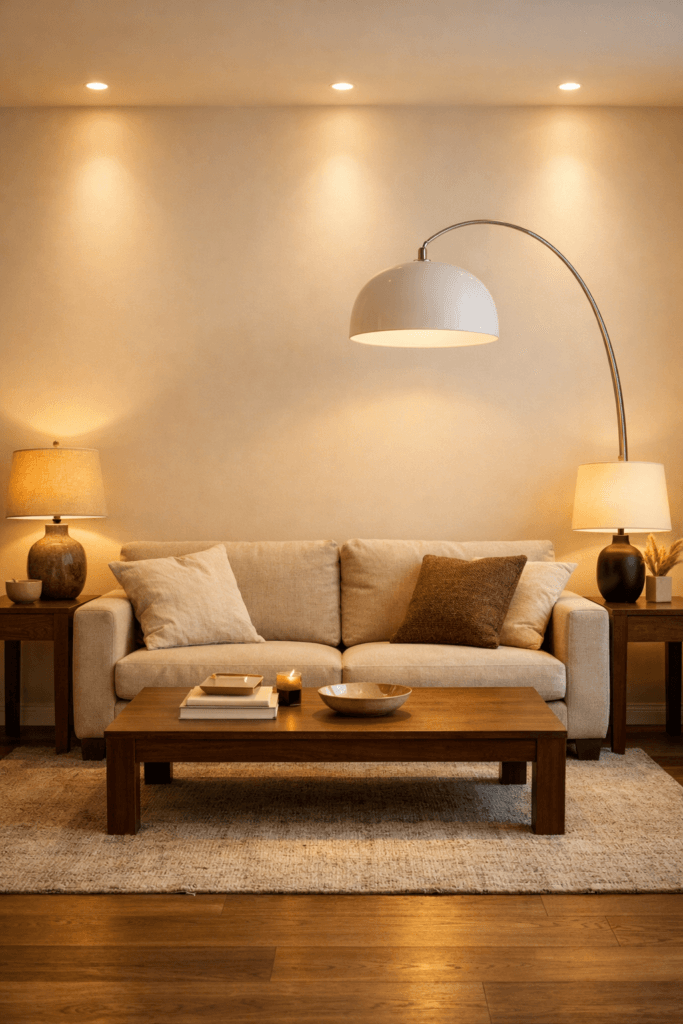
Refined interiors layer height intentionally.
A coffee table may sit at seat height, while side tables rise slightly above sofa arms. Floor lamps extend vertically beyond seating height.
This controlled variation introduces rhythm across the room.
When the coffee table is dramatically shorter or taller than surrounding elements, rhythm breaks.
Balance across vertical planes enhances sophistication.
Advanced Proportion Audit
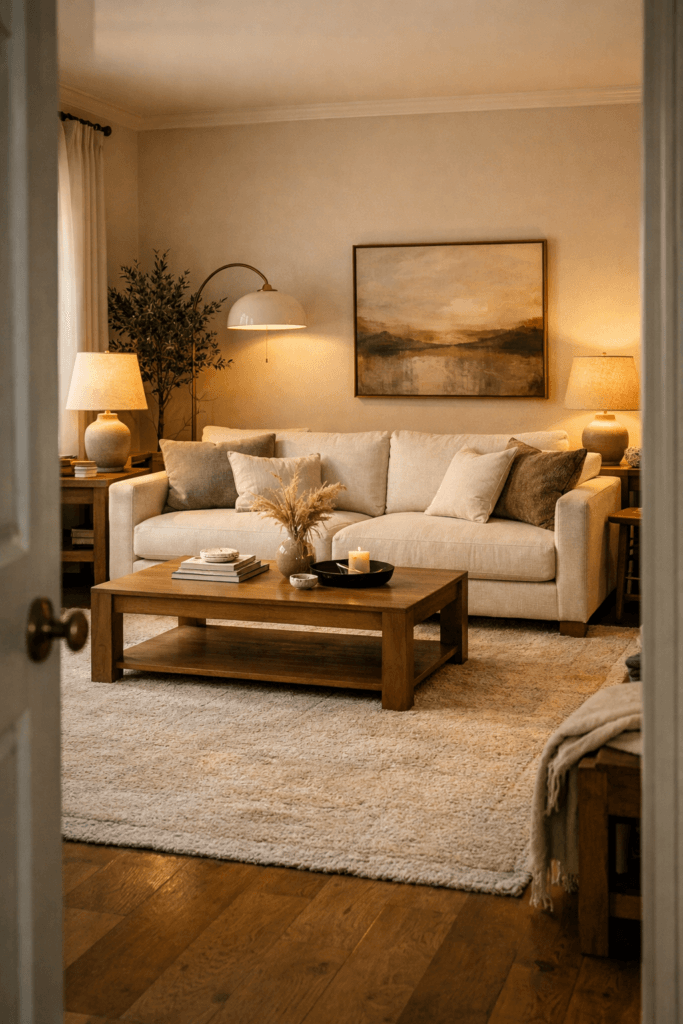
Stand at the entrance of your living room.
Observe whether the coffee table feels central and proportionate.
Evaluate width against sofa length. Assess height alignment. Measure spacing from the sofa edge.
If imbalance is visible, structural adjustment should precede decorative changes.
Correcting scale often transforms the room without requiring additional purchases.
Why the Wrong Coffee Table Makes a Room Feel Cheap — And the Designer Reset
When a living room feels slightly unbalanced, the issue is often structural rather than decorative.
The rug may be properly scaled. The sofa may be positioned correctly. Lighting may be layered well. Yet something still feels incomplete.
The coffee table is frequently the missing adjustment.
This Is Why It Feels Cheap
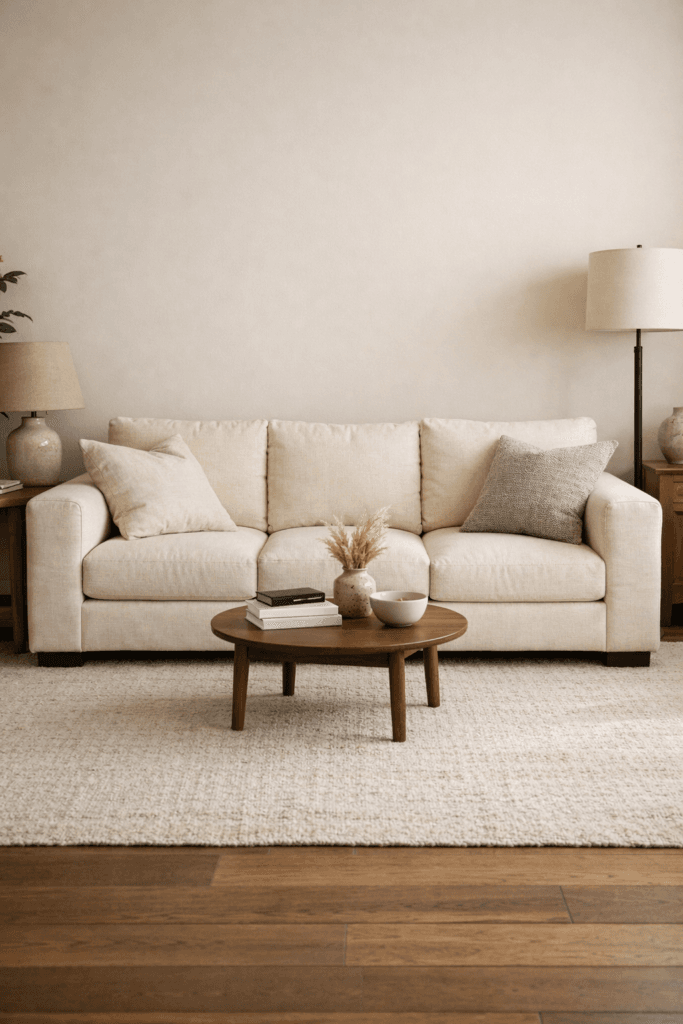
Luxury interiors rely on proportional hierarchy.
When the central surface is too small, the seating arrangement appears oversized and unsupported. When it is too large, circulation compresses and movement feels constrained.
Imbalance at the center disrupts cohesion across the entire layout.
The coffee table sits at the midpoint of the conversation zone. Any distortion in its proportion becomes immediately visible, even if subconsciously.
Balance creates confidence. Confidence elevates perceived value.
The Hollow Center Problem
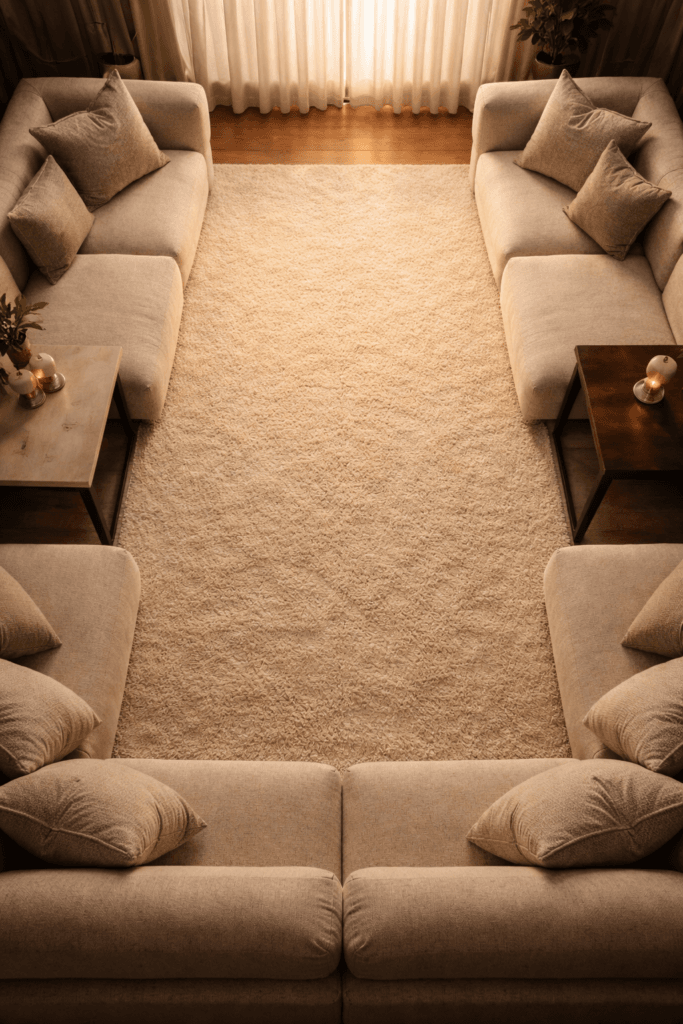
A common mistake is selecting a coffee table that leaves excessive negative space within the rug boundary.
When the center feels hollow, the seating area appears incomplete. That void signals indecision rather than intention.
Designers avoid hollow centers by ensuring the table occupies enough visual footprint to anchor the arrangement.
This anchoring logic parallels the rug size rule designers use, where foundation scale determines whether a room feels cohesive or fragmented.
Structural gaps lower perceived refinement.
Common Coffee Table Mistakes
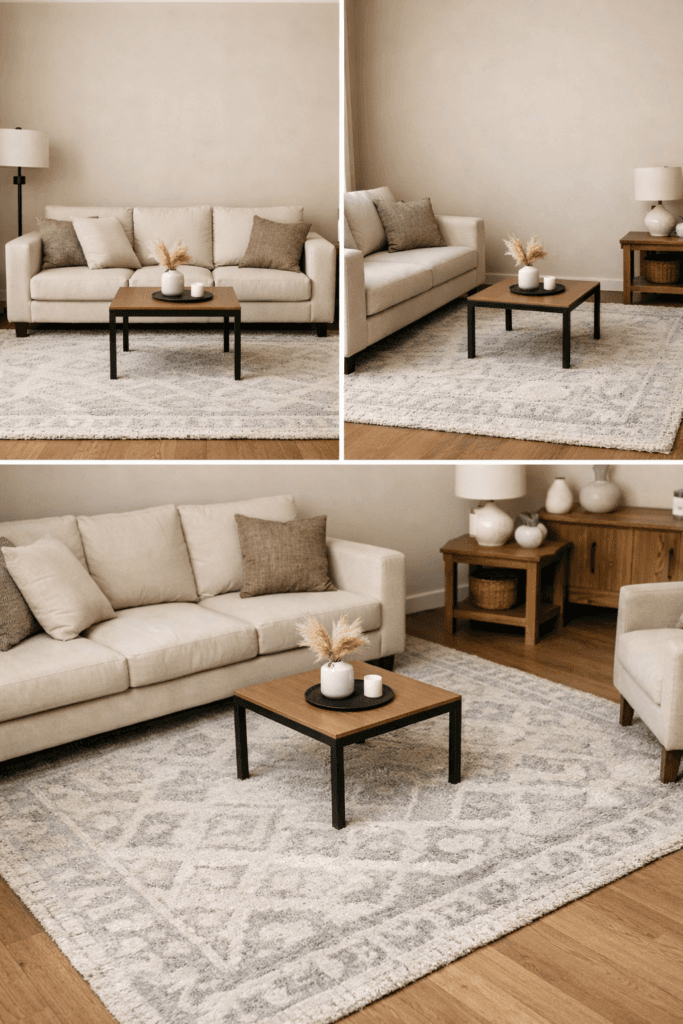
- Choosing width based on trend instead of the two-thirds formula
- Ignoring height alignment with sofa cushions
- Leaving more than 24 inches between sofa and table
- Selecting overly lightweight materials in large rooms
- Using decorative pieces to compensate for poor proportion
Each decision may seem minor in isolation. Together, they weaken the seating zone.
The Evening Lighting Test

Evaluate your coffee table under layered evening lighting.
Turn off overhead fixtures and rely on floor lamps and table lamps.
Observe how light interacts with the table’s surface.
Does it create soft shadow gradients across wood or stone? Does it reflect glare harshly? Does the table feel proportionate within the illuminated rug boundary?
Proper scale enhances how light behaves across the center of the room.
This interaction reinforces the principles outlined in the designer lighting rule, where surface response to illumination influences depth perception.
Open Concept Revisited
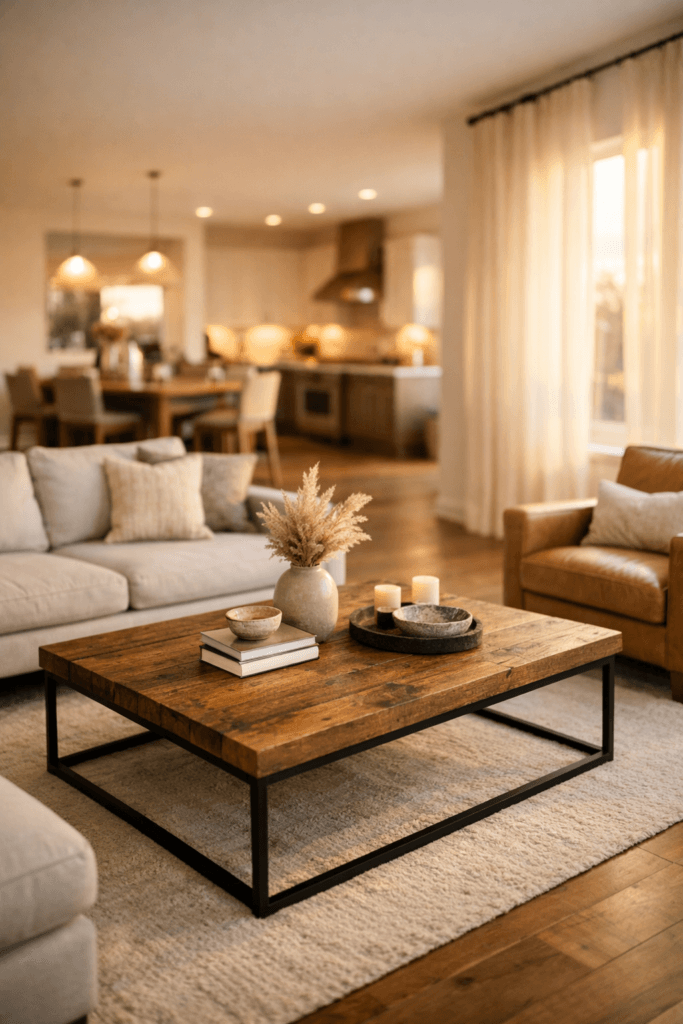
In open layouts, the coffee table reinforces zone clarity.
If the piece is too small, the living area may bleed visually into surrounding spaces. If it is proportionate, the seating zone feels defined without walls.
Defined zones create order. Order fosters calm.
The Designer Checklist
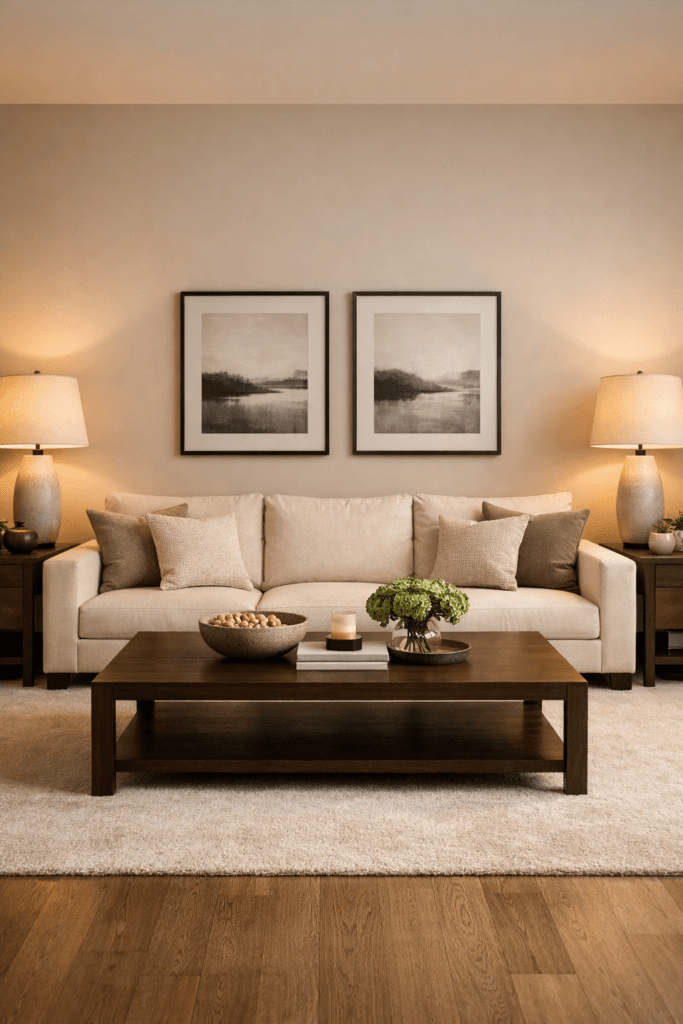
- Coffee table width approximately two-thirds of sofa length
- Height aligned with or slightly below sofa seat cushions
- 14–18 inches of spacing between sofa and table
- Material weight appropriate for room size
- Surface scale balanced within rug boundary
If multiple criteria are unmet, proportion may be undermining the layout.
The Structural Philosophy
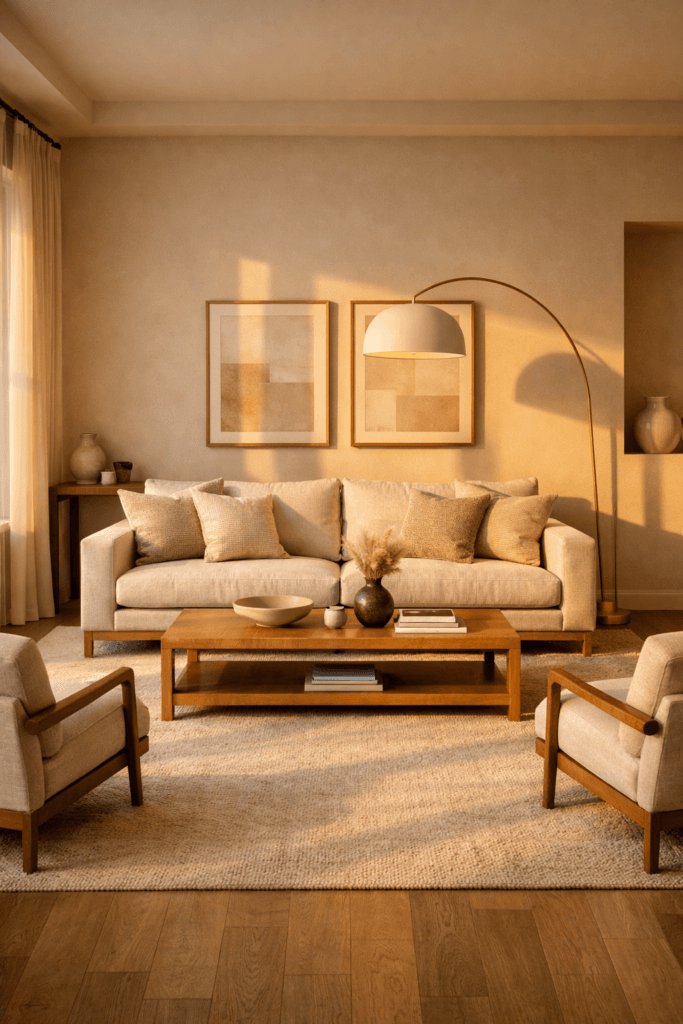
Luxury is not excess.
It is disciplined proportion.
It is alignment across horizontal planes.
It is spacing that supports both movement and intimacy.
It is cohesion between rug, sofa, table, and lighting.
Before adding more decor, correct the central scale.
Before replacing larger furniture pieces, evaluate the coffee table’s proportion.
Stop guessing.
Apply the rule.
The living room will feel instantly more expensive.
Bellencinista Notes
A coffee table should anchor the seating zone, not disappear into it. Follow the two-thirds width rule, align height with the sofa, and maintain 14–18 inches of spacing. Proportion at the center determines whether a room feels intentional or incomplete.