
Rule of Thirds Outfits: Why It Works – Part 2
December 14, 2025

Trending Finds Readers Are Loving
Explore affordable luxe discoveries people are clicking on right now.
See What's TrendingIf you’ve ever put an outfit on and thought, “This should work, but something feels off,” you’re already brushing up against the idea behind rule of thirds outfits. The rule of thirds started in art and photography, where images are divided into three parts instead of halves to create balance and movement. When you apply that same thinking to clothes, you stop cutting your body in half with awkward hemlines and start using one-third and two-thirds proportions that feel more flattering, modern, and intentional.
In everyday styling, this usually means making one part of your outfit visually shorter and the other part visually longer. Think: a cropped or tucked top (about one-third) with high-waisted pants (about two-thirds), or a knee-length dress (about two-thirds) with tall boots covering the lower third. You’re not changing your body; you’re simply changing where your clothes create those strong horizontal lines. The result is a look that suddenly “clicks” without needing more pieces or trend chasing.

What Are Rule of Thirds Outfits, Exactly?

At its core, the rule of thirds is a visual guideline. In photography, you divide a frame into three equal sections and place key elements along those one-third lines instead of dead center. When we translate that to outfits, we’re not literally drawing a grid on your body, but we are paying attention to where your clothes “break” your silhouette. Any strong horizontal line—a hem, waistband, belt, color block, or boot edge—creates a clear visual division.
Rule of thirds outfits deliberately place those lines around one-third or two-thirds of your height instead of right at the halfway point. That might look like:
- A tucked sweater with high-waisted jeans, where the top covers about one-third of your frame.
- A midi skirt that hits mid-calf (two-thirds), with a shorter top or cropped jacket (one-third).
- A long coat that covers two-thirds of your body, layered over slim pants and boots that show the final third.
Outfits that skip this idea aren’t “wrong,” they just tend to feel a little off. Think hip-length tops that land right in the middle of your thighs, or long cardigans paired with long skirts in the same color. Everything sits near that halfway mark, and your shape starts to look boxy instead of framed. Once you see it, you can’t unsee it—and that’s where the rule of thirds starts to become a useful styling tool.
Why Our Eyes Love the One-Third / Two-Thirds Ratio
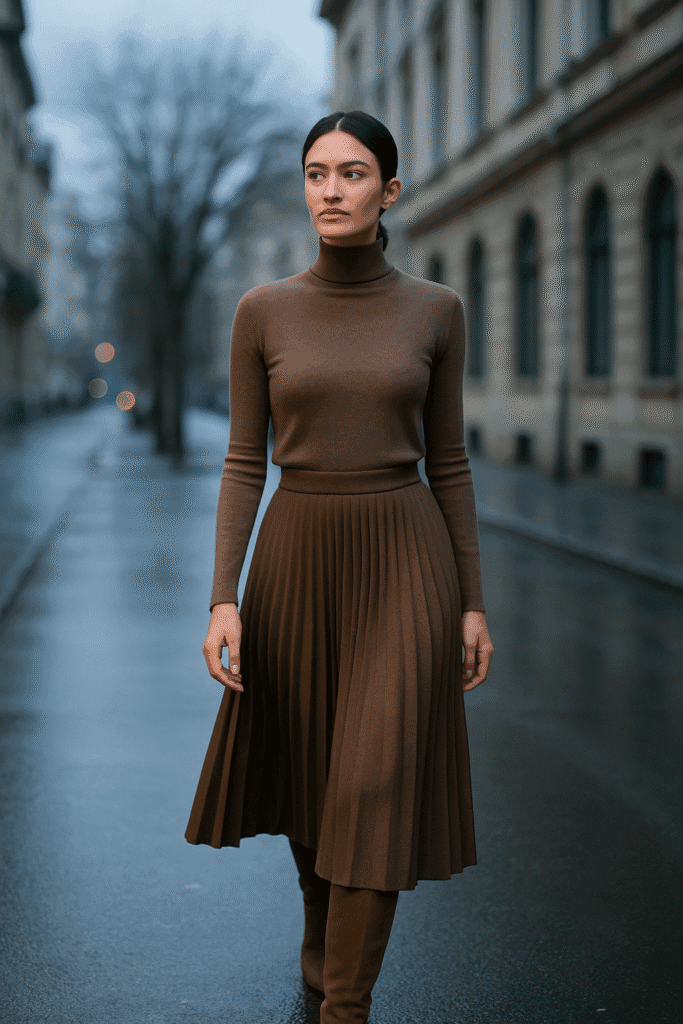
There’s a reason the rule of thirds shows up in art, architecture, photography, and now fashion. Humans are drawn to slightly uneven proportions. A perfect one-to-one split can feel flat and static, while a one-third to two-thirds balance creates subtle movement and interest. In simple terms, our eyes like when there is a clear “main section” and a smaller “supporting section,” instead of two equal blocks competing for attention.
In rule of thirds outfits, the longer two-thirds section usually becomes the hero. That might be your legs in high-waisted jeans, your torso in a long coat, or the sweep of a midi dress. The shorter one-third piece—your cropped knit, tucked shirt, jacket, belt, or boots—frames that hero area instead of distracting from it. When you get this balance right, your outfits tend to feel:
- More elongated – your legs or upper body look longer because the eye doesn’t stop at the halfway point.
- More polished – even simple basics look “styled” without adding extra items.
- More interesting – the slight imbalance creates flow, which is exactly what you see in elevated street style and editorials.
You can think of it as giving your outfit a storyline. The two-thirds section is the main chapter, and the one-third section is the supporting paragraph that keeps everything focused and cohesive.
How to Build Rule of Thirds Outfits in Real Life
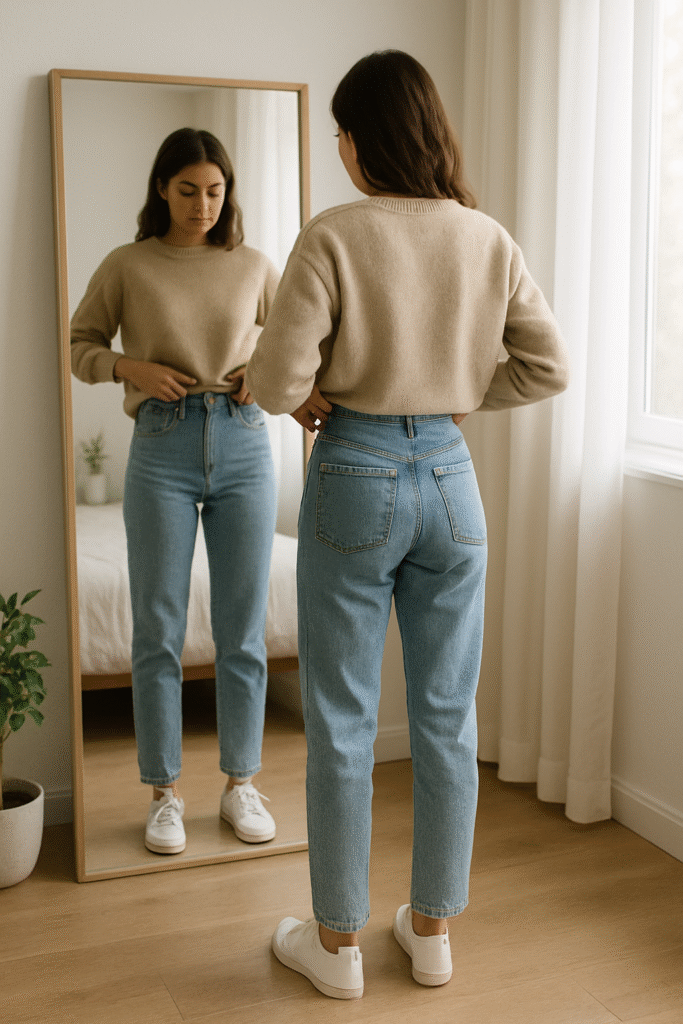
The best part about this concept is that you don’t need a new wardrobe to start using it. You’re really just shifting where your lines sit. A full-length mirror, a couple of styling tweaks, and a willingness to experiment will do more for you than a huge shopping haul.
1. Tops and Bottoms
Start with the simplest formula: top + bottom. For most people, the easiest way to hit that one-third / two-thirds balance is to visually shorten your top and lengthen your bottom. You can:
- Tuck a regular sweater or tee into high-waisted jeans or trousers.
- Do a half-tuck or front-tuck with a button-down shirt.
- Choose a cropped knit or jacket that naturally lands above your hip bone.
In each of these cases, your top becomes roughly one-third of your overall height, and everything from your waistband down reads as the remaining two-thirds. That’s a classic rule of thirds outfit, but it still feels casual and wearable. You’re not dressing “for a formula,” you’re just using the formula to make your everyday pieces sit in the right places.
2. Dresses and Skirts
Dresses and skirts already give you strong lines; your only job is to decide where they land. With a midi skirt, you can structure the look as:
- One-third top, two-thirds skirt; or
- Two-thirds dress or skirt, one-third boots or visible leg.
A great example is a midi skirt that hits around mid-calf (taking up two-thirds), paired with tall boots that cover part of the lower third. Or a knee-length dress (two-thirds) with boots that come just below the knee, leaving a small band of leg visible. That slim space of skin or contrasting color keeps the proportion dynamic and stops the outfit from feeling heavy at the bottom.
3. Jackets, Coats, and Third Pieces
Outerwear and extra layers are where the rule of thirds starts to overlap with another styling concept: the “third piece rule,” which says that adding a jacket, vest, or statement layer can instantly make an outfit look complete. When you add the rule of thirds into that mix, you’re not just adding a third item—you’re using that layer to place a new one-third or two-thirds line.
For example:
- A long coat that covers two-thirds of your body over slim jeans and simple boots.
- A cropped blazer that hits just above your natural waist over high-rise trousers.
- A hip-length cardigan worn open over a tucked top and jeans, where the tuck creates the one-third line and the cardigan adds vertical lines that slim and lengthen.
When your outer layer, top, and bottom all support the same proportion story, your outfit looks layered but not chaotic. That’s the sweet spot you’re aiming for.
Rule of Thirds Outfits for Different Heights and Body Types

The rule of thirds is flexible. It isn’t about forcing every body into one standard silhouette; it’s about using proportion to highlight what you love most about your shape. Once you understand how to steer the eye, you can tailor the ratios to your height, curves, and style personality instead of fighting against them.
If You’re Petite
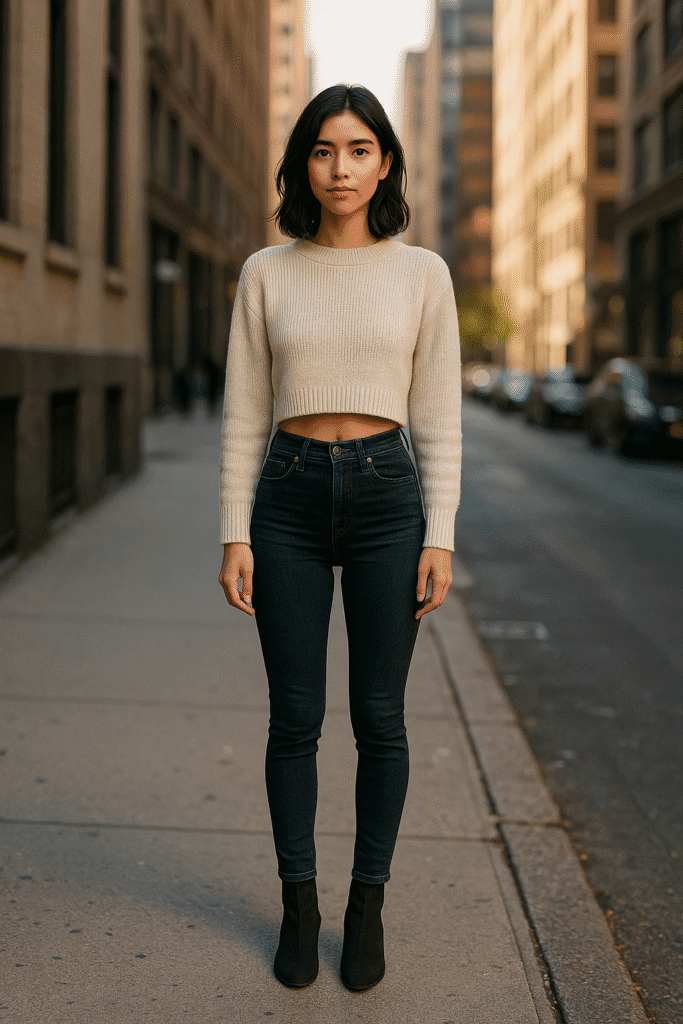
If you’re petite, rule of thirds outfits can help you look more elongated and streamlined. High-waisted jeans, trousers, and skirts paired with tucked or cropped tops create a long, uninterrupted two-thirds leg line. Tops that end right at your widest point or mid-thigh tend to cut your frame in half and can make you feel shorter.
Midi skirts can still be your friend. Aim for a length that hits just below the knee or mid-calf with a slimmer shape, and pair it with boots in the same color as your tights or pants. That “column” of color visually lengthens you, and the one-third top keeps your upper half compact and balanced.
If You’re Tall

If you’re tall, you have more vertical space to play with, which makes rule of thirds outfits incredibly fun. You can still work with a one-third / two-thirds balance, but you might feel comfortable experimenting with dramatic coats, long knits, or oversized shapes. The key is to maintain at least one strong break around the one-third mark so your outfits look intentionally oversized rather than unintentionally baggy.
For example, a long duster coat and wide-leg pants can look very elevated when your top is tucked or cropped to show a clear upper third. Belting a dress or jumpsuit at your natural waist can also create a strong one-third line inside a longer piece, instantly bringing more structure to the overall look.
If You’re Curvy
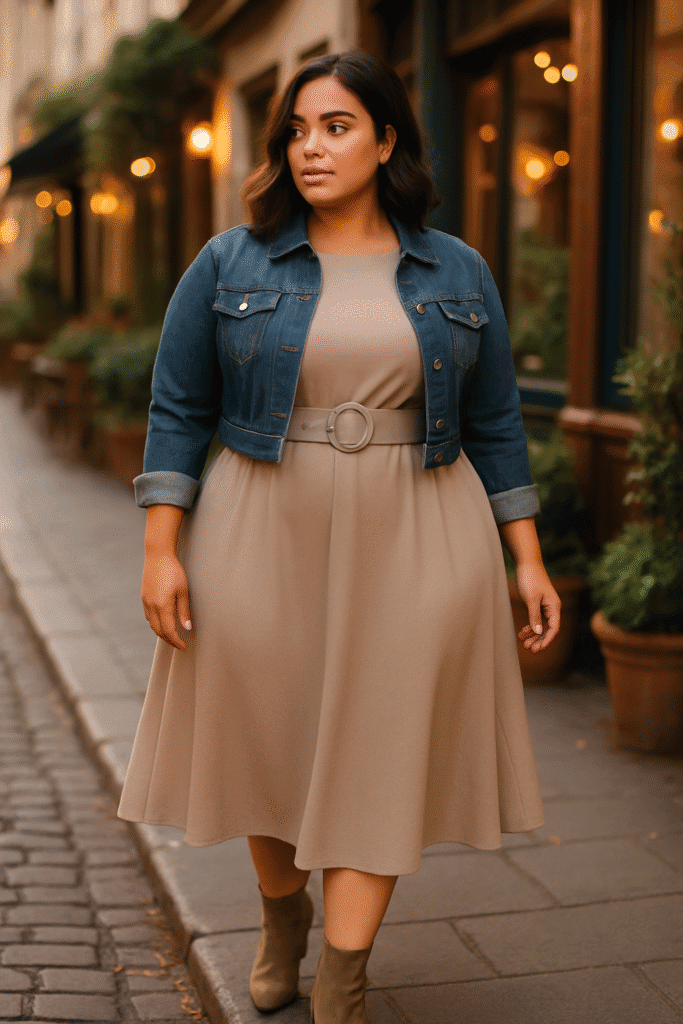
For curvier figures, the rule of thirds is a great way to highlight your waist without feeling restricted. Tucked tops, wrap dresses, belted coats, and high-rise bottoms all create a clear one-third upper section where your waist becomes the natural focal point. The two-thirds section—your skirt, pants, or the lower part of a dress—then flows from that point instead of competing with it.
A midi dress with a defined waist and a skirt that skims over your hips is a simple, powerful example. The bodice and waist take up the top third, the skirt fills the lower two-thirds, and your curves are framed rather than hidden. Add a cropped jacket or cardigan that hits at the waist, and you double down on that one-third emphasis in a way that looks intentional and flattering.
When to Break the Rule on Purpose

Like any good style guideline, the rule of thirds is there to support you, not boss you around. Some of the most interesting outfits happen when you understand why it works and then choose to break it on purpose. It’s the same idea photographers use when they center a subject after years of following a grid—the impact comes from intent.
You might skip the rule of thirds when:
- You want a boxy, androgynous silhouette with straight, equal lines.
- You’re leaning into oversized loungewear for a cozy, cocooned feel.
- You’re experimenting with extreme proportions, like floor-grazing knits over chunky boots.
The difference now is that you’ll know exactly why a centered, half-and-half look feels different from a one-third / two-thirds outfit. You’re choosing drama instead of stumbling into it. That level of awareness gives you more control over your style and makes it easier to curate a wardrobe that actually supports the vibe you want to project.
If you want to layer this idea with other styling strategies, you can pair the rule of thirds with concepts like “outfit formulas” or “fashion math.” The more you understand how proportions, colors, and textures work together, the easier it is to create Pinterest-worthy outfits without needing to buy something new every time you get dressed.
Putting the Rule of Thirds Into Your Daily Outfit Routine

You don’t need a complex checklist to make rule of thirds outfits part of your day-to-day routine. Start with a full-length mirror and one question: “Where is my outfit cutting my body?” If the main line is sitting right at the halfway point, try a quick tweak—a tuck, a belt, a different hem length, a cropped jacket, or boots that shift where your eye naturally stops.
Over time, your eye will start to recognize good proportions almost automatically. You’ll know which tops love your high-waisted bottoms, which dresses pair best with tall boots, and which coats give you that easy two-thirds drama you keep saving to your boards. That’s the real power of the rule of thirds: it’s not about dressing perfectly, it’s about giving yourself an easy, repeatable way to make outfits feel balanced, flattering, and intentional—without overthinking every single piece.