
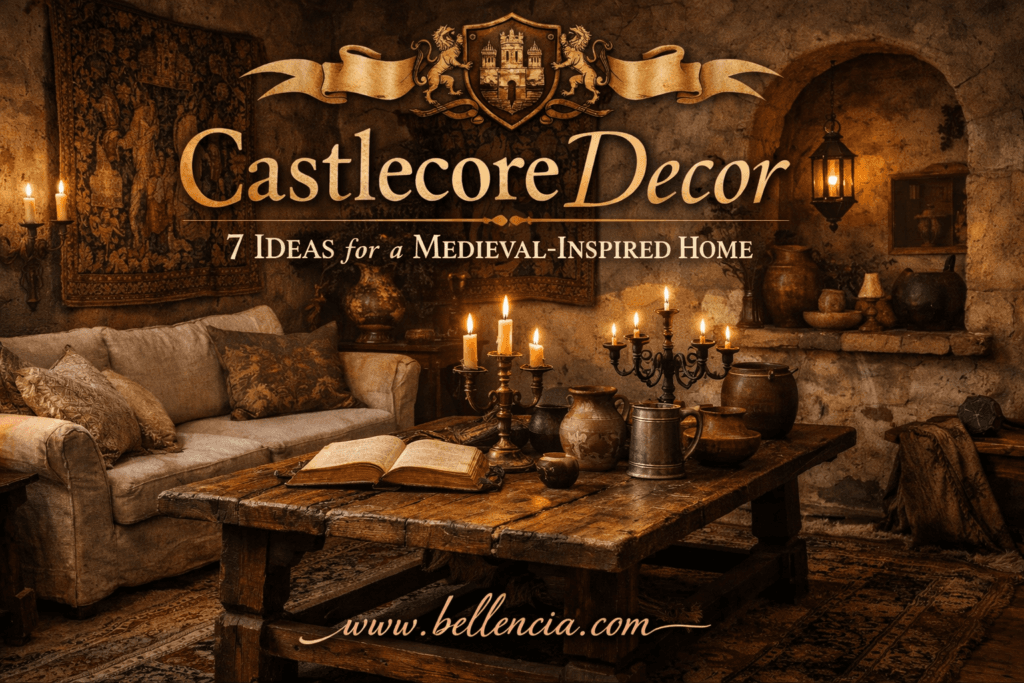
7 Castlecore Decor Ideas for a Medieval-Inspired Home
April 23, 2026
Introduction: What Castlecore Really Is
Trending Finds Readers Are Loving
Explore affordable luxe discoveries people are clicking on right now.
See What's TrendingCastlecore is not a costume aesthetic. It is not about turning your home into a theme park version of a castle. At its core, Castlecore is about building spaces that feel enduring, protective, and historically grounded. It borrows from medieval architecture, old European interiors, and centuries of human ideas about shelter, ritual, and permanence.
A true Castlecore home feels heavy in the best way: grounded, quiet, and emotionally stable. It is built from materials that age, furniture that lasts, and layouts that prioritize containment over exposure. Whether your taste leans Gothic, Royal, Cottage, Vintage European, or Monastic, all Castlecore interiors share a few foundational principles.
This guide does not give you surface-level decorating tips. Instead, it gives you seven structural ideas that make any medieval-inspired home feel authentic, timeless, and deeply livable.
1. Build With Weight: Let Materials Do the Work
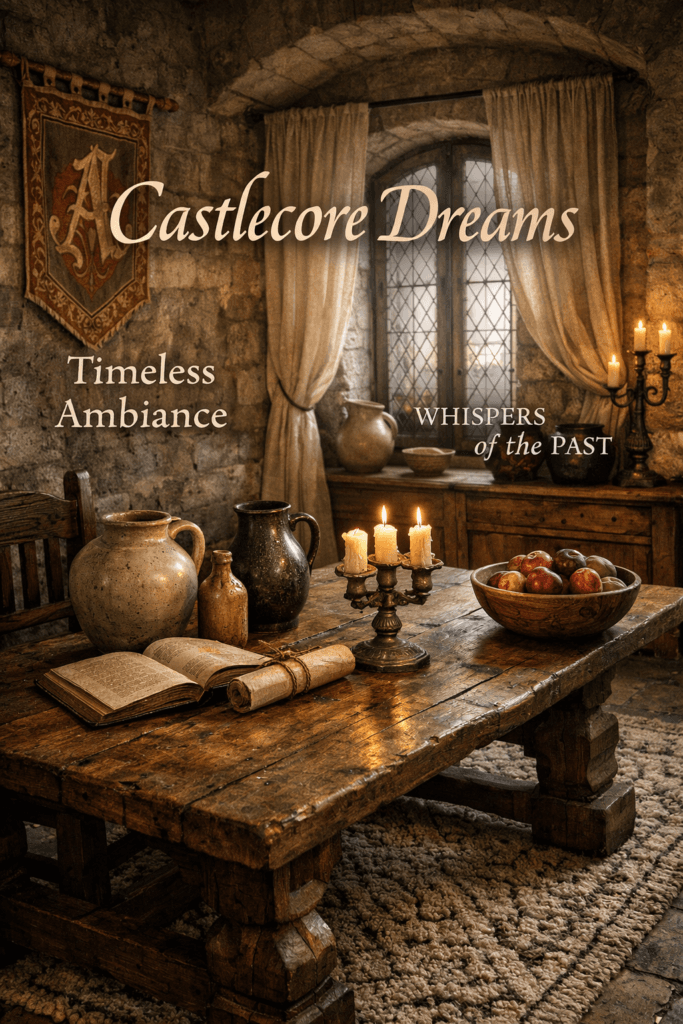
Castlecore begins with material gravity. Medieval spaces feel powerful and calming because they are built from materials that have physical and visual weight: stone, wood, iron, plaster, wool, and linen. These materials do more than just look historic—they absorb sound, soften light, and anchor the nervous system. A room built from honest, heavy materials feels quieter, more stable, and more permanent, even before you add any decoration.
In a modern home, this does not mean you must install stone walls or exposed beams. It means you must prioritize material honesty in everything you bring in. Choose solid wood tables instead of veneer. Choose ceramic, stone, or metal instead of plastic. Choose linen and wool instead of shiny synthetics. Even small upgrades—like swapping lightweight lamps for ceramic or stone bases—begin to change how a room feels.
One of the most common mistakes in Castlecore interiors is trying to achieve the look through decoration rather than structure. A room full of medieval-looking objects sitting on glossy floors with lightweight furniture will never feel convincing. On the other hand, a simple room with a heavy wood table, a thick wool rug, and linen curtains can feel deeply medieval without a single themed object.
A helpful test is longevity: what would still look right in fifty years? If a piece would age well, develop patina, and still feel appropriate, it belongs in a Castlecore home. If it feels disposable or trend-based, it does not.
2. Create Enclosure: Medieval Spaces Feel Protected, Not Exposed
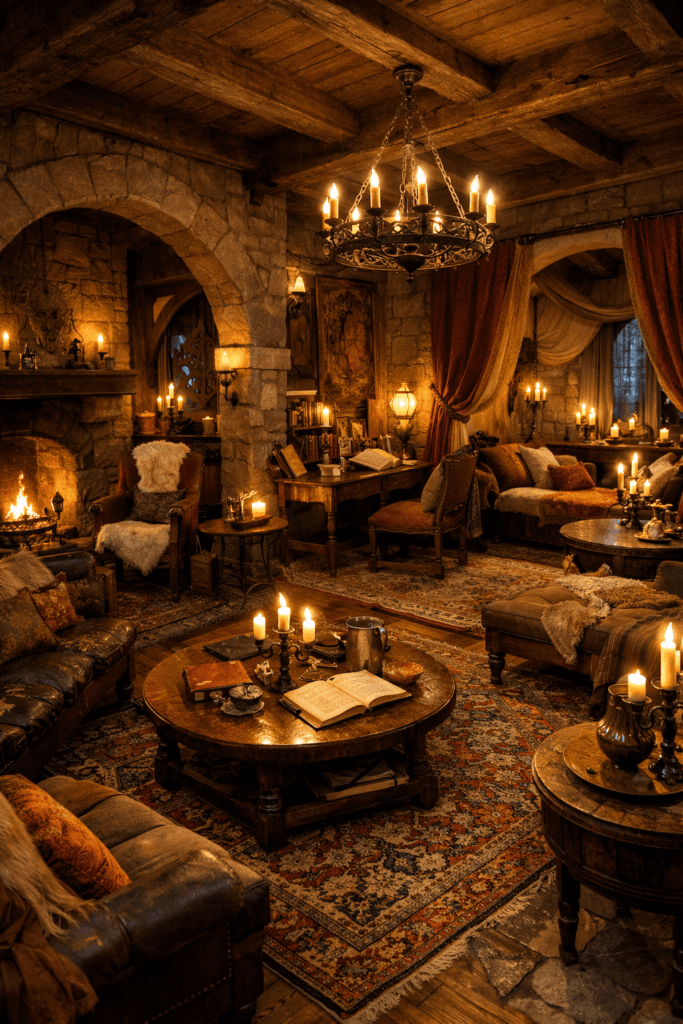
One of the biggest differences between medieval-inspired interiors and modern ones is the relationship to openness. Medieval spaces were not designed to feel expansive or open-plan. They were designed to feel contained, sheltered, and protective. This sense of enclosure is a major reason castle and monastery interiors feel emotionally grounding rather than overstimulating.
In modern homes, you can create enclosure visually instead of structurally. Use rugs to define zones. Use curtains—even where they are not strictly necessary—to soften walls and windows. Use furniture placement to shape smaller, inward-facing areas instead of pushing everything to the edges of the room. A sofa pulled slightly inward, paired with a rug and a lamp, can suddenly create a room-within-a-room feeling.
Lighting plays a huge role here. Pools of warm light make rooms feel intimate and held. Avoid flooding a space with uniform brightness. Let some corners stay dimmer. Shadow is not a flaw in Castlecore—it is part of the architecture.
Whether your taste leans Gothic, Royal, Cottage, Vintage European, or Monastic, this principle is universal: the space should feel like it holds you, not like you are on display inside it.
3. Choose Fewer, Larger, More Serious Pieces
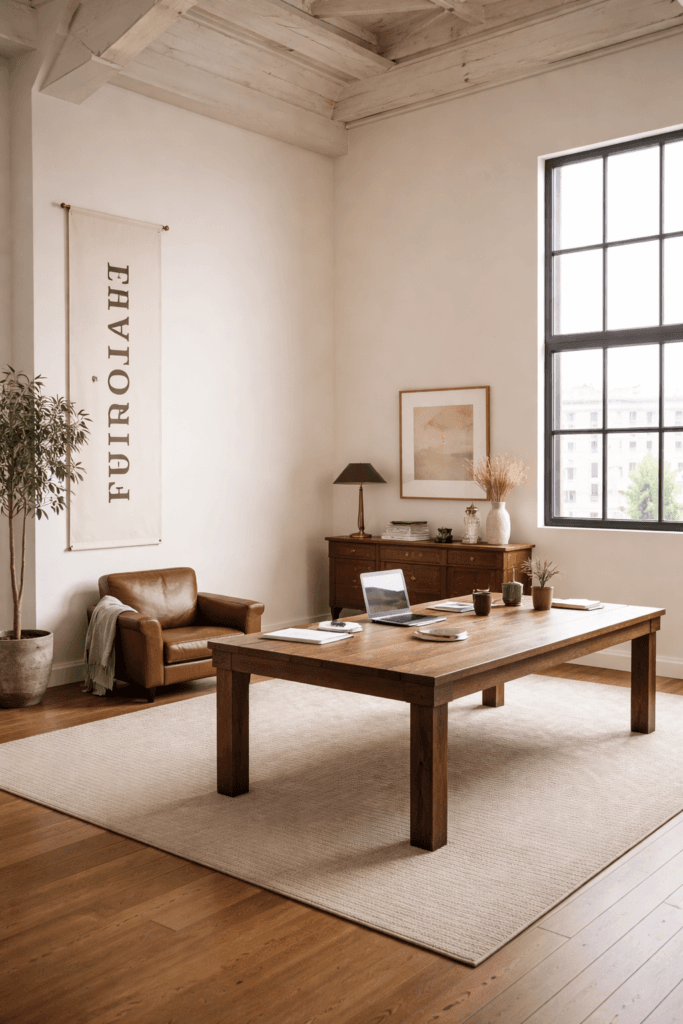
Castlecore is not a style that benefits from lots of small, lightweight furniture. Historically, furniture was expensive, heavy, and built to last for generations. That visual logic still matters today, even in smaller or more modern homes.
Instead of filling a room with many small pieces, focus on fewer, more substantial anchors. One solid table is better than three small ones. One good armchair is better than several decorative ones. One strong cabinet is better than shelves crowded with objects.
Large, serious pieces create visual hierarchy and calm. They give the eye somewhere to rest and make the space feel intentional rather than busy. They also make rooms easier to live in, because fewer pieces means fewer decisions and less visual noise.
This principle shows up differently in each Castlecore branch:
- Royal Castlecore uses larger, more formal pieces.
- Gothic Castlecore uses heavier, more dramatic ones.
- Monastic Castlecore uses fewer, simpler ones.
- Cottage Castlecore uses sturdy, humble ones.
- Vintage European Castlecore uses collected but still weighty ones.
The shared rule is always the same: less, but better.
4. Let Time Be Visible: Patina Is Part of the Design

One of the most important Castlecore ideas is that wear is not a flaw. Medieval-inspired spaces feel alive because they show time. In fact, a room that looks too new or too perfect often feels less authentic than one that shows gentle use.
Think about wood that has softened edges, stone that has been smoothed by footsteps, linen that has faded slightly, or metal that has darkened with age. These are not imperfections—they are records of life.
In a modern home, you can support this by choosing matte finishes instead of glossy ones, avoiding anything that looks factory-sharp or overly polished, and allowing materials to age naturally instead of constantly replacing them. Do not over-distress or artificially age things. That usually looks theatrical and forced. Instead, start with good materials and let real use do the work.
A Castlecore home should look like it has been lived in for years, not styled in a weekend. Time is not the enemy of this aesthetic—it is one of its main ingredients.
5. Build Atmosphere With Light, Not With Objects
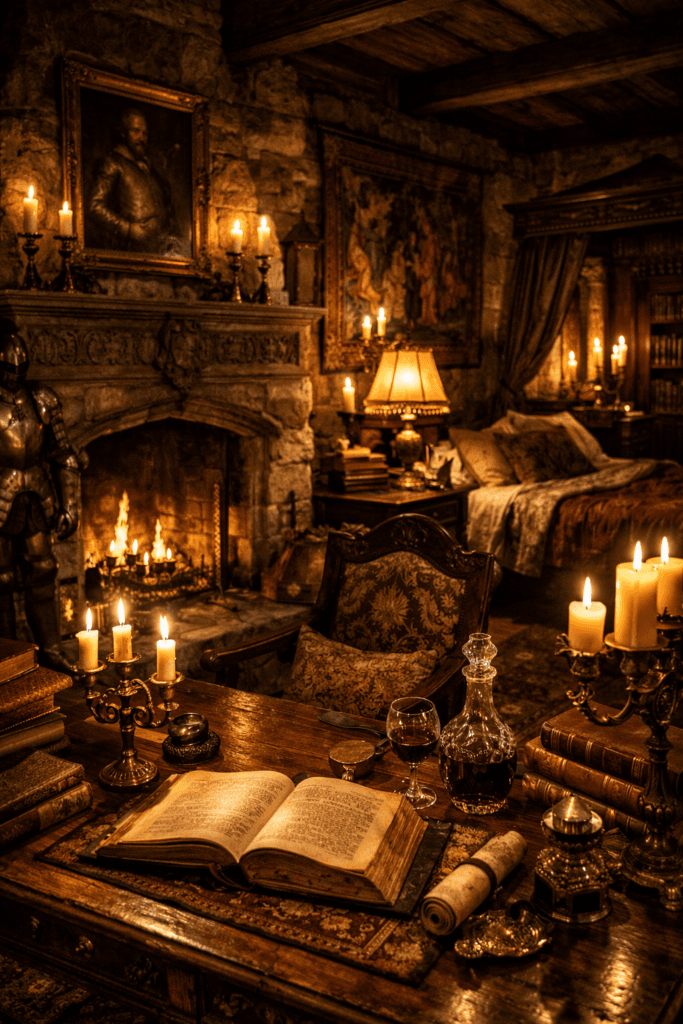
Medieval spaces were defined by light and shadow, not by decor density. Candles, small windows, and thick walls created rooms where light moved slowly and selectively. You can recreate this feeling in a modern home without changing any architecture.
Start by abandoning the idea that every corner must be evenly lit. Use multiple small light sources: table lamps, floor lamps, wall sconces, and candles. Choose warm bulbs. Let some areas remain dimmer than others. This creates depth, calm, and a sense of mystery.
When light is right, a room needs far fewer objects to feel rich and complete. Shadow becomes part of the architecture, and empty space starts to feel intentional rather than unfinished.
This principle is especially powerful for Gothic and Monastic Castlecore, but it elevates Royal, Cottage, and Vintage European interiors just as much.
6. Make Objects Earn Their Place
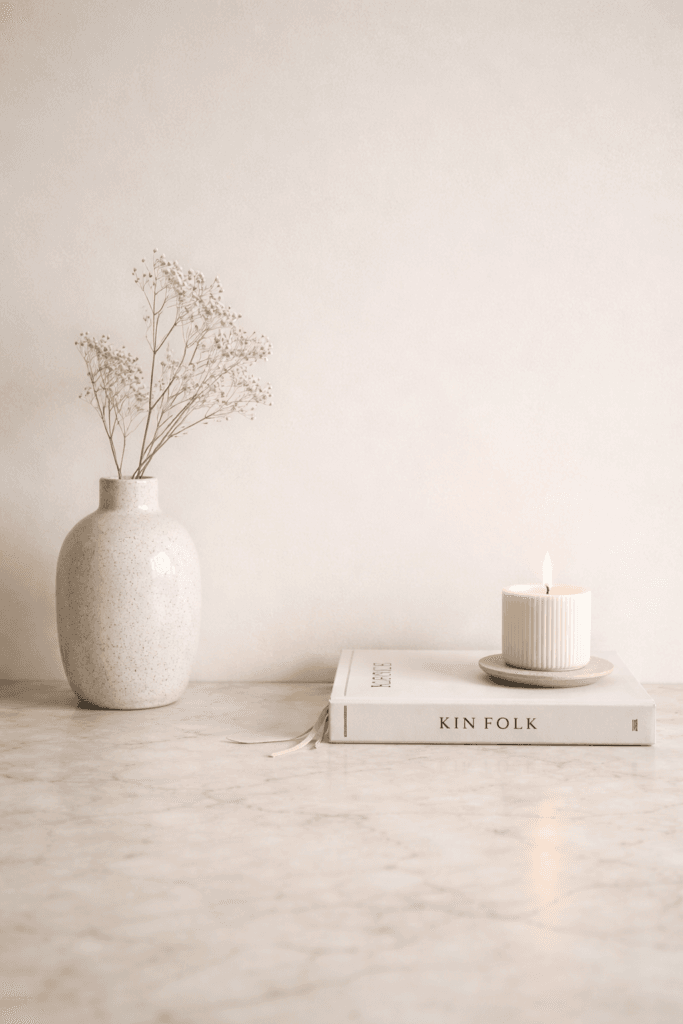
In true medieval and monastic environments, objects existed because they were useful, symbolic, or deeply valued. This mindset is essential for Castlecore to feel authentic rather than themed.
Before adding something, ask yourself:
- Does this support how I live here?
- Does it carry emotional or functional weight?
- Or is it only filling space?
Castlecore interiors feel powerful because they are edited. Each object has room to breathe. This does not mean minimalism. It means intentionality. You can have many objects, but they should not all compete for attention.
A good practice is to leave some surfaces deliberately empty. This gives visual rest and makes the objects you do keep feel more meaningful.
7. Choose Your Branch of Castlecore (And Don’t Mix Them Blindly)
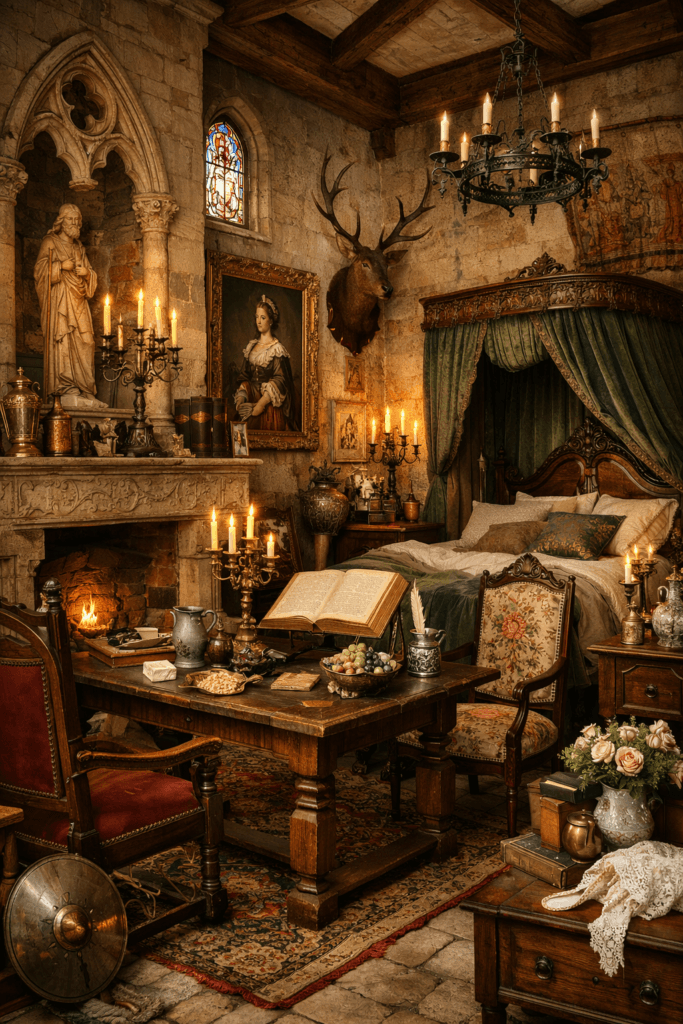
Castlecore is not one single look. It is a family of related styles, each with a different emotional outcome:
- Gothic Castlecore: dramatic, symbolic, shadowed
- Royal Castlecore: formal, ceremonial, grand
- Enchanted Cottage Castlecore: warm, cozy, storybook
- Vintage European Castlecore: collected, layered, old-world
- Monastic Castlecore: quiet, minimal, contemplative
All of them share the seven principles in this article, but they apply them differently. The most common mistake is mixing these branches without intention, which creates visual confusion.
Before choosing furniture or decor, choose your emotional goal. Do you want drama? Calm? Warmth? Grandeur? History? Let that answer guide your decisions.
You can blend styles, but only if you understand what you are blending and why.
Final Thoughts: Castlecore Is About How a Home Feels to Live In
: Castlecore Is About How a Home Feels to Live In
Castlecore is not about pretending you live in a castle. It is about creating a home that feels protective, enduring, and emotionally grounding.
When you focus on materials, enclosure, weight, time, light, restraint, and intention, even a small modern apartment can begin to feel medieval in spirit.
Style comes and goes. Shelter, gravity, and calm never do.