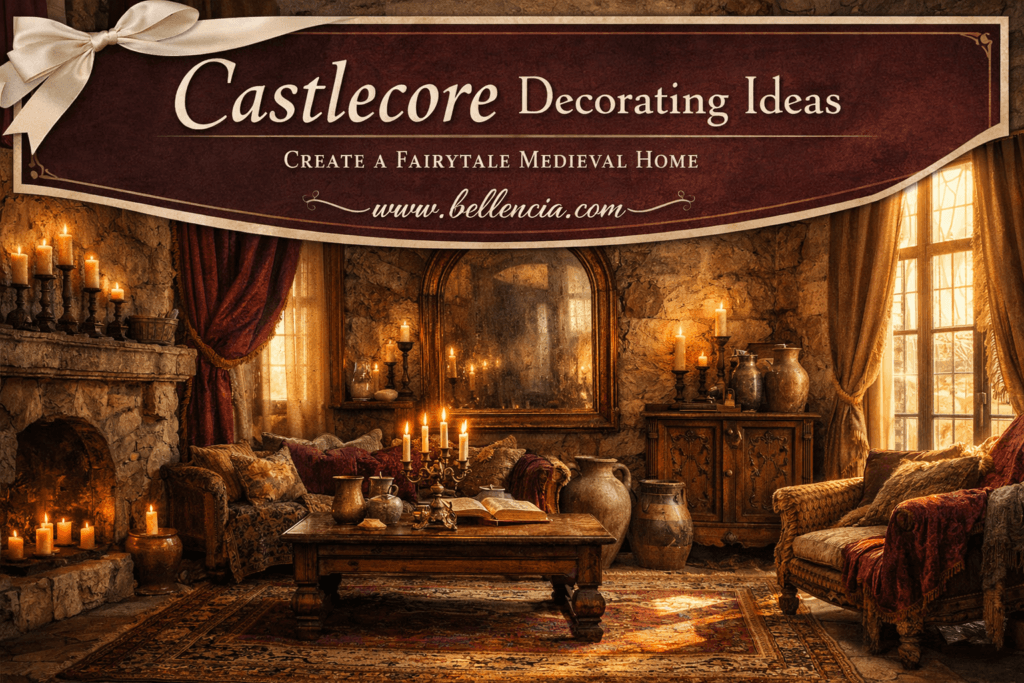
Introduction: Castlecore Is a Feeling, Not a Floor Plan
Trending Finds Readers Are Loving
Explore affordable luxe discoveries people are clicking on right now.
See What's TrendingCastlecore is not about copying history. It’s about borrowing the emotion of history—the quiet drama, the weight of stone, the romance of shadow and candlelight, the sense that a space has stories to tell. Where our earlier guide, “7 Castlecore Decor Ideas for a Medieval-Inspired Home,” focused on specific decor pieces and entry-level styling, this article is the next step in the journey. This is about building a complete atmosphere—a home that feels grounded, timeless, and slightly magical, even if it’s a modern apartment or a suburban house.
The reason Castlecore resonates so deeply is that it answers a modern problem: our homes are often bright, minimal, and efficient—but emotionally flat. Castlecore brings back depth, texture, shadow, and narrative. It invites you to slow down, makes rooms feel protected and intentional, and lived-in. It replaces visual noise with visual weight.
Importantly, Castlecore is not about excess or clutter. It’s about intentional richness—choosing fewer things, but letting those things have presence. A heavier curtain instead of a sheer one. A substantial table instead of a flimsy one. A warm lamp instead of a bright overhead light.
In this guide, you’ll find ten design strategies that work together as a system. You don’t need to implement all of them at once. Castlecore is best built gradually, layer by layer, so the space evolves naturally rather than feeling staged.
Think of this article as a long-term design blueprint—not a shopping list.
1. Build a Stone-Inspired Color Palette (Without Remodeling)
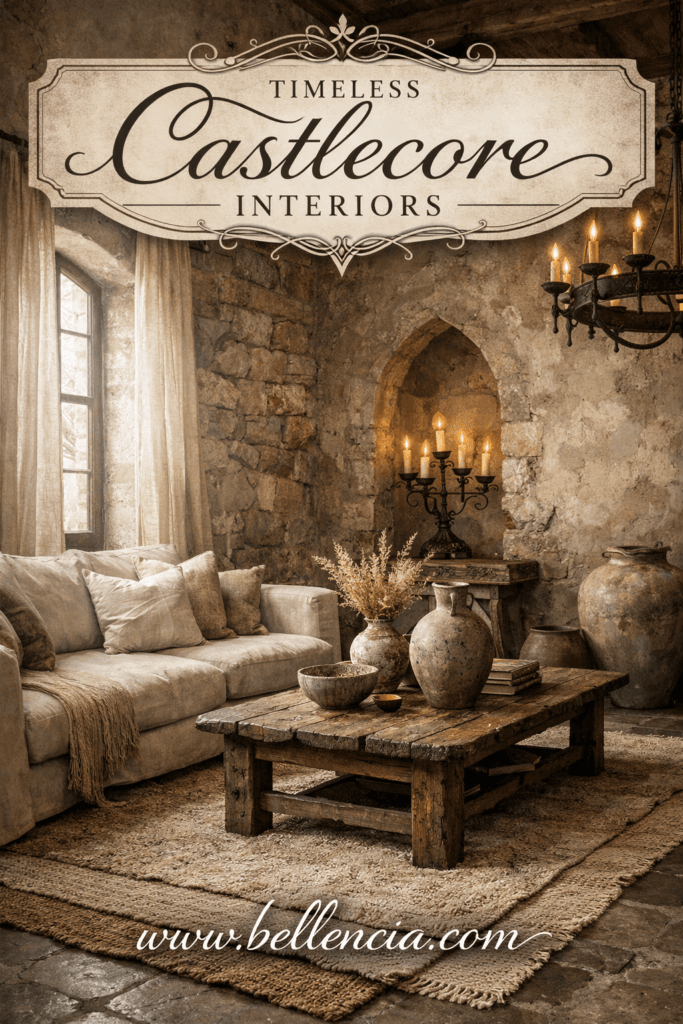
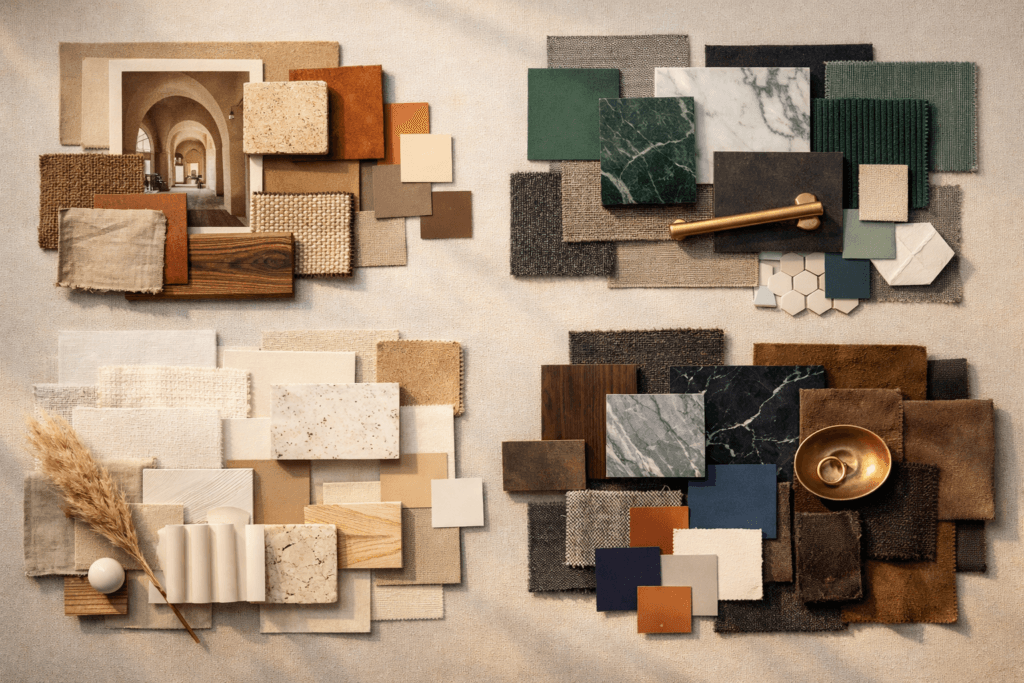
The emotional foundation of Castlecore is stone—cool, grounded, ancient, and calm. But you don’t need actual stone walls to achieve this effect. You need the illusion of stone, created through color and surface treatment.
Start with a palette built around:
- Warm greige and mushroom tones
- Soft limestone beige
- Muted taupe
- Smoky gray
- Deep charcoal
- Dusty clay
These colors feel architectural. They immediately suggest old walls, thick structures, and permanence. They also act as a perfect neutral base for richer accents like wood, metal, velvet, and linen.
If you can paint, consider finishes that aren’t perfectly flat. Limewash, plaster-look paint, or subtly textured finishes add movement and depth to walls. Even a single accent wall in this style can completely change the emotional temperature of a room.
If you can’t paint, you can still build the palette through rugs, curtains, bedding, upholstery, and large furniture pieces. The goal is not to make the room dark—it’s to make it grounded.
Castlecore rooms should feel like they are carved out of something solid, not floating in light.
2. Use Heavy Drapery for Instant Medieval Drama
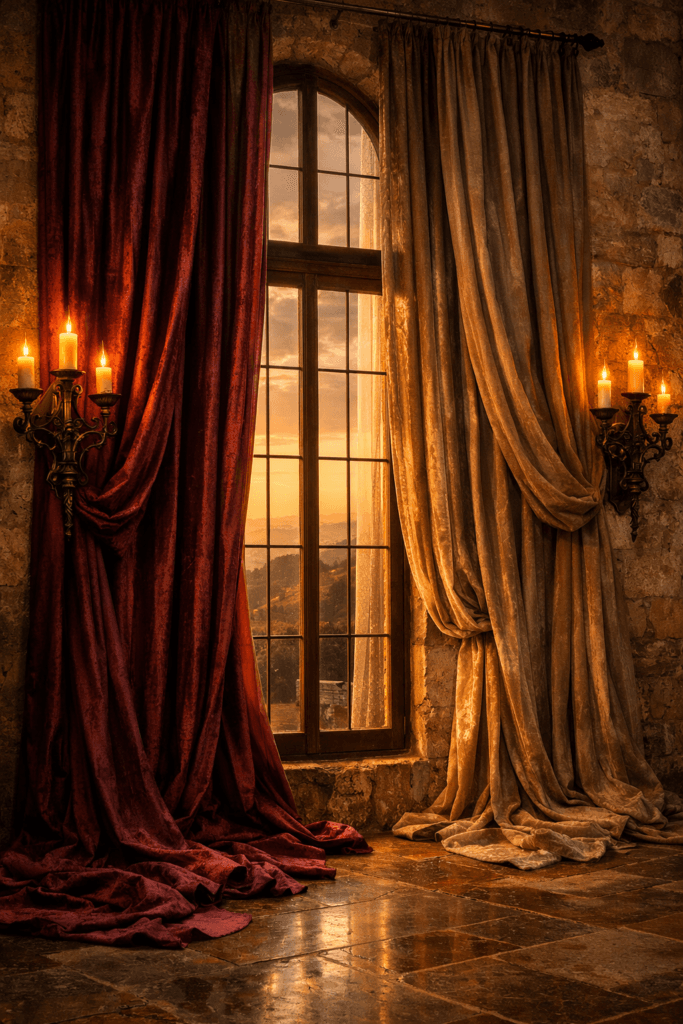
If there is one change that delivers the biggest emotional return for Castlecore, it’s curtains.
Modern spaces often rely on sheer panels or blinds. They’re practical, but visually weightless. Castlecore needs visual gravity.
Choose curtains made from:
- Velvet
- Heavy linen
- Thick cotton
- Textured or woven fabrics
Hang them higher and wider than the window. Let them touch the floor. Let them pool slightly if possible. This creates the illusion of taller walls and more architectural presence.
Color choices that work especially well:
- Deep wine
- Forest green
- Warm taupe
- Smoky blue
- Charcoal
These fabrics don’t just block light—they frame the room. They make the space feel enclosed, protected, and intentional, like a chamber rather than a generic room.
If your room only allows one Castlecore upgrade, make it this one.
3. Create Moody, Old-World Lighting
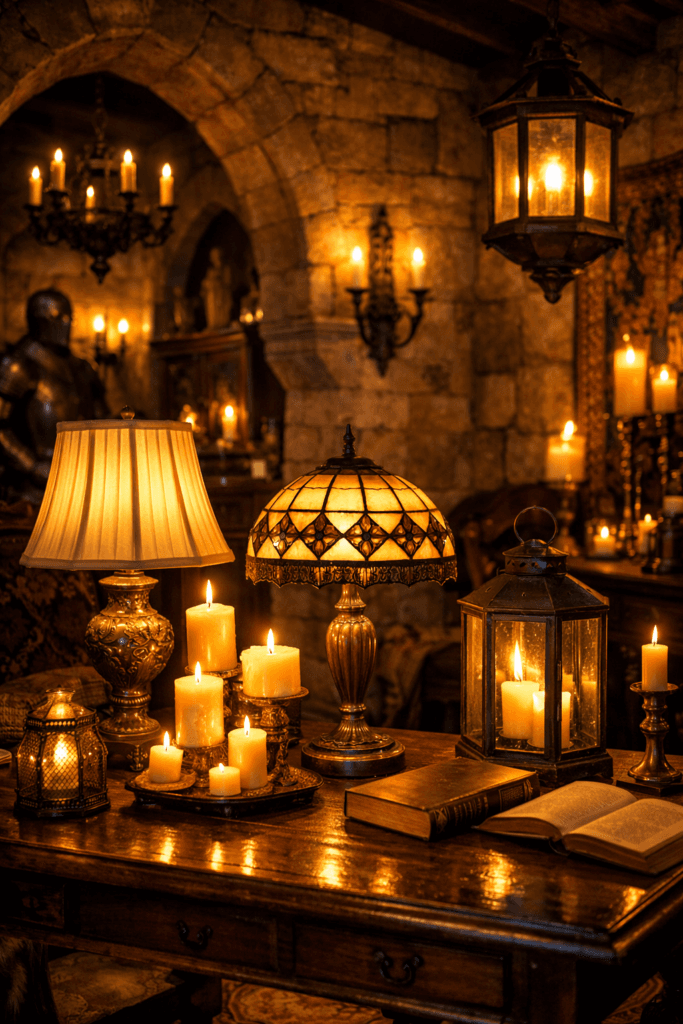
Castlecore and overhead lighting do not get along.
Bright ceiling lights flatten rooms. They erase shadow. They kill atmosphere.
Castlecore lighting should be layered, warm, and low. Think in terms of pools of light, not total illumination.
Use:
- Table lamps
- Floor lamps
- Wall sconces
- Lantern-style fixtures
- Candle-style bulbs
Choose warm bulbs, not white ones. Place lights so that they create contrast—one corner glowing, another fading into shadow.
This is what makes a room feel cinematic and intimate. The goal is not visibility—it’s ambience.
A Castlecore room should look better in the evening than during the day.
4. Choose Furniture With Medieval-Inspired Silhouettes
You don’t need reproduction medieval furniture. You do need presence and proportion.
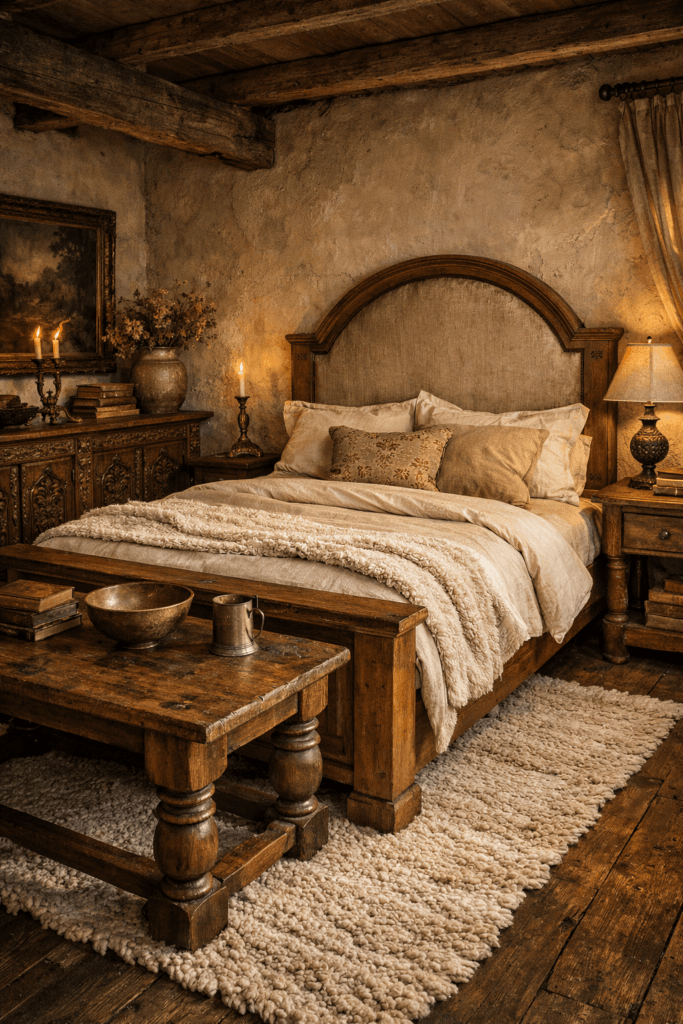
Look for furniture with:
- Thick legs
- Solid frames
- Rounded or arched shapes
- Carved or paneled details
- Substantial visual weight
Avoid anything that looks too thin, spindly, or ultra-modern.
One anchor piece per room is often enough:
- A solid wood bed
- A heavy dining table
- A chunky sideboard
- A high-backed chair
These pieces set the tone. Everything else can be simpler as long as the core silhouette feels grounded and timeless.
Castlecore furniture should feel like it could survive generations—not like it was designed to be replaced in five years.
5. Tell Stories With Tapestries and Wall Hangings
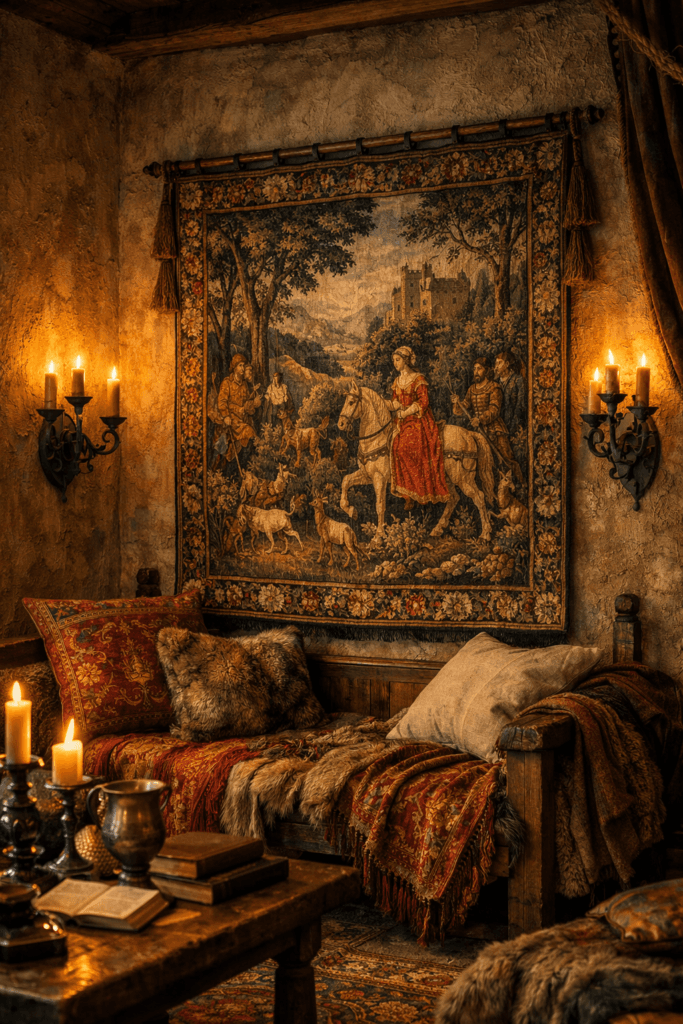
Historically, castles were not minimal spaces. Walls were used to tell stories, display symbols, and soften stone.
You can bring that same narrative quality into your home with:
- Tapestries
- Woven wall hangings
- Textile art
- Large fabric panels
Choose motifs that feel:
- Medieval
- Botanical
- Mythic
- Heraldic
- Romantic or historical
These pieces do more than decorate. They change the acoustics of a room, soften hard surfaces, and make walls feel inhabited rather than empty.
One large tapestry can become the emotional center of a space.
6. Layer Textures Like a Medieval Interior
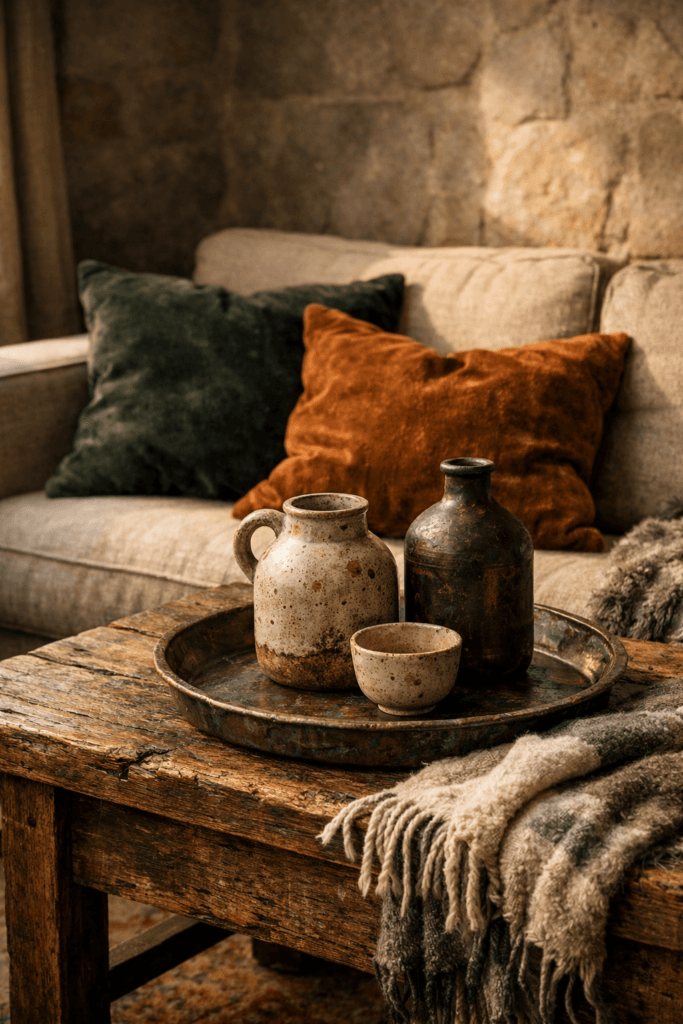
Castlecore is not about smooth surfaces. It’s about tactile richness.
A convincing Castlecore room usually includes:
- Wood
- Metal
- Stone-like textures
- Linen
- Velvet
- Wool
- Ceramics
The magic is in contrast:
- Rough with soft
- Matte with subtle shine
- Heavy with light
Avoid anything that feels overly sleek or glossy. Even modern pieces should be grounded by something textured nearby.
The more your room invites touch, the more believable and comforting it becomes.
7. Use Arches, Mirrors, and Architectural Illusions
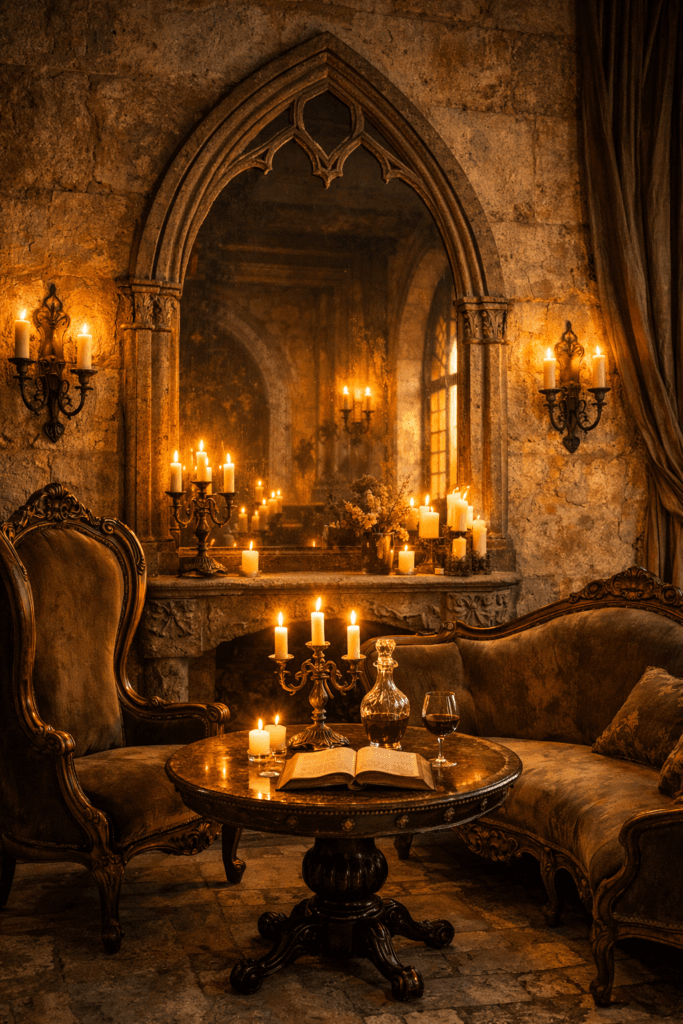
Most homes don’t have arched doorways or stone niches—but you can suggest architecture.
Use:
- Arched mirrors
- Curved headboards
- Rounded shelves
- Gothic or cathedral-inspired shapes
These forms quietly reference historical architecture and shift the emotional language of a space without any renovation.
Mirrors, in particular, are powerful. They can suggest depth, reflect candlelight, and make small rooms feel more layered and mysterious.
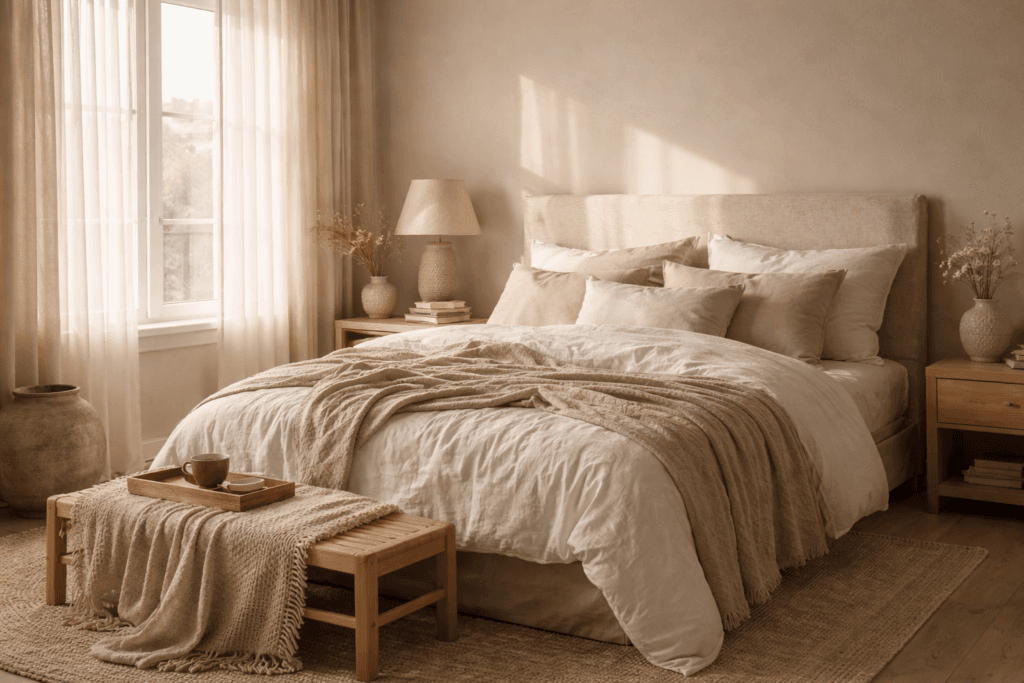
8. Design a Castlecore Bedroom That Feels Royal and Safe
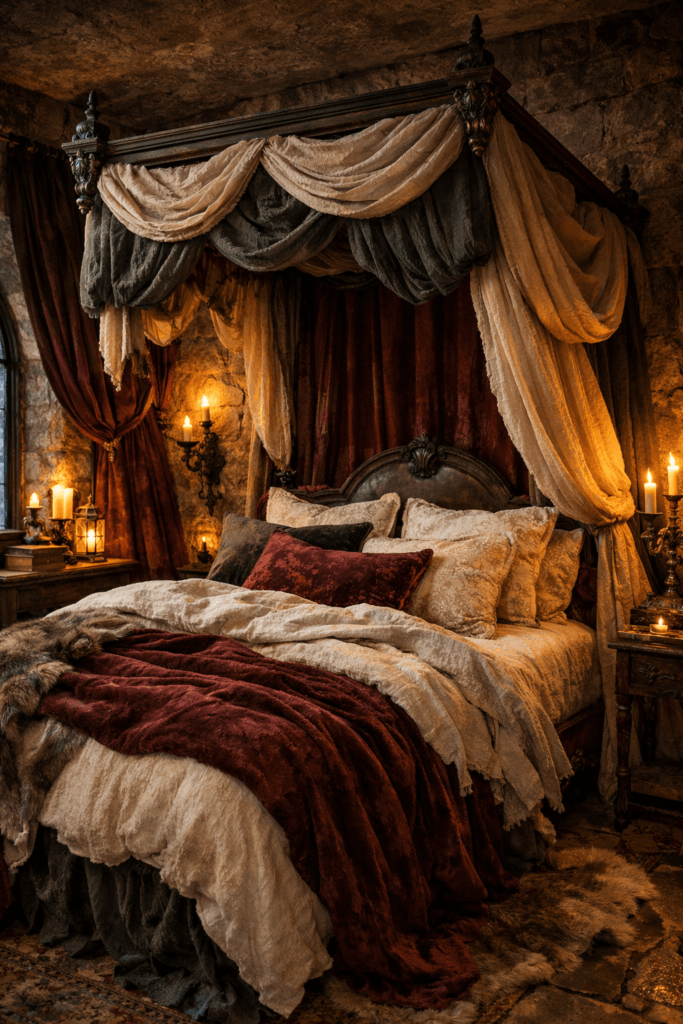
If there is one room where Castlecore truly shines, it’s the bedroom.
A Castlecore bedroom should feel:
- Enclosed
- Quiet
- Protected
- Slightly ceremonial
Focus on:
- A substantial bed or headboard
- Layered bedding in rich neutrals or jewel tones
- Soft, indirect lighting
- Heavy curtains
- Textured throws and pillows
This is not about luxury in a modern sense. It’s about sanctuary—a room that feels like a private chamber away from the world.
9. Create a Dining Space That Feels Like a Great Hall
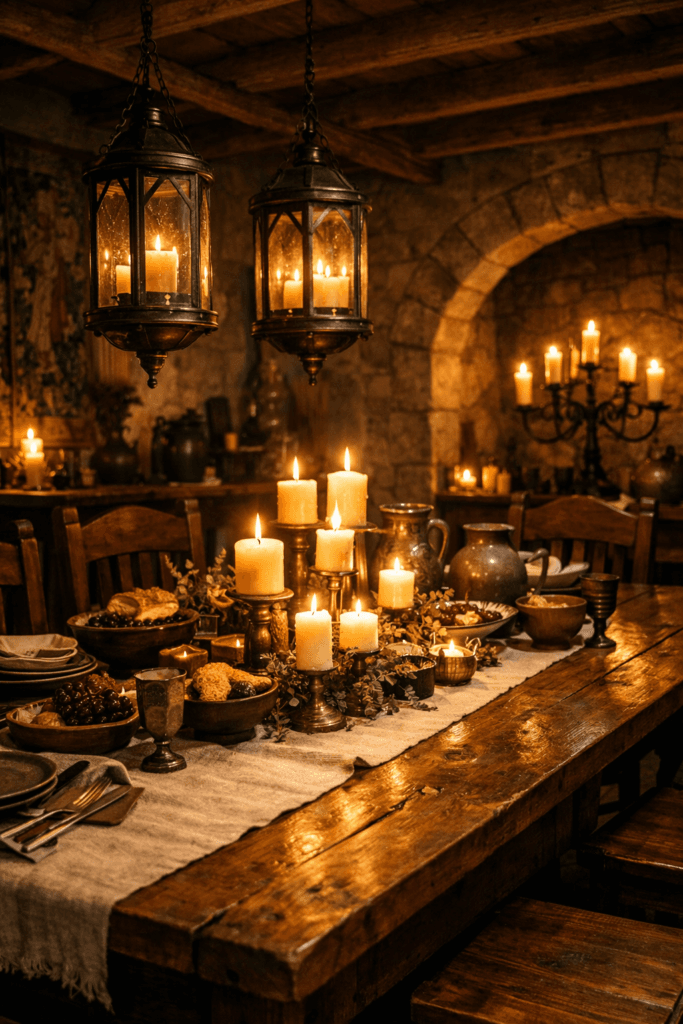
You don’t need a banquet table to borrow the ritual and gravity of medieval dining.
Focus on:
- A substantial table (or making your existing one feel heavier with styling)
- A table runner or textured cloth
- Candles or lantern-style lighting
- Simple, earthy tableware
Even a small dining nook can feel ceremonial if it’s styled with intention. The goal is to make meals feel deliberate and grounded, not rushed or temporary.
10. Finish With Small Details That Make It Believable

This is where Castlecore becomes a world, not just a look.
Use:
- Old or old-looking books
- Ceramic and stoneware vessels
- Wooden boxes
- Metal trays
- Subtle vintage-style objects
These pieces should feel collected over time, not bought all at once.
They are what make a home feel inhabited by a story.
How to Build Castlecore Slowly (And Why You Should)
The biggest mistake people make with aesthetic styles is trying to complete them instantly.
Castlecore works best when it’s grown, not installed.
Start with:
- Lighting
- Curtains
- One anchor furniture piece
Then layer in:
- Textiles
- Wall elements
- Decorative objects
This creates a space that feels authentic rather than staged.
Castlecore in Small Spaces and Modern Homes
You do not need:
- High ceilings
- Stone walls
- A historic building
You need:
- Control of light
- Control of texture
- Control of color
- Control of visual weight
Even a studio apartment can feel Castlecore if it’s treated like a series of chambers rather than one bright, open box.
Use curtains, rugs, lighting zones, and furniture placement to create rooms within rooms.
Final Thoughts: Castlecore Is About Emotional Architecture
Castlecore is not about pretending you live in another century.
It’s about creating spaces that feel:
- Calm
- Protected
- Grounded
- Timeless
- Intentional
It’s about replacing visual noise with visual meaning.
And the most beautiful part? You don’t need to do it all at once. Let your home become Castlecore slowly, layer by layer, story by story.
If you enjoyed this deeper dive, make sure to also read our original guide:7 Castlecore Decor Ideas for a Medieval-Inspired Home—together, they form a complete design journey into this aesthetic.