
Sculptural Lighting Decor: The Interior Trend Designers Are Using
August 25, 2026
Trending Finds Readers Are Loving
Explore affordable luxe discoveries people are clicking on right now.
See What's TrendingFor many years, lighting fixtures were designed primarily for function.
Ceiling lights illuminated a room, and table lamps provided extra brightness where needed.
But modern interior design has begun to treat lighting differently.
Today, lighting fixtures are often designed as architectural features that shape the visual identity of a room.
This shift has given rise to one of the most exciting trends in interior design:
sculptural lighting decor.
Rather than hiding lighting fixtures within the ceiling, designers now highlight them.
Large chandeliers, artistic pendants, and geometric lighting structures are placed prominently within rooms.
These fixtures act as visual anchors that define the space.
Publications such as
https://www.architecturaldigest.com/story/interior-design-trends
have highlighted the increasing role of statement lighting in modern interiors.
Sculptural lighting fits perfectly within that movement.
What Makes Lighting “Sculptural”
Not every lighting fixture qualifies as sculptural lighting.
The defining characteristic is form.
Sculptural lighting fixtures are designed with shapes that resemble artwork.
Instead of simple round or square fixtures, designers use lighting that incorporates dramatic structures.
These may include:
• branching chandelier arms
• layered glass spheres
• geometric metal frames
• asymmetrical lighting arrangements
When installed within a room, these fixtures create movement and visual interest.
Light spreads through the structure and interacts with surrounding surfaces.
This produces a dynamic interior that feels far more expressive than a room lit by standard fixtures.
Sculptural Lighting Fixtures Designers Love
Several types of fixtures have become particularly popular in sculptural lighting design.
Each one creates a slightly different visual effect.
Constellation Chandeliers
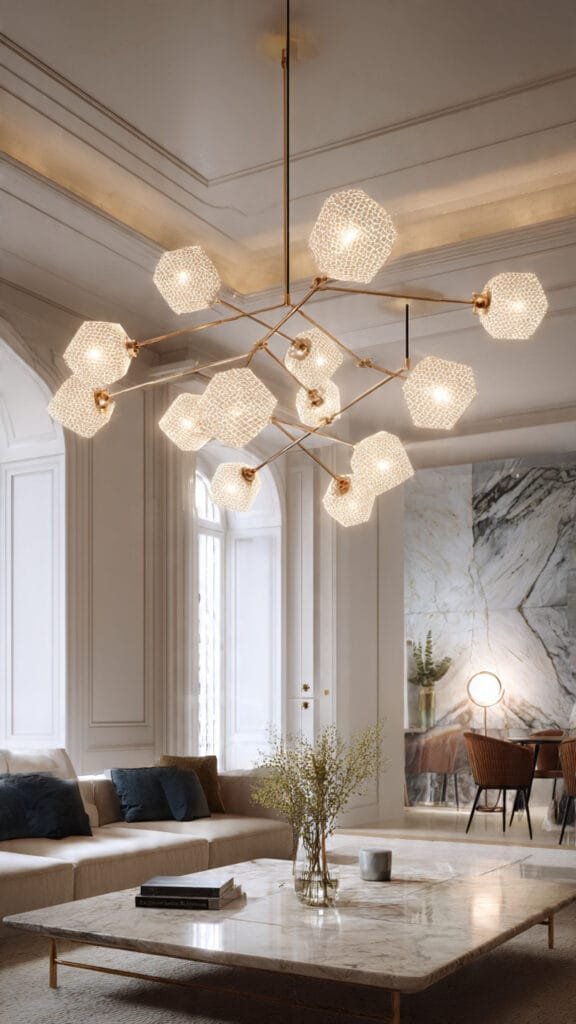
Constellation chandeliers are composed of multiple small lights connected by thin metal rods.
The structure often resembles a map of stars.
These fixtures are usually constructed from:
- brushed brass
- polished steel
- matte black metal
The lights themselves are typically frosted globes that soften the illumination.
This style connects closely with the atmospheric lighting discussed in
https://www.bellencia.com/moonlight-lighting-decor
where orb lighting creates a soft glowing environment.
Sunburst Chandeliers
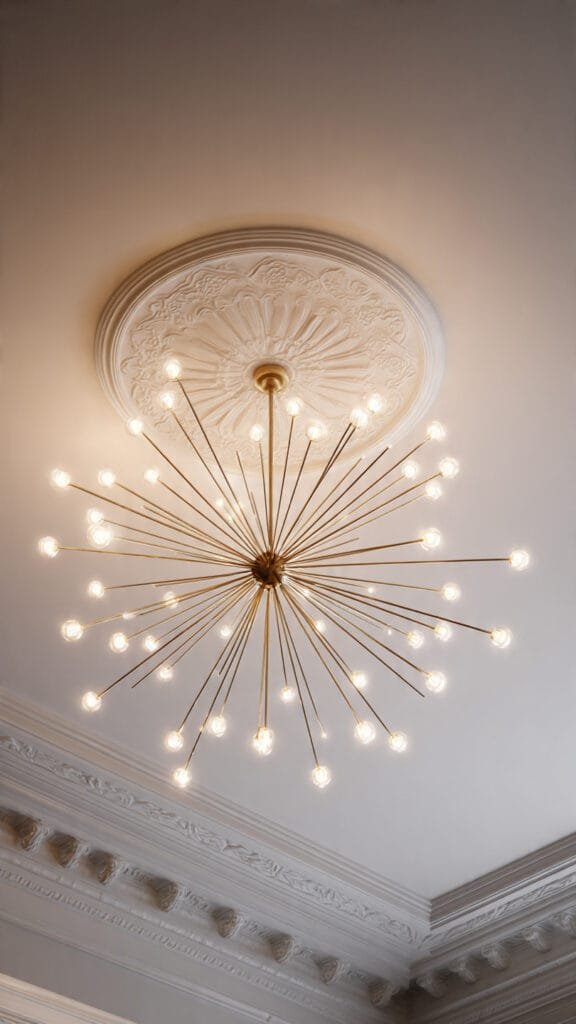
Sunburst lighting fixtures radiate outward from a central hub.
Thin metal rods extend outward in all directions, each ending with a glowing bulb.
These fixtures add dramatic energy to a room.
They are particularly effective in spaces with higher ceilings.
Glass Cluster Pendants
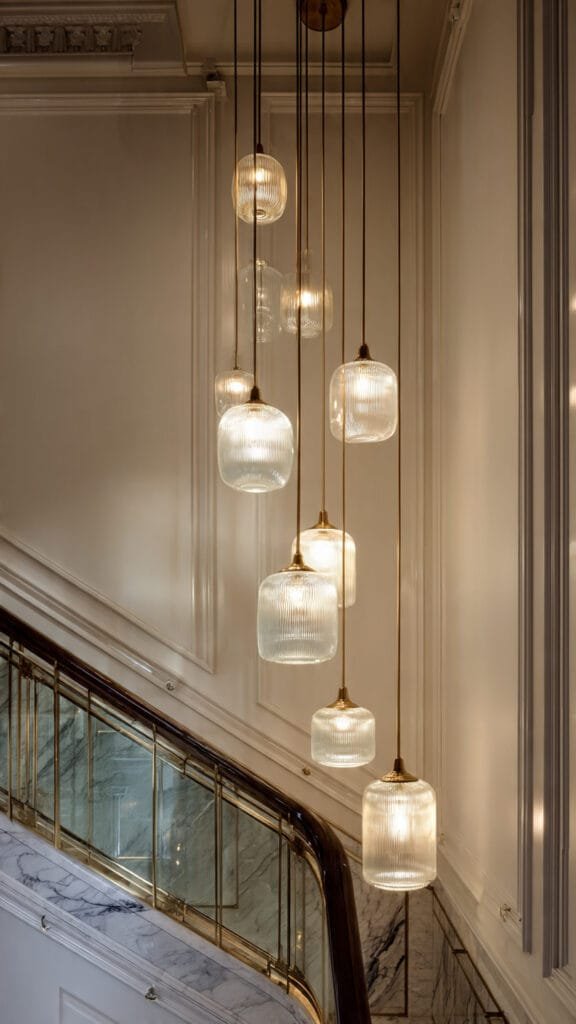
Glass cluster pendants consist of several suspended glass globes hanging at different heights.
This layered arrangement creates visual movement while also diffusing light softly.
Cluster pendants often appear in:
- stairwells
- dining rooms
- entryways
because the varying heights make them ideal for taller vertical spaces.
Why Sculptural Lighting Feels So Luxurious
One reason sculptural lighting has become so popular is because it adds instant drama to interiors.
Even a simple room can feel elevated when a striking chandelier is installed above the seating area.
The fixture becomes the focal point of the space.
Materials also play an important role.
Designers frequently use combinations of:
- brass
- glass
- marble
- stone
These materials interact with light in ways that create reflections and highlights throughout the room.
This effect becomes even more powerful when paired with the atmospheric interiors explored in
https://www.bellencia.com/celestial-home-decor-trend
where reflective materials amplify the glow of lighting fixtures.
How Designers Place Sculptural Lighting in a Room
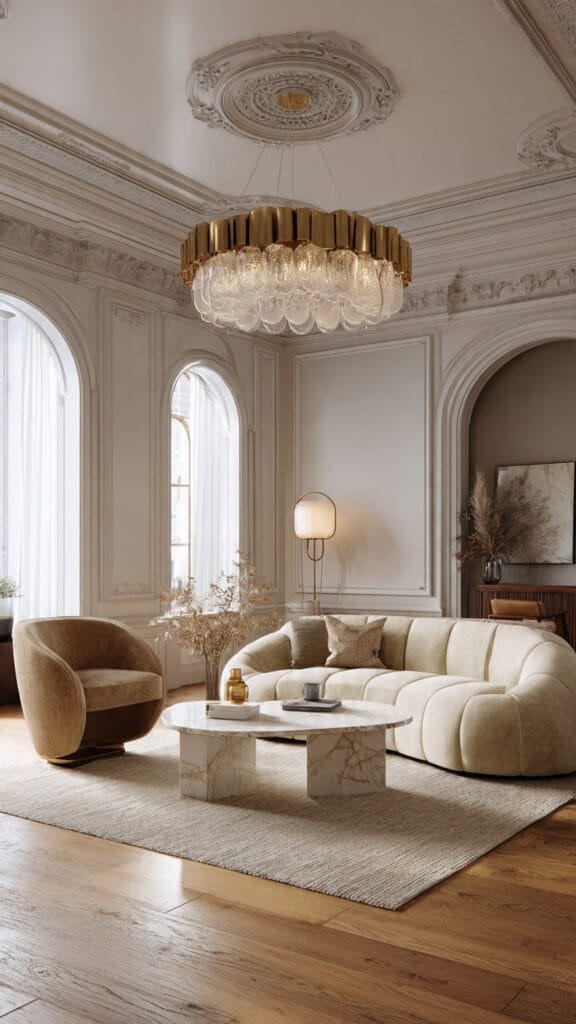
Placement is one of the most important factors when using sculptural lighting.
Because these fixtures act as visual focal points, they need to be positioned in ways that allow their form to be fully appreciated.
Designers usually install sculptural lighting in areas where it can anchor the room’s layout.
Some of the most common placement strategies include:
Above the main seating area
Large chandeliers are often positioned directly above sofas or coffee tables so that the fixture becomes the visual centerpiece of the room.
Above dining tables
Dining rooms are ideal spaces for sculptural lighting because the fixture can hang lower without obstructing movement.
In entryways
Entry halls benefit from statement lighting because the fixture immediately establishes the design style of the home.
Over stairwells
Cluster pendants or multi-level chandeliers work especially well in staircases where vertical height allows the fixture to extend downward dramatically.
These placement strategies ensure that the lighting fixture becomes part of the room’s architecture rather than simply an accessory.
The Materials That Make Sculptural Lighting Stand Out
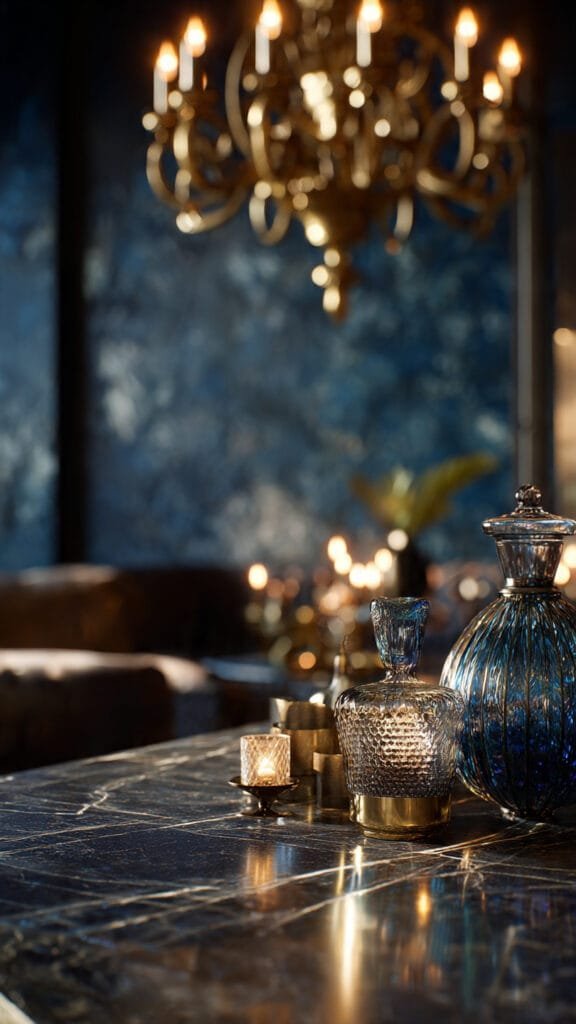
Materials play a major role in how sculptural lighting interacts with its environment.
Designers often select materials that either reflect light or soften it.
Some of the most common materials used in sculptural lighting fixtures include:
Brass
Brass has become one of the most popular finishes in lighting design.
Its warm tone reflects light softly and adds a sense of luxury to interiors.
Frosted Glass
Frosted glass diffuses light evenly, preventing harsh glare while creating a soft glow.
This type of lighting is especially common in orb chandeliers.
Alabaster
Alabaster is a translucent stone that allows light to pass through it gently.
When used in lighting fixtures, the stone glows from within and produces a moonlike effect.
This material connects closely with the glowing lighting style explored in
https://www.bellencia.com/moonlight-lighting-decor
where alabaster lamps and frosted globes create a soft atmospheric environment.
Steel or Matte Black Metal
Some sculptural lighting designs use darker metal finishes to create contrast against lighter ceilings and walls.
These fixtures tend to appear more graphic and architectural.
How Sculptural Lighting Works With Architectural Details
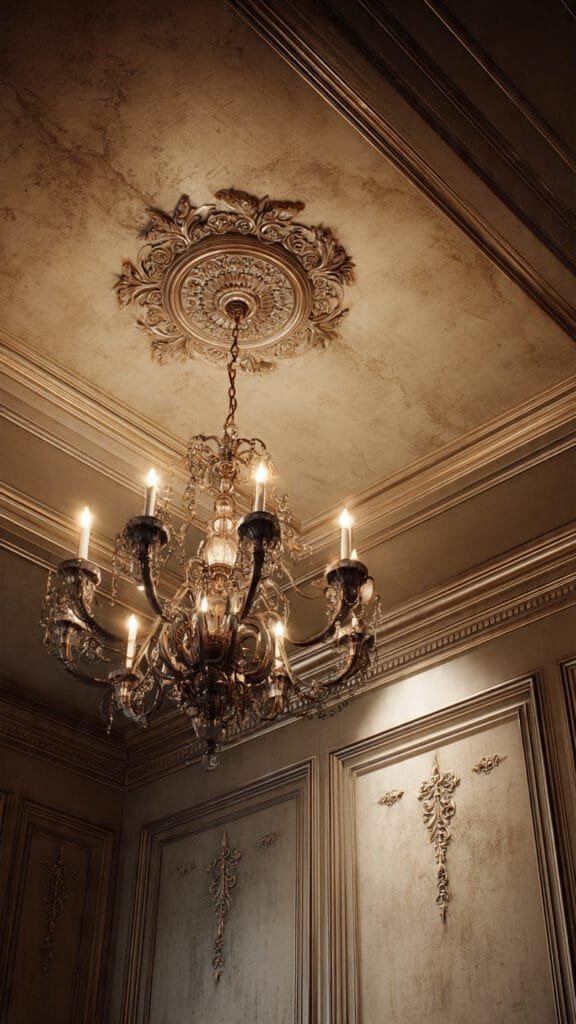
One of the reasons sculptural lighting has become so influential is because it interacts beautifully with architectural features.
Rather than simply illuminating a room, the fixture often highlights the surrounding structure.
For example:
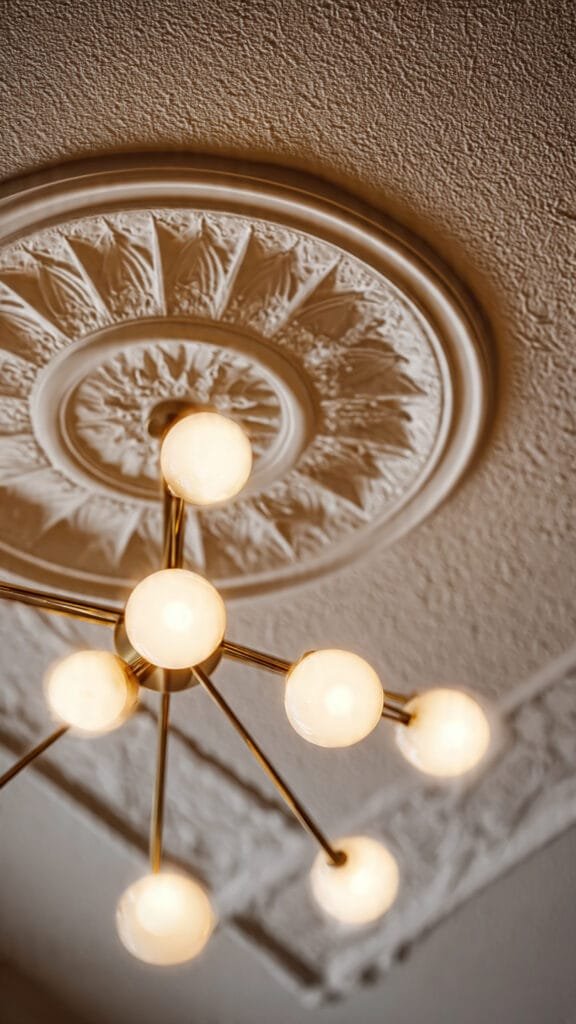
A constellation chandelier installed beneath a decorative ceiling medallion draws attention to the ceiling’s craftsmanship.
A cluster pendant hanging within a tall stairwell emphasizes the vertical height of the space.
Lighting can also highlight wall textures such as:
- Venetian plaster
- limewash paint
- panel molding
When light spreads across these surfaces, it creates subtle shadows that add depth to the room.
This layered environment is similar to the atmospheric interiors discussed in
https://www.bellencia.com/celestial-home-decor-trend
where lighting interacts with reflective materials and textured walls to create dramatic visual depth.
The Relationship Between Lighting and Furniture
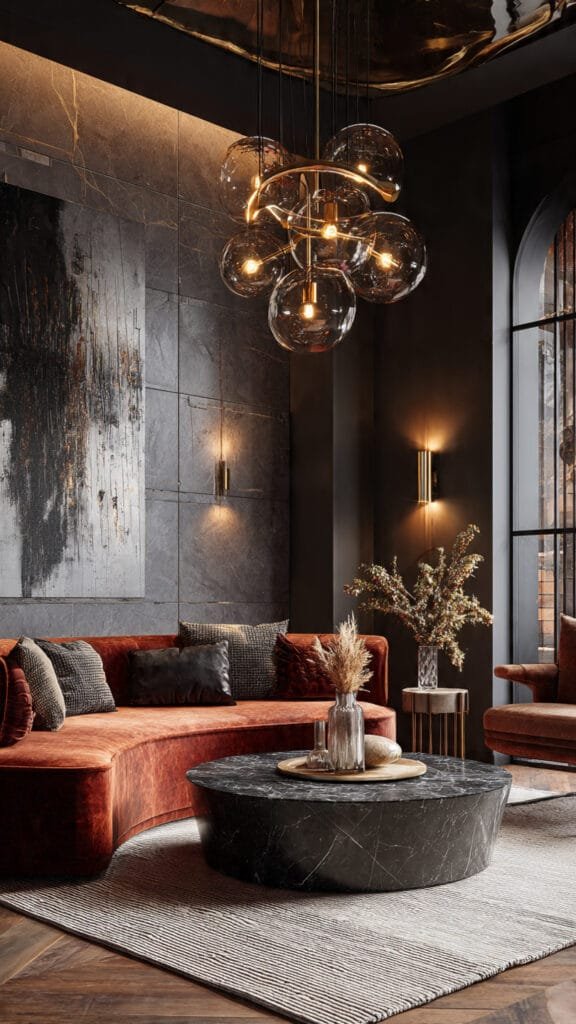
Sculptural lighting works best when it complements the shapes of the furniture below it.
Designers frequently pair dramatic lighting with equally sculptural furniture pieces.
For example:
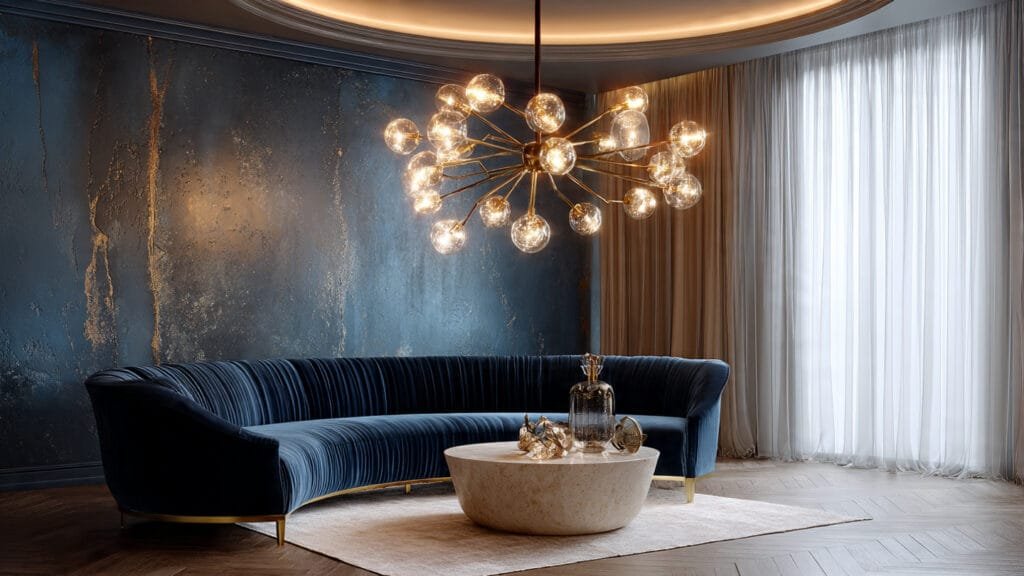
A branching chandelier might hang above a curved velvet sofa.
A sunburst fixture might be positioned above a round marble dining table.
This balance between lighting and furniture helps the room feel cohesive rather than chaotic.
Furniture materials also influence how lighting behaves within the room.
Velvet fabrics absorb light and create softness.
Stone surfaces reflect light subtly.
Glass decor pieces scatter small reflections across nearby surfaces.
These interactions help the room feel more dynamic.
Why Sculptural Lighting Works in Modern Interiors
Modern homes often feature open floor plans and minimal architectural ornamentation.
While this style creates clean spaces, it can sometimes make rooms feel visually empty.
Sculptural lighting solves this problem by introducing form and movement.
A single dramatic fixture can define the entire atmosphere of a room.
For example:
A constellation chandelier above a living room seating area instantly establishes a modern celestial aesthetic.
This approach pairs especially well with the cool-toned interiors explored in
https://www.bellencia.com/cool-blue-interior-design
where calming blue palettes allow dramatic lighting fixtures to stand out more clearly.
When lighting, furniture, and color palettes are carefully coordinated, the entire room begins to feel intentional and refined.
Sculptural Lighting in Bedrooms
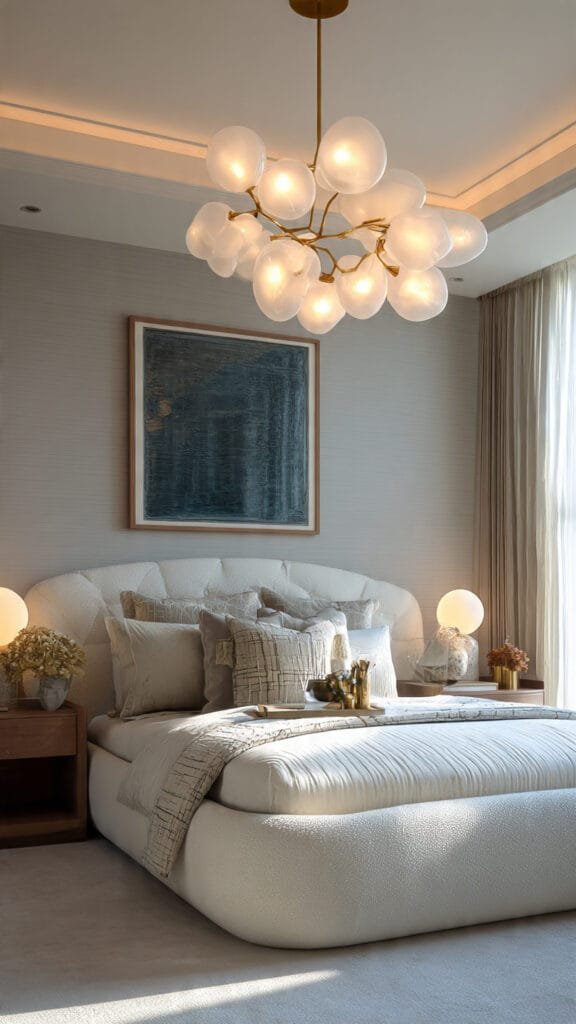
While sculptural lighting is often associated with living rooms and dining spaces, designers are increasingly incorporating it into bedrooms as well.
Bedrooms benefit from lighting that feels soft and atmospheric, and sculptural fixtures can introduce both visual drama and calming illumination.
Instead of traditional ceiling lights, many bedrooms now feature smaller sculptural chandeliers or artistic pendant lights.
These fixtures are often paired with softer lighting elements such as:
• alabaster bedside lamps
• brass wall sconces
• frosted glass pendant lights
Together, these layers of light create a bedroom environment that feels both luxurious and relaxing.
The effect becomes even more striking when sculptural lighting is installed above a bed with a curved headboard or surrounded by soft textiles such as linen bedding and wool throws.
These materials absorb light and soften the atmosphere of the room.
Designers often combine this approach with the glowing lighting techniques discussed in
https://www.bellencia.com/moonlight-lighting-decor
where layered lighting creates interiors that feel calm and atmospheric.
Sculptural Lighting in Kitchens and Dining Areas
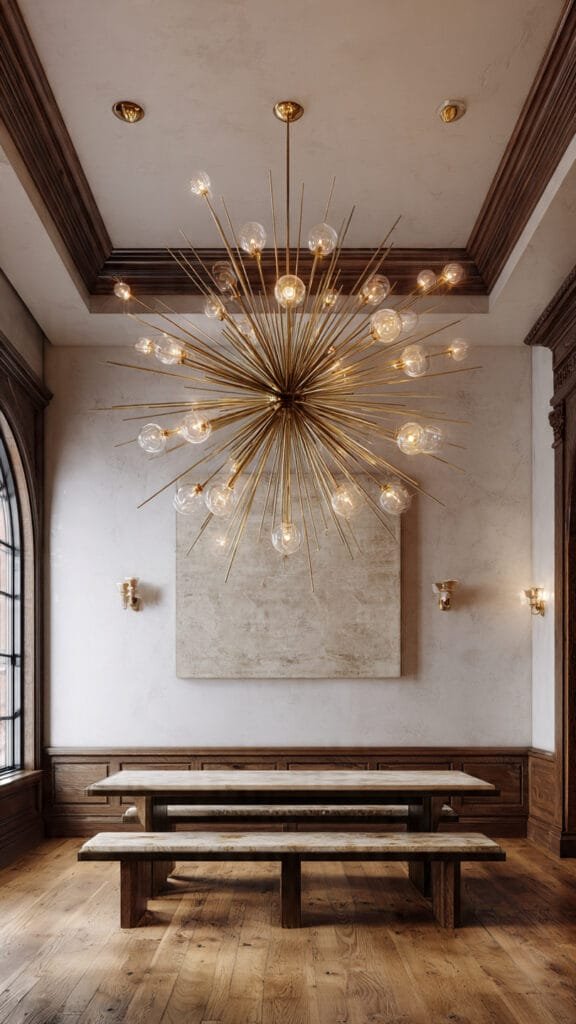
Sculptural lighting is also becoming increasingly popular in kitchens and dining spaces.
These rooms naturally benefit from statement lighting because fixtures can hang lower without interfering with daily movement.
Dining rooms, in particular, are ideal environments for dramatic chandeliers.
A sculptural chandelier installed above a dining table can become the focal point of the entire room.
In kitchens, designers frequently install:
• glass cluster pendant lights above kitchen islands
• geometric pendant fixtures above dining areas
• sculptural brass chandeliers above breakfast tables
Because these fixtures hang directly above work surfaces or tables, they provide both illumination and decorative impact.
The combination of reflective materials such as marble countertops and metallic lighting fixtures further enhances the glow of the room.
Placement Rules Designers Follow
While sculptural lighting can dramatically elevate an interior, designers still follow several placement guidelines to maintain balance.
Some of the most common rules include:
Center the fixture within the room
The chandelier should align with the central point of the seating area or table.
Scale the fixture to the room
Larger rooms can accommodate dramatic multi-branch chandeliers, while smaller rooms benefit from simpler pendants.
Consider ceiling height
High ceilings allow longer fixtures or multi-level pendant clusters.
Balance lighting layers
Even when sculptural lighting is the focal point, designers still include other lighting sources to avoid dark corners.
For example, a living room may include:
• a sculptural chandelier
• table lamps on side tables
• a floor lamp beside a reading chair
This layered approach ensures that the room remains both functional and visually interesting.
Why Sculptural Lighting Is Becoming a Defining Design Trend
Interior design trends often evolve when homeowners begin seeking environments that feel more expressive and personalized.
Sculptural lighting allows a room to develop a clear visual identity without requiring a complete redesign.
Because lighting fixtures are positioned centrally within a space, they naturally draw attention.
A single chandelier can transform the mood of an entire room.
This is one of the reasons sculptural lighting is increasingly appearing alongside other atmospheric design trends.
For example, the cosmic-inspired interiors explored in
https://www.bellencia.com/celestial-home-decor-trend
use dramatic lighting fixtures to enhance reflective materials and textured surfaces.
Similarly, calm layered palettes such as those discussed in
https://www.bellencia.com/cool-blue-interior-design
allow sculptural lighting to become even more visually prominent.
When these elements work together, the result is an interior that feels both modern and timeless.
The Future of Statement Lighting
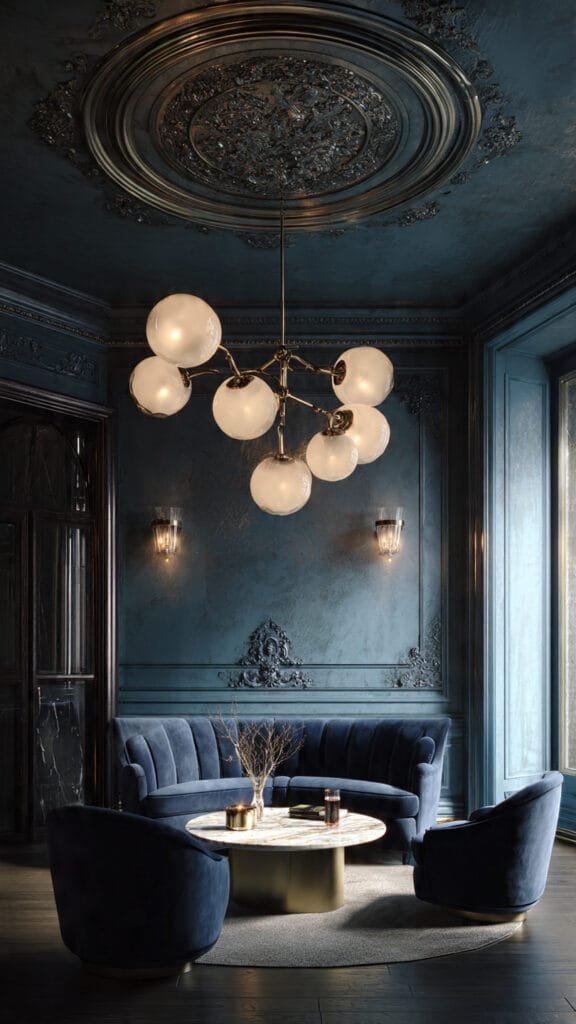
As interior design continues evolving, lighting is likely to become even more expressive.
Designers are already experimenting with lighting fixtures that blur the line between illumination and sculpture.
Future trends will likely include:
• larger architectural chandeliers
• artistic pendant clusters
• mixed-material lighting structures
Rather than hiding lighting within ceilings, homes will continue highlighting fixtures as artistic elements.
Sculptural lighting decor represents one of the clearest examples of this shift.
By combining dramatic shapes, reflective materials, and layered illumination, designers can create interiors that feel visually striking while still remaining warm and inviting.
And as more homeowners embrace statement lighting, sculptural fixtures are likely to remain one of the most influential design trends in modern interiors.