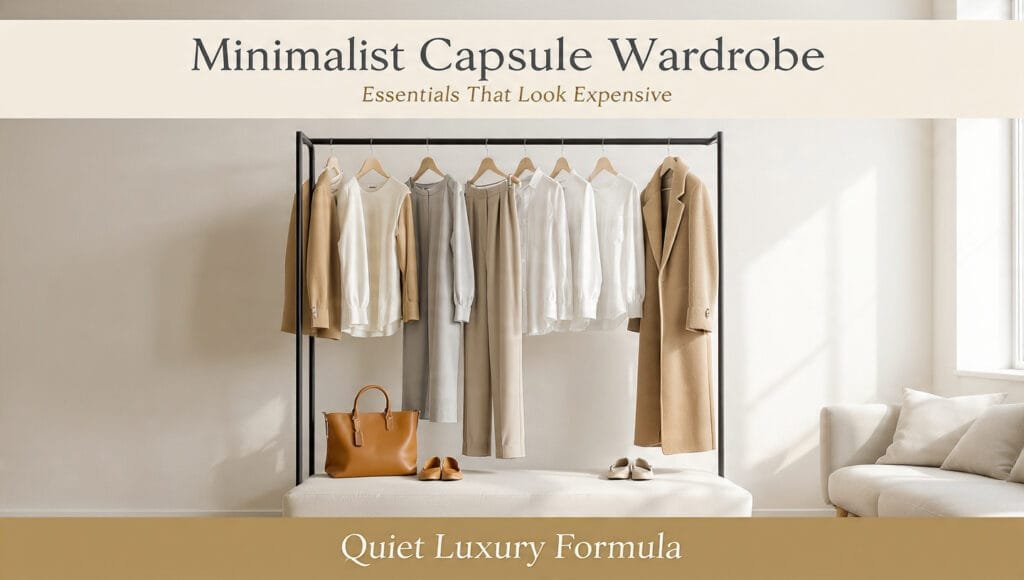
A Minimalist Capsule Wardrobe is not about owning less for the sake of aesthetics.
It’s about owning better.
Better:
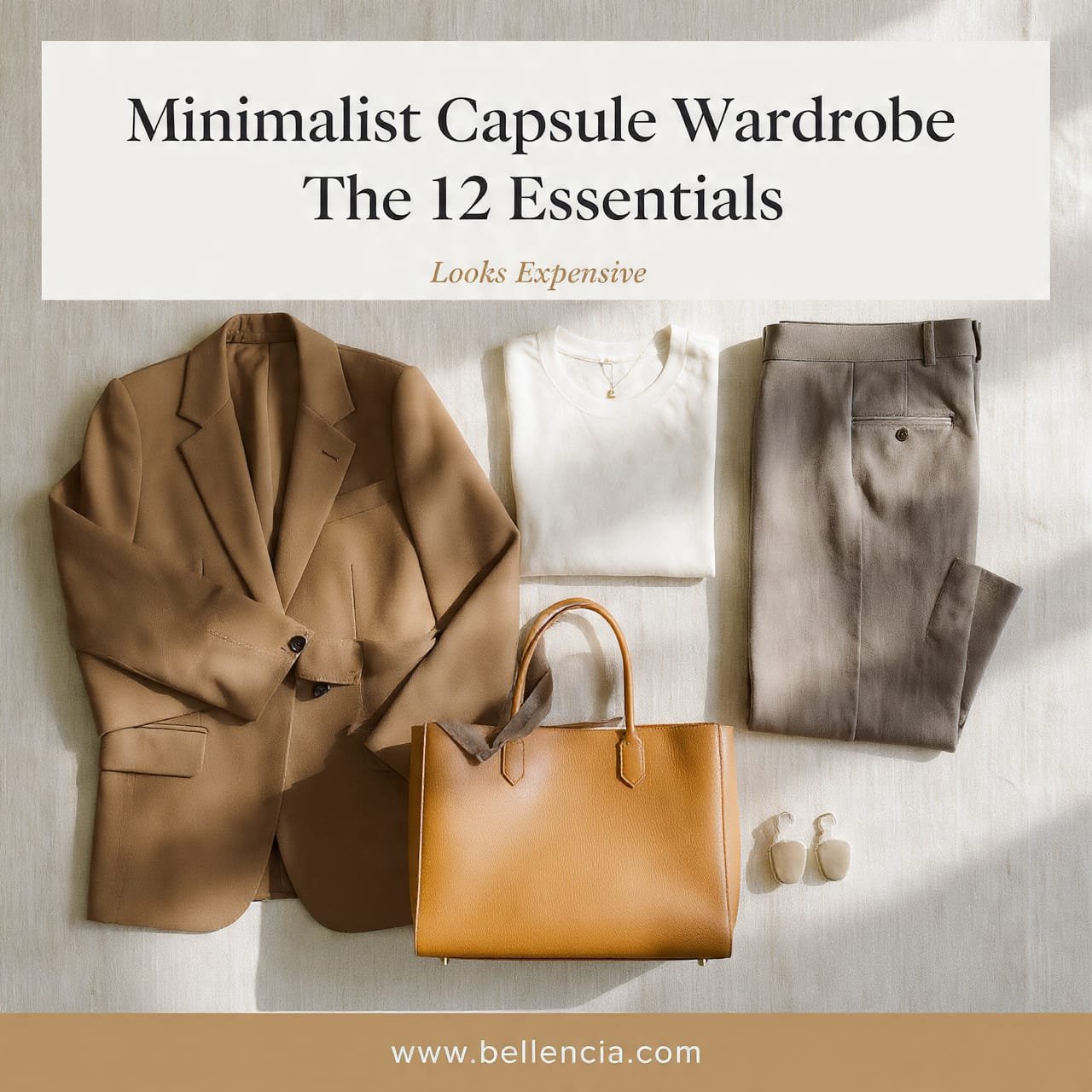
Price: $49.99
Shop Similar: Cicy Bell Womens Casual Blazers – a must-have featured in this post.
- fabric
- fit
- structure
- Better repeat value
The reason a Minimalist Capsule Wardrobe always looks expensive has nothing to do with logos or price tags. It’s about visual restraint and proportion.
When done correctly, a capsule wardrobe creates:
• Consistency
• Effortless coordination
• Elevated simplicity
• High cost-per-wear return
And in 2026, quiet luxury dressing continues to dominate fashion search trends because it feels calm in an overstimulated style cycle.
Let’s build this correctly from the foundation.
1. The Core Philosophy Behind a Minimalist Capsule Wardrobe
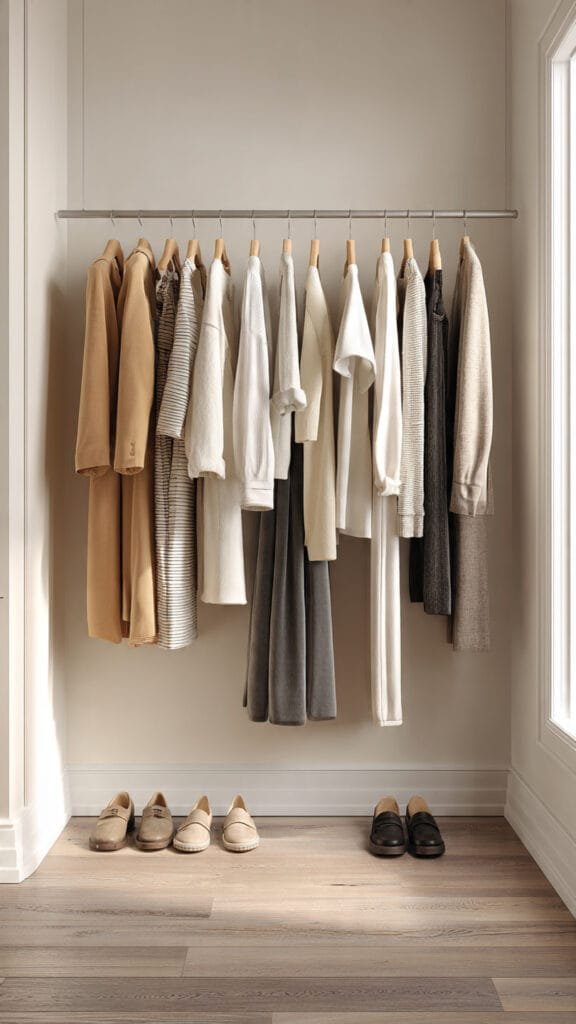
A Minimalist Capsule Wardrobe is built on repetition with variation.
Instead of 40 random tops, you own:
• 3–5 structured tops
• 2–3 tailored bottoms
• 1–2 layering pieces
• 2 versatile shoes
• 1 everyday bag
Every piece should combine with at least three others.
If it doesn’t integrate seamlessly, it doesn’t belong in the capsule.
This is where most wardrobes fail.
They’re built on impulse — not cohesion.
Fashion publications like Vogue frequently emphasize the power of investment dressing and wardrobe building over trend chasing (https://www.vogue.com). The difference between trend-driven closets and capsule wardrobes is longevity.
Longevity looks expensive.
Random looks chaotic.
2. Start With Neutral Anchors
The foundation of a Minimalist Capsule Wardrobe is a tight color palette.
You need:
• A base neutral
• A secondary neutral
• A grounding tone
Example combinations:
• Cream + camel + black
• Taupe + ivory + navy
• Beige + chocolate brown + white
Avoid mixing warm and cool undertones unless you are doing so intentionally.
For example, if you lean toward soft beige and camel tones, introduce navy carefully — not stark blue. If you prefer cooler tones, you may find inspiration in curated palettes similar to our cool-toned aesthetic breakdown here: www.bellencia.com/cool-blue-aesthetic-amazon-finds.
Color consistency is what makes outfits feel intentional.
Intentional always reads elevated.
3. The Five Essentials That Anchor Everything
A strong Minimalist Capsule Wardrobe begins with five non-negotiables:
1. Structured Blazer
Neutral (black, camel, or navy).
Shoulder seams aligned perfectly with natural shoulder edge.
Slight waist shaping.
Sleeve length hitting wrist bone.
2. Tailored Trousers
Mid-rise.
Straight or subtle wide-leg.
Hemmed to fall slightly above shoe top without dragging.
3. High-Quality White or Cream Tee
Medium-weight cotton.
Not sheer.
Not overly tight.
Clean neckline.
4. Classic Loafers or Minimal Leather Sneakers
No bulky sole.
No heavy logos.
Clean silhouette.
5. Structured Everyday Bag
Medium size.
Neutral tone.
Minimal hardware.
When these five are correct, you can build nearly 15–20 outfits without adding anything else.
This is how a capsule multiplies.
4. Fit Is More Important Than Brand
Luxury is visible in tailoring — not labels.
A $70 blazer that fits perfectly looks better than a $700 one that pulls at the shoulders.
Pay attention to:
• Sleeve length
• Trouser hem
• Waist shaping
• Fabric drape
Structured garments elevate minimalist outfits immediately.
Soft, slouchy pieces should be intentional — not accidental.
If everything is oversized, the look loses polish.
Balance is key:
• Structured blazer + soft knit
• Tailored trousers + relaxed tee
• Clean sneakers + structured bag
That contrast keeps minimalist dressing from looking flat.
5. Fabric Is What Makes It Look Expensive
A Minimalist Capsule Wardrobe relies heavily on fabric quality.
Look for:
• Cotton with weight
• Wool blends with structure
• Linen with density (not sheer)
• Knits with tight weave
Avoid:
• Thin polyester blends
• High-shine synthetic finishes
• Overly stretchy fabrics
Texture variation keeps neutrals interesting.
Just like interior design relies on layered materials to create depth (see how tonal layering works in home design here: www.bellencia.com/warm-modern-beige-living-room-ideas), fashion uses fabric contrast the same way.
Matte cotton next to smooth leather.
Soft knit next to structured wool.
Cream next to camel.
The subtle shifts create dimension.
Dimension feels intentional.
Why Minimalism Looks Expensive
When someone walks into a room wearing a Minimalist Capsule Wardrobe, it feels effortless.
There are no loud distractions.
No competing trends.
No chaotic color clashes.
The eye rests.
And when the eye rests, the outfit reads refined.
6. The Layering Formula That Multiplies Outfits
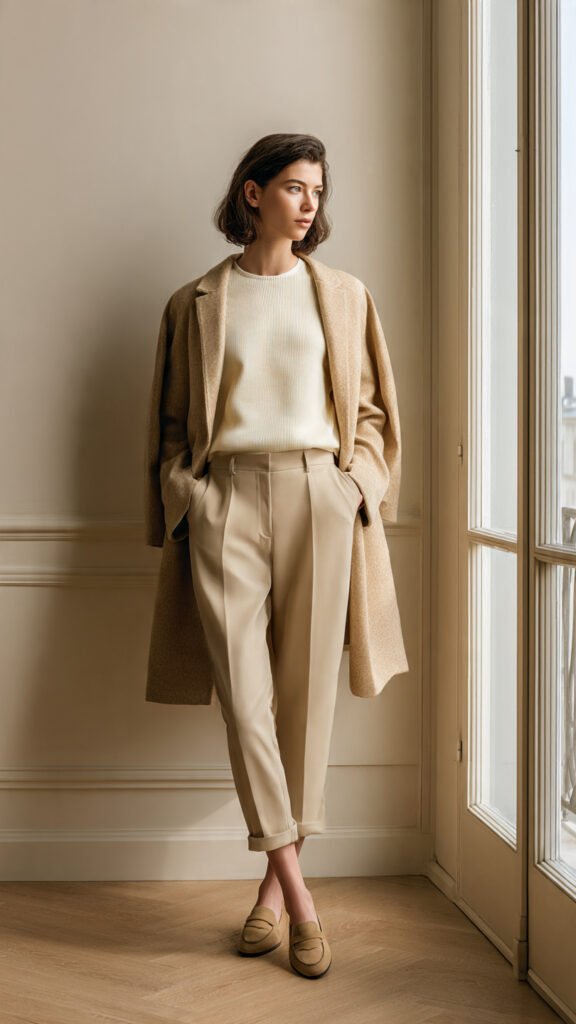
A strong Minimalist Capsule Wardrobe relies on a three-layer formula:
• Base layer
• Structure layer
• Optional texture layer
For example:
Base layer: Cream fitted tee
Structure layer: Camel tailored blazer
Texture layer: Lightweight wool coat
Or:
Base layer: Neutral tank
Structure layer: Relaxed button-down
Texture layer: Soft knit cardigan
Layering creates visual depth without introducing new colors.
Depth makes repetition invisible.
When silhouettes are balanced correctly, the same trousers can appear completely different depending on the layering piece.
For example:
• Trousers + blazer = structured work look
• Trousers + knit = relaxed luxury
• Trousers + button-down = effortless minimal
The pieces stay the same.
The proportions shift.
That shift creates variety.
7. Seasonal Capsule Adjustments (Without Rebuilding Everything)
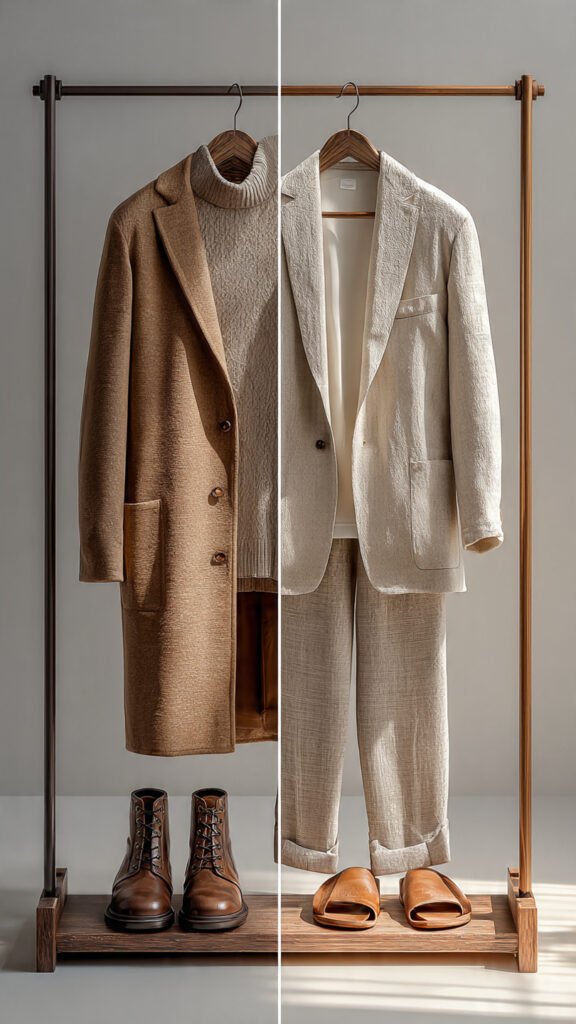
One of the biggest myths about a Minimalist Capsule Wardrobe is that it requires full seasonal replacement.
It doesn’t.
Instead, rotate textures — not identity.
In cooler months:
• Add wool coat
• Introduce heavier knit
• Swap loafers for leather boots
• Layer structured scarf
In warmer months:
• Replace wool blazer with linen blazer
• Switch trousers to breathable cotton or linen blend
• Add minimalist leather sandal
• Introduce lightweight tank instead of knit
The color palette remains intact.
The silhouettes remain consistent.
Only fabric weight changes.
This keeps your wardrobe cohesive year-round.
If you lean toward warmer neutrals like camel and beige, you’ll notice the same tonal continuity strategy used in minimalist interiors (see how tonal layering functions in neutral design here: www.bellencia.com/warm-modern-beige-living-room-ideas).
Consistency across seasons is what makes minimalist fashion look intentional rather than restricted.
8. Accessories That Elevate Without Overpowering
Minimalist dressing fails when accessories become distracting.
The goal is subtle emphasis — not loud contrast.
Stick to:
• Structured leather belt
• Delicate gold or silver jewelry (choose one metal and repeat it)
• Medium structured tote
• Classic sunglasses with clean lines
Avoid:
• Trend-heavy statement necklaces
• Logo-dominant bags
• Chunky costume jewelry
• Overly patterned scarves
Accessories should reinforce the outfit — not dominate it.
Metal consistency is key.
If you choose gold hardware on your bag, repeat gold in:
• Earrings
• Watch
• Belt buckle
This repetition creates visual cohesion.
Cohesion feels polished.
9. The Cost-Per-Wear Mindset
A Minimalist Capsule Wardrobe shifts your buying strategy.
Instead of asking:
“Is this cute?”
You ask:
“How many outfits can I build with this?”
If a piece pairs with at least three other items in your wardrobe, it qualifies.
If it only works with one outfit, it’s not capsule-worthy.
Fashion editors consistently emphasize investment dressing over trend chasing because longevity lowers overall wardrobe cost (https://www.vogue.com).
Cost-per-wear formula:
Item cost ÷ number of wears = true value.
A $150 blazer worn 100 times costs $1.50 per wear.
A $40 trendy top worn twice costs $20 per wear.
Minimalism isn’t restrictive.
It’s strategic.
10. The Silhouette Balance Rule
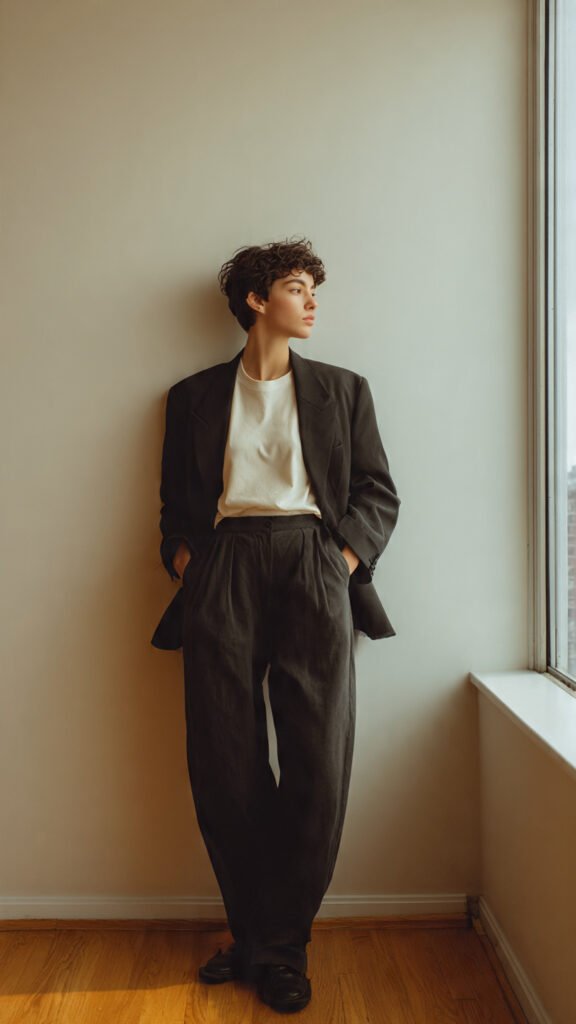
Minimalist outfits look expensive when silhouettes are balanced.
If the top is structured, the bottom can be relaxed.
The trousers are wide-leg, the top should be fitted.
If the blazer is oversized, the base layer should be streamlined.
Avoid wearing oversized everything at once.
That reads sloppy — not intentional.
Likewise, avoid overly tight everything.
That removes the quiet luxury effect.
The balance between structure and softness is what creates refinement.
Think:
• Structured blazer + straight-leg trousers
• Relaxed knit + tailored trousers
• Slim tee + wide-leg pants
• Oversized coat + fitted base
The silhouette interplay creates movement without chaos.
Why This Formula Works
A Minimalist Capsule Wardrobe looks expensive because it removes visual noise.
The fewer distractions in an outfit, the more noticeable:
• Fit
• Fabric
• Structure
• Proportion
When those elements are correct, the entire look feels elevated.
By now, your Minimalist Capsule Wardrobe has structure, layering strategy, and seasonal flexibility.
Now we refine it into a blueprint.
Because minimalism only looks expensive when it’s intentional — not accidental.
This is where we eliminate guesswork.
11. The 12-Piece Minimalist Capsule Blueprint
If you want a clean, repeatable formula, start here:
Tops (4)
• 1 structured blazer (neutral)
• 1 relaxed button-down (white, cream, or soft taupe)
• 1 high-quality fitted tee (white or beige)
• 1 knit sweater (camel, gray, or black depending on palette)
Bottoms (3)
• 1 tailored trouser (black, navy, or taupe)
• 1 straight-leg denim (mid-wash or ecru)
• 1 structured skirt or secondary trouser option
Outerwear (2)
• 1 wool coat (camel, black, or charcoal)
• 1 lightweight jacket (linen blazer or trench)
Shoes (2)
• 1 loafer or sleek flat
• 1 minimal sneaker or ankle boot
Bag (1)
• 1 structured everyday tote or shoulder bag
That’s 12 pieces.
With strategic layering, this can produce over 30 outfit combinations without feeling repetitive.
The key is that every piece supports the others.
No random colors and loud prints.
No impulse additions.
Everything integrates.
12. Common Mistakes That Make Minimalism Look Boring
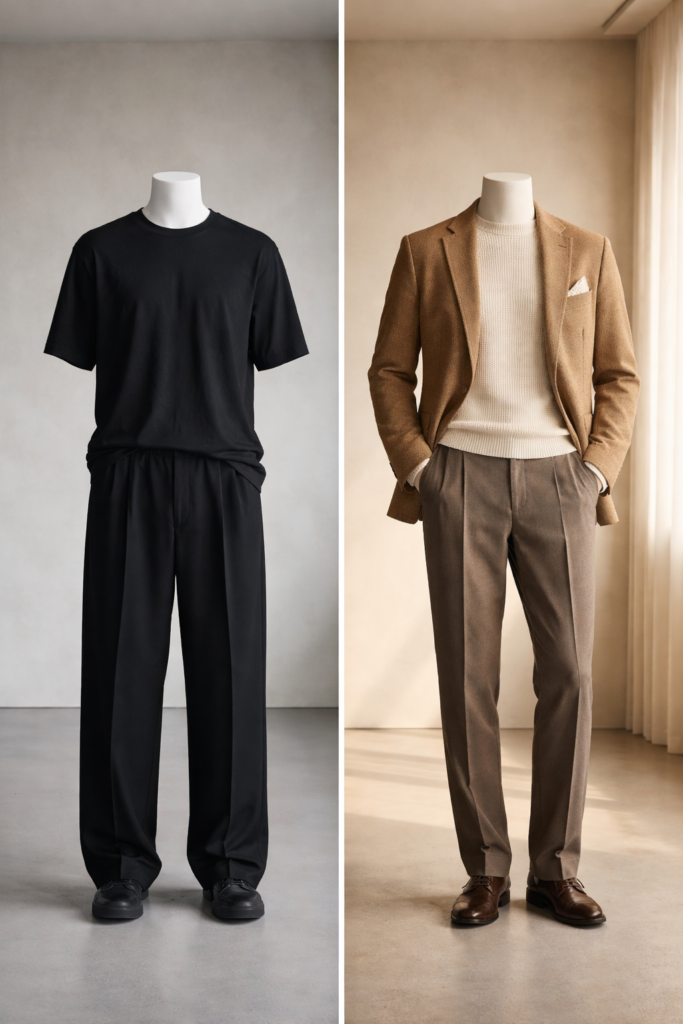
Minimalism is not the absence of personality.
It’s the presence of refinement.
Here’s what makes minimalist wardrobes fall flat:
• Thin, flimsy fabrics
• Ill-fitting tailoring
• All-black everything without texture variation
• Oversized silhouettes with no structure
• Zero contrast between pieces
If your outfit feels bland, add texture — not color.
For example:
• Pair matte cotton with smooth leather
• Combine soft knit with structured wool
• Layer cream with camel instead of stark white
Subtle tonal variation creates depth.
Just like layered neutrals in interior design prevent spaces from looking flat (notice how tonal layering elevates a room in neutral home styling here: www.bellencia.com/warm-modern-beige-living-room-ideas), wardrobe layering works the same way.
Depth makes minimalism feel curated.
Flatness makes it feel plain.
13. How to Prevent Repetition From Feeling Repetitive
Repetition is the strength of a Minimalist Capsule Wardrobe.
But visual monotony is the risk.
To avoid it:
Change proportion — not color.
For example:
• Tuck the tee one day, leave it relaxed the next
• Roll blazer sleeves for a softer look
• Swap loafers for sneakers
• Add belt for waist definition
Small shifts create new silhouettes.
Silhouette changes create fresh energy without adding new pieces.
Also, rotate metals intentionally.
If your wardrobe leans warm, choose gold and repeat it consistently.
If it leans cool, choose silver and stay aligned.
Mixing randomly breaks cohesion.
14. The Neutral Palette Combinations That Always Work
A Minimalist Capsule Wardrobe thrives on strong pairings.
Here are combinations that consistently look elevated:
• Cream + camel + black
• Taupe + white + chocolate brown
• Navy + beige + ivory
• Gray + black + soft white
Avoid mixing too many undertones at once.
If your neutrals lean warm, keep them warm.
If your neutrals lean cool, stay consistent.
Cool-toned capsules often incorporate navy beautifully when balanced correctly. For inspiration on cool layering psychology, you can reference tonal strategies similar to those discussed in www.bellencia.com/cool-blue-aesthetic-amazon-finds.
The goal is visual calm.
Calm reads confident.
15. Why Minimalist Capsules Always Look Expensive
There’s a reason the Minimalist Capsule Wardrobe remains dominant in fashion search trends.
It communicates:
• Stability
• Confidence
• Intentionality
• Restraint
It removes chaos.
Removes guesswork.
It removes trend pressure.
When every item fits properly, coordinates effortlessly, and layers cleanly, the overall look feels refined — even if none of the pieces are designer.
Minimalism is not about deprivation.
It’s about control.
Control over color and over proportion.
Control over quality.
And control always looks elevated.
This is not about owning less for aesthetic reasons.
It’s about building a wardrobe that works harder than you do.
Because when everything coordinates naturally, getting dressed becomes automatic.
And automatic confidence always reads expensive.
Bellencinista Notes
Choose one dominant neutral and repeat it across layers, shoes, and accessories. Steam everything before wearing. Replace plastic buttons with matte tortoiseshell or tonal buttons. Upgrade hangers to wood. Presentation elevates even the simplest capsule pieces.