
Luxury Kitchen Ideas: 27 Designer Secrets for a High-End Look
June 7, 2026
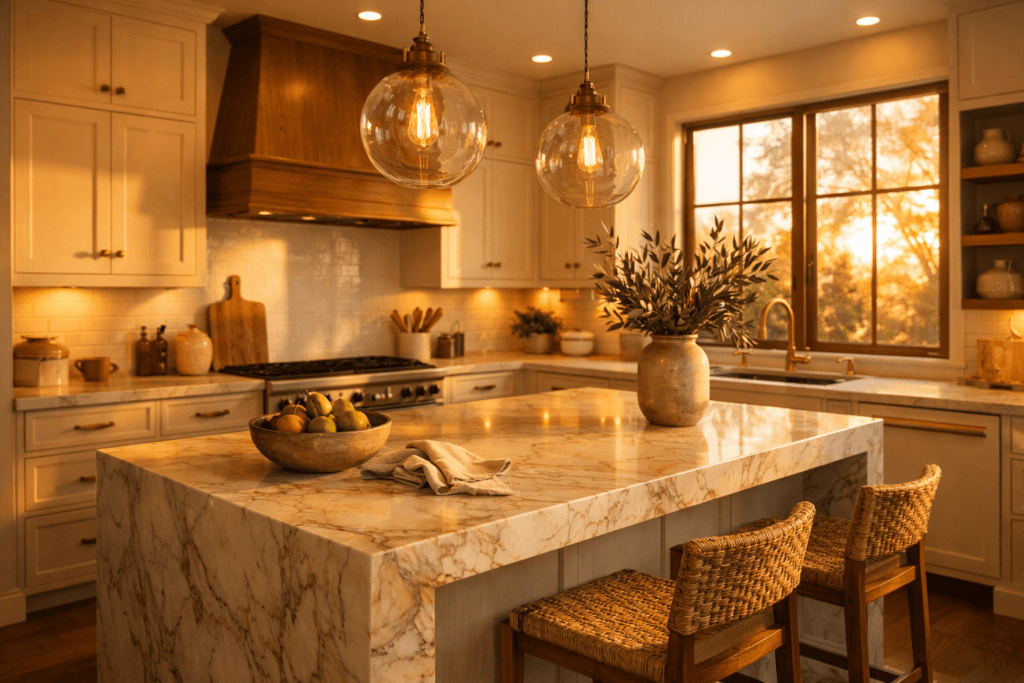
1) Warm Lighting Overhead (Not Harsh White)
Trending Finds Readers Are Loving
Explore affordable luxe discoveries people are clicking on right now.
See What's TrendingLighting is one of the most underestimated elements in kitchen design, yet it has the biggest emotional impact on how a space feels. You can have beautiful cabinetry, stone countertops, and premium hardware, but if your lighting is too harsh or cool-toned, the entire kitchen can feel uninviting.
Luxury kitchens rarely rely on bright, cold white light. Instead, they use warm lighting that enhances materials and creates a welcoming glow. Warm LEDs in the 2700K–3000K range make wood tones richer, marble look softer, and brass fixtures appear more elegant. The space instantly feels calmer and more lived-in.
Think about how high-end restaurants feel. The lighting is never harsh. It’s warm, flattering, and intentional. The same philosophy applies to designer kitchens. A kitchen should feel like a gathering place, not a laboratory.
Layering warm lighting also helps eliminate shadows on countertops, which makes cooking more comfortable. Pendant lights, recessed lights, and under-cabinet lighting working together create depth and dimension.
One small lighting adjustment can completely shift the mood of a kitchen. It’s one of the highest-impact upgrades you can make without changing a single cabinet or countertop.
Luxury begins with atmosphere, and atmosphere begins with lighting.
2) Statement Range Hoods
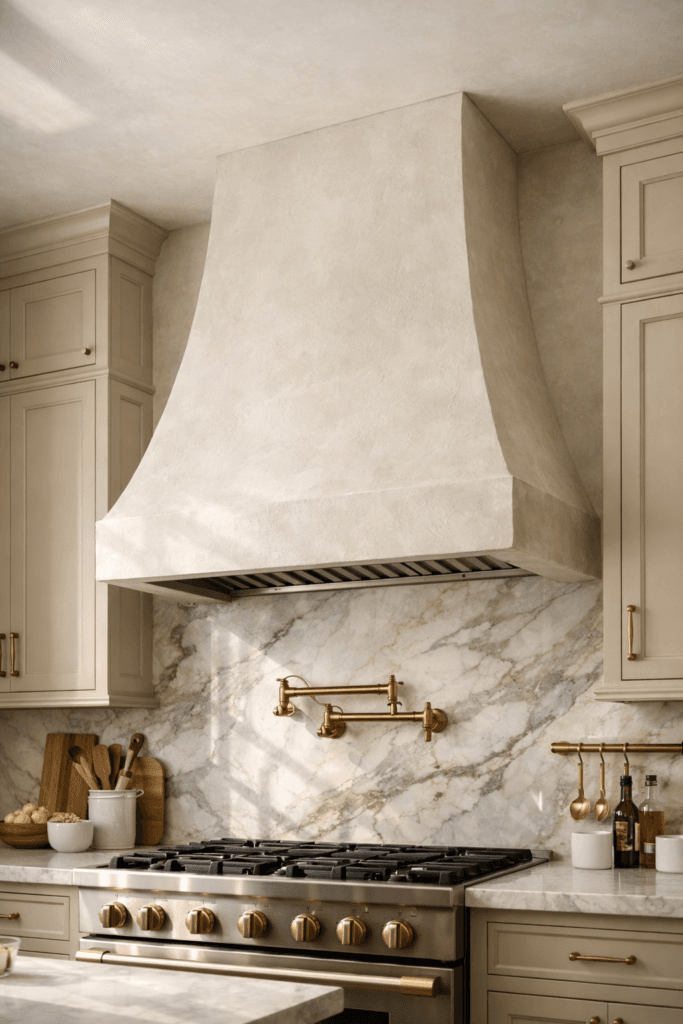
A statement range hood acts like the architectural centerpiece of a kitchen. In many designer kitchens, the hood is treated almost like a fireplace mantle — a focal point that anchors the entire space.
Basic stainless hoods do the job functionally, but they rarely add personality. Luxury kitchens elevate this area with plaster finishes, wood-wrapped designs, or cabinetry-paneled hoods that blend seamlessly into the design.
A plaster hood, for example, introduces softness and texture. It gives a kitchen an old-world European feel that’s both timeless and warm. Wood-wrapped hoods add organic richness and help balance stone and metal elements.
Designers often use the hood to draw the eye upward, making ceilings feel taller and spaces feel grander. It becomes a vertical design feature rather than just a ventilation necessity.
Another reason statement hoods feel luxurious is because they signal customization. They suggest the kitchen wasn’t just ordered from a catalog — it was designed with intention.
Even in smaller kitchens, a thoughtfully styled hood can transform the overall look. It doesn’t need to be oversized; it just needs presence.
A statement hood quietly communicates craftsmanship, and craftsmanship is at the heart of luxury design.
3) Mixed Metals (Done Intentionally)
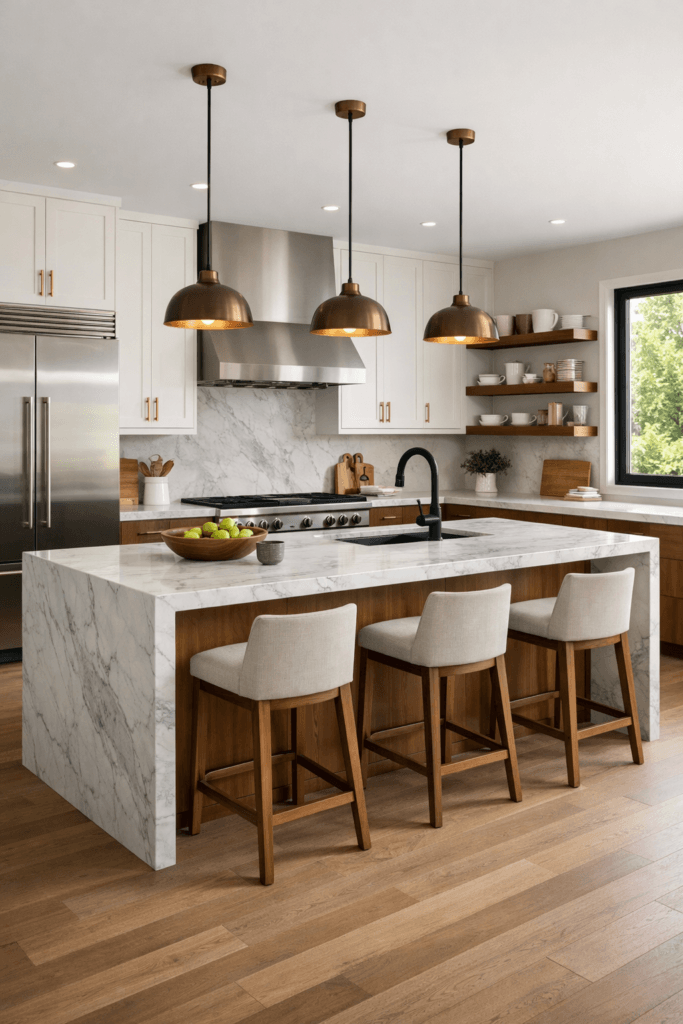
Matching every finish in a kitchen used to be the rule. Today, that approach often looks flat and dated. Luxury kitchens feel layered because they mix metals thoughtfully.
The key word is thoughtfully.
Designers typically limit the palette to two or three metals to maintain cohesion. For example, brass cabinet hardware paired with a matte black faucet and stainless appliances creates contrast without chaos.
Mixed metals add depth and dimension. When everything matches perfectly, a space can feel one-note. Variation creates visual interest and prevents the kitchen from feeling sterile.
Another reason mixed metals work is realism. Real homes evolve over time. Mixing finishes subtly reflects that evolution, which makes a kitchen feel curated rather than staged.
The trick is balance. If brass appears in hardware, repeat it in lighting or decor. Repetition creates harmony.
Luxury design rarely feels rigid. It feels collected, layered, and intentional. Mixed metals support that philosophy beautifully.
When done right, mixing finishes doesn’t look random — it looks designed.
4) Cabinet Hardware That Feels Substantial
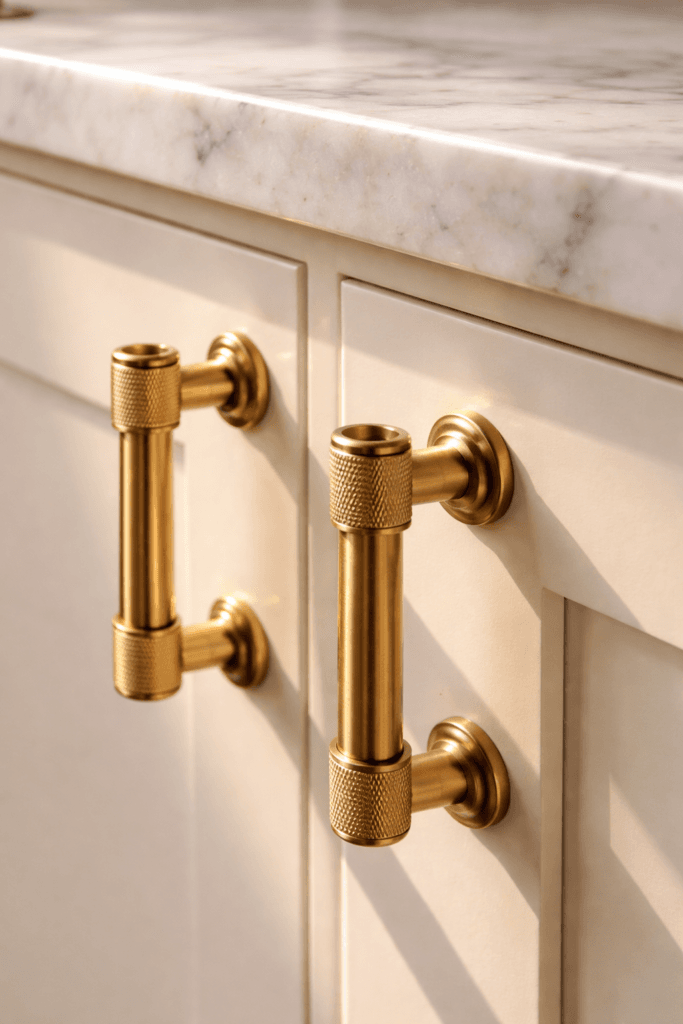
Cabinet hardware might seem like a small detail, but it has an outsized impact on how a kitchen is perceived. Designers often call hardware the “jewelry” of the kitchen because it adds polish and personality.
Lightweight, flimsy hardware can unintentionally cheapen cabinetry. Heavier, well-made pulls feel solid in the hand and signal quality. That tactile experience matters more than people realize.
Longer handles also create a custom look. They draw clean lines across cabinetry and feel modern yet timeless. Small knobs can work, but in luxury kitchens they’re often used selectively.
Finish matters too. A beautifully aged brass or matte black pull adds richness and contrast against lighter cabinets.
Upgrading hardware is one of the most cost-effective ways to elevate a kitchen. It doesn’t require renovation, but it changes how cabinetry is experienced daily.
Luxury isn’t always about what you see first. Sometimes it’s about what you touch every day. Substantial hardware brings that subtle luxury into everyday routines.
5) Hidden Appliances
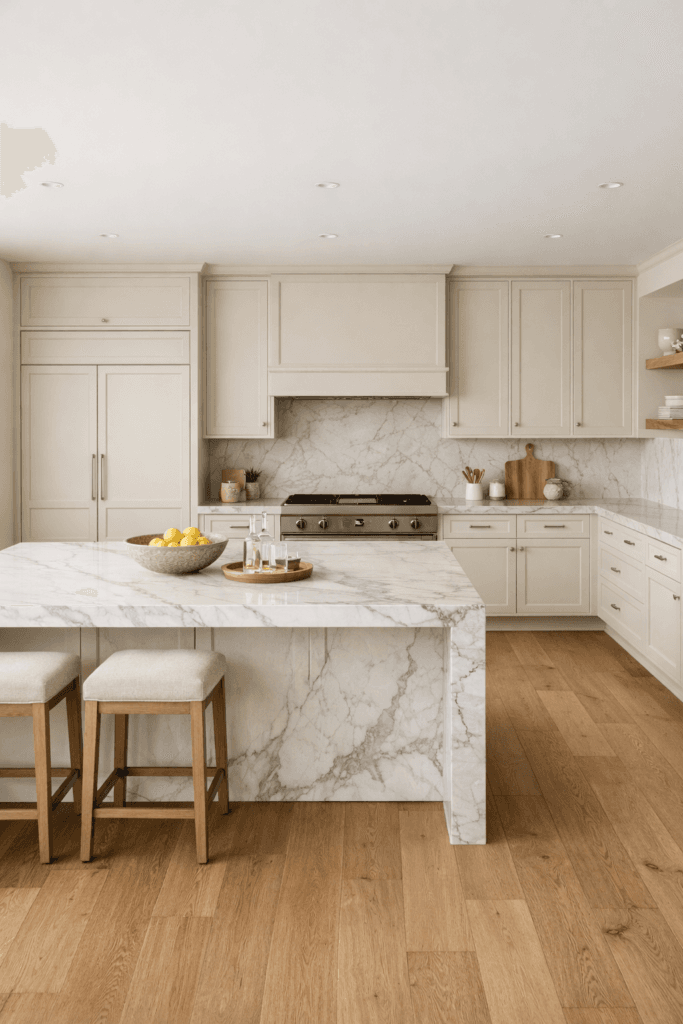
Luxury kitchens prioritize visual calm. One way designers achieve this is by hiding appliances within cabinetry. Panel-ready refrigerators and dishwashers blend into their surroundings, creating a seamless look.
When large appliances disappear visually, the focus shifts to materials, textures, and overall design. The kitchen feels less like a workspace and more like a living space.
Hidden appliances also reduce visual clutter. Brand logos, stainless finishes, and digital displays can distract from a cohesive palette. Paneling creates unity.
This approach doesn’t mean sacrificing function. It simply means designing with intention. Everything still works the same — it just integrates better.
Another benefit is timelessness. Seamless kitchens age well because they aren’t tied to appliance trends or finishes.
Even if full paneling isn’t possible, minimizing visible appliances on counters helps. Appliance garages or dedicated zones can maintain the same effect.
Luxury often whispers rather than shouts. Hidden appliances embody that quiet sophistication.
6) Natural Wood Tones
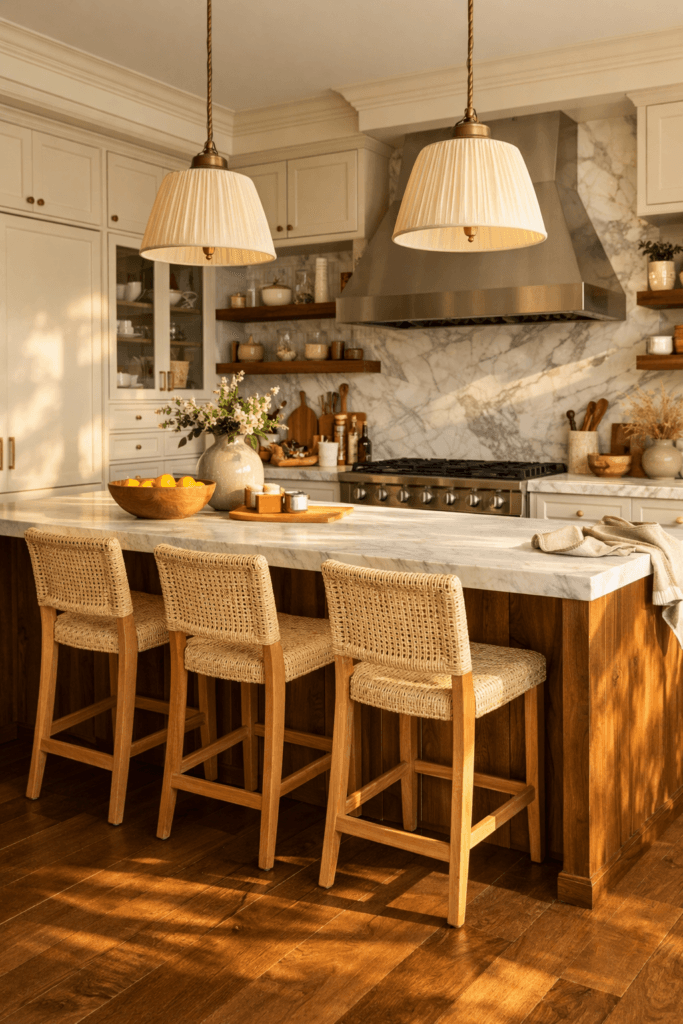
Natural wood introduces warmth that painted cabinets alone can’t replicate. It adds organic texture and a sense of grounding that balances stone, metal, and painted finishes.
Oak, walnut, and lighter natural woods are especially popular in high-end kitchens right now. They create softness without feeling rustic.
Wood works beautifully on islands, open shelving, or as accent cabinetry. Even small touches — like wooden barstools or cutting boards — can shift the mood.
One reason wood feels luxurious is its connection to nature. Natural materials age gracefully and develop character over time. That evolution adds authenticity.
Luxury kitchens rarely feel overly glossy or artificial. They include natural elements that bring life into the space.
Wood also pairs well with neutral palettes. Cream cabinets and warm wood accents create a calm, timeless environment.
A kitchen should feel lived-in, not staged. Wood helps achieve that balance effortlessly.
7) Stone Countertops With Movement
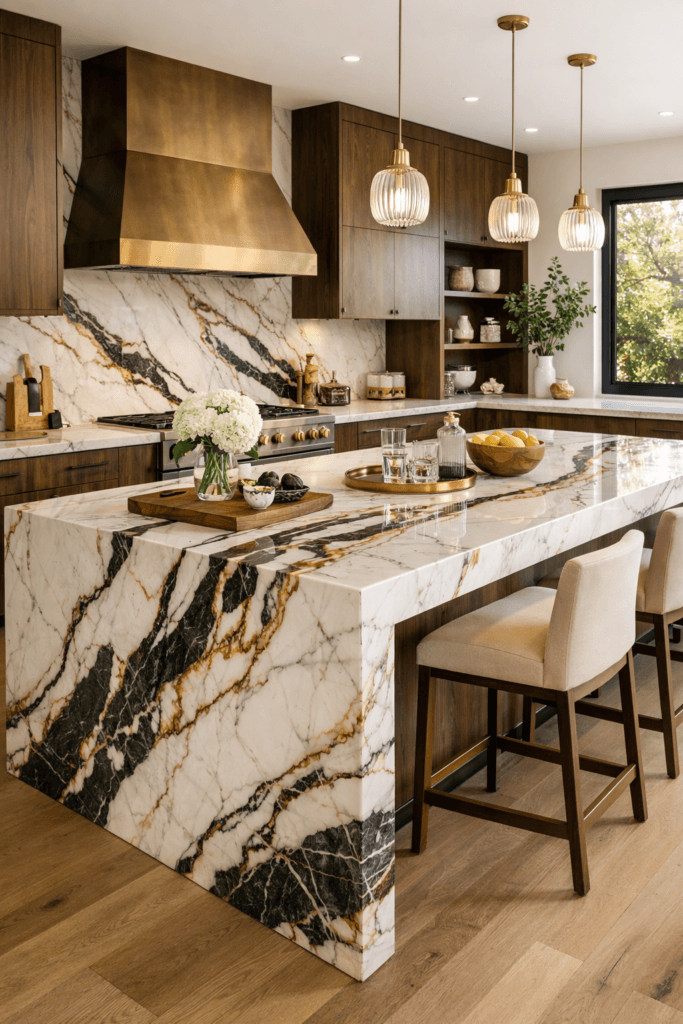
Luxury kitchens rarely choose plain, uniform countertops. Instead, designers gravitate toward stone with natural movement — veining, variation, and organic patterning that feels alive.
Why? Because movement adds visual richness.
Flat, solid surfaces can sometimes make a kitchen feel sterile. But marble, quartzite, and high-variation quartz introduce subtle drama without overwhelming the space. They create focal points while still feeling timeless.
Natural veining also makes each kitchen unique. No two slabs are identical, which gives a sense of exclusivity. That individuality is one of the quiet signals of luxury design.
Designers often treat countertops as artwork. A beautifully veined slab becomes the visual anchor for the room, allowing other elements to remain simple.
Movement also helps disguise minor wear over time. Kitchens are hardworking spaces, and materials that age gracefully are always preferred in high-end design.
Another benefit? These stones photograph beautifully. The variation catches light and adds depth in photos, which is one reason they dominate Pinterest kitchens.
Luxury isn’t about excess — it’s about choosing materials that naturally bring interest. Stone with movement does exactly that.
8) Layered Lighting
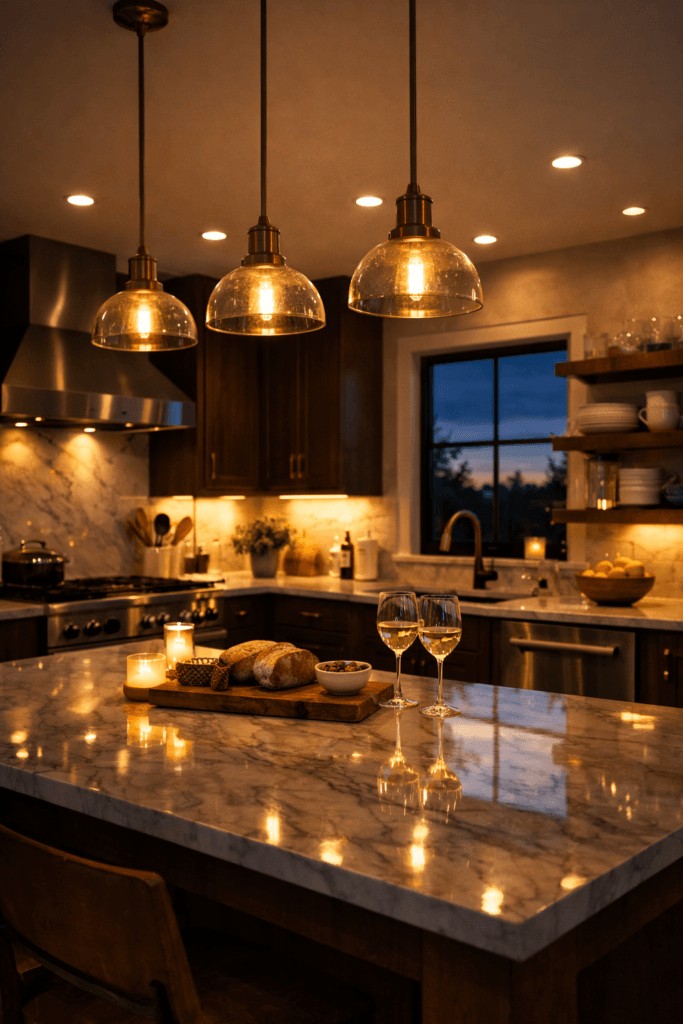
One overhead light is never enough in a luxury kitchen. Designers use layered lighting to build dimension and mood.
There are typically three layers:
Ambient lighting – overall illumination
Task lighting – for prep and cooking
Accent lighting – for atmosphere and depth
This layered approach prevents harsh shadows and creates balance. It also allows the kitchen to transition from functional daytime space to cozy evening gathering spot.
Under-cabinet lighting, for example, softly illuminates countertops while adding a warm glow at night. Pendant lights over islands add both style and targeted light. Recessed lighting ensures general brightness.
Luxury kitchens feel dynamic because the lighting adapts to different needs. Bright for cooking, softer for entertaining, warm for winding down.
Another benefit is visual hierarchy. Lighting highlights certain areas, guiding the eye naturally through the space.
Flat lighting makes a kitchen feel one-dimensional. Layered lighting adds depth, shadow, and contrast — the same elements that make photography and film feel cinematic.
In many ways, lighting is what brings a kitchen to life. Without it, even expensive materials can fall flat.
9) A Styled Island
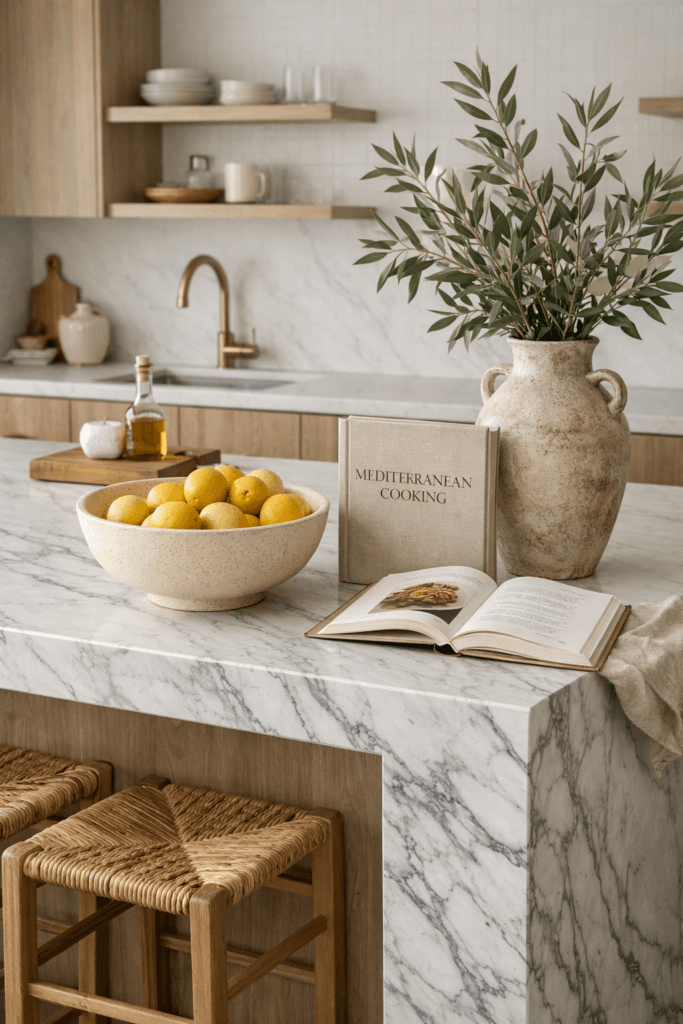
The kitchen island is often the heart of the room. In luxury kitchens, it’s styled intentionally but minimally.
An island shouldn’t feel cluttered. Instead, it should feel curated.
Designers typically style with just one or two elements:
- A bowl of fruit
- A stack of cookbooks
- A small vase with greenery
- A sculptural object
The goal is to make the island feel lived-in but not crowded. Too many items can make even a large island look busy.
Luxury design relies heavily on restraint. Leaving space empty allows beautiful materials to shine. A marble or quartzite island doesn’t need much decoration.
Another reason minimal styling works is practicality. The island remains usable for cooking, gathering, and conversation.
Many high-end kitchens treat the island as a social space. It’s where people gather, talk, and connect. A clutter-free surface encourages that.
Think of the island as a table rather than a shelf. It should invite use, not just display.
A styled island feels calm, intentional, and welcoming — all hallmarks of a designer kitchen.
10) Integrated Storage
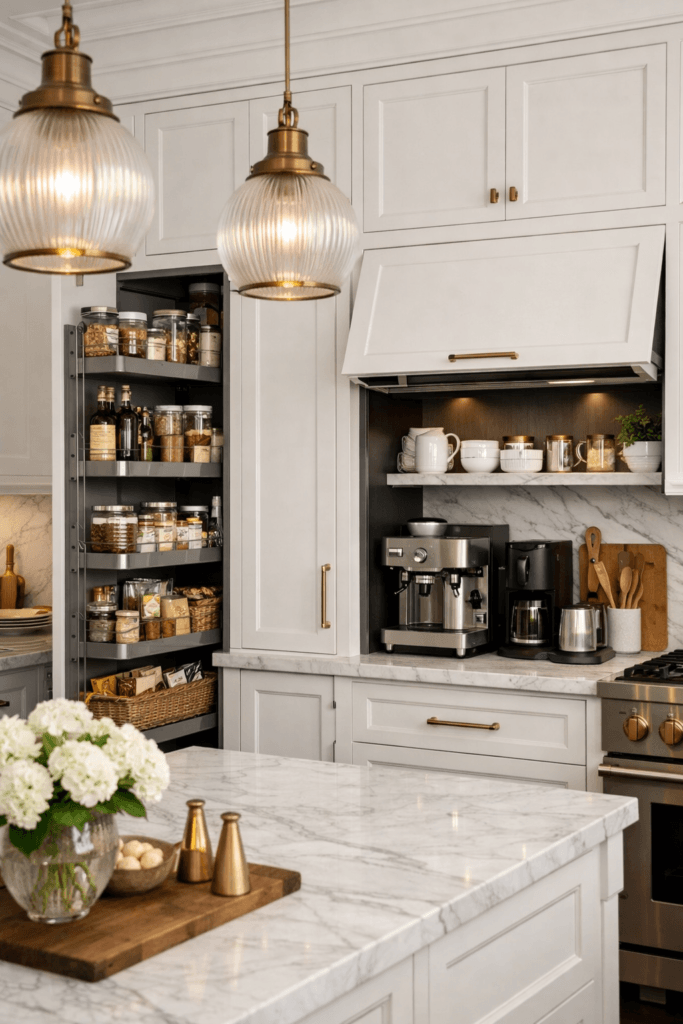
Luxury kitchens are not defined by what you see — but by what you don’t.
Integrated storage keeps visual noise to a minimum. Pull-out pantry systems, hidden spice drawers, and appliance garages allow everything to have a place.
When counters stay clear, the kitchen instantly feels calmer. Visual calm is one of the strongest signals of luxury.
Designers prioritize storage that supports daily life. Deep drawers for cookware, vertical dividers for trays, and concealed outlets for appliances all contribute to a seamless experience.
Integrated storage also reduces decision fatigue. When everything has a home, routines become smoother.
Another reason this feels luxurious is ease. You don’t have to search for things. Everything is accessible yet hidden.
Luxury design often focuses on how a space functions, not just how it looks. Integrated storage supports both beauty and practicality.
A clutter-free kitchen doesn’t happen by accident. It’s designed.
And that thoughtful design is what separates ordinary kitchens from elevated ones.
11) Full-Height Backsplashes
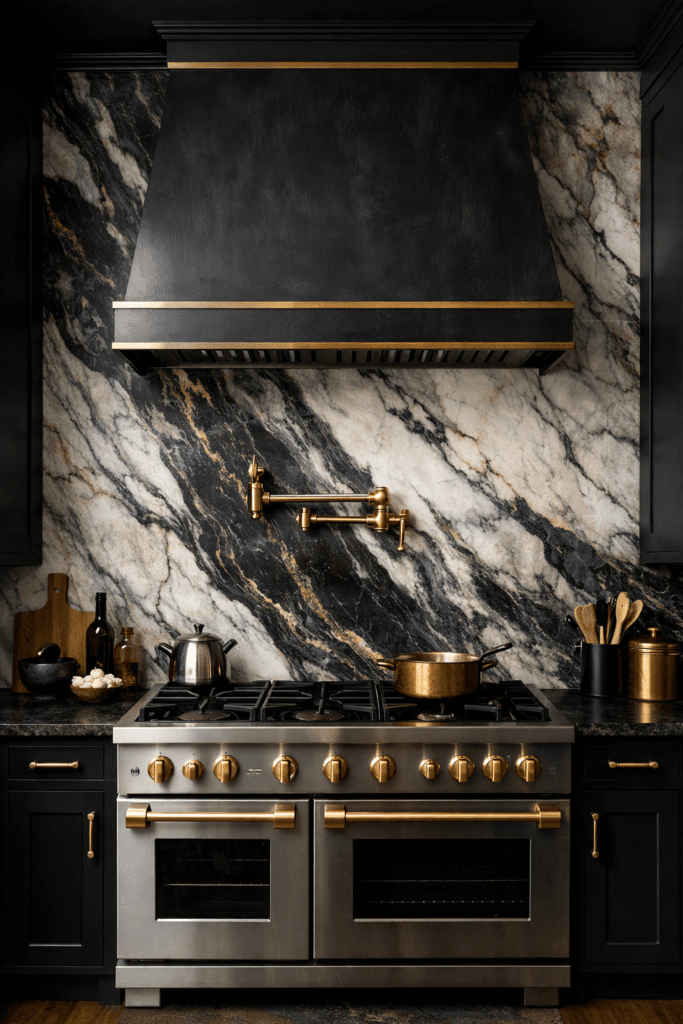
Running backsplash material all the way to the ceiling creates drama and polish. It transforms the wall into a design feature instead of just a protective surface.
Full-height backsplashes often use the same stone as the countertop. This continuity makes the space feel cohesive and high-end.
Designers love this approach because it elongates the room visually. It draws the eye upward and makes ceilings feel taller.
It also simplifies design decisions. Instead of mixing materials, one beautiful stone can do the work.
Another advantage is maintenance. Fewer grout lines mean easier cleaning and a more seamless appearance.
Full-height slabs also photograph beautifully. They create a striking backdrop that elevates the entire kitchen aesthetic.
In luxury design, fewer materials often create more impact. A continuous backsplash is a perfect example of that philosophy.
It’s bold without being loud, and elegant without trying too hard.
12) Neutral Color Palettes
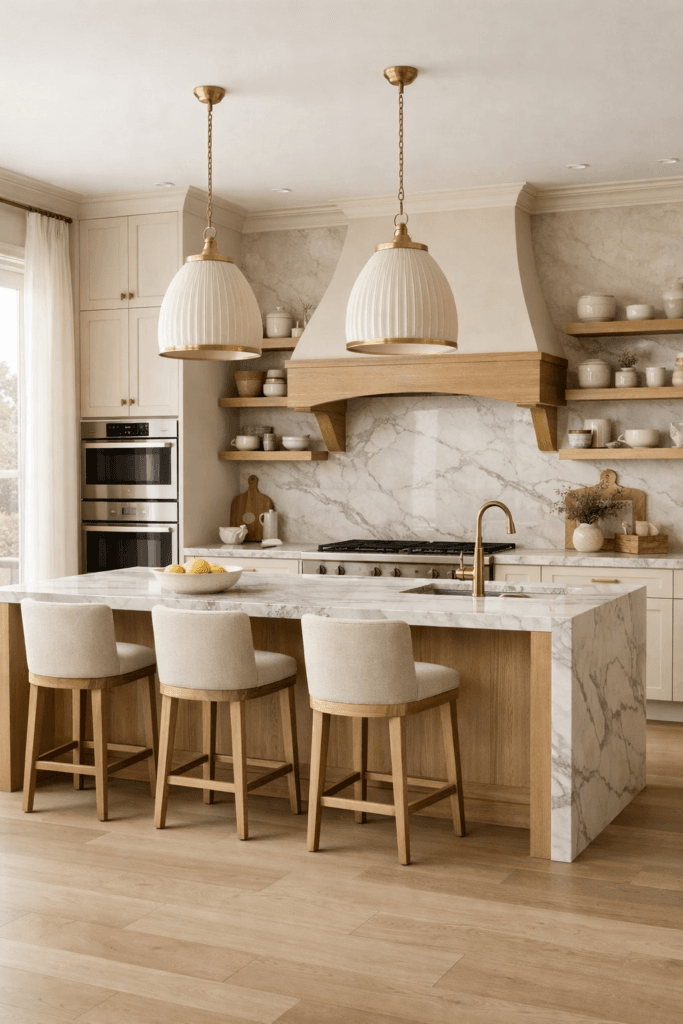
Neutral kitchens remain a staple in luxury design for a reason — they age gracefully.
Cream, beige, taupe, and warm grays create a calming foundation. These tones reflect light softly and make spaces feel open.
Neutral palettes also allow materials to shine. Marble veining, wood grain, and metal finishes stand out more when the background is subtle.
Another benefit is flexibility. Neutral kitchens adapt easily to seasonal decor or small styling changes.
Designers often say neutrals create “visual rest.” They prevent overstimulation and make a kitchen feel peaceful.
This doesn’t mean boring. Texture, layering, and materials add depth even within a neutral palette.
Neutral kitchens also appeal to a broader audience, which can help resale value. They feel timeless rather than trendy.
Luxury design is rarely about bold color statements. It’s about creating an environment that feels balanced and enduring.
Neutrals accomplish that beautifully.
13) Fluted or Reeded Details
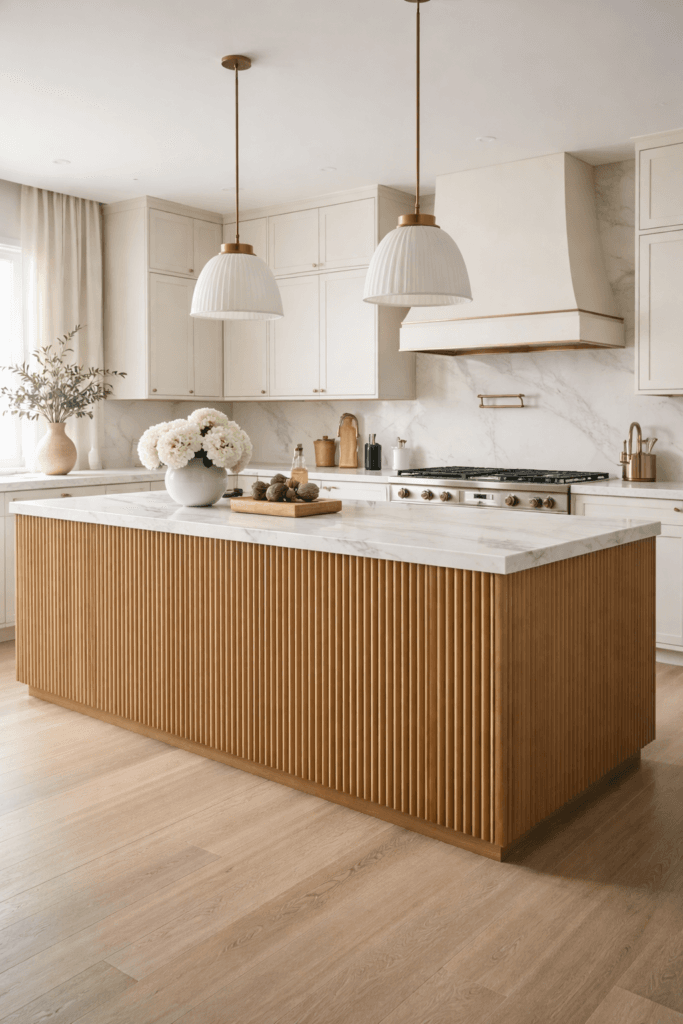
Texture is one of the quiet heroes of luxury design, and fluted or reeded details are a perfect example of how subtle texture can elevate a kitchen.
Fluting refers to those vertical grooves you see on cabinetry, islands, or decorative panels. Reeded details are similar but slightly rounded, creating a softer ripple effect. Both introduce movement without loud patterns.
Luxury kitchens often avoid bold prints or busy finishes. Instead, they rely on tactile elements like fluting to add interest. When light hits those grooves, it creates natural shadow and depth, which makes the space feel layered.
Designers love using fluting on kitchen islands because it turns the island into a sculptural centerpiece. It feels custom and architectural rather than mass-produced.
Another reason this detail feels upscale is craftsmanship. Fluted panels require more work and precision, which subconsciously signals quality.
Even a small dose works. A fluted island front or a single cabinet section can change the entire mood.
Luxury design often whispers rather than shouts. Fluting is the whisper that makes people look twice.
14) Large-Scale Pendants
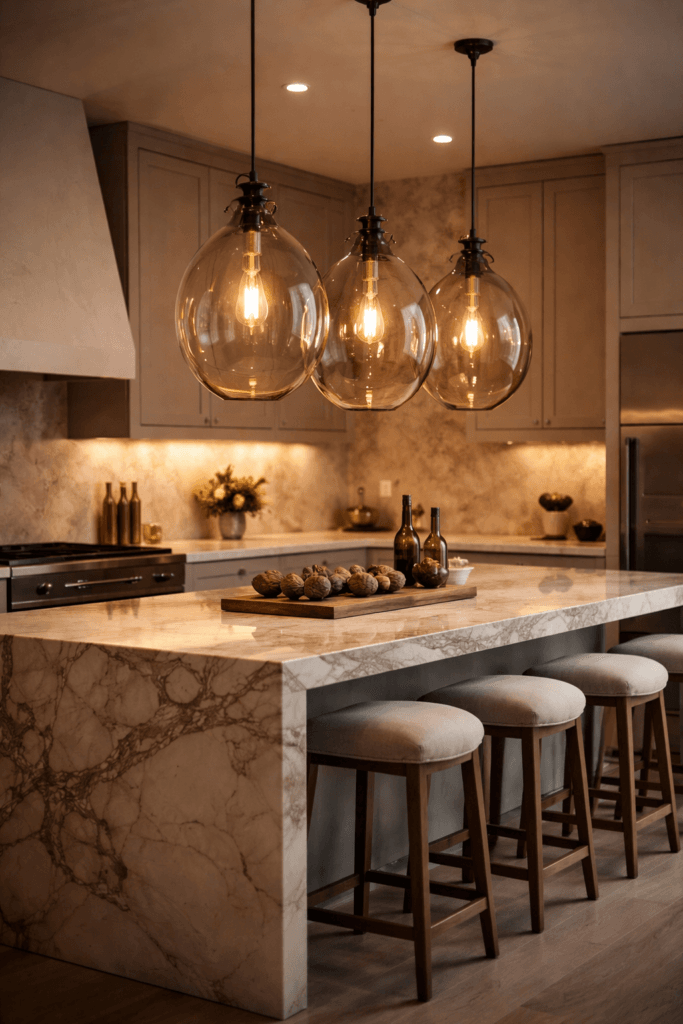
Lighting is functional, but in luxury kitchens it’s also artistic. Oversized pendants are one of the easiest ways to create a designer look.
Small pendants can feel underwhelming, especially over large islands. Large-scale fixtures, on the other hand, add presence and balance.
Designers often choose pendants that are slightly larger than expected. This creates a focal point and anchors the island visually.
Materials matter too. Glass, metal, ceramic, and woven textures each bring a different feeling. A blown-glass pendant can feel elegant, while a linen or woven shade adds softness.
Another benefit of larger pendants is proportion. They help fill vertical space and make ceilings feel taller. They also frame the island, making it feel like the true center of the kitchen.
Luxury kitchens use lighting to define zones. Pendants mark the gathering space, guiding where people naturally gravitate.
The goal isn’t just brightness — it’s atmosphere. Beautiful pendants create both.
15) A Quality Faucet Upgrade
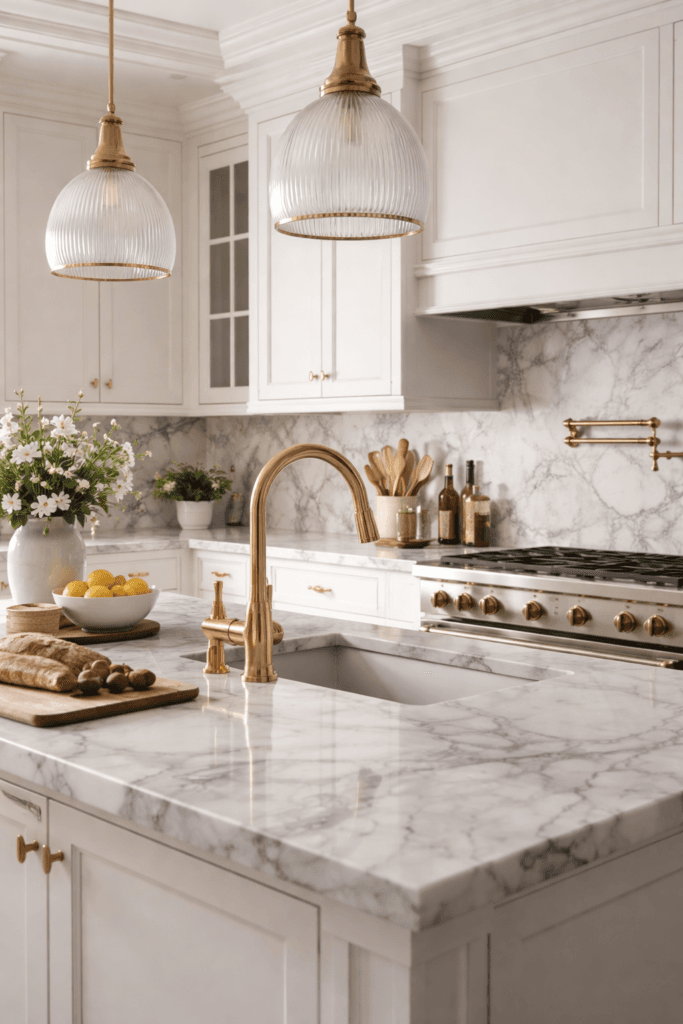
A kitchen faucet is one of the most used items in a home, yet many people overlook its design impact.
In luxury kitchens, the faucet is treated as both a tool and a design feature. A well-made faucet feels smooth, solid, and reliable. That tactile experience matters.
High-end kitchens often feature:
- Pull-down sprayers
- Minimalist silhouettes
- Warm finishes like brass or champagne bronze
- Matte black for contrast
A premium faucet can instantly elevate the sink area, which is one of the most visible parts of a kitchen.
Designers often match the faucet finish to hardware or lighting to create cohesion. That repetition makes the space feel intentional.
Another reason faucet upgrades are powerful is ROI. They’re far less expensive than cabinetry or countertops but make a noticeable difference.
Luxury isn’t always about big renovations. Sometimes it’s about upgrading the elements you use daily.
A beautiful faucet blends practicality and style — exactly what designer kitchens aim for.
16) Soft-Close Everything
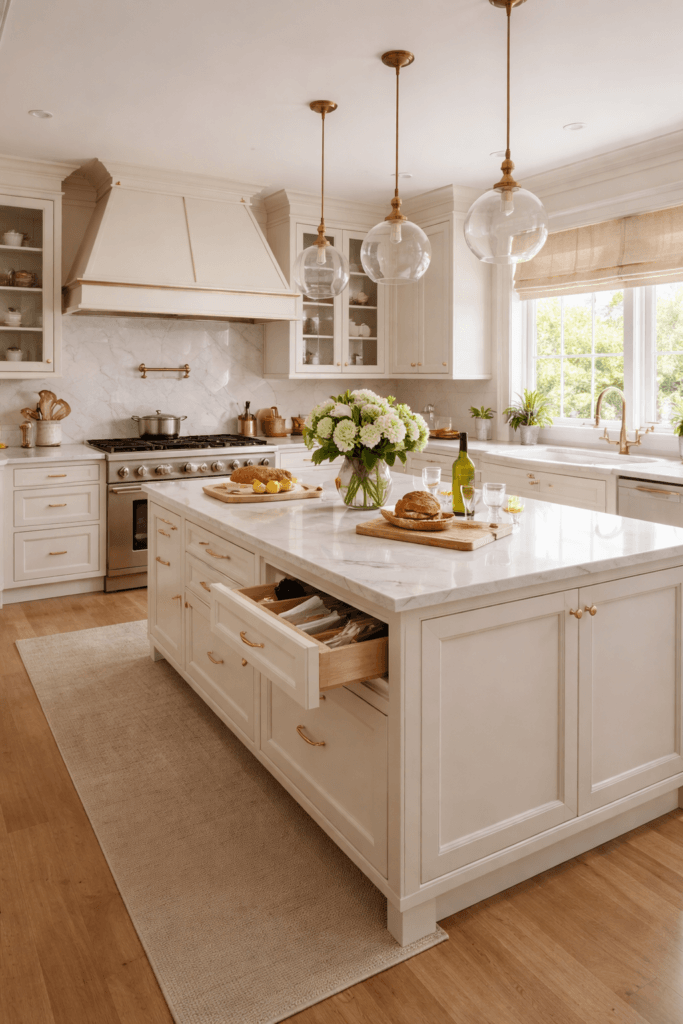
One of the most overlooked signs of a luxury kitchen is sound — or rather, the lack of it.
Luxury kitchens are quiet.
Drawers glide.
Doors close gently.
Nothing slams.
Soft-close mechanisms create a refined experience. They protect cabinetry from wear while making everyday use feel smoother.
This feature also signals quality construction. Cabinets with soft-close hardware tend to be better built overall.
Another benefit is stress reduction. Repetitive slamming noises can create subtle tension in a home. Soft-close systems eliminate that.
Designers often emphasize that luxury is about how a space feels, not just how it looks. A quiet kitchen feels calmer and more controlled.
If a full remodel isn’t possible, soft-close hinges can often be retrofitted. That makes this a surprisingly accessible upgrade.
Small details shape daily experiences. Soft-close features are one of those details that quietly improve life at home.
17) Minimal Counter Decor
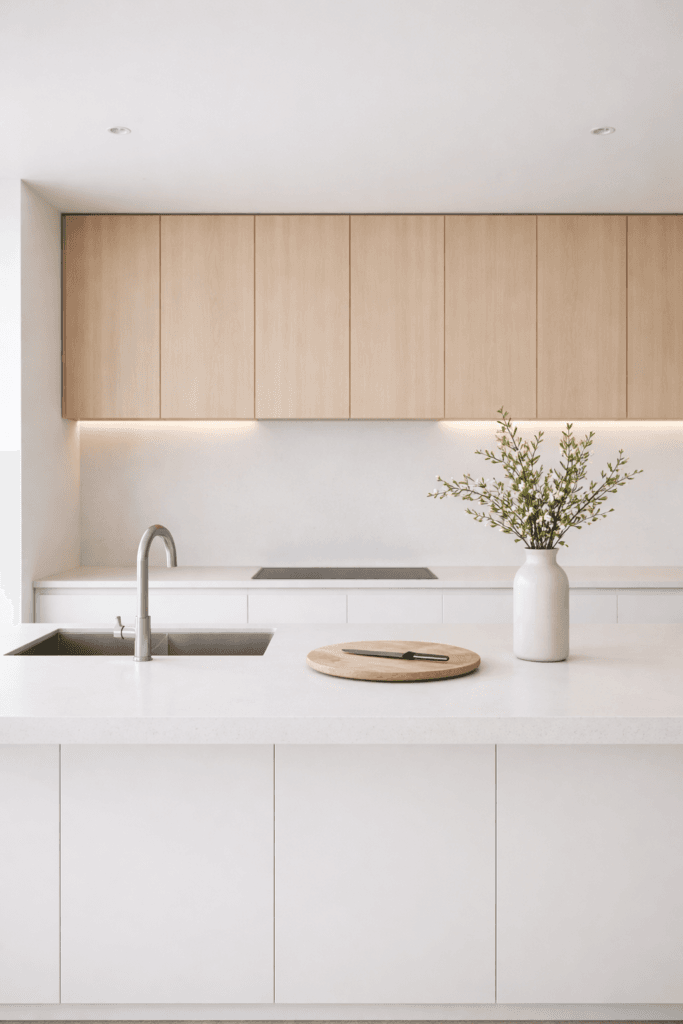
Luxury kitchens don’t rely on decoration — they rely on materials and restraint.
Counters crowded with gadgets, mail, and random items instantly reduce the sense of calm. Even beautiful kitchens can feel chaotic when surfaces are cluttered.
Designer kitchens edit ruthlessly. Only a few items stay out:
- A coffee machine
- A cutting board
- A vase
- A bowl of fruit
That’s usually enough.
Minimal counter decor allows the eye to rest. It also highlights the quality of the countertops themselves.
Another reason minimalism works is practicality. Clear counters are easier to clean and use.
Luxury design often prioritizes function first. Beauty follows naturally.
Think of your counters like gallery space. Each item should earn its spot.
Less truly is more in this case.
18) Built-In Coffee Stations
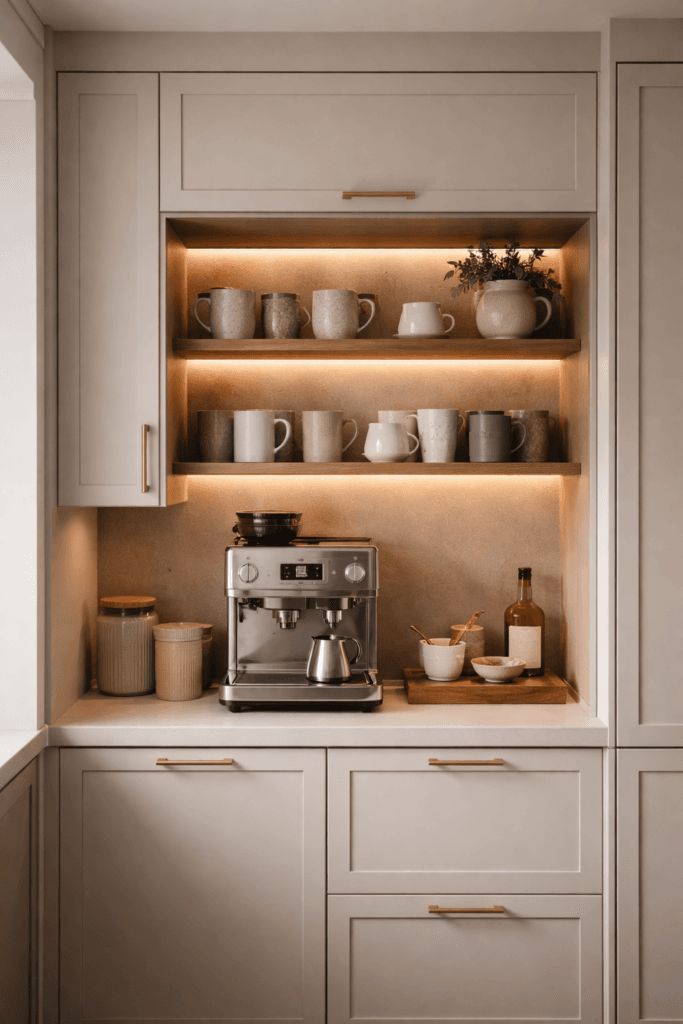
A built-in coffee station adds both convenience and lifestyle appeal. It turns a daily routine into a small ritual.
Luxury kitchens often include a dedicated zone for coffee or tea. This might be a small nook, a cabinet with a pull-out shelf, or a styled corner.
Why does this feel upscale? Because it supports real life. It acknowledges how people actually use their kitchens.
A coffee station also keeps the main counters clear. Everything related to brewing stays in one area.
Designers sometimes include:
- Floating shelves for mugs
- Hidden outlets
- Small drawers for pods or beans
- Soft lighting
This zone becomes cozy and personal.
It’s also a favorite feature for guests. Offering coffee from a beautiful setup feels welcoming.
Luxury design isn’t only about looks. It’s about enhancing everyday moments. A coffee station does exactly that.
19) Drawer Organizers
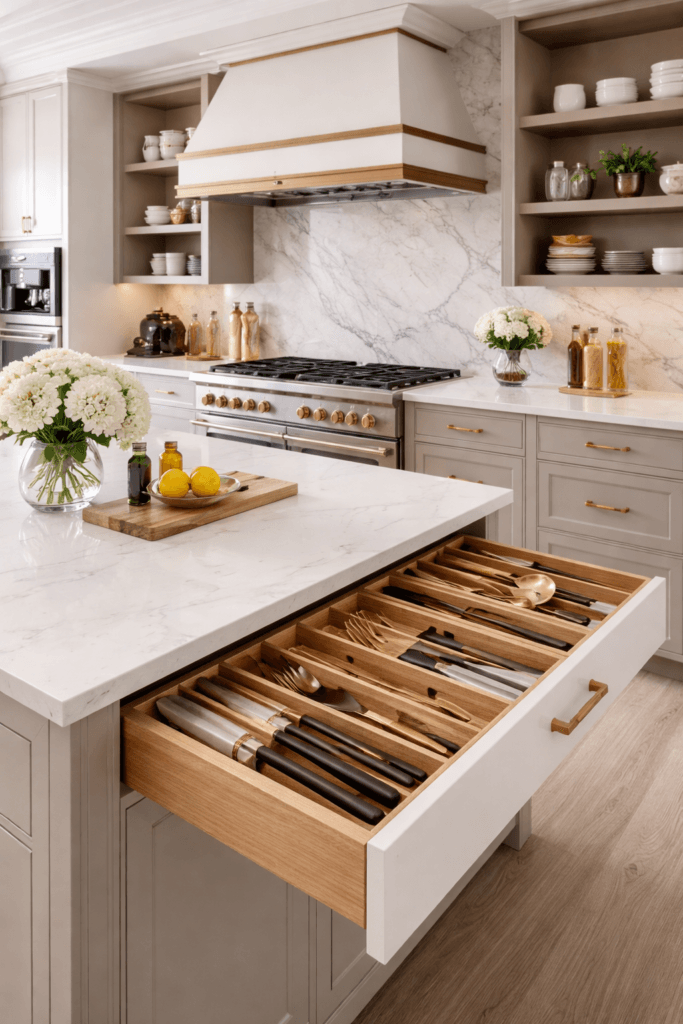
Luxury kitchens are not just beautiful on the outside — they are intentional on the inside. Drawer organizers are one of the clearest signs of a thoughtfully designed kitchen.
Opening a drawer and seeing neatly arranged utensils, spices, and tools creates a sense of calm. It removes friction from everyday routines. Instead of digging through clutter, everything has a place.
Designers often say that true luxury is about ease. When your kitchen works smoothly, it feels elevated.
Custom drawer inserts for cutlery, knives, spices, and cookware make a kitchen feel tailored. Even adjustable organizers can create a similar effect.
Another benefit is longevity. Organized drawers reduce wear and tear because items aren’t constantly shifting or piling up.
From a visual standpoint, organized interiors support minimal counters. When drawers are functional, you don’t need to store things on display.
Luxury kitchens prioritize both beauty and usability. Drawer organizers bridge that gap.
It’s one of those upgrades guests may never see — but you’ll feel every single day.
20) Tall Cabinetry
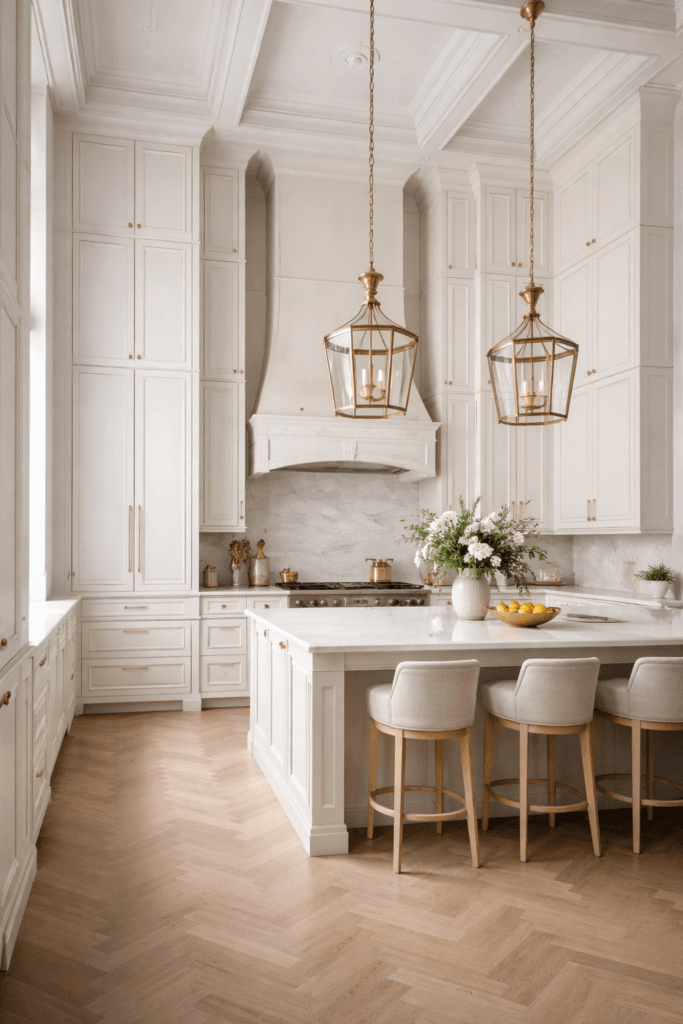
Tall cabinetry instantly makes a kitchen feel more custom and expansive. Cabinets that extend to the ceiling draw the eye upward and emphasize height.
Standard cabinets often leave a gap at the top, which can collect dust and visually cut off the space. Full-height cabinetry feels cleaner and more intentional.
Designers use tall cabinets to create a seamless wall effect. This reduces visual breaks and makes the kitchen feel cohesive.
Another advantage is storage. Upper cabinets can hold seasonal items, specialty cookware, or entertaining pieces you don’t need daily.
Tall cabinetry also photographs beautifully. Pinterest-favorite kitchens often showcase uninterrupted cabinet lines because they feel polished.
This design choice signals customization. It suggests the kitchen was designed specifically for the home rather than pulled from a template.
Luxury kitchens maximize both function and visual flow. Tall cabinetry achieves both.
Even adding a small stacked cabinet on top of existing ones can mimic the effect.
21) A Secondary Prep Sink
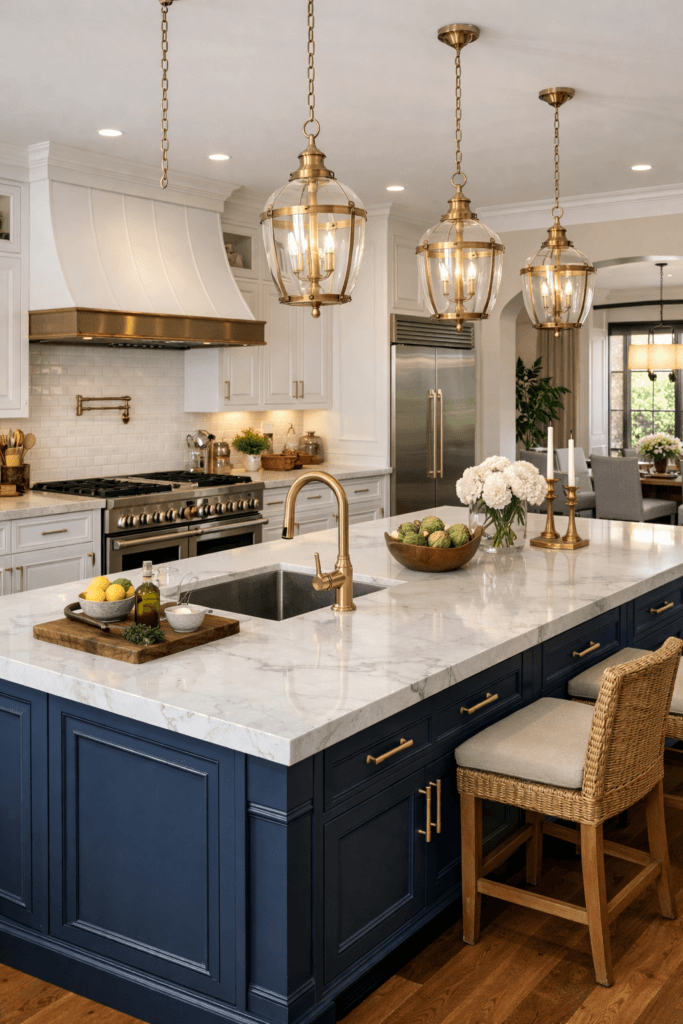
A secondary prep sink is a feature commonly found in high-end kitchens, especially those designed for entertaining or serious cooking.
This extra sink allows multiple people to work comfortably at once. One person can prep while another washes or rinses.
Luxury design often considers flow. A prep sink near the island or cooking zone reduces back-and-forth movement, making the kitchen more efficient.
Even in smaller kitchens, a compact prep sink can add convenience.
Another benefit is entertaining. Guests can gather around the main sink area while prep happens elsewhere. It keeps the space feeling open and social.
Designers also appreciate the symmetry prep sinks can bring, especially on large islands.
While this is more of an upgrade than a styling trick, it’s a hallmark of thoughtfully designed kitchens.
Luxury isn’t always visible at first glance. Sometimes it’s about how smoothly a space functions.
22) Open Shelving (Styled Carefully)
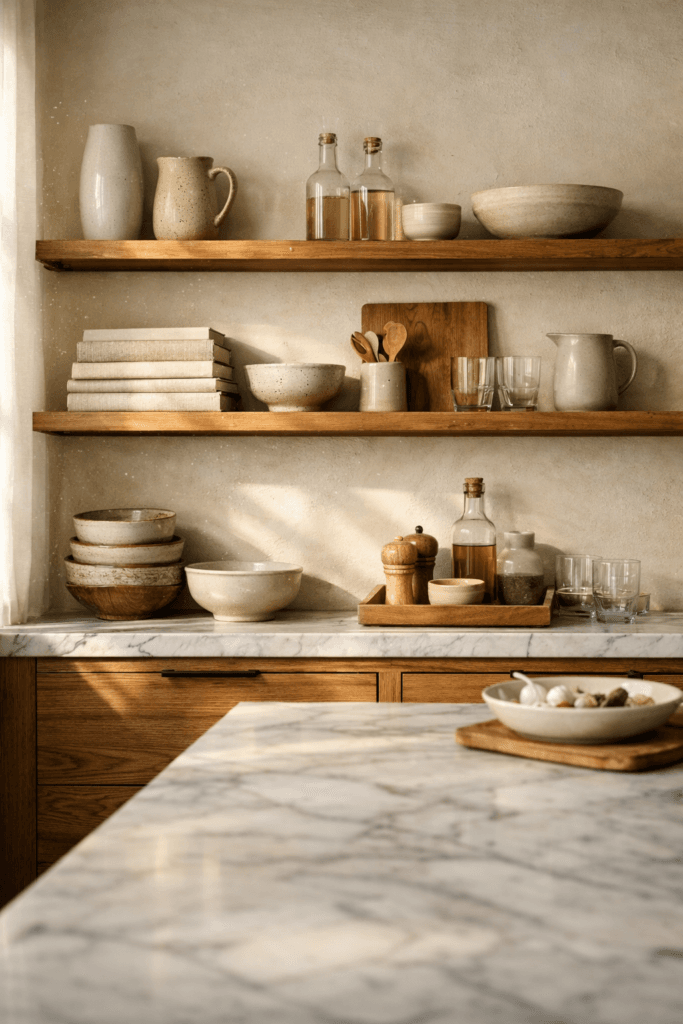
Open shelving can look stunning — or cluttered — depending on how it’s styled.
Luxury kitchens use open shelves sparingly and intentionally. They’re not for storage overload; they’re for curated display.
Designers typically style shelves with:
- Neutral ceramics
- Matching glassware
- A few cookbooks
- Small decor accents
Repetition in color and material keeps shelves cohesive.
The key is breathing room. Shelves packed too tightly feel chaotic. Leaving space between objects creates calm.
Open shelving works best when it supports the overall palette. For example, warm wood shelves in a neutral kitchen add softness.
Another advantage is accessibility. Everyday items become easy to grab.
However, luxury kitchens never rely solely on open storage. Closed cabinets still do the heavy lifting.
Open shelving is the accent — not the main act.
When styled thoughtfully, it adds personality without sacrificing elegance.
23) Texture Through Textiles
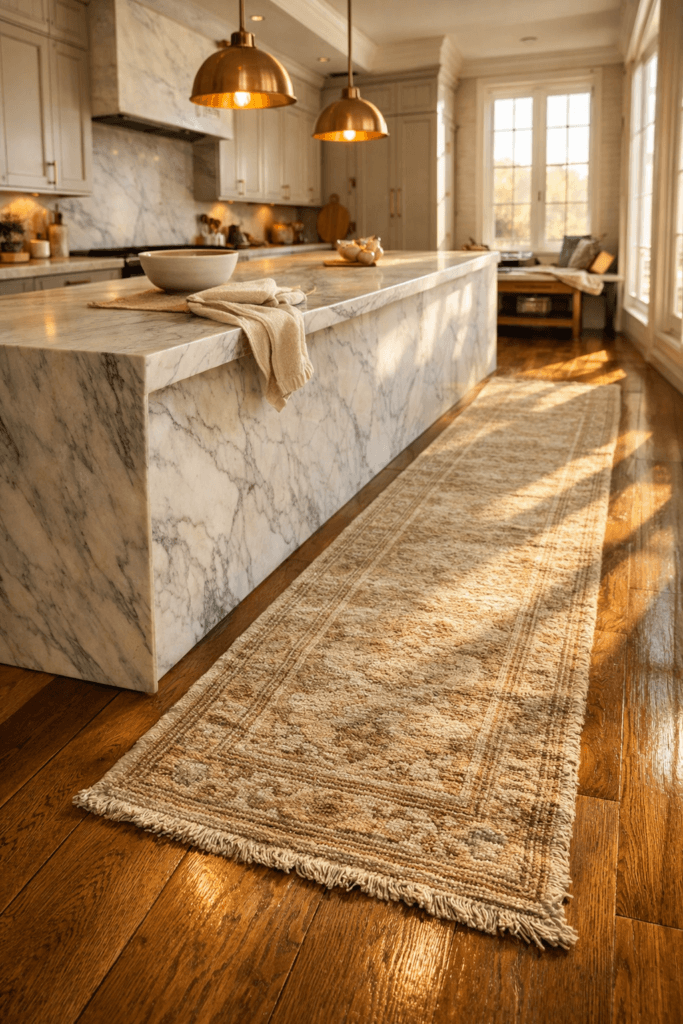
Kitchens are full of hard surfaces: stone, tile, metal, and glass. Textiles soften that environment.
A simple runner rug, for example, can add warmth and absorb sound. It makes a kitchen feel more like a living space than a work zone.
Designers often choose:
- Neutral vintage-style runners
- Subtle patterns
- Natural fibers
These choices add character without overpowering the design.
Textiles also introduce comfort. Standing on a rug while cooking feels better than standing on hard flooring.
Another benefit is layering. Luxury spaces often feel rich because they include varied textures.
Even dish towels can contribute. High-quality linen or cotton towels in neutral tones elevate the sink area.
Textiles make a kitchen feel lived-in and welcoming.
Luxury doesn’t mean sterile. It means comfortable and curated.
24) A Statement Island Color
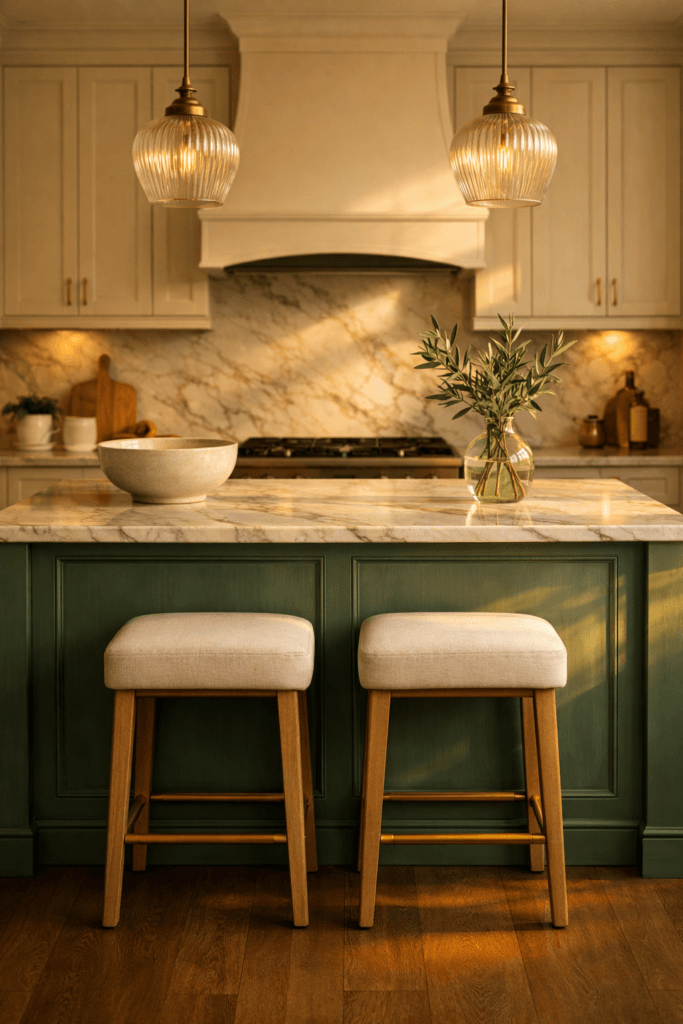
A statement island color can anchor the entire kitchen. While perimeter cabinets stay neutral, the island introduces depth.
Popular luxury choices include:
- Deep green
- Warm wood
- Soft taupe
- Muted navy
These tones feel grounded and timeless.
Designers use contrasting islands to add dimension. It prevents an all-white kitchen from feeling flat.
Another advantage is personality. The island becomes a design feature rather than just a workspace.
Statement islands also photograph beautifully, which is why they appear frequently on Pinterest.
The key is balance. The color should complement the overall palette, not compete with it.
Luxury design often uses contrast subtly. A colored island achieves that without overwhelming the space.
It’s bold, but still refined.
25) Under-Cabinet Lighting
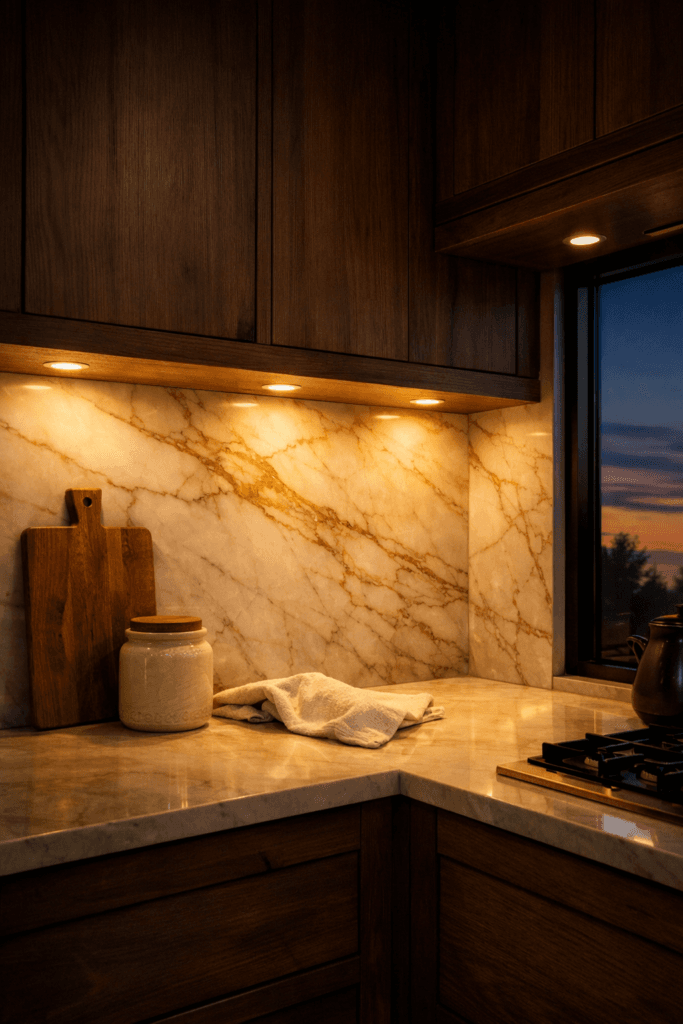
Under-cabinet lighting is one of the most transformative yet underestimated upgrades in a kitchen. It quietly elevates the entire space.
During the day, it highlights backsplash textures and countertop materials. At night, it creates a warm glow that makes the kitchen feel cozy rather than dark.
Luxury kitchens rarely rely on overhead lights alone. They use layered lighting, and under-cabinet lighting is a key layer.
It improves function too. Task lighting makes food prep safer and more comfortable. Shadows are reduced, and visibility improves exactly where you need it.
Designers often choose warm LED strips because they blend seamlessly and don’t overpower the room. The goal is a soft glow, not a spotlight.
Another reason this feels luxurious is atmosphere. Imagine walking into your kitchen at night and seeing a gentle light wash across the counters. It feels calming, intentional, and high-end.
Under-cabinet lighting also photographs beautifully, which is why it appears in so many Pinterest kitchens.
It’s a relatively simple upgrade with a dramatic payoff. Few changes make a kitchen feel as polished this quickly.
26) Quality Ventilation
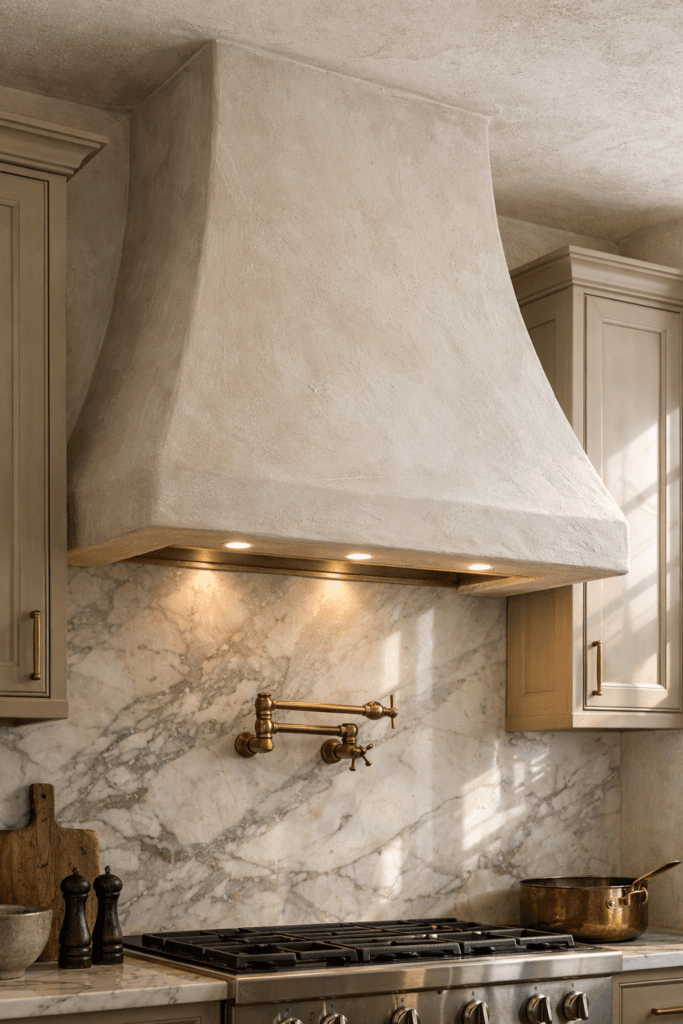
Ventilation might not be the most glamorous topic, but it plays a major role in how a kitchen feels.
A high-quality range hood removes smoke, odors, and grease efficiently. This keeps the air fresh and the kitchen cleaner over time.
Luxury kitchens prioritize comfort, and clean air contributes to that comfort. Strong ventilation also protects cabinetry and finishes from buildup.
Another overlooked factor is noise. Premium ventilation systems operate more quietly. A loud hood can disrupt conversation and make the space feel less relaxing.
Designers often integrate ventilation systems into statement hoods so function and beauty work together.
Good ventilation also supports open-concept living. When kitchens flow into dining or living areas, managing smells and air quality becomes more important.
Luxury design considers the full sensory experience — not just what you see, but what you smell and hear.
Investing in quality ventilation is investing in the longevity and comfort of your kitchen.
27) Editing Your Space
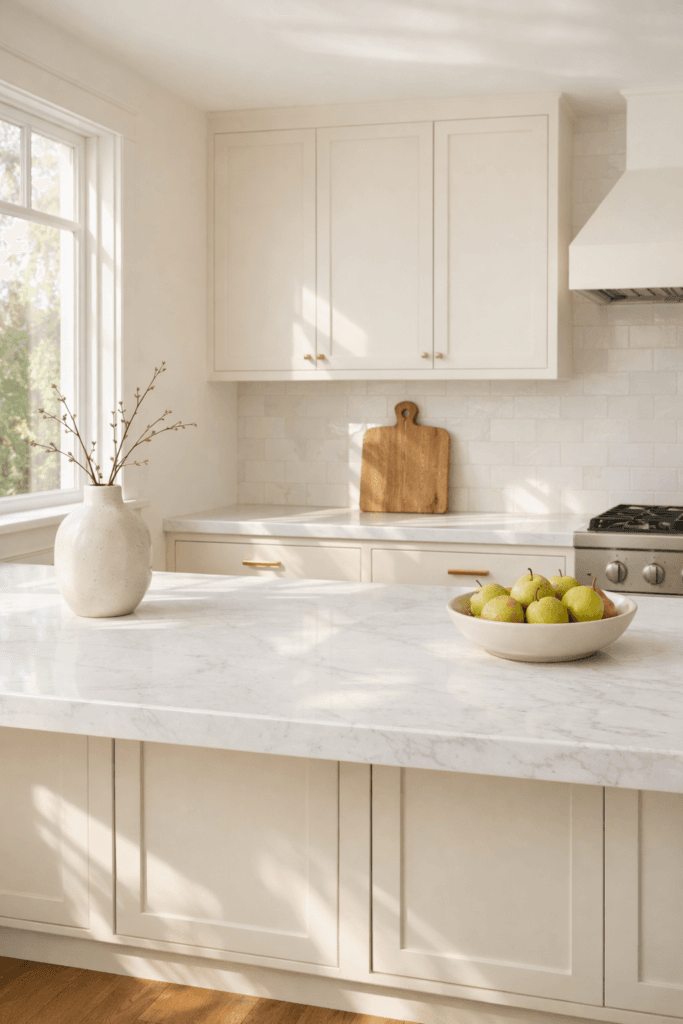
Perhaps the most powerful luxury kitchen idea is also the simplest: editing.
Luxury kitchens are edited spaces. They are not filled to capacity. They breathe.
Editing means removing what doesn’t serve the space. It means choosing quality over quantity. It means being intentional about what stays visible.
Designers often step back and ask:
Does this add beauty?
Does this add function?
Does this support calm?
If the answer is no, it doesn’t belong on the counter.
Clutter competes for attention. Edited spaces feel peaceful because your eye isn’t overwhelmed.
Another benefit is flexibility. A clean, edited kitchen can adapt to seasons, guests, and lifestyle changes easily.
Luxury isn’t about more.
It’s about better.
The most expensive-looking kitchens are rarely the most decorated. They are the most intentional.
Editing transforms an ordinary kitchen into a designer-feeling one faster than almost any upgrade.
The Emotional Impact of a Beautiful Kitchen
A well-designed kitchen changes how a home feels.
It encourages gathering.
It slows routines.
It invites conversation.
It makes everyday moments more enjoyable.
When a kitchen feels calm and curated, people naturally want to spend time there. Morning coffee feels more peaceful. Cooking feels less stressful. Hosting feels more welcoming.
Luxury isn’t always about price tags. It’s about intention, comfort, and thoughtful design.
A beautiful kitchen supports your lifestyle rather than competing with it.
Bellencinista Notes
Designer trick: keep at least 40% of your counters empty. Negative space is what makes kitchens feel custom, calm, and truly high-end.
Final Thoughts
Luxury kitchens aren’t created by copying trends. They’re created by choosing materials, lighting, and layouts that support daily life.
They focus on atmosphere.
They prioritize calm.
They celebrate craftsmanship.
They embrace restraint.
When you combine these principles, your kitchen doesn’t just look better — it feels better.
And that feeling is what designer-level spaces are really about.