
Celestial Home Decor: The Luxury Interior Trend Rising in 2026
August 20, 2026
Trending Finds Readers Are Loving
Explore affordable luxe discoveries people are clicking on right now.
See What's TrendingCelestial home decor is quickly emerging as one of the most captivating interior trends of the moment. Inspired by cosmic imagery, moonlit atmospheres, and luminous metallic materials, this design style creates rooms that feel both dramatic and calming at the same time.
But unlike older interpretations of “space-themed” interiors, the modern celestial aesthetic is far more refined.
Designers are not filling rooms with stars and planets.
Instead, they are translating celestial inspiration into materials, textures, and lighting effects that evoke the atmosphere of the night sky.
The result is an interior style that feels artistic, luxurious, and slightly mysterious.
Publications like
https://www.architecturaldigest.com/story/interior-design-trends
have highlighted the growing popularity of interiors that rely on atmospheric lighting and sculptural decor.
Celestial design fits perfectly into that movement.
The Core Elements of Celestial Home Decor
Celestial interiors rely on a handful of defining visual elements that help create their signature look.
These elements combine light, texture, and reflective materials to build depth within a room.
Some of the most recognizable features include:
Sculptural Lighting
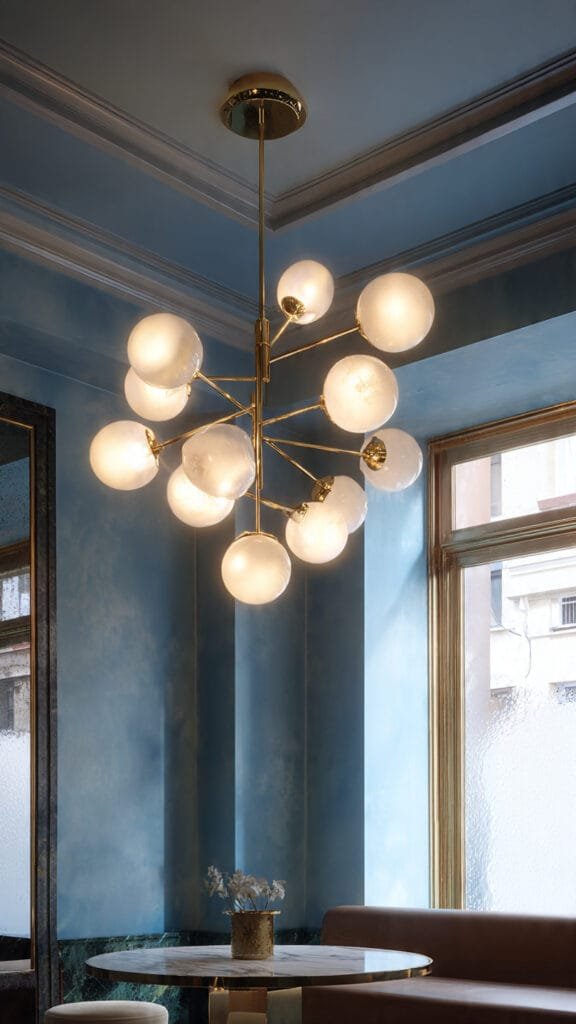
Lighting is the most important element in celestial interiors.
Designers frequently use fixtures that mimic the appearance of stars, moons, or glowing orbs.
Common choices include:
- globe pendant lights
- clustered orb chandeliers
- alabaster stone lamps
- frosted glass sconces
These fixtures produce soft diffused light that spreads evenly throughout the room, creating a calm atmospheric glow.
Warm lighting around 2700K is usually preferred because it enhances metallic finishes and softens the environment.
Metallic Finishes
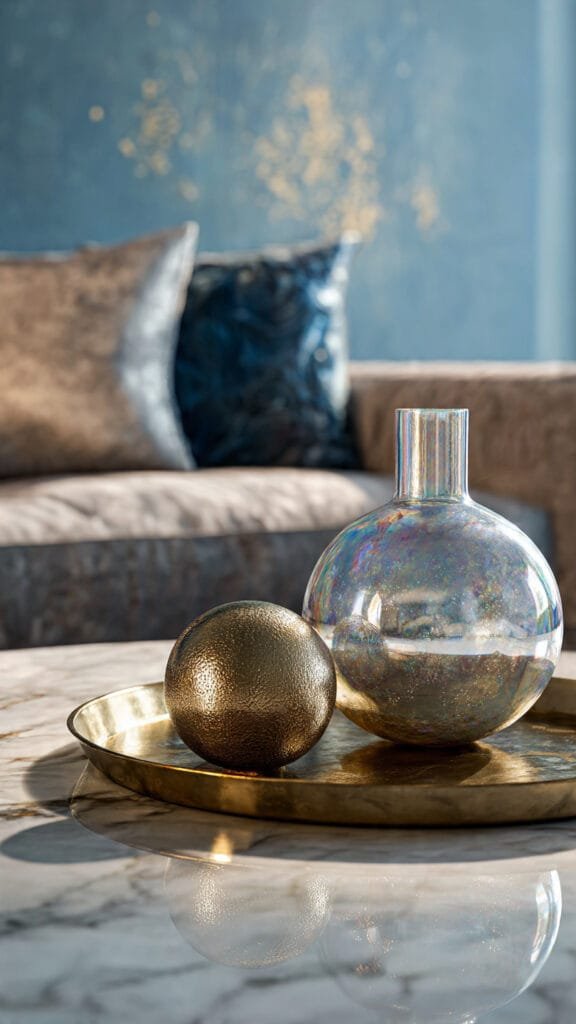
Celestial interiors often incorporate metals that reflect light in subtle ways.
These include:
- brushed brass
- champagne gold
- polished chrome
- antiqued bronze
Rather than dominating the room, metallic finishes are used in small details such as:
- lighting fixtures
- cabinet hardware
- decorative trays
- mirror frames
When light hits these surfaces, it creates small reflections that mimic the shimmering quality of stars.
Stone and Mineral Surfaces
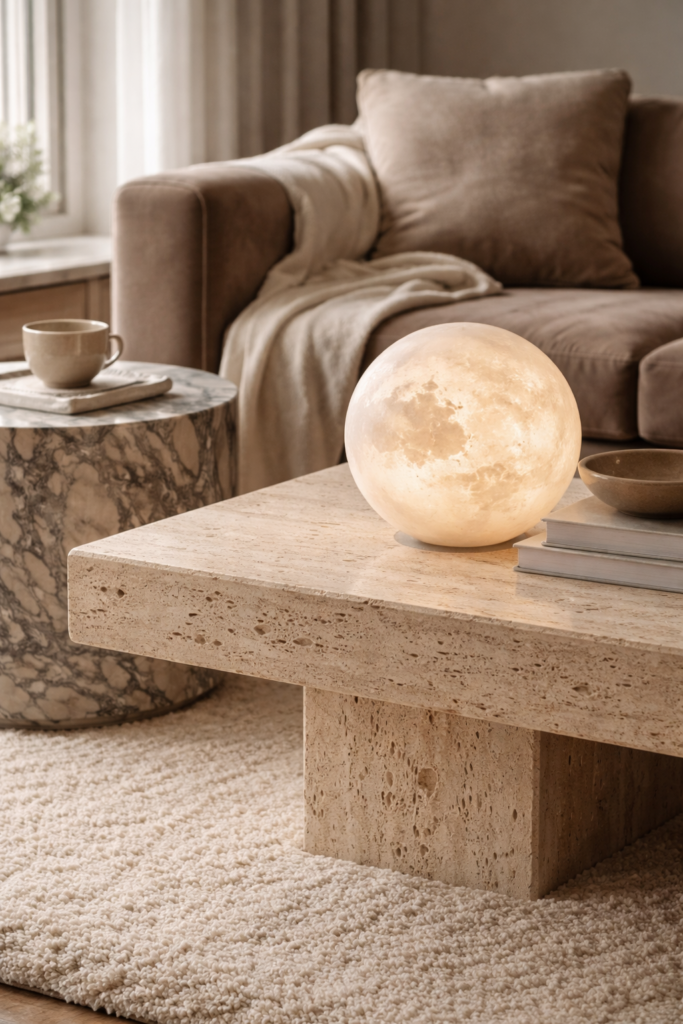
Natural stone is another important component of celestial interiors.
Materials like marble, travertine, and alabaster have organic veining patterns that resemble cosmic landscapes.
For example:
A marble coffee table might feature swirling grey veining that resembles cloud formations in space.
An alabaster lamp might glow softly from within, creating the appearance of a moon-like sphere.
These materials introduce natural movement into the room, preventing the space from feeling flat or overly minimal.
Celestial Colors Designers Use Most Often
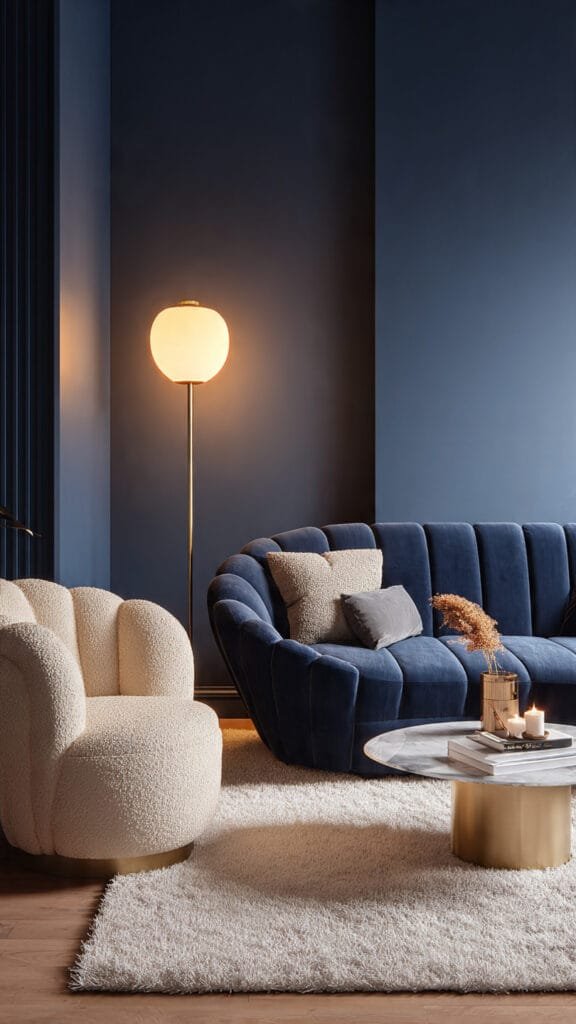
Color palettes in celestial interiors are inspired by the sky at night.
Rather than using bright colors, designers rely on deep atmospheric tones.
Some of the most popular palettes include:
Midnight Blue
This deep navy tone creates dramatic contrast against metallic finishes.
Soft Charcoal
Charcoal gray provides a neutral backdrop that allows lighting and decor to stand out.
Warm Cream
Cream tones soften darker colors and help balance the palette.
Muted Gold
Gold accents add warmth and subtle luxury.
Interestingly, celestial interiors often pair beautifully with the calming palettes discussed in
https://www.bellencia.com/cool-blue-interior-design
where cool blue tones provide the perfect backdrop for reflective metallic decor.
Why Celestial Interiors Feel So Luxurious
The reason celestial interiors feel expensive is because they rely heavily on contrast and lighting effects.
Rooms are often layered with:
- dark background colors
- reflective metallic accents
- soft glowing light sources
- textured stone surfaces
These elements create visual depth that changes throughout the day.
During daylight hours, natural light highlights the textures of stone and fabric.
At night, ambient lighting creates a warm glow that makes metallic finishes shimmer subtly.
This dynamic environment makes the room feel far more sophisticated than a flat, evenly lit space.
Celestial Decor Pieces That Instantly Elevate a Room
You don’t need to redesign an entire space to introduce celestial elements.
Designers often rely on a handful of carefully chosen decor pieces to create the effect.
Some of the most effective pieces include:
Orb Lighting Fixtures
These lights resemble glowing moons or planets.
Iridescent Glass Decor
Glass objects with subtle color shifts add movement and reflection.
Sculptural Mirrors
Round mirrors with metallic frames reflect light and visually expand the room.
Many of these decor strategies overlap with the styling techniques discussed in
https://www.bellencia.com/designer-decor-pieces
where simple design objects are used to elevate interiors.
Celestial Lighting Is the Heart of the Design
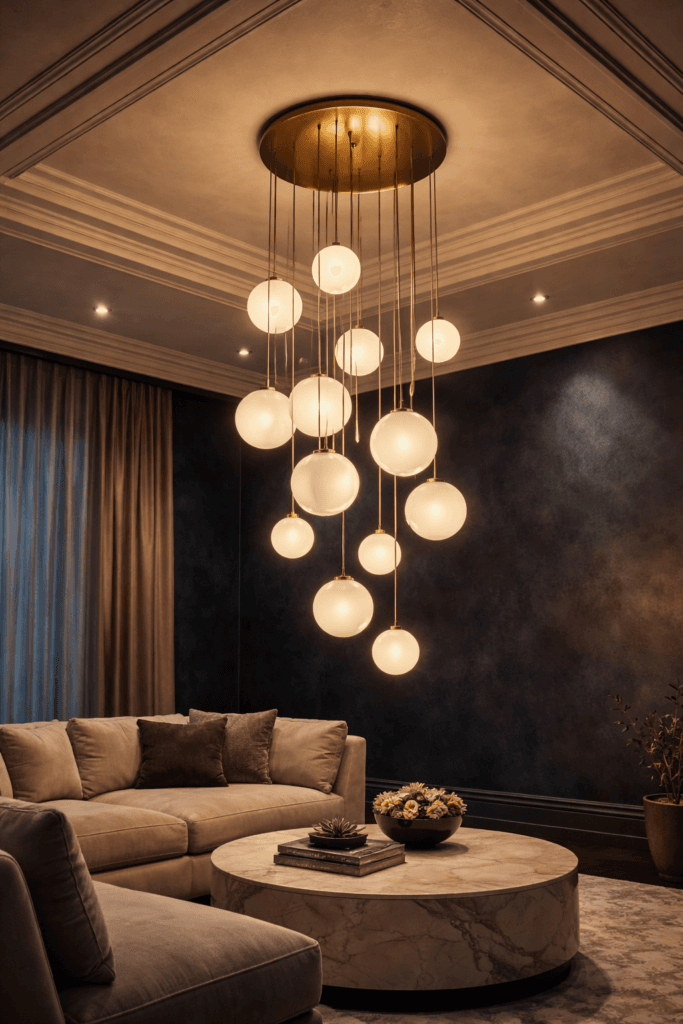
Lighting is the defining element that transforms a normal interior into a celestial-inspired space.
Unlike traditional interiors that rely on a single central fixture, celestial rooms are designed using layered lighting that creates depth and atmosphere.
Designers usually combine three types of lighting:
Ambient lighting
This provides the general illumination of the room.
Orb chandeliers, alabaster pendants, and frosted globe fixtures are commonly used because they diffuse light evenly and resemble glowing moons.
Accent lighting
Accent lighting highlights architectural details or decor.
Brass wall sconces with frosted glass cylinders often appear in celestial interiors because they produce soft halos of light across walls.
Decorative lighting
Decorative lighting is where designers become more expressive.
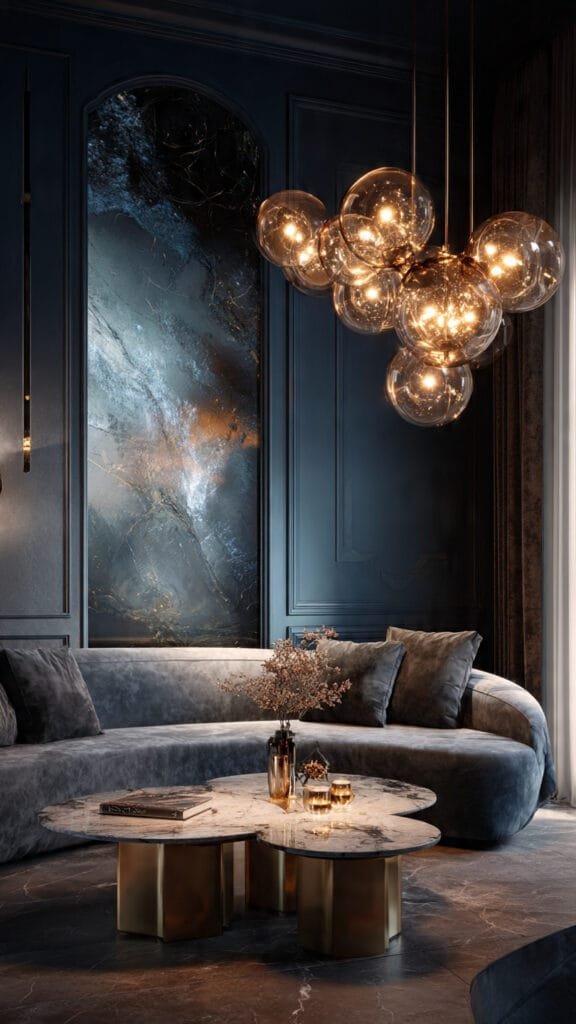
Cluster chandeliers with multiple glass globes are especially popular because they resemble floating constellations.
The goal is to create a layered environment where light reflects across metallic surfaces and stone textures.
When done correctly, the room appears almost illuminated from within.
How Designers Style Celestial Living Rooms
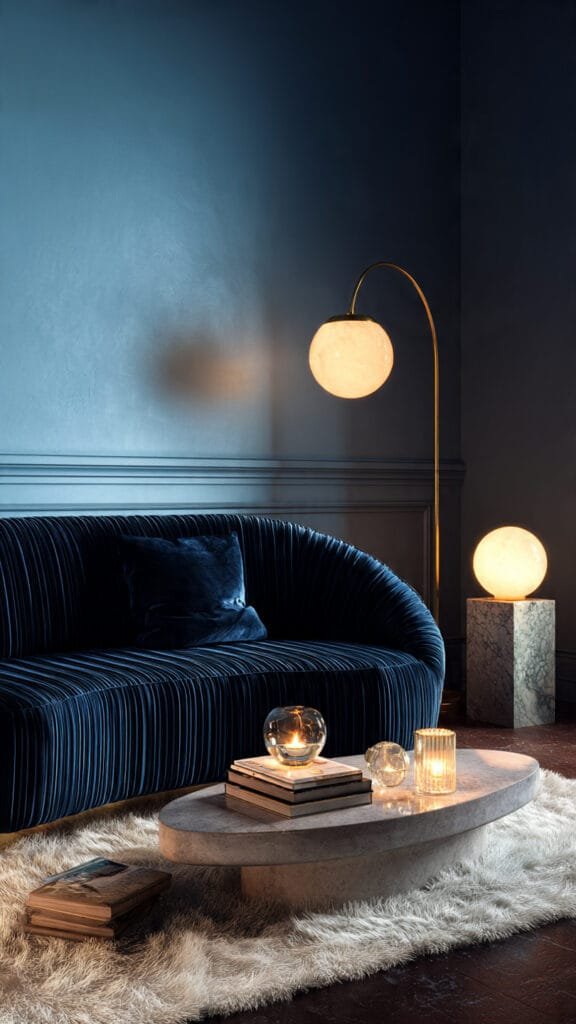
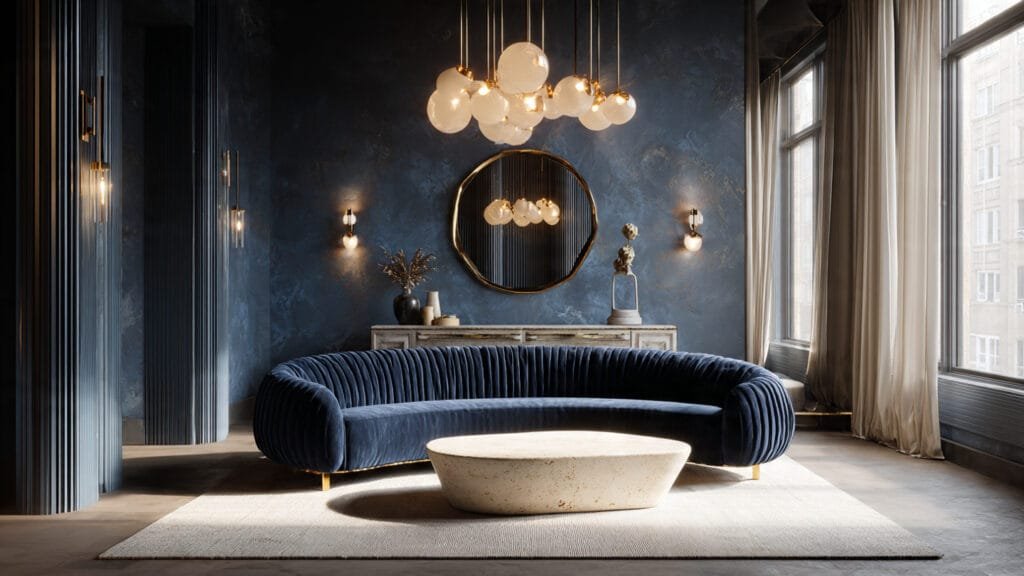
The living room is usually where celestial design makes the biggest visual impact.
Instead of focusing on one statement piece, designers carefully build the atmosphere through several layered elements.
A typical celestial living room may include:
• a marble or travertine coffee table
• a velvet sofa in deep blue or charcoal
• orb pendant lighting suspended above the seating area
• metallic decor pieces that reflect ambient light
The combination of soft upholstery and reflective metals creates contrast.
For example, a room may feature a deep navy velvet sofa paired with a polished brass floor lamp.
During the day, natural light reflects across the brass surface.
At night, the lamp produces a soft golden glow that spreads across the surrounding furniture.
These subtle light interactions are what give celestial interiors their atmospheric quality.
Many designers also integrate geometric shapes into these rooms, which connects the celestial trend with the architectural styling seen in
https://www.bellencia.com/neo-deco-living-room-trend
where sculptural lighting and bold forms play a major role.
Furniture That Works Best in Celestial Interiors
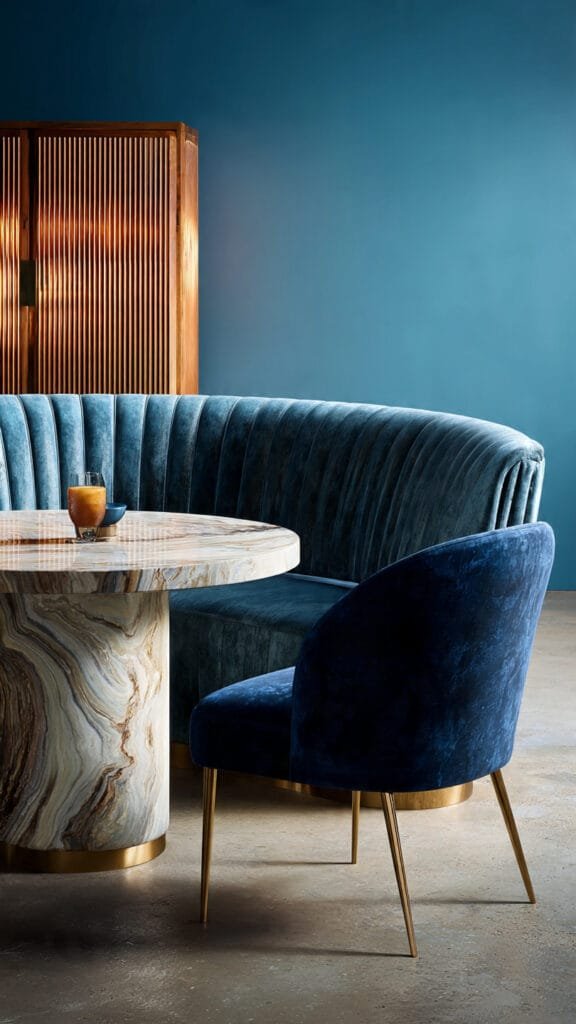
Furniture in celestial interiors tends to follow two design principles:
sculptural shapes and luxurious materials.
Rather than using flat, angular furniture, designers favor pieces with soft curves and organic silhouettes.
Some of the most popular choices include:
Curved velvet sofas
Rounded sofas create a sense of movement within the room and soften darker color palettes.
Pedestal stone tables
Travertine and marble pedestal tables often appear in celestial interiors because their organic veining resembles cosmic patterns.
Rounded accent chairs
Circular shapes reinforce the celestial theme while also creating visual balance.
Glass and metal side tables
These pieces help reflect light and prevent the room from feeling visually heavy.
When layered together, these elements create an environment that feels refined yet slightly dramatic.
Materials That Define the Celestial Look
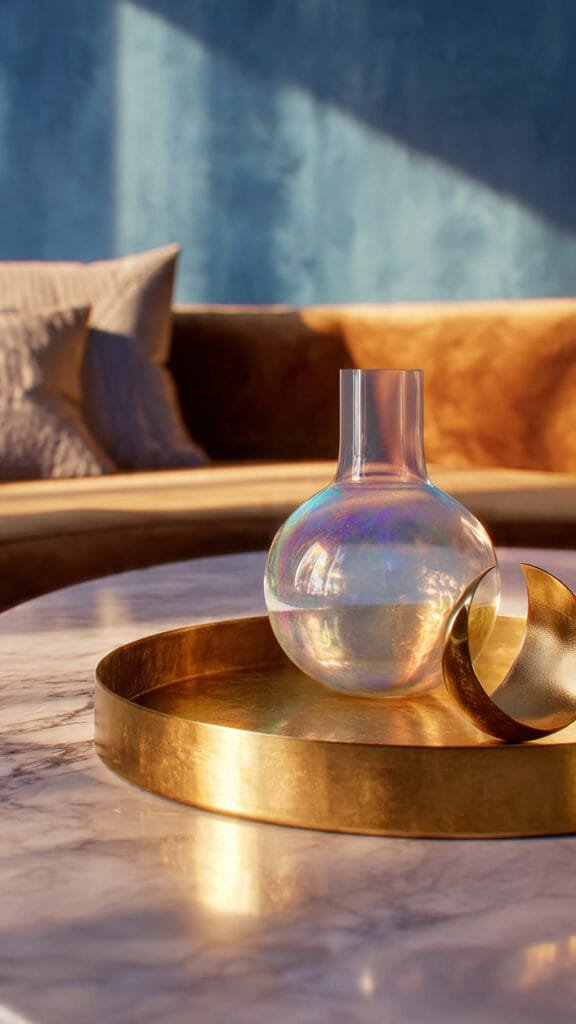
Celestial interiors rely heavily on materials that interact beautifully with light.
Designers often mix the following surfaces within a single room:
Marble
The swirling veining of marble surfaces resembles cloud formations or distant galaxies.
Travertine
Travertine stone introduces natural texture and a warm neutral tone that balances darker colors.
Glass
Glass objects allow light to pass through and create subtle reflections.
Metal
Brass, chrome, and polished steel introduce brightness and contrast.
These materials create a layered environment where light moves across surfaces rather than simply illuminating them.
This technique is what makes celestial interiors feel more dynamic than many minimalist spaces.
Color Layering in Celestial Design
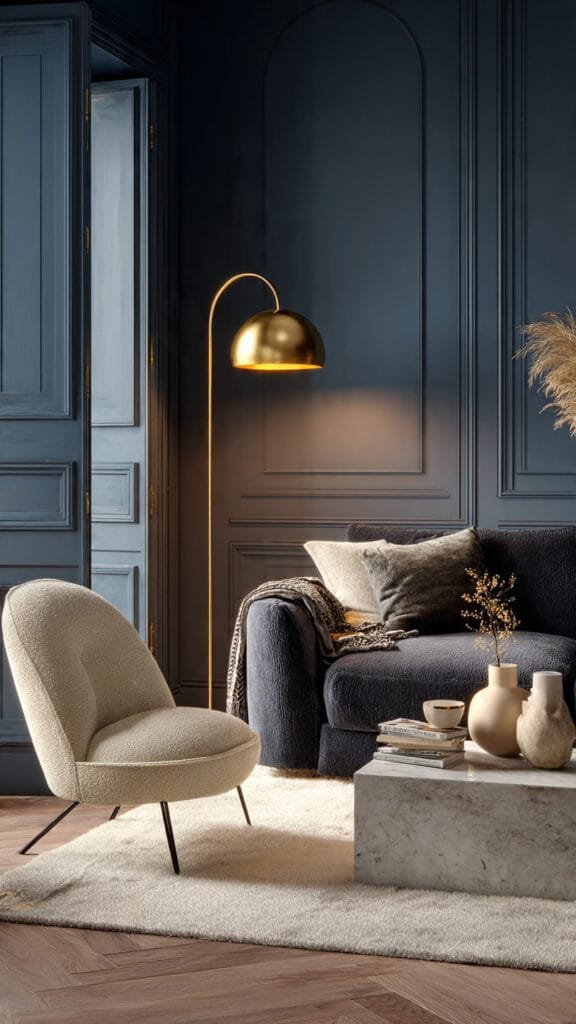
While celestial interiors are often associated with dark tones, the palette is more nuanced than simply “dark and dramatic.”
Designers typically layer colors gradually.
A common palette may include:
• deep midnight blue walls
• charcoal or slate upholstery
• warm cream textiles
• gold or brass accents
These layers create contrast without overwhelming the room.
Cool blue tones are especially effective because they create a calming backdrop for reflective materials.
This approach connects beautifully with the palette explored in
https://www.bellencia.com/cool-blue-interior-design
where cool blue interiors introduce depth without sacrificing calmness.
When combined with celestial lighting and metallic decor, the effect becomes even more striking.
Why Celestial Interiors Work So Well With Modern Homes
One reason celestial interiors are gaining popularity is because they complement modern architecture.
Contemporary homes often feature:
• open floor plans
• large windows
• minimal wall ornamentation
These characteristics create the perfect canvas for atmospheric lighting and sculptural decor.
Large windows allow natural light to highlight stone textures during the day.
At night, layered lighting transforms the room into a soft glowing environment.
This dual personality makes celestial interiors incredibly versatile.
They feel calm and airy during daylight hours and dramatic in the evening.
Celestial Bedrooms Create the Most Atmospheric Spaces
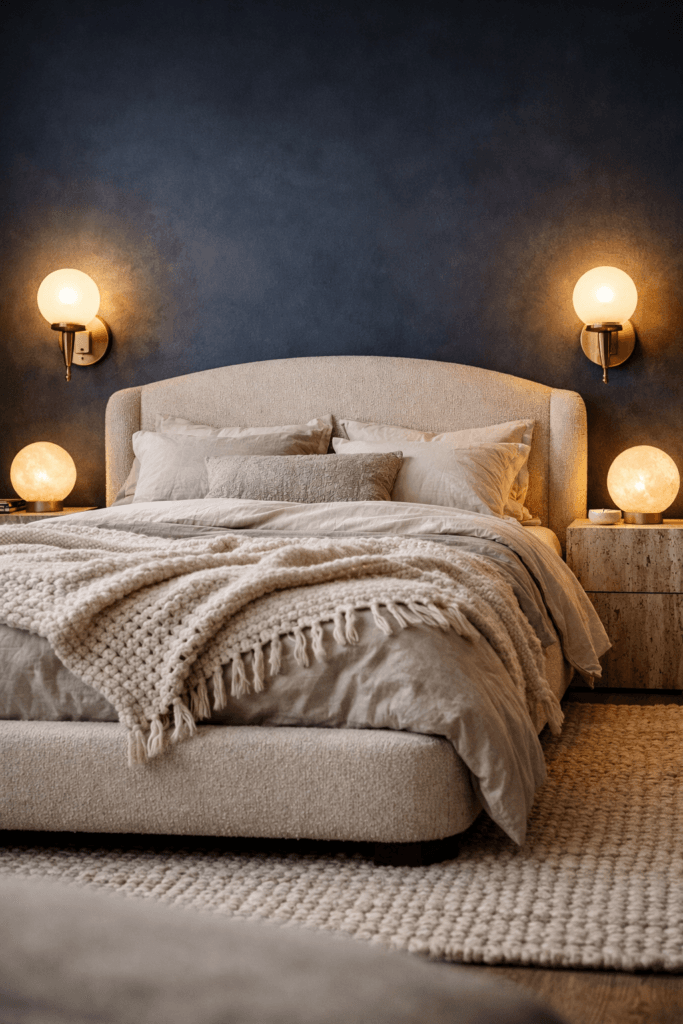
While celestial decor works beautifully in living rooms, many designers believe the style feels even more powerful in bedrooms.
Bedrooms are naturally designed to be calming environments, and celestial design emphasizes mood and atmosphere more than most interior styles.
Instead of bright overhead lighting, celestial bedrooms often rely on soft layered lighting that mimics the glow of the night sky.
Designers commonly use:
• alabaster bedside lamps
• frosted glass pendant lights
• brass wall sconces
• sculptural table lamps
These lighting elements produce soft, diffused illumination that feels warm and relaxing rather than harsh.
When paired with darker wall colors such as deep navy or charcoal, the lighting creates a quiet glow that transforms the room into a restful retreat.
Textiles also play an important role.
Designers often incorporate:
• linen bedding
• velvet accent pillows
• textured wool throws
• soft woven rugs
These materials absorb light and soften the room’s overall appearance.
The result is a bedroom that feels both luxurious and deeply calming.
Small Celestial Decor Pieces That Transform a Room
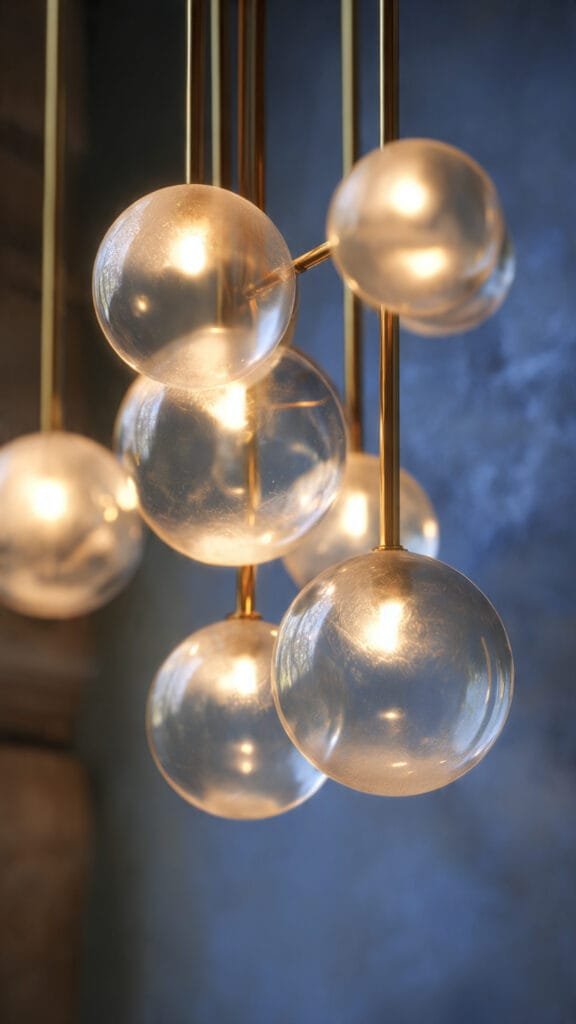
You don’t need a complete redesign to introduce celestial design into your home.
Many designers begin by adding a few carefully selected decorative elements.
Some of the most effective celestial decor pieces include:
Orb Lighting Fixtures
Glass globe lamps and pendant lights create a glowing effect that resembles small moons.
Round Mirrors
Circular mirrors framed in brass or gold reflect light and visually expand the room.
Metallic Trays and Objects
Small metallic accents add brightness and reflect surrounding light.
Sculptural Glass Decor
Iridescent glass objects introduce subtle color shifts that mimic cosmic light.
These types of pieces are often used strategically throughout the room to guide the eye.
You can see similar styling strategies explored in
https://www.bellencia.com/designer-decor-pieces
where a small number of well-chosen decor objects dramatically elevate a space.
How Designers Balance Celestial Interiors
One of the biggest challenges when designing celestial interiors is maintaining balance.
Because the style incorporates darker colors and reflective surfaces, too many elements can easily overwhelm the room.
Professional designers avoid this by following a simple rule:
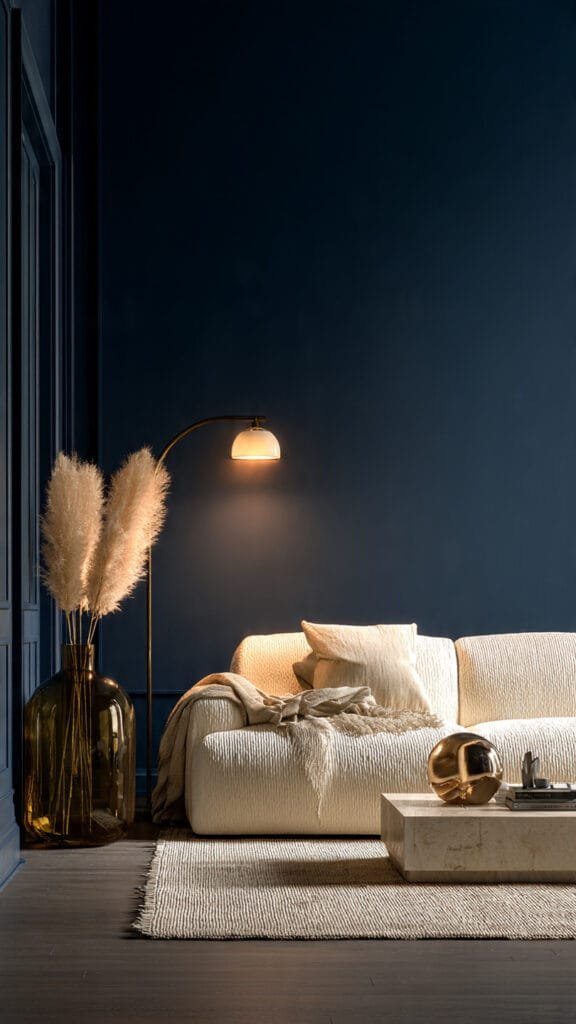
dark backgrounds + soft lighting + reflective accents
This combination keeps the space visually dramatic while still feeling calm and comfortable.
For example, a designer might create contrast by pairing:
• midnight blue walls
• warm cream upholstery
• brass lighting fixtures
• marble or travertine surfaces
The dark walls create depth.
The soft upholstery keeps the room inviting.
Metallic lighting introduces reflection and brightness.
Together, these elements create the layered visual environment that defines celestial design.
Celestial Design and the Future of Interior Trends
Interior design trends often emerge when several ideas begin overlapping.
Celestial interiors are part of a broader shift toward spaces that feel more expressive and atmospheric.
Rather than relying on purely minimal design, many homeowners now want interiors that evoke emotion.
This shift is visible in several design movements currently gaining popularity.
For example, the sculptural forms and metallic lighting used in celestial interiors also appear in the Neo-Deco revival explored in
https://www.bellencia.com/neo-deco-living-room-trend
where geometric lighting and bold furniture silhouettes create dramatic visual impact.
At the same time, calming color palettes continue to influence interior design.
Many celestial interiors rely on the cool-toned palette discussed in
https://www.bellencia.com/cool-blue-interior-design
where layered blue tones introduce depth without sacrificing serenity.
Together, these trends reveal something important about the direction of modern interiors.
Home design is becoming less about strict style categories and more about creating atmosphere.
Spaces are now being designed to feel calm, expressive, and visually layered.
Celestial interiors accomplish this beautifully.
By combining glowing lighting, reflective metals, organic stone surfaces, and deep atmospheric colors, the style creates rooms that feel almost cinematic.
And as more designers experiment with this aesthetic, celestial decor is likely to become one of the most recognizable interior design trends of the coming years.