
Moonlight Lighting Decor: The Interior Lighting Trend Designers Love
August 23, 2026
Trending Finds Readers Are Loving
Explore affordable luxe discoveries people are clicking on right now.
See What's TrendingLighting has always been one of the most powerful elements in interior design.
But in recent years, designers have begun moving away from bright, centralized lighting systems toward something far more atmospheric.
Instead of flooding rooms with uniform brightness, many interiors are now designed around soft glowing light sources that resemble moonlight.
This approach has become known as moonlight lighting decor.
The idea behind this trend is simple.
Rather than relying on a single overhead fixture, rooms are illuminated using multiple light sources that create subtle layers of illumination.
These lights often include:
- alabaster lamps
- frosted globe pendants
- sculptural orb chandeliers
- reflective brass sconces
When placed strategically throughout a space, these fixtures create an interior that feels warm, calming, and almost cinematic.
Publications such as
https://www.architecturaldigest.com/story/interior-design-trends
have noted that lighting is increasingly being used as a design feature rather than just a functional necessity.
Moonlight lighting decor fits perfectly within that movement.
The Lighting Fixtures That Define the Moonlight Trend
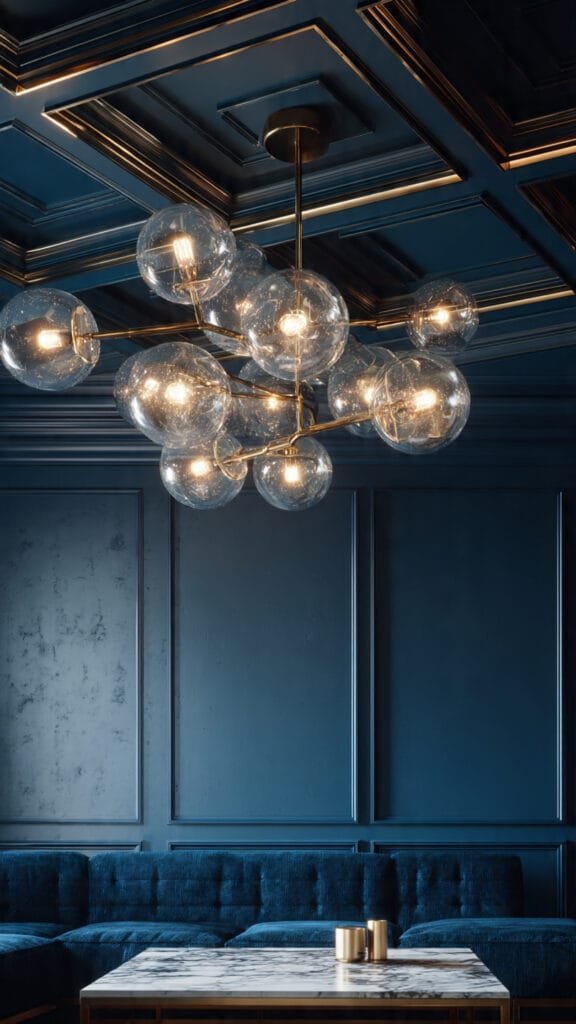
Several lighting styles have become particularly popular in interiors that follow this aesthetic.
Each fixture contributes to the soft glowing atmosphere that defines moonlight-inspired spaces.
Orb Chandeliers
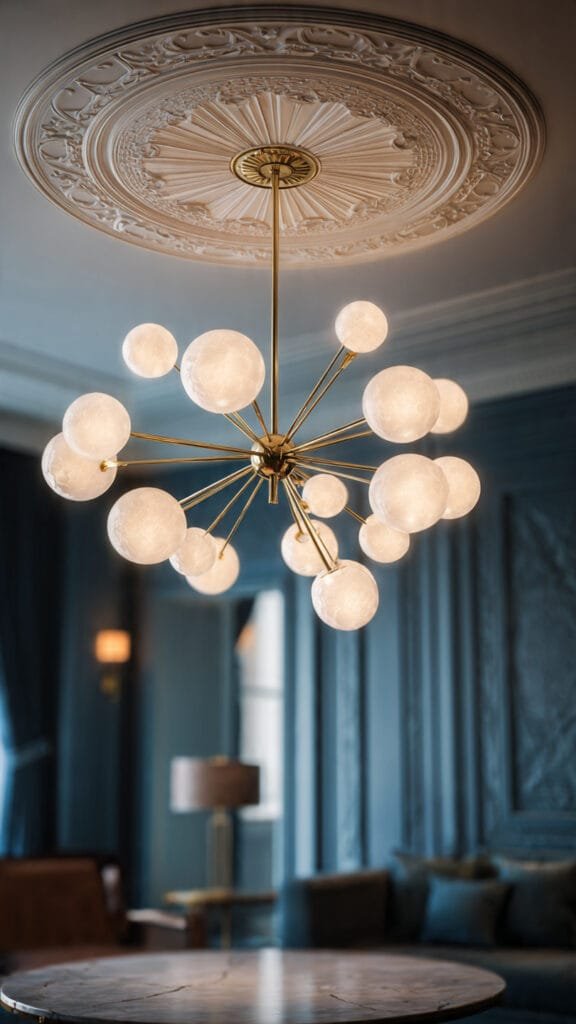
Orb chandeliers are one of the most recognizable features of this trend.
These fixtures usually consist of several frosted glass spheres mounted on brass arms.
The globes diffuse light evenly throughout the room, producing a soft glow rather than sharp brightness.
The effect is similar to a cluster of glowing moons suspended above the room.
Orb chandeliers often work best in:
- living rooms
- dining rooms
- entryways
because they provide both illumination and visual drama.
Alabaster Lamps
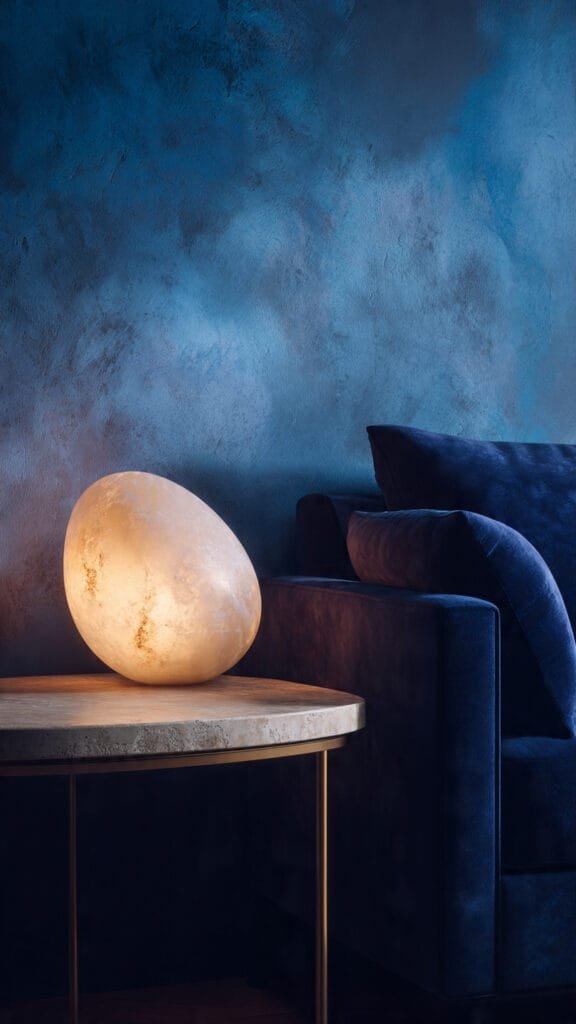
Alabaster is a translucent stone that allows light to pass through it softly.
When used in lamps, the material produces a glowing effect that resembles moonlight.
Alabaster lighting is often used in:
- bedside lamps
- table lamps
- wall sconces
Because the stone diffuses light naturally, alabaster fixtures create a calm and relaxing environment.
Frosted Glass Pendant Lights
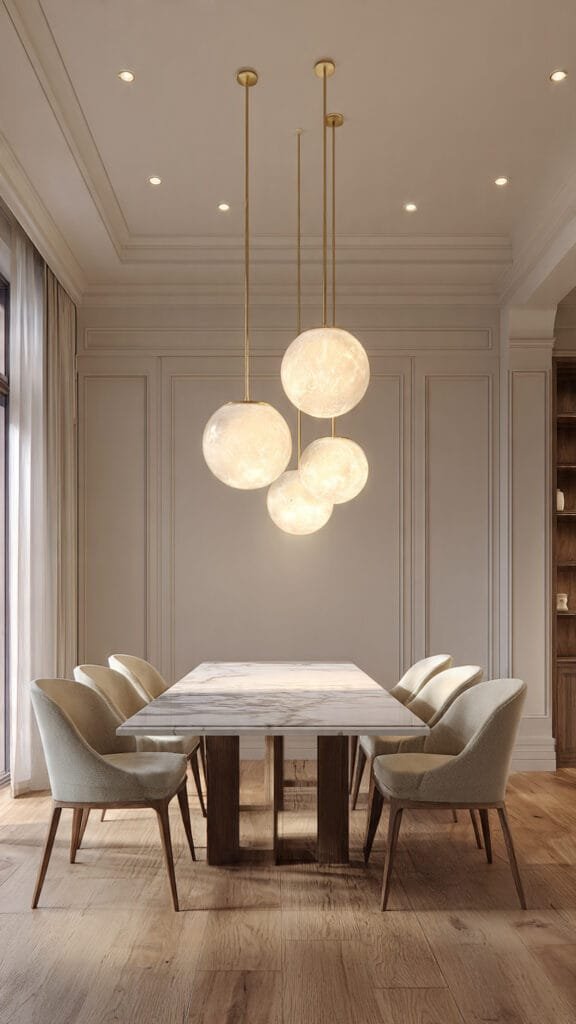
Frosted glass pendant lights are another key element in moonlight lighting design.
These fixtures soften light by scattering it in multiple directions.
Unlike clear glass fixtures, frosted globes eliminate glare and harsh reflections.
This makes them perfect for spaces where ambient lighting is preferred.
Why Designers Are Moving Away From Harsh Lighting
For many years, interior lighting focused heavily on brightness.
Large recessed lights and powerful overhead fixtures were installed to illuminate entire rooms evenly.
But designers eventually realized that this approach often created interiors that felt flat and uninviting.
Moonlight lighting decor solves this problem by introducing contrast and shadow.
Instead of lighting every corner of the room equally, the lighting is layered.
Some areas remain softly shadowed while others glow gently.
This creates visual depth and makes the room feel far more comfortable.
The technique also pairs beautifully with the layered interiors discussed in
https://www.bellencia.com/celestial-home-decor-trend
where reflective materials and sculptural decor interact with lighting to create dynamic spaces.
How Designers Layer Moonlight Lighting in Living Rooms
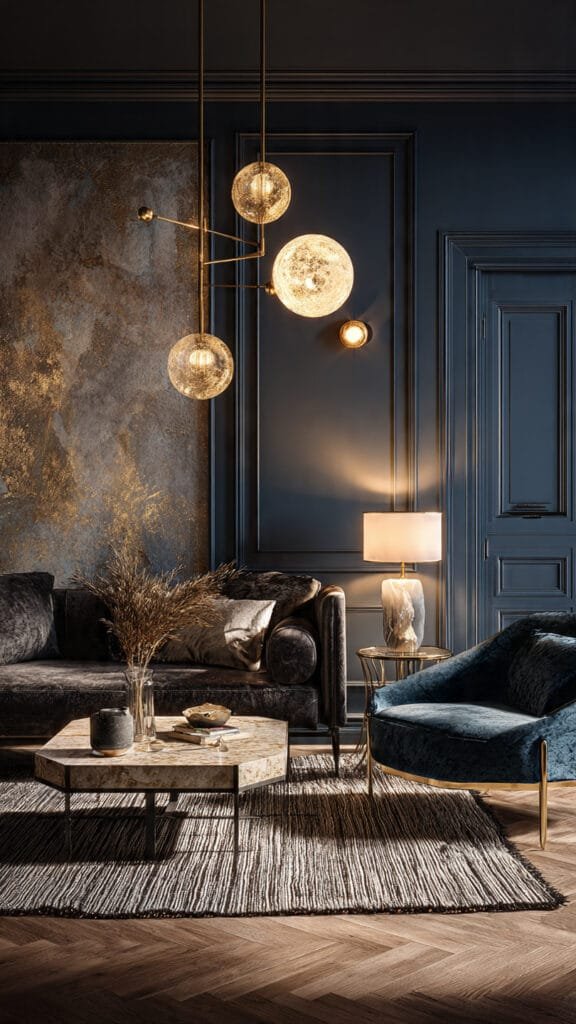
The most successful moonlight-inspired interiors rarely rely on a single light source.
Instead, designers create atmosphere by layering multiple lighting elements throughout the room.
This approach allows light to move across surfaces and create subtle shadows that make the interior feel more dimensional.
A typical moonlight-inspired living room may include several types of lighting:
• a sculptural orb chandelier above the seating area
• alabaster table lamps on side tables
• brass wall sconces near architectural features
• floor lamps placed beside accent chairs
Each light source contributes to a different layer of illumination.
The chandelier provides overall ambient lighting.
Table lamps introduce softer pools of light around seating areas.
Wall sconces highlight vertical surfaces and decorative textures.
When combined, these fixtures create a space that feels warm and visually balanced rather than overly bright.
This technique also pairs beautifully with the atmospheric interiors discussed in
https://www.bellencia.com/celestial-home-decor-trend
where glowing orb lighting and reflective materials help produce a cosmic-inspired environment.
Materials That Enhance the Moonlight Effect
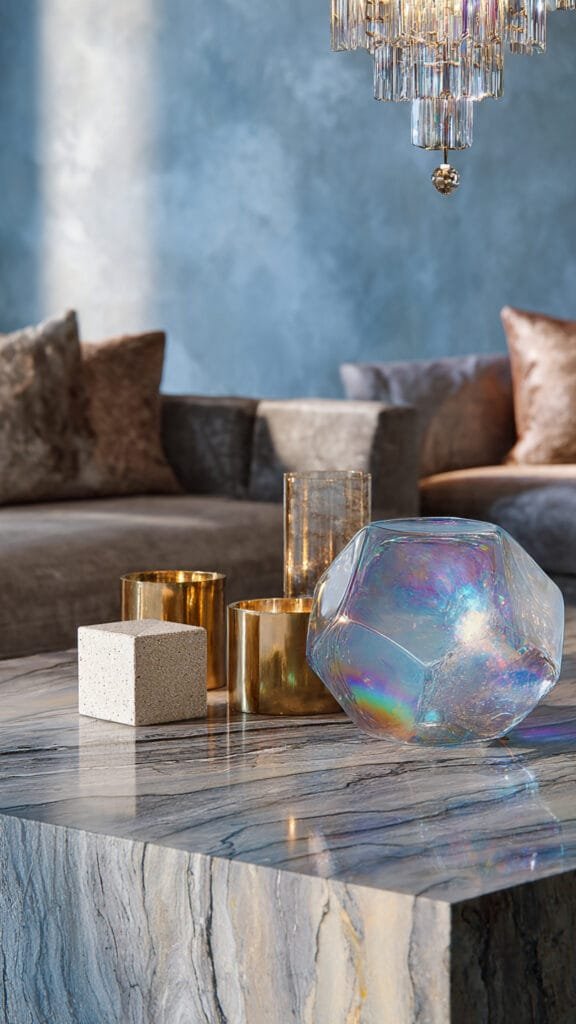
Lighting alone cannot create the moonlight aesthetic.
The materials used throughout the room play an equally important role because they interact with light in different ways.
Designers often rely on a mix of surfaces that either reflect light or soften it.
Some of the most common materials used in moonlight interiors include:
Marble
Marble surfaces subtly reflect light while adding organic movement through their natural veining.
Coffee tables and side tables made from marble often become focal points in moonlight-inspired spaces.
Travertine
Travertine introduces a softer matte texture that balances more reflective materials.
Because of its warm neutral color, travertine works well with glowing lighting.
Glass
Glass objects allow light to pass through them, creating reflections that add depth.
Frosted glass globes and decorative glass sculptures are particularly popular.
Metal
Brass and chrome surfaces bounce light around the room.
These metals create small highlights that mimic the shimmer of moonlight.
When these materials are layered together, the interior begins to feel luminous even when the lighting itself remains soft.
How Reflective Surfaces Amplify Lighting
One of the reasons moonlight lighting decor works so well is because reflective surfaces help amplify the effect.
Rather than installing stronger lights, designers allow reflections to multiply the existing illumination.
This technique can be seen in several design elements:
Mirrors
Round mirrors framed in brass reflect light back into the room.
Metal Decor
Decorative metallic objects catch small highlights that shimmer when light moves across them.
Glass Lighting
Glass fixtures scatter light softly, producing a glow that spreads throughout the room.
These reflections help prevent the space from feeling dim while still maintaining a calm, atmospheric mood.
This is also why moonlight lighting pairs beautifully with sculptural interiors like those discussed in
https://www.bellencia.com/neo-deco-living-room-trend
where metallic finishes and geometric lighting create dramatic visual depth.
The Ideal Color Palette for Moonlight Interiors
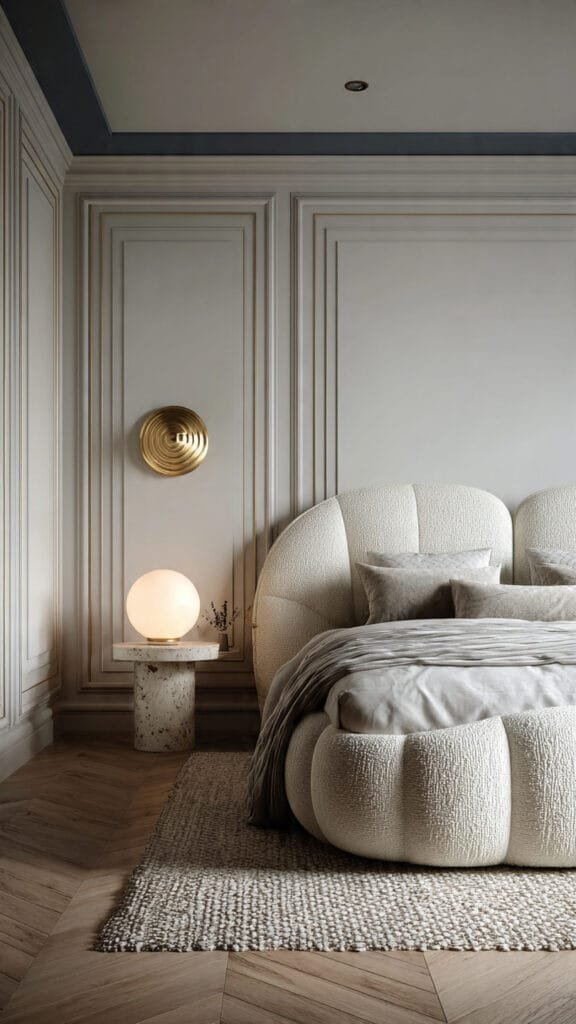
Color selection plays a major role in how lighting behaves within a space.
Moonlight interiors typically use deeper background tones that allow lighting to stand out more dramatically.
Some of the most popular palettes include:
Midnight Blue
This color creates the strongest contrast against warm lighting.
Charcoal Gray
Charcoal tones add depth while maintaining a neutral environment.
Soft Cream
Cream fabrics and textiles balance darker walls and prevent the room from feeling too heavy.
Warm Metallics
Gold and brass accents reflect light in subtle ways.
These layered palettes are similar to those explored in
https://www.bellencia.com/cool-blue-interior-design
where cool-toned interiors create calm spaces that highlight reflective materials and architectural details.
When paired with orb lighting and alabaster fixtures, the effect becomes even more striking.
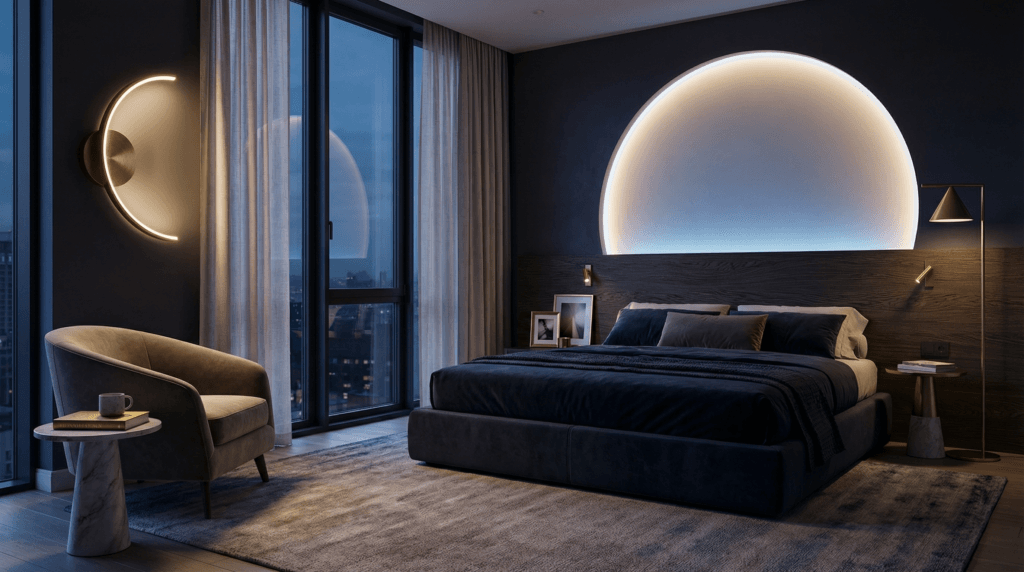
Moonlight Bedrooms Create the Most Relaxing Interiors
While moonlight lighting works beautifully in living rooms, many designers believe it feels even more powerful in bedrooms.
Bedrooms naturally benefit from softer lighting because the goal of the space is relaxation rather than activity.
Moonlight-inspired bedrooms are designed around warm glowing light sources that mimic the softness of natural moonlight.
Instead of a single bright overhead fixture, designers rely on layered lighting placed throughout the room.
Common lighting elements include:
- alabaster bedside lamps
- brass wall sconces
- frosted glass pendants above nightstands
- sculptural floor lamps in reading corners
These fixtures create gentle pools of illumination that make the room feel calm and peaceful.
The effect becomes even stronger when paired with deeper wall colors such as navy or charcoal.
Soft lighting against darker surfaces produces subtle contrast that adds atmosphere without overwhelming the room.
Many celestial-inspired bedrooms also incorporate reflective materials like marble and brass, which help spread the light throughout the space.
This approach connects beautifully with the cosmic-inspired interiors discussed in
https://www.bellencia.com/celestial-home-decor-trend
where glowing orb lighting and reflective surfaces create a soft luminous environment.
Where Designers Place Moonlight Lighting
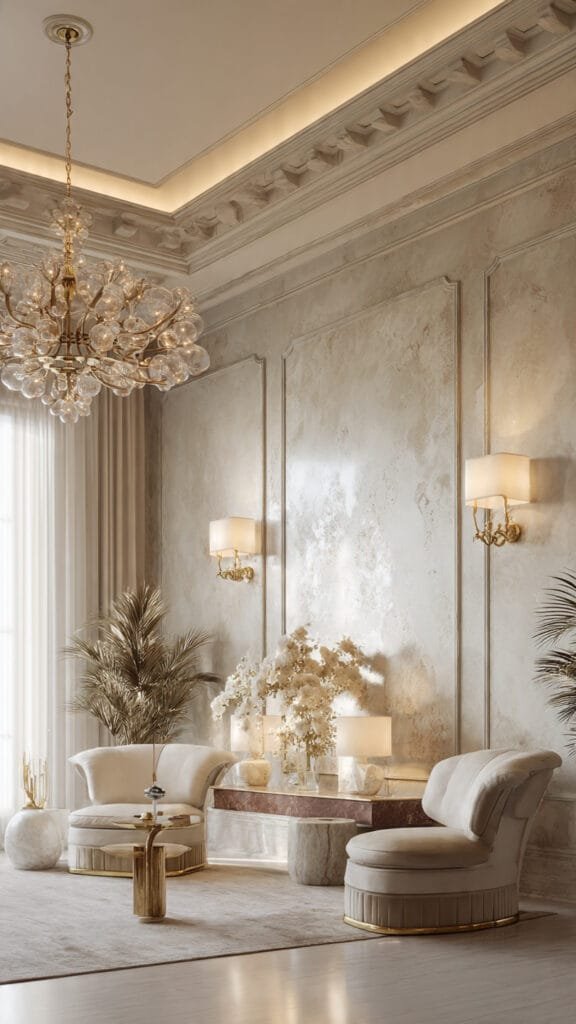
Lighting placement plays a major role in achieving the moonlight effect.
Professional designers rarely place lighting randomly.
Instead, they position fixtures strategically so that light interacts with architectural elements and furniture.
A few common placement strategies include:
Above Seating Areas
Orb chandeliers are often installed above sofas or coffee tables so the light spreads evenly across the room.
Near Reflective Surfaces
Table lamps are frequently placed beside marble tables, mirrors, or metallic decor so the light reflects outward.
Along Vertical Surfaces
Wall sconces highlight textured plaster walls, paneling, or artwork.
At Different Heights
Using lighting at multiple heights prevents the room from feeling flat.
For example, a living room might include:
- a ceiling chandelier
- table lamps on side tables
- a floor lamp beside a chair
This layering technique creates depth and visual movement.
Why Moonlight Lighting Feels So Luxurious
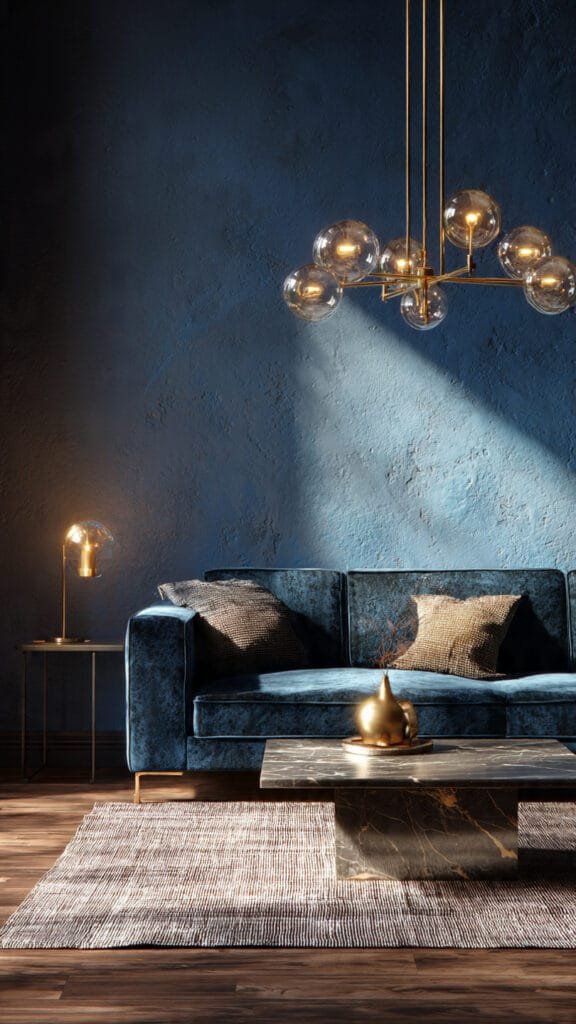
The reason moonlight lighting decor feels so refined is because it focuses on atmosphere rather than brightness.
Traditional lighting often aims to illuminate an entire room evenly.
Moonlight lighting takes the opposite approach.
Some areas remain softly shadowed while others glow gently.
This balance of light and shadow adds depth to the space and makes the room feel more intimate.
Reflective surfaces such as brass trays, glass decor, and marble tables help amplify the effect.
Light bounces across these materials, creating small highlights that shimmer subtly throughout the room.
The result is an interior that feels warm, layered, and visually dynamic.
Why This Lighting Trend Is Growing So Quickly
Interior design trends often gain momentum when they align with broader lifestyle shifts.
In recent years, many homeowners have become more interested in creating calming environments within their homes.
Rather than bright, clinical lighting, people are increasingly drawn to interiors that feel relaxed and atmospheric.
Moonlight lighting supports this shift perfectly.
The style works well with a variety of interior aesthetics, including the sculptural spaces explored in
https://www.bellencia.com/neo-deco-living-room-trend
where geometric lighting fixtures and metallic finishes create dramatic visual interest.
It also complements the cool-toned palettes discussed in
https://www.bellencia.com/cool-blue-interior-design
where layered blue hues create serene and balanced interiors.
Because of this flexibility, moonlight lighting can easily integrate into many different design styles.
The Future of Atmospheric Lighting in Interior Design
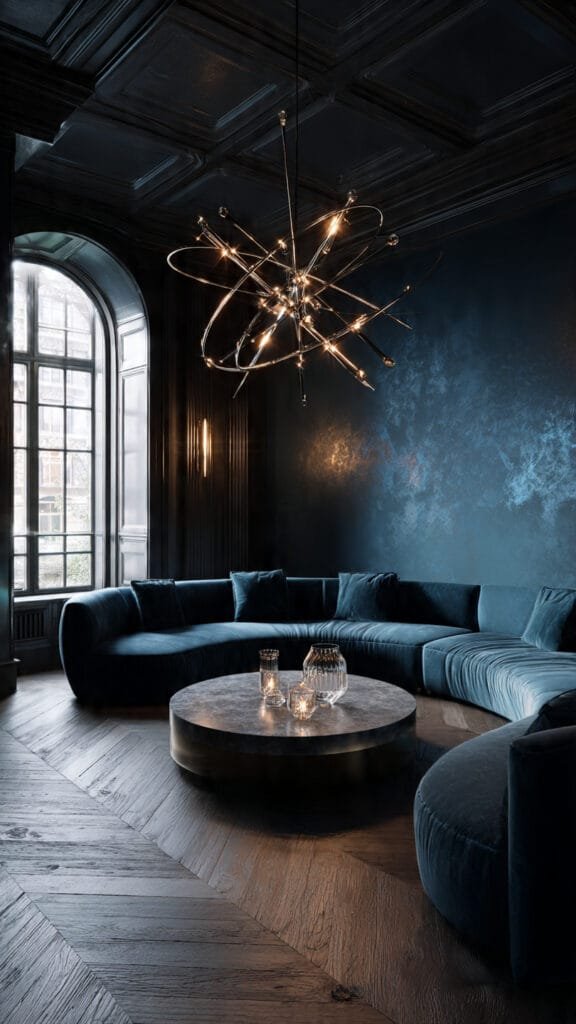
As interior design continues evolving, lighting is likely to become even more important.
Rather than being treated as a purely functional element, lighting is increasingly used as a central design feature.
Future interiors will likely rely even more on:
- sculptural lighting fixtures
- reflective materials
- layered illumination
Moonlight lighting decor represents a perfect example of this shift.
By combining soft glowing light sources with reflective metals, glass, and stone surfaces, designers can create interiors that feel both luxurious and calming.
And as more homeowners embrace atmospheric design, moonlight lighting is likely to remain one of the most influential interior trends in the years ahead.