
The Curtain Height Rule Designers Use
July 30, 2026
Trending Finds Readers Are Loving
Explore affordable luxe discoveries people are clicking on right now.
See What's TrendingMost curtains are hung too low.
The mistake is subtle, yet the effect is dramatic.
When curtain rods sit just above the window frame, the entire room feels compressed. Ceilings appear lower. Walls look shorter. The space loses vertical presence.
Designers approach curtains differently. They treat them as architectural tools rather than decorative accessories.
Why Curtain Height Changes Everything
Ceiling height is one of the strongest signals of perceived luxury.
Even in homes with standard 8-foot ceilings, strategic curtain placement can visually stretch the wall upward.
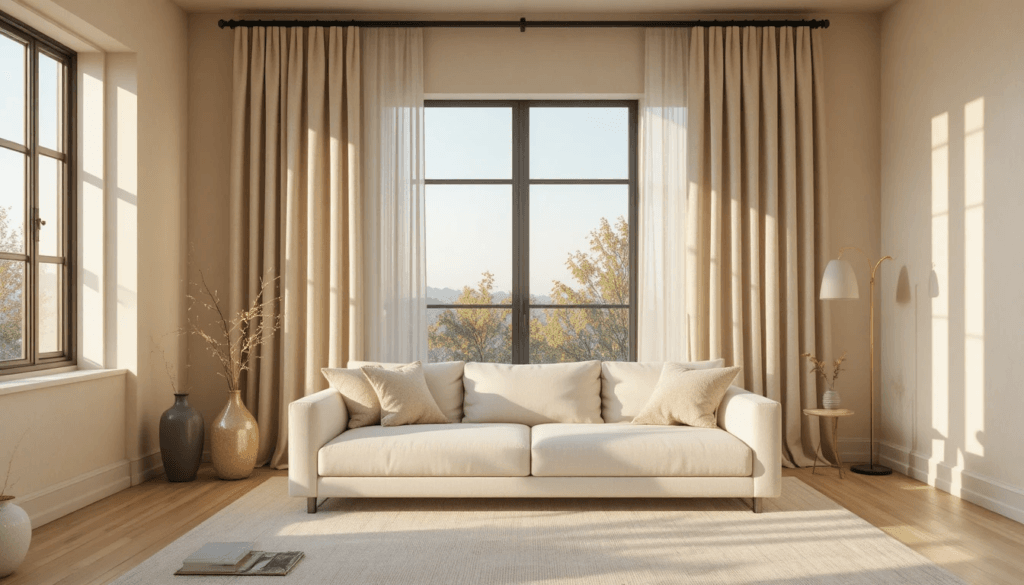
When rods are mounted close to the ceiling line instead of directly above the window, the eye travels vertically. That vertical movement creates the illusion of added height.
Interior publications such as Architectural Digest consistently showcase curtain rods placed high and wide because the technique elongates walls instantly.
Low-hung curtains emphasize the window frame. High-mounted curtains emphasize the entire wall.
The Designer Curtain Height Rule
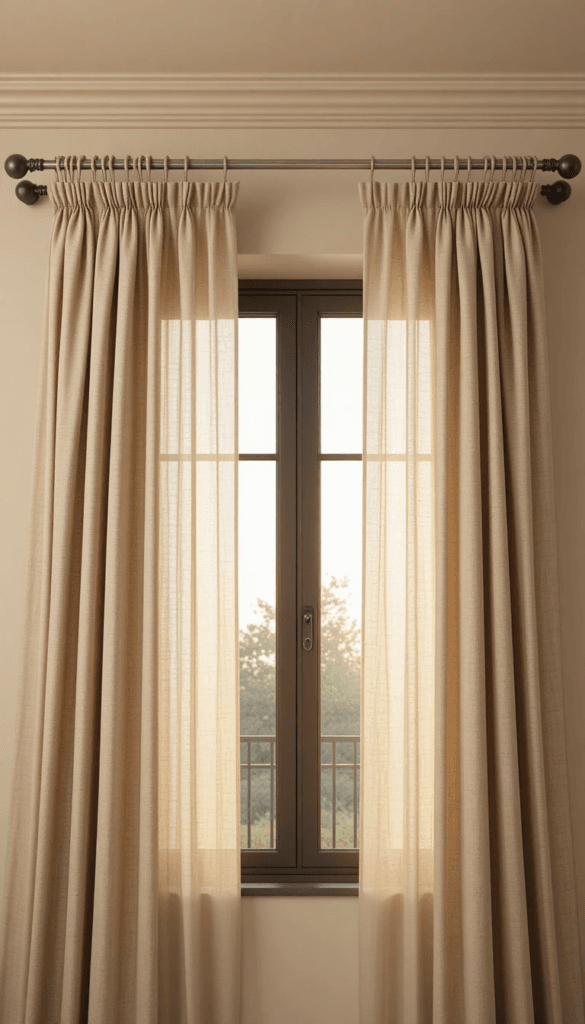
Mount the curtain rod 4–6 inches below the ceiling — or as close to the ceiling as possible without crowding crown molding.
The rod should never sit directly on top of the window trim.
In rooms without crown molding, the rod can be installed just 1–2 inches below the ceiling line to maximize vertical illusion.
This single adjustment shifts visual proportion immediately.
The same proportional thinking applies to artwork scale and mirror placement, which we break down in wall art size rules designers use and the designer mirror rule.
Width Matters as Much as Height
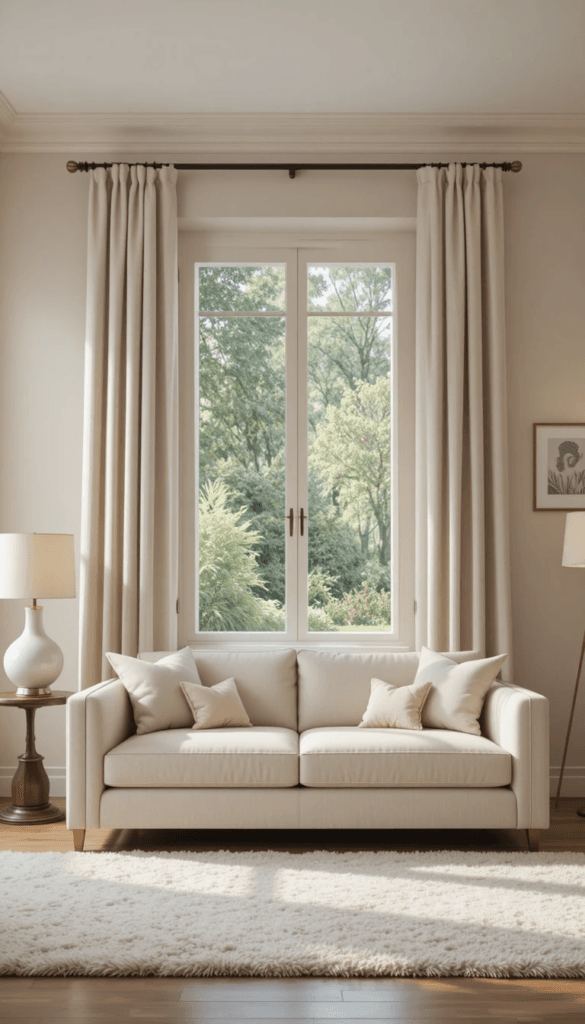
The rod should extend 8–12 inches beyond each side of the window frame.
This extension allows curtains to frame the window instead of blocking light.
When panels sit too close to the glass, they visually narrow the opening.
Wider placement increases perceived window size and introduces balance across the wall.
Fabric Length Signals Refinement
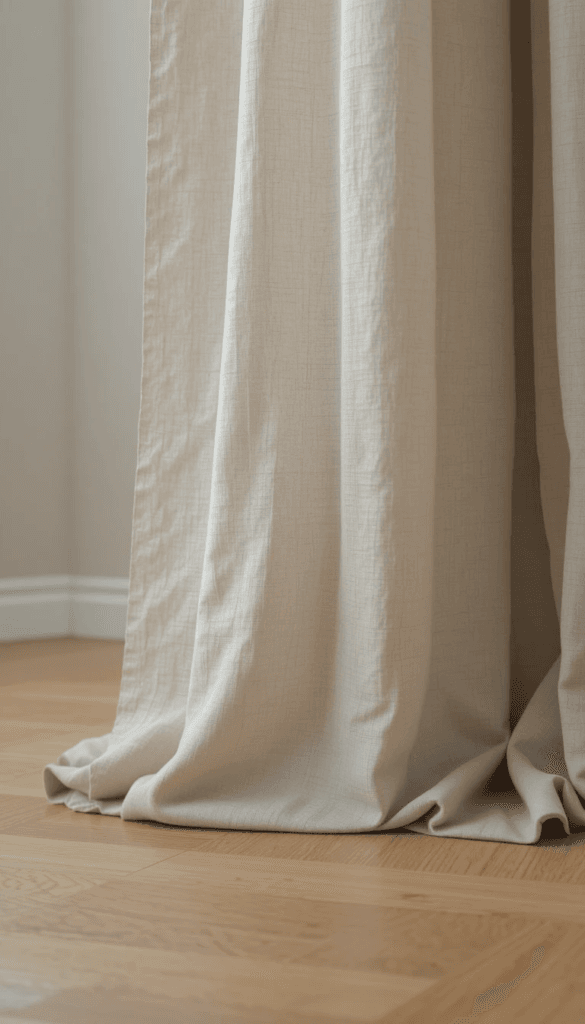
Short curtains immediately lower perceived value.
High-end interiors use full-length panels that either just kiss the floor or create a subtle one-inch break.
Anything hovering above the floor disrupts vertical continuity.
Ceiling-height placement paired with full-length fabric produces uninterrupted lines from top to bottom.
Color and Texture Influence Height Perception
In a Warm Modern Beige interior, curtain color should blend with the wall rather than contrast sharply.
Soft linen tones, warm ivory, oat beige, and muted greige create cohesion.
Heavy contrast can visually chop the wall in half.
Texture, however, should remain present.
Natural linen, cotton blends, or subtle woven fabrics reflect layered lighting softly, reinforcing vertical movement.
If lighting feels flat, revisit the designer lighting rule to ensure layered warmth enhances the curtain texture rather than flattening it.
Why Low Curtain Placement Feels “Rented”
Developer-installed rods often sit just inches above the window frame.
This placement prioritizes convenience over proportion.
The result feels temporary rather than tailored.
High-mounted rods create the impression of custom design.
The adjustment costs nothing beyond hardware repositioning, yet the visual upgrade is immediate.
Visual Math Creates Vertical Illusion
Ceilings do not need to be taller to feel taller.
The eye simply needs direction.
By extending curtain rods upward and outward, you redefine the perceived boundaries of the room.
Vertical emphasis communicates architectural confidence.
Architectural confidence communicates luxury.
Before replacing furniture or adding decor, correct curtain height.
The transformation will feel structural rather than decorative.
Proportion, Fabric Weight, and the Illusion of Architectural Height
Hanging the rod higher is only the beginning.
True elevation happens when proportion, fabric weight, and hardware scale align.
Without those elements working together, even high-mounted curtains can feel incomplete.
Rod Thickness and Visual Authority
Thin, lightweight rods weaken the vertical effect.
Substantial hardware reinforces the illusion of height.
In a Warm Modern Beige interior, matte black or brushed brass rods introduce visual weight without overpowering the palette.
The diameter should feel proportional to the wall size. Large living rooms require thicker rods, while smaller spaces benefit from streamlined yet solid hardware.
Undersized rods create fragility. Balanced hardware creates intention.
Panel Fullness Creates Luxury
Flat panels look inexpensive.
Luxury interiors use generous fabric width.
Each side should appear full even when closed. Designers often recommend curtain panels that equal two to two-and-a-half times the width of the window.
Extra fullness softens vertical lines and enhances texture.
Minimal fullness produces tension across the rod and reduces softness.
The Floor-Length Standard
Panels should extend fully to the floor.
Fabric that stops short interrupts vertical continuity and draws attention to measurement mistakes.
A subtle one-inch break creates tailored polish. Slight puddling can work in formal rooms, though restraint is key in modern spaces.
The goal is elongation, not excess.
Layering Sheers and Drapes
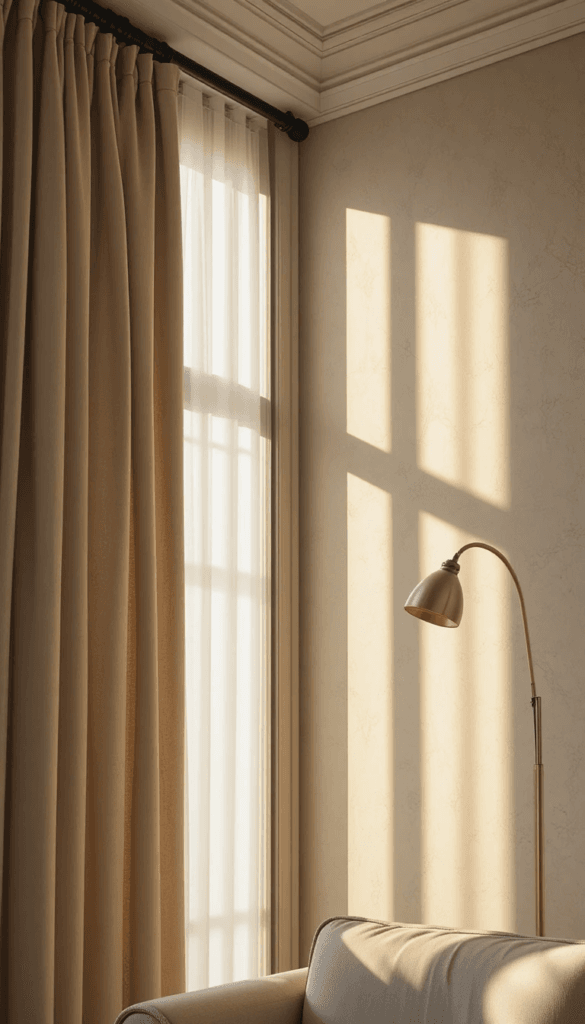
Double rods elevate the entire wall.
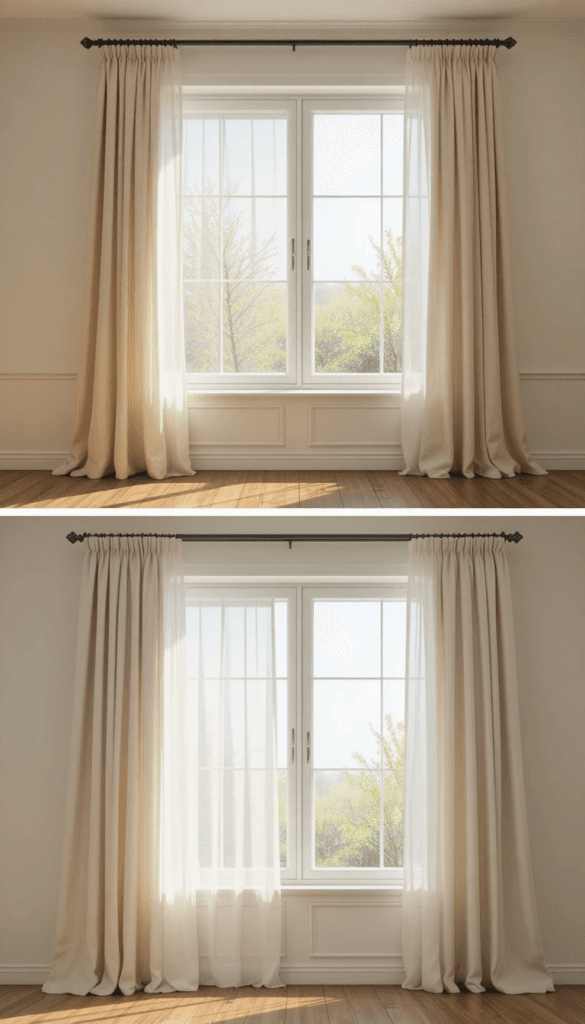
Sheer panels closest to the window diffuse daylight while heavier drapes frame the structure.
Layering adds depth and dimension, especially in evening lighting.
This approach mirrors the same layering principle outlined in the designer lighting rule, where multiple light sources create architectural shadow gradients.
Depth signals refinement.
Mounting Width Expands the Wall
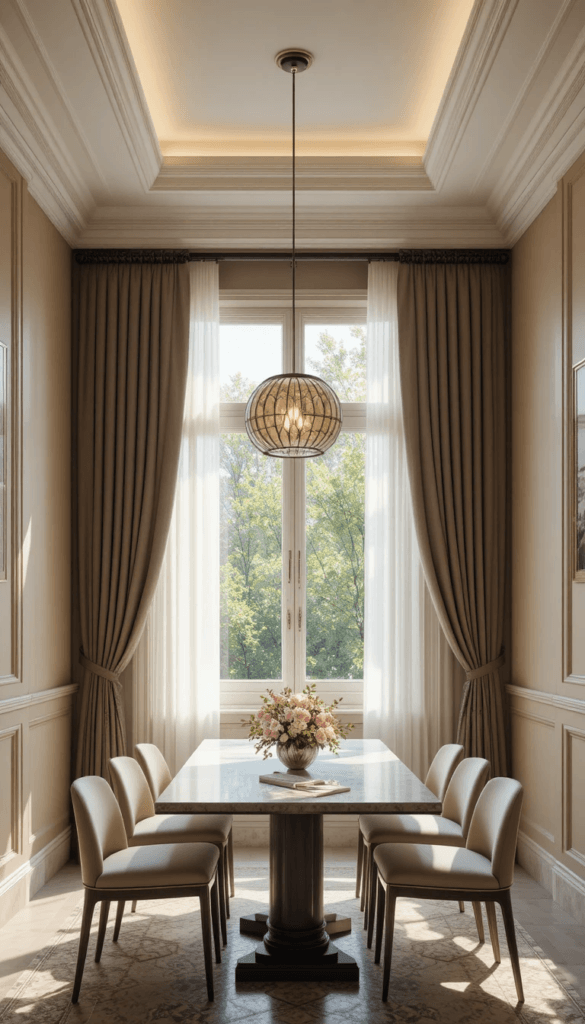
Rod placement should extend beyond the window frame by 8–12 inches on each side.
That extra span increases perceived window width and allows panels to rest outside the glass area.
When curtains overlap the window opening, natural light becomes restricted and the wall feels narrower.
Wider placement enhances brightness and proportion simultaneously.
Neutral Palette, Strategic Contrast
Warm Modern Beige interiors thrive on tonal layering.
Ivory walls paired with oat or greige curtains maintain cohesion.
Strong contrast, such as dark charcoal against pale walls, can visually segment the wall and interrupt height illusion.
Texture should create interest, not color blocking.
Linen weaves, subtle slubs, and lightly structured cotton blends reflect layered lighting softly.
Curtain Height and Furniture Proportion
Low curtain rods often exaggerate bulky furniture.
When rods sit close to the ceiling, furniture feels grounded rather than towering.
The vertical emphasis redistributes weight across the room.
This balance supports other structural elements, including art placement and mirror positioning, as detailed in wall art size rules designers use and the designer mirror rule.
Every vertical element in the room should reinforce height.
The Rental Illusion Problem
Standard installation often prioritizes convenience.
Developer rods mounted directly above window trim create visual compression.
The ceiling line becomes secondary, and the wall appears segmented.
Raising the rod changes the hierarchy of the room instantly.
Instead of emphasizing the window frame, the entire wall becomes the feature.
The Height Illusion Audit
Stand at the doorway and observe your curtain line.
Does the rod sit near the ceiling?
Do the panels extend fully to the floor?
Does the width extend beyond the window frame?
If any of these elements are missing, the room may feel shorter than it actually is.
Correcting curtain placement costs far less than structural renovation.
The return on visual impact is immediate.
The Psychology of Height, Value Perception, and the Designer Audit
Ceiling height influences how expensive a room feels.
Even when square footage remains unchanged, vertical emphasis alters perception.
That shift is psychological, not structural.
Why Height Signals Luxury
Luxury interiors feel open.
Airiness communicates confidence.
When curtain rods sit near the ceiling line, the wall reads as taller and more architectural.
Low-mounted rods shorten the wall visually and fragment vertical continuity.
The eye follows the highest horizontal line in a room. Designers raise that line intentionally.
Publications such as Elle Decor consistently feature high-mounted drapery because it elevates proportion without altering construction.
The Vertical Illusion Principle
Rooms appear taller when uninterrupted lines extend from ceiling to floor.
Full-length curtains installed close to the ceiling create that uninterrupted line.
Short panels break the line. Low rods interrupt it.
When both elements align properly, the effect feels architectural rather than decorative.
The Warm Modern Beige Advantage
Neutral palettes amplify vertical illusion.
Soft ivory walls paired with oat or greige curtains maintain visual continuity.
Heavy contrast introduces segmentation that shortens walls.
Texture should carry interest while color remains cohesive.
Linen weaves reflecting layered 2700K lighting reinforce softness and height simultaneously.
The Designer Curtain Checklist
- Rod mounted 4–6 inches below ceiling or just beneath crown molding
- Rod extended 8–12 inches beyond each side of the window frame
- Panels equal two to two-and-a-half times the width of the window
- Fabric length touching the floor or creating a subtle one-inch break
- Hardware proportionate to room scale
- Warm lighting enhancing fabric texture
If one of these elements feels misaligned, vertical illusion weakens.
The Evening Height Test
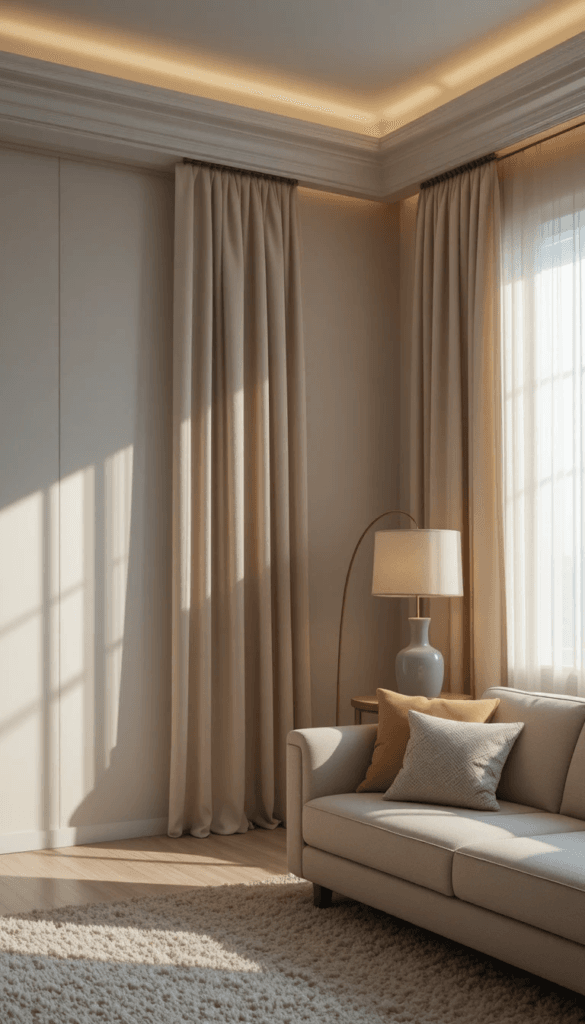
Evaluate your curtains at night.
Turn off overhead lighting.
Leave only layered lamps on.
Observe how shadows fall along the panels.
When rods are mounted high and fabric runs uninterrupted to the floor, shadows elongate the wall visually.
When rods sit low, the shadow line shortens the wall.
The difference becomes immediately apparent.
Common Curtain Mistakes That Lower Perceived Value
Short panels that hover above the floor.
Thin rods that appear fragile.
Panels installed directly on the window trim.
Insufficient fullness creating flat, stretched fabric.
High contrast color blocking that segments the wall.
Each decision may seem minor. Together, they compress the room.
Curtains Are Structural, Not Decorative
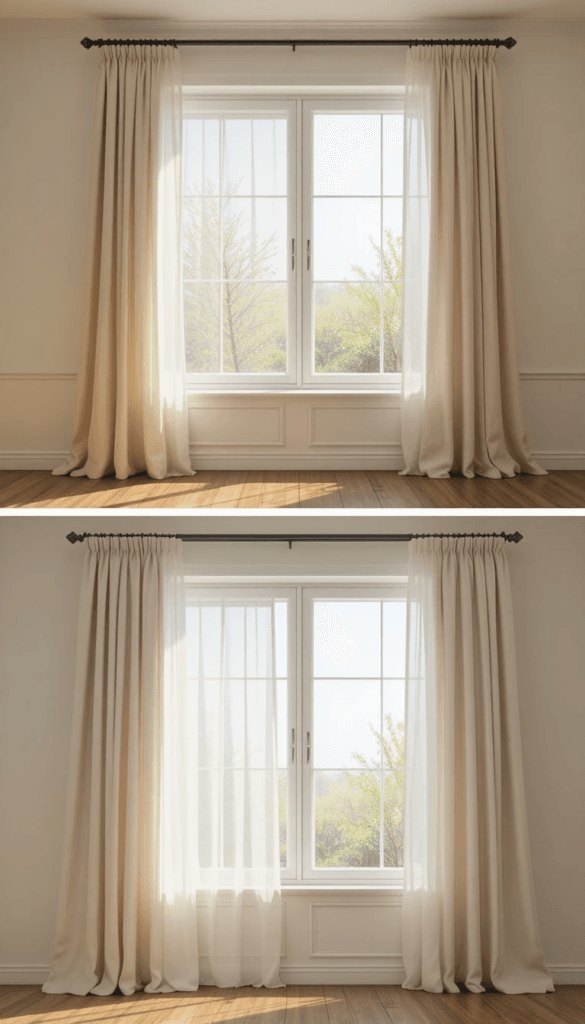
Many homeowners treat curtains as finishing touches.
Designers treat them as vertical architecture.
Before investing in new furniture, correct curtain height.
Prior to dding more decor, extend the rod width.
Before repainting, evaluate fabric tone and texture.
Luxury is not excess.
Luxury is proportion, cohesion, layered lighting, and disciplined vertical emphasis.
Raise the rod.
Extend the width.
Let the fabric run uninterrupted from ceiling to floor.
The ceiling will feel taller.
The room will feel more expensive.
Bellencinista Notes
curtain height rule, how to hang curtains high, make ceilings look taller, luxury curtain placement, drapery rod placement guide, modern beige living room, designer curtain tips, window treatment rules, expensive home styling, ceiling illusion design