
The Designer Mirror Rule That Instantly Makes a Room Look Bigger and More Expensive
July 28, 2026
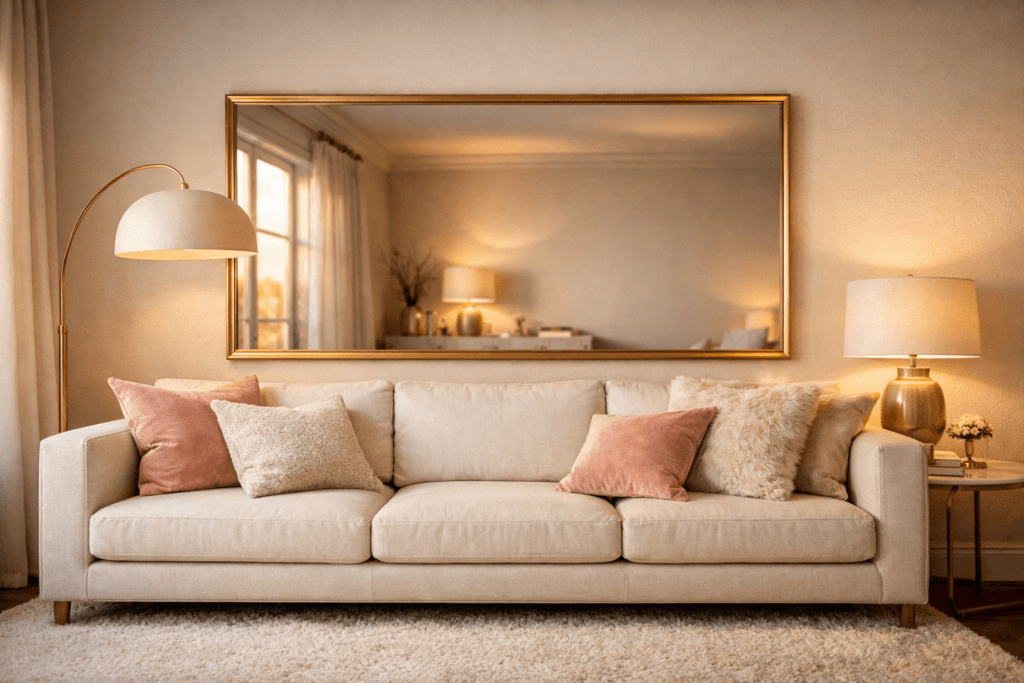
Trending Finds Readers Are Loving
Explore affordable luxe discoveries people are clicking on right now.
See What's TrendingMost mirrors are placed randomly.
Designers place them strategically.
A mirror is not just decorative. It is architectural.
When positioned correctly, it expands light, increases perceived square footage, and elevates the entire room without adding more furniture.
Why Most Mirrors Fail
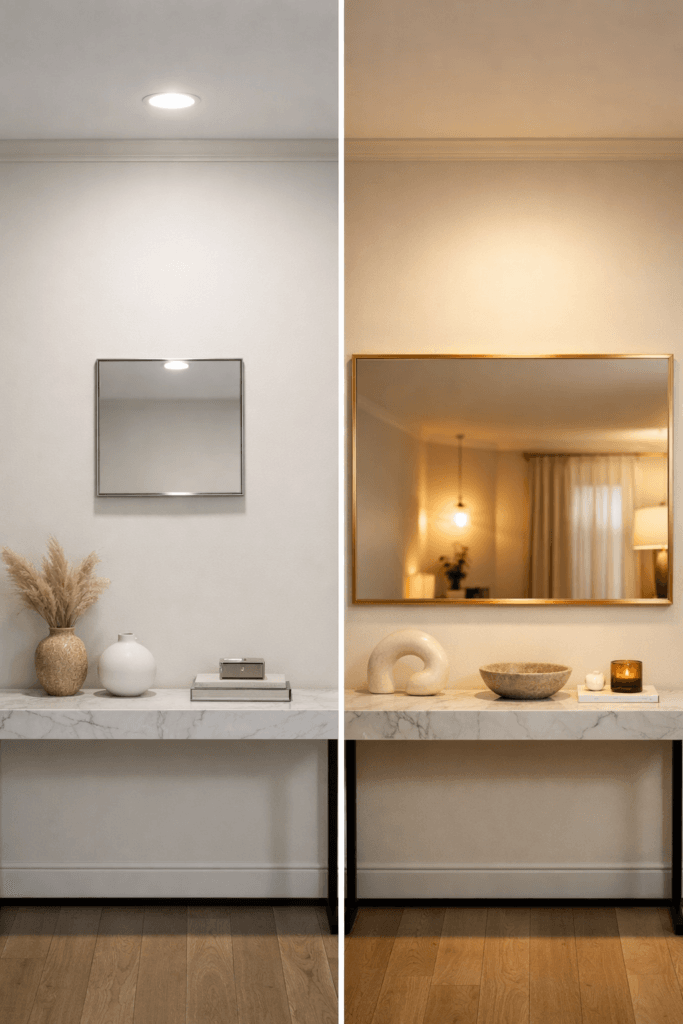
Small mirrors centered too high on walls do very little.
Mirrors placed opposite blank walls reflect nothing of value.
Thin frames and timid proportions weaken impact.
When a mirror does not reflect light, texture, or structure, it becomes filler instead of feature.
The Designer Mirror Rule
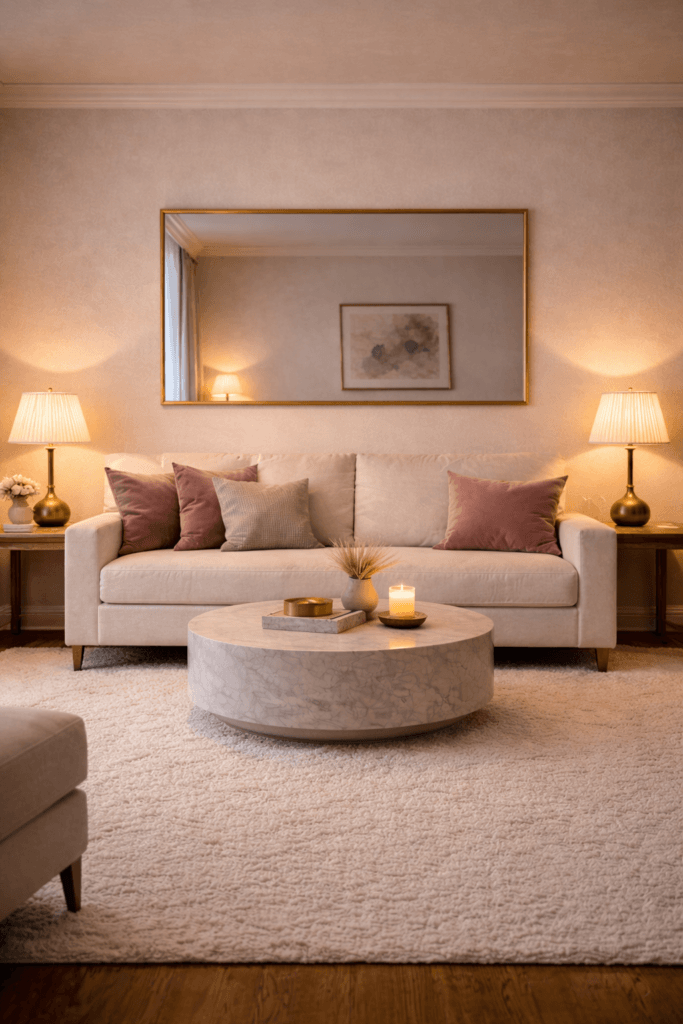
Use oversized mirrors and position them to reflect either a window, layered lighting, or a focal point.
The mirror should feel proportional to the furniture beneath it.
For example, a mirror above a console table should span roughly two-thirds the width of the table.
Placement should anchor the furniture below it, not float independently.
This proportion principle mirrors the same rule we use for art scale in wall art size rules designers use.
Reflection Strategy Matters
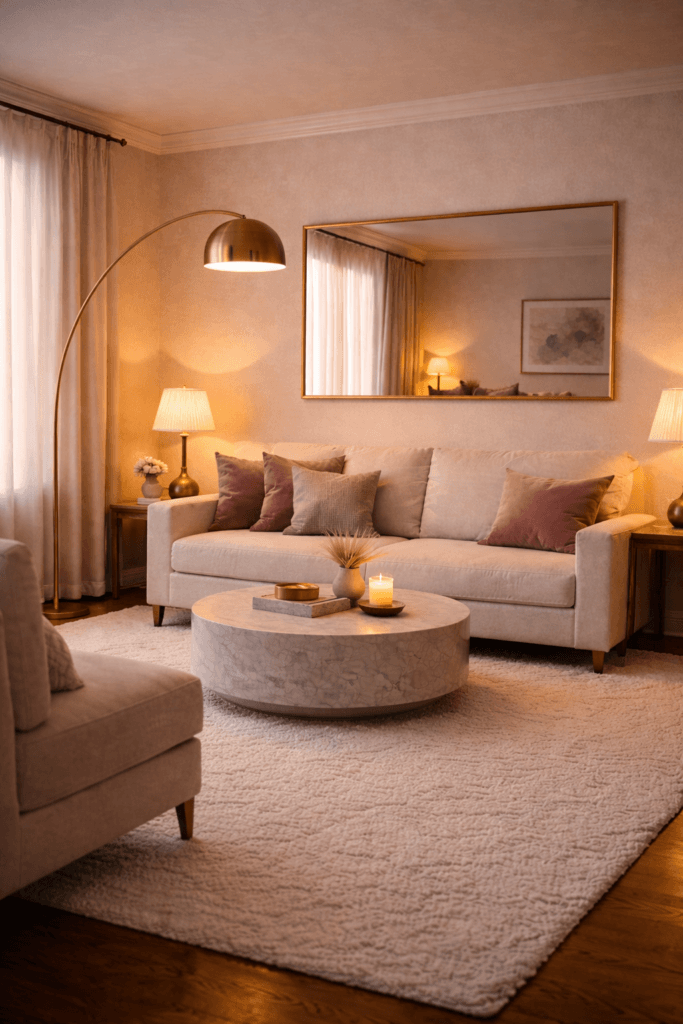
The true power of a mirror comes from what it reflects.
Position a mirror across from a window to visually amplify natural light.
Reflecting layered lighting enhances evening ambiance.
Angling it toward textured elements adds noticeable depth.
Publications such as Architectural Digest frequently highlight mirrors as tools for expanding perceived space in smaller rooms.
Scale Is Everything
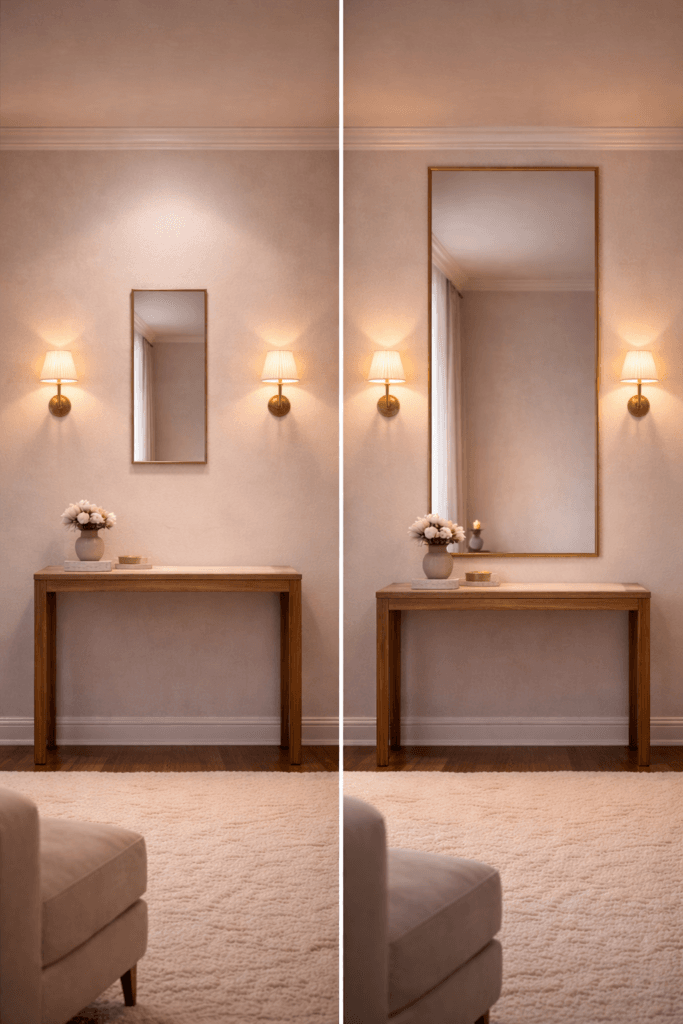
Small mirrors look apologetic.
Oversized mirrors look intentional.
A tall vertical mirror elongates ceilings.
A wide horizontal mirror expands narrow rooms.
The wrong scale shrinks the wall. The right scale stretches it.
Placement, Proportion, and Light Amplification
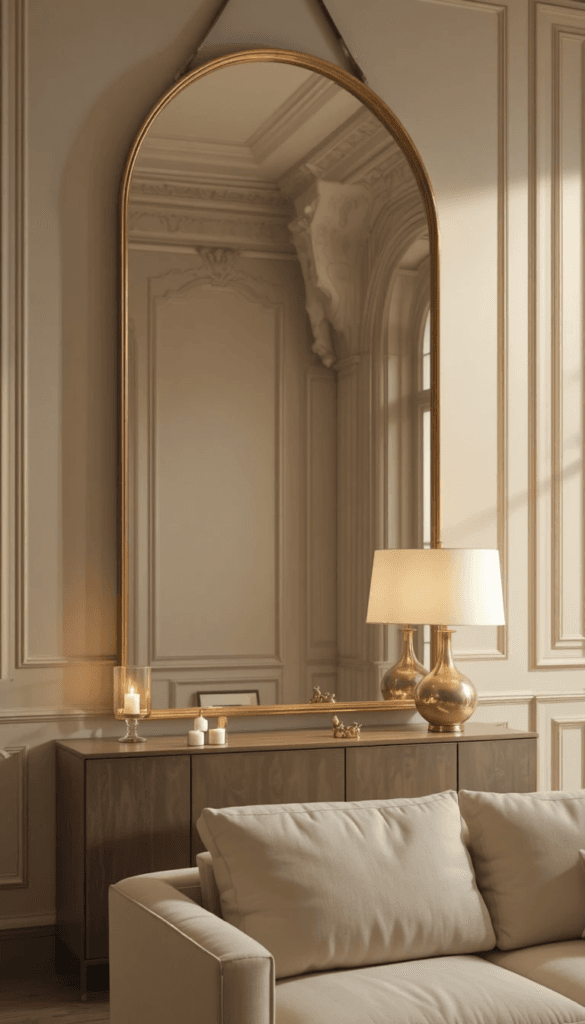
A mirror should never feel like an afterthought.
Designers treat mirrors as structural tools that manipulate depth and light.
Correct placement changes how a room is perceived within seconds.
Place Mirrors Where They Multiply Light
The most effective location for a mirror is across from a window.
Natural light reflects back into the room, increasing brightness without raising bulb wattage.
In smaller living rooms or narrow dining areas, this simple shift can visually double light exposure.
If the room lacks strong natural light, position the mirror to reflect layered lighting instead.
A properly placed mirror will capture the glow from table lamps and floor lamps, increasing evening ambiance.
This layered lighting strategy aligns with our breakdown in the designer lighting rule that instantly makes a home look expensive.
Anchor the Mirror to Furniture
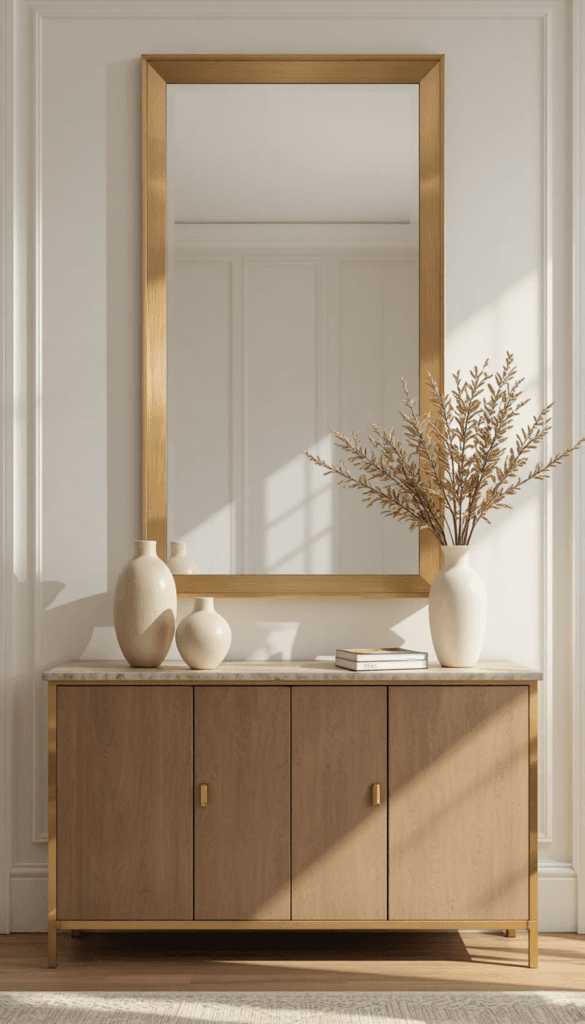
A floating mirror lowers perceived value.
The mirror should visually connect to the furniture beneath it.
Above a console table, allow 6–8 inches of space between the bottom of the mirror and the top surface.
The width of the mirror should span approximately two-thirds of the furniture below it.
When proportion aligns, the wall feels intentional.
Use Vertical Mirrors to Stretch Ceilings
In rooms with lower ceilings, height becomes the priority.
A tall, vertical mirror elongates the wall visually.
Leaning floor mirrors can amplify this effect when positioned correctly against a wall with architectural depth.
The mirror should feel substantial, not narrow or timid.
Thin, undersized mirrors tend to emphasize ceiling height limitations rather than correct them.
Use Wide Mirrors to Expand Narrow Rooms
In tight hallways or narrow dining spaces, width becomes the solution.
A wide horizontal mirror visually stretches the wall and creates the illusion of added square footage.
Placement should remain centered and proportional to the furniture footprint.
For a broader overview of how proportion impacts overall room balance, revisit how to make your home look expensive on a budget.
Frame Finish Signals Value
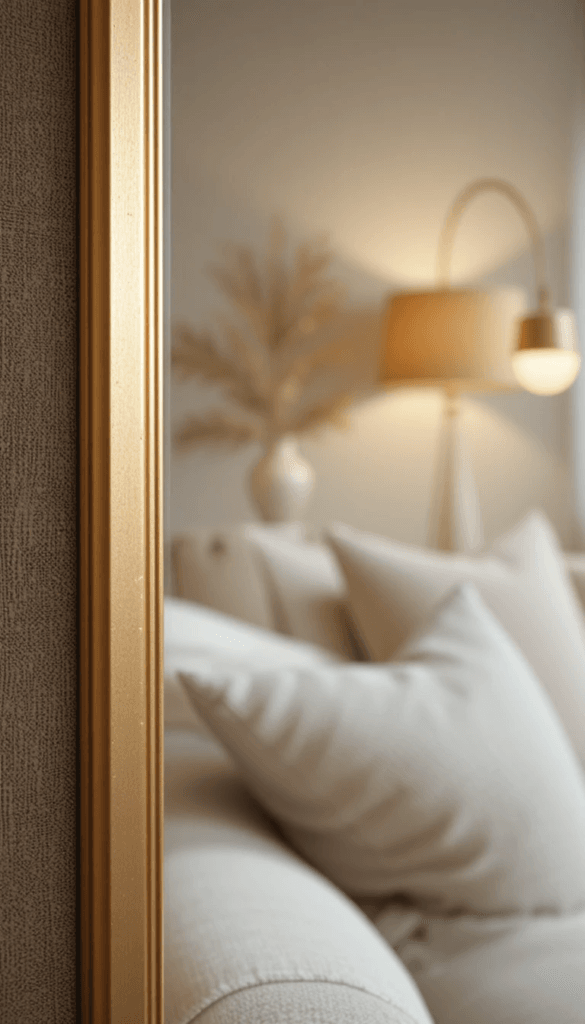
The frame is not secondary.
Thin, shiny chrome frames often appear lightweight.
Medium-thickness brushed gold, matte black, or warm wood frames carry more visual weight.
Repeating the frame finish elsewhere in the room increases cohesion.
Consistency across finishes builds rhythm, and rhythm communicates refinement.
The Psychology of Reflection and the Luxury Test
Mirrors influence perception more than most decor elements.
They reshape light, alter depth, and redirect the eye.
When proportion and placement align correctly, the room feels expansive rather than confined.
Why Reflection Signals Luxury
Luxury interiors feel open and breathable.
Mirrors enhance that sensation by extending sightlines.
When a mirror reflects layered lighting, the glow doubles. When it reflects texture, the depth increases.
Flat walls become dimensional surfaces.
Design publications such as Elle Decor frequently showcase oversized mirrors as focal elements in elevated interiors because they increase perceived space without adding clutter.
The Evening Expansion Test
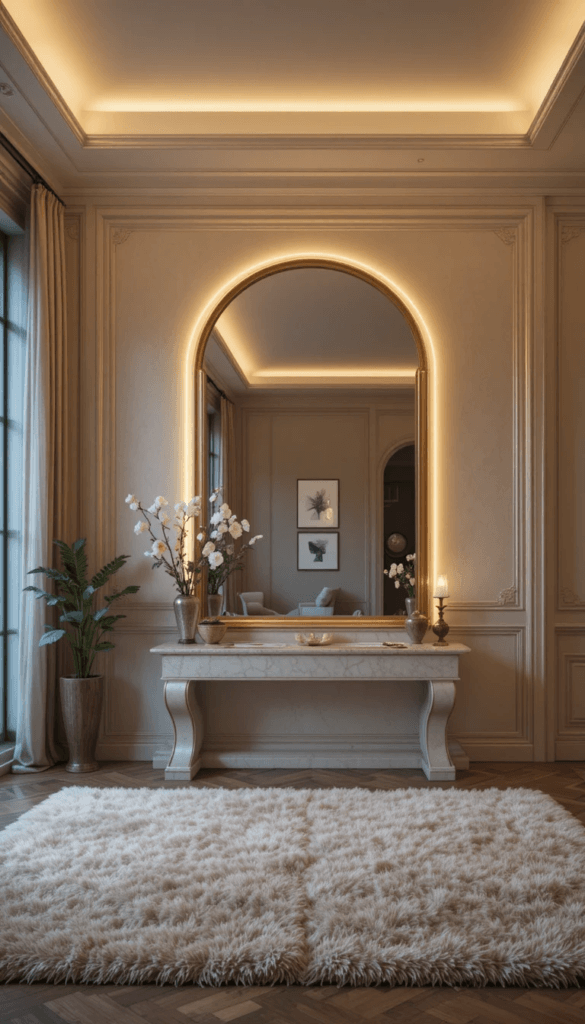
Evaluate your mirror placement after sunset.
Turn off overhead lights.
Leave only layered lamps on.
Observe what the mirror reflects.
If it captures warm light and textured elements, the room will feel larger and more atmospheric.
If it reflects a blank wall or ceiling glare, reposition it.
The Designer Mirror Checklist
- Mirror spans roughly two-thirds the width of furniture beneath it
- Bottom edge sits 6–8 inches above the furniture surface
- Mirror reflects a window, layered lighting, or a focal point
- Frame finish repeats elsewhere in the room
- Scale feels bold rather than timid
- Lighting temperature remains warm (2700K–3000K)
If even one of these elements feels off, the mirror may reduce impact instead of enhancing it.
Mirrors Are Structural, Not Decorative
Many homeowners treat mirrors as accessories.
Designers treat them as architectural tools.
Evaluate reflection strategy before adding more decor.
Placement adjustments often solve what furniture replacement cannot.
Instead of increasing brightness, reposition the mirror to amplify existing light.
Luxury is not excess.
Luxury is proportion, layered lighting, cohesive repetition, and disciplined placement.
Position the mirror intentionally.
The room will feel larger and more expensive without increasing the budget.