
White Kitchen Aesthetic: How to Create a Timeless, Elevated Look
March 24, 2026
Trending Finds Readers Are Loving
Explore affordable luxe discoveries people are clicking on right now.
See What's TrendingThe white kitchen aesthetic has endured for decades, not because it’s safe, but because it’s adaptable. When designed with intention, a white kitchen becomes more than a neutral backdrop — it becomes a canvas for texture, light, and daily living. The difference between a white kitchen that feels cold and one that feels refined lies in the choices you make beneath the surface.
In its most elevated form, the white kitchen aesthetic isn’t about perfection or minimalism for the sake of restraint. It’s about balance. It’s about understanding how materials interact with light, how subtle contrast creates depth, and how a space meant for function can still feel considered and beautiful.
This guide breaks down how to create a white kitchen that feels timeless rather than trend-driven — one that evolves with your home instead of aging out of it.
Why the White Kitchen Aesthetic Endures
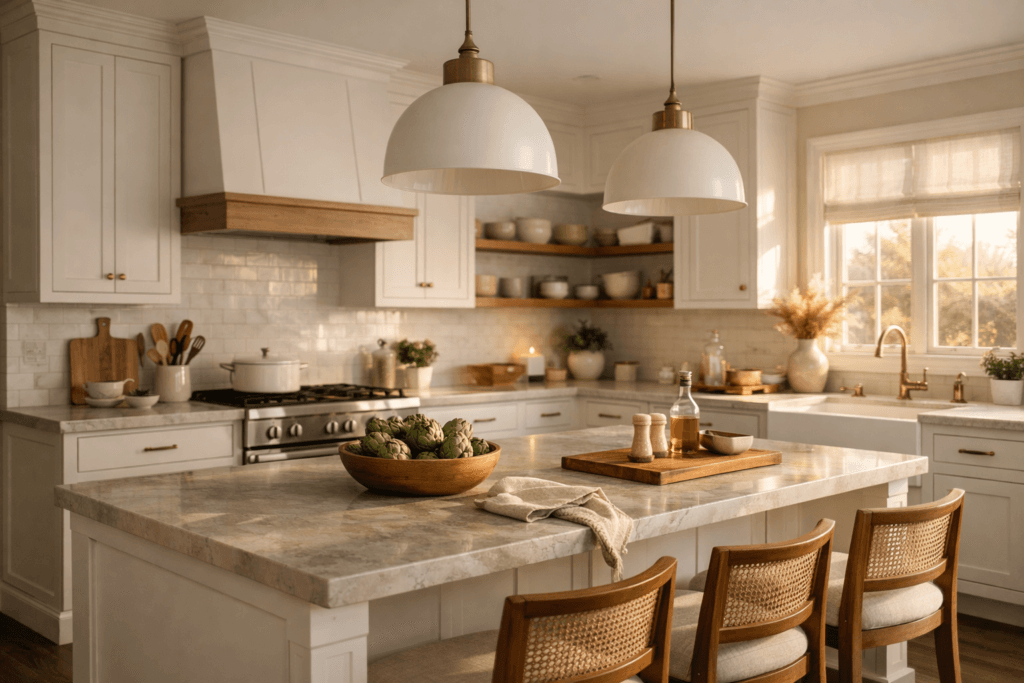
White kitchens continue to resonate because they offer clarity in a space that’s constantly in motion. As the heart of the home, kitchens are expected to serve multiple roles — cooking, gathering, working, and unwinding. White provides visual calm, allowing the space to feel open even when life around it feels busy.
From a design perspective, white reflects light more effectively than any other color. This makes it especially valuable in kitchens where natural light varies throughout the day. White surfaces amplify brightness, soften shadows, and create a sense of airiness that darker palettes struggle to achieve without feeling heavy.
More importantly, white kitchens adapt. Hardware can change. Lighting can evolve. Styling can shift with seasons and trends. The foundation remains intact. This flexibility is what allows white kitchens to feel current year after year without requiring constant renovation.
The Difference Between Flat White and Elevated White Kitchens
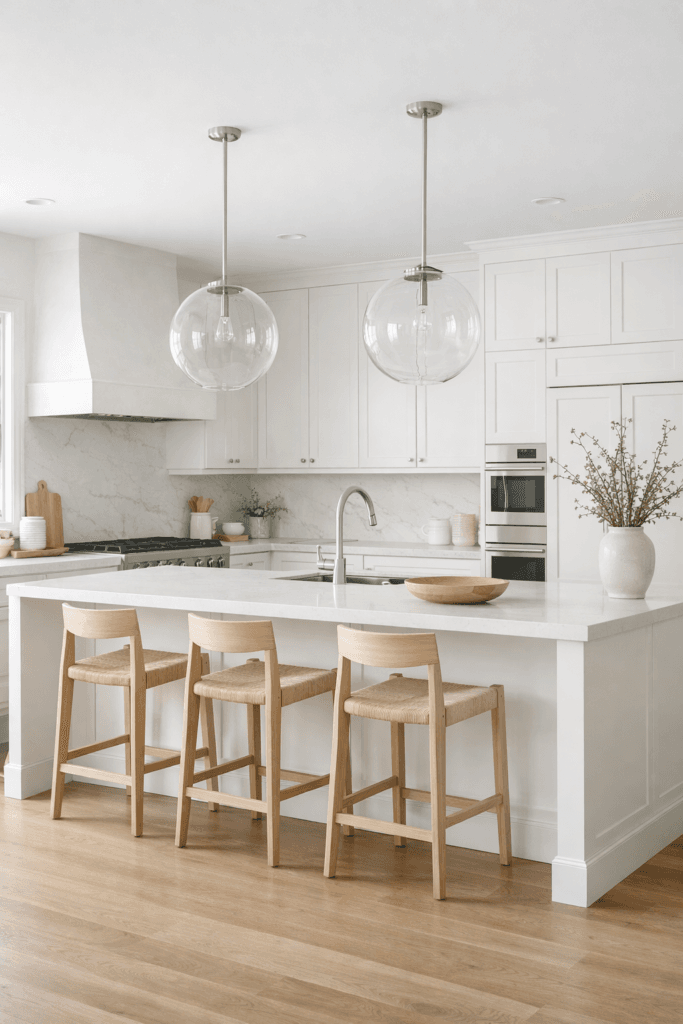
One of the most common misconceptions is that choosing white automatically results in a refined kitchen. In reality, white without depth often feels unfinished.
Flat white kitchens rely on a single shade of white applied uniformly across cabinetry, walls, and finishes. Without variation, the space lacks dimension. The result is often sterile, overly modern, or impersonal — a room that photographs well but feels lifeless in daily use.
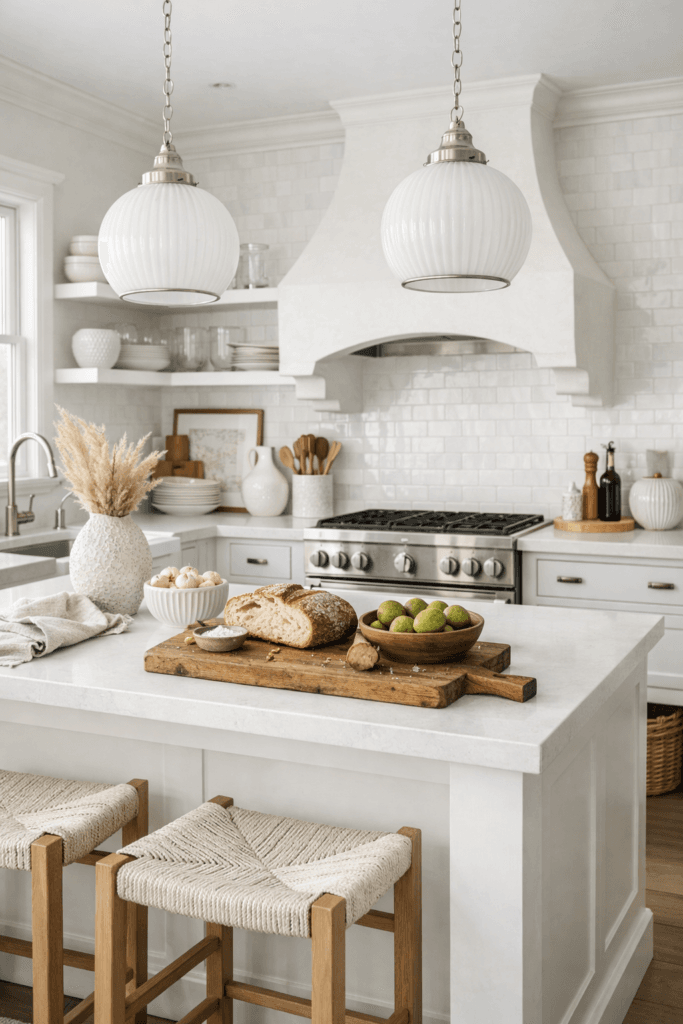
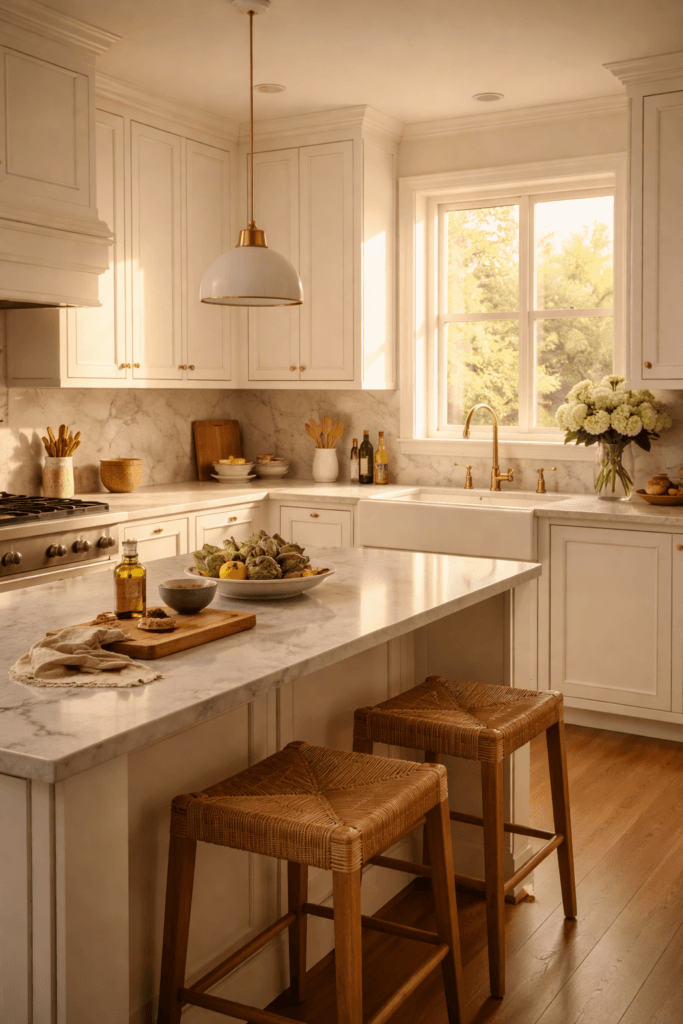
An elevated white kitchen introduces subtle complexity. It layers whites with different undertones, finishes, and textures. Cabinetry may lean warm while walls stay neutral. Stone surfaces introduce movement. Metals add contrast. Wood softens the edges.
The goal isn’t visual noise — it’s quiet richness. Elevated white kitchens feel intentional because each element serves a purpose beyond aesthetics.
Choosing the Right White: Why Undertones Matter
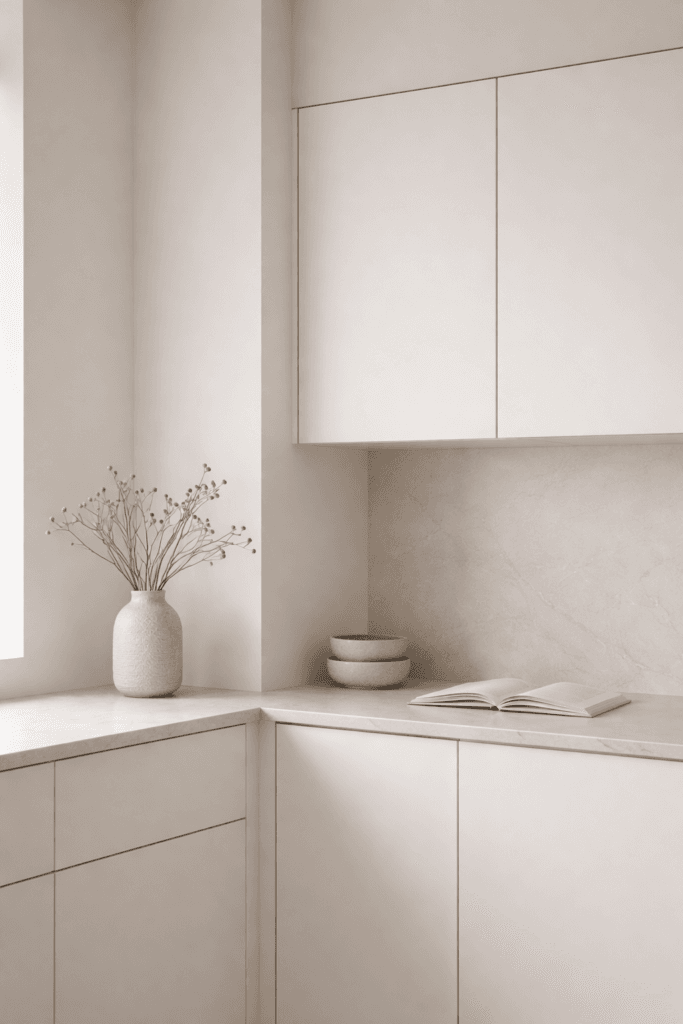
Not all whites behave the same once installed. Undertones play a critical role in how a kitchen feels, especially as lighting changes throughout the day.
Warm whites carry hints of cream, beige, or soft linen. These tones feel inviting and pair naturally with wood, brass, and stone. Neutral whites strike a balance, offering clarity without starkness. Cool whites, while crisp, can easily feel harsh unless carefully offset.
In kitchens, warm or neutral whites tend to create the most livable results. They soften shadows, reduce glare, and age more gracefully over time. Cool whites may look clean initially, but they often highlight imperfections and amplify artificial lighting.
Testing paint and material samples in morning, afternoon, and evening light is essential. A white that looks perfect at noon can feel entirely different once the sun sets.
Materials That Make a White Kitchen Feel Expensive
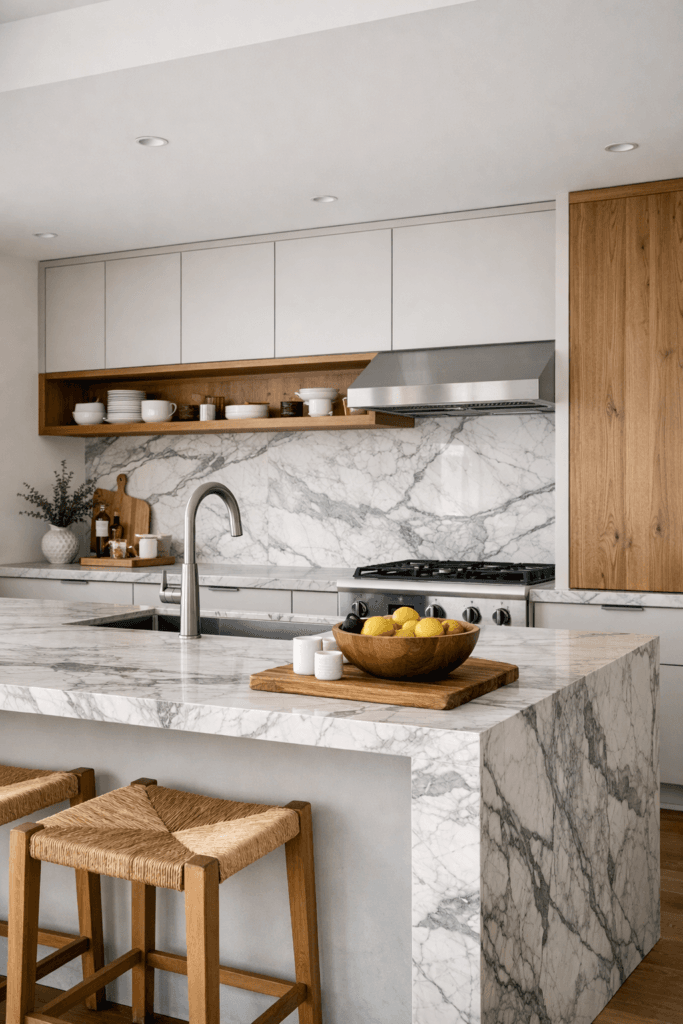
Luxury in white kitchens doesn’t come from excess — it comes from material choice. Thoughtful materials elevate the simplest palette.
Natural stone countertops introduce organic movement that keeps white surfaces from feeling flat. Matte or satin cabinetry finishes feel softer and more refined than high-gloss alternatives. Wood accents — whether in flooring, shelving, or islands — add warmth and visual grounding.
Even small details matter. Handcrafted tile, subtle plaster finishes, and textured backsplashes contribute depth without overwhelming the space. These materials create contrast not through color, but through variation.
When white kitchens feel expensive, it’s rarely because they’re decorated heavily. It’s because the materials were chosen with care.
Texture Layering in White Kitchens
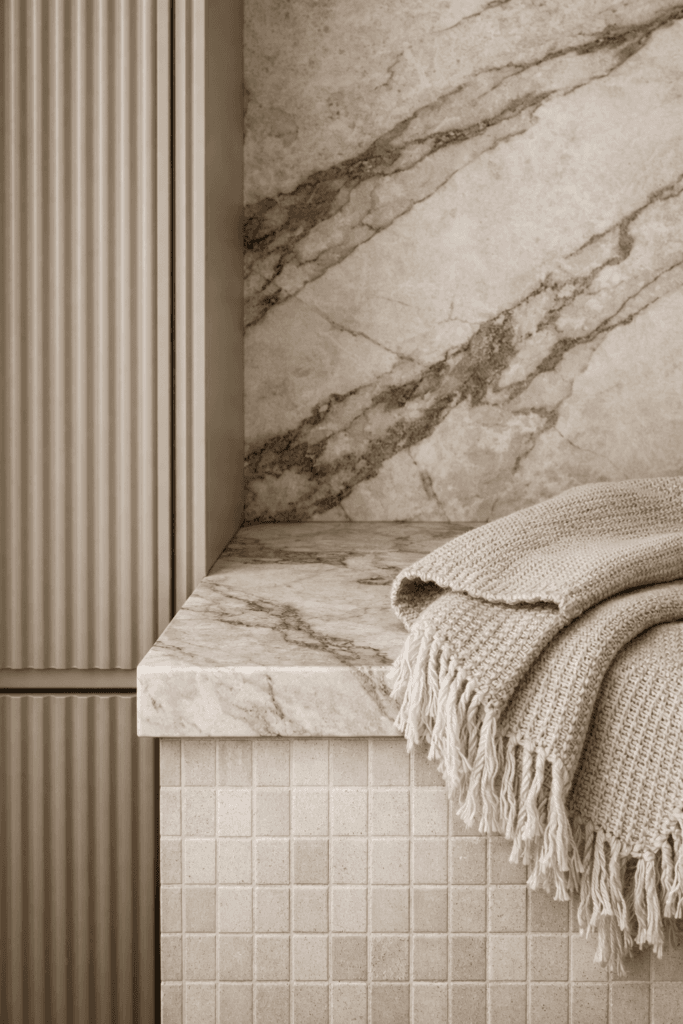
Texture is the unsung hero of the white kitchen aesthetic. Without it, even the most beautiful materials can feel incomplete.
Layering texture doesn’t require bold statements. Fluted cabinetry, soft stone veining, linen window treatments, and lightly brushed metals all contribute quietly. The goal is to create a space that feels tactile and inviting — one that encourages use rather than admiration from afar.
Texture also prevents white kitchens from feeling seasonal or trend-bound. It anchors the space in a timeless sensibility that works year-round.
Hardware, Fixtures, and Finishes That Complete the Look
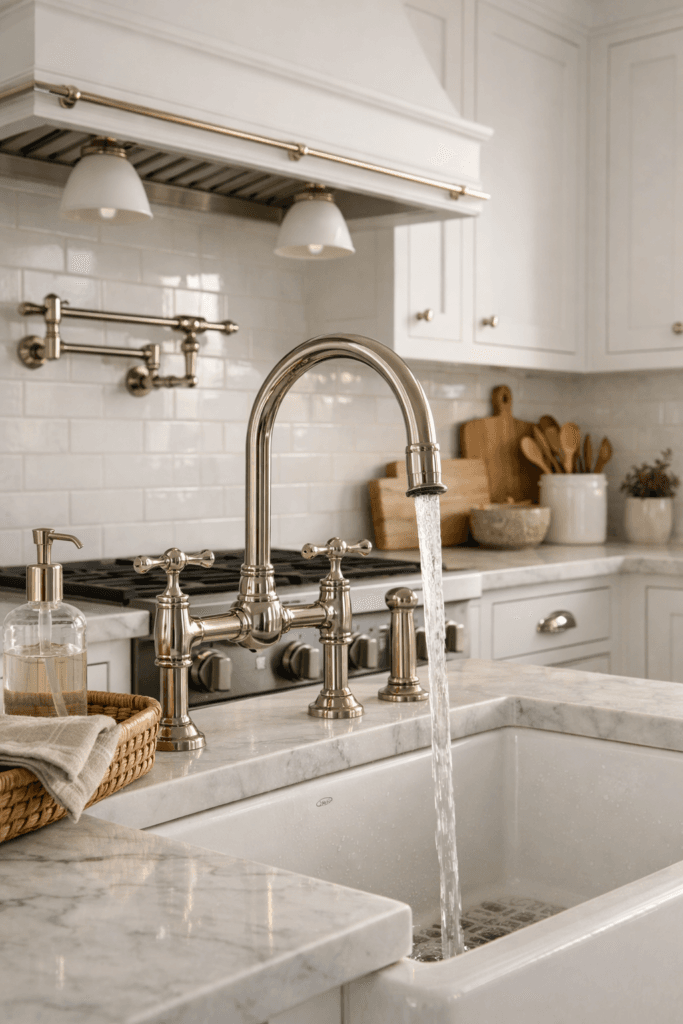
In a white kitchen, hardware acts as punctuation. It shouldn’t dominate the space, but it should be deliberate.
Warm metals such as brushed brass or aged bronze add softness. Darker finishes introduce contrast and structure. Unlacquered metals evolve over time, developing character rather than wearing out.
Consistency matters more than boldness. When finishes feel cohesive, the kitchen feels settled — not styled for effect, but designed for longevity.
Lighting Strategies That Bring White Kitchens to Life
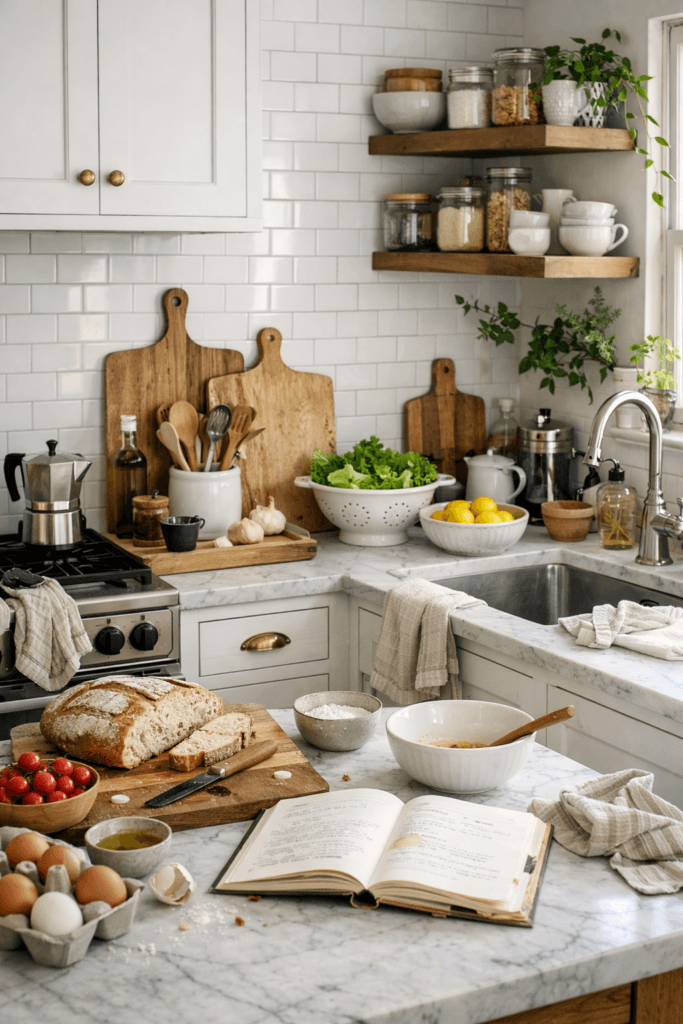
Lighting defines how white behaves. Without thoughtful lighting, white surfaces can appear flat or overly bright.
Layered lighting creates balance. Ambient lighting sets the tone, task lighting supports function, and accent lighting adds dimension. Warm bulbs soften white finishes and reduce glare, making the space feel comfortable rather than clinical.
Natural light is equally important. White kitchens thrive when daylight is allowed to move freely through the space, changing its mood throughout the day.
Styling a White Kitchen for Everyday Living
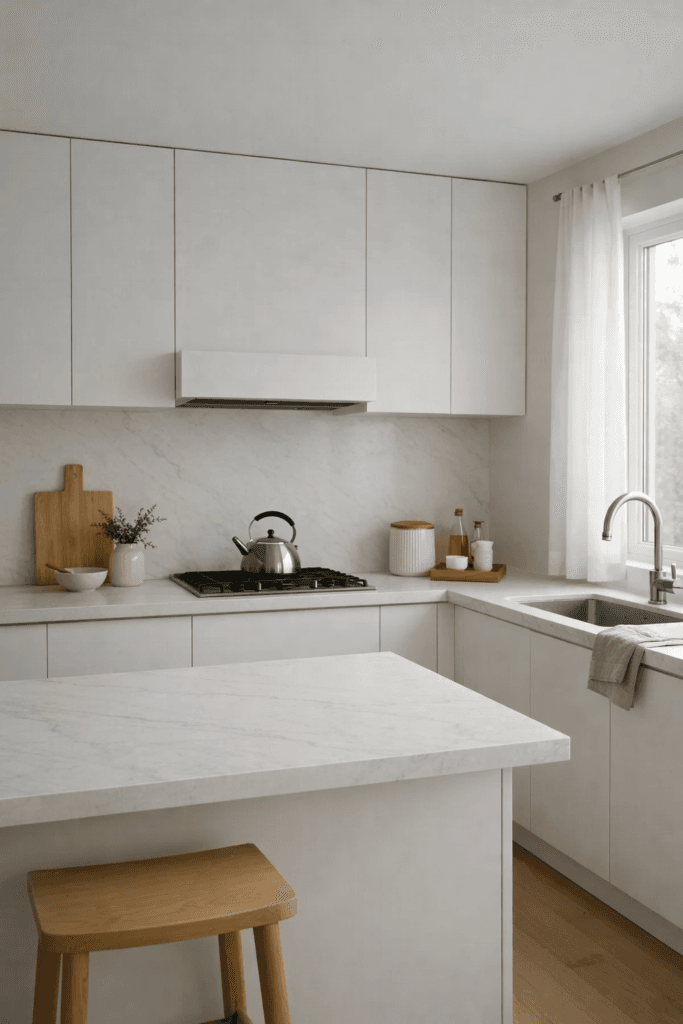
An elevated white kitchen should feel lived in, not preserved. The goal isn’t to maintain a showroom-perfect space, but to allow daily life to coexist beautifully with design.
Styling a white kitchen starts with restraint. Instead of filling every surface, choose a few intentional elements that add warmth and personality. A wooden cutting board leaned casually against the backsplash, a ceramic bowl filled with seasonal fruit, or a simple vase with fresh greenery can soften the space without cluttering it.
Functional items can also be beautiful. Glass jars for dry goods, linen dish towels, and stoneware mugs contribute texture while serving a purpose. When everything has a place and a role, the kitchen feels calm and usable rather than staged.
Rotating small details seasonally keeps the space feeling fresh. In warmer months, lighter woods and greenery feel natural. In cooler months, deeper-toned ceramics or warm textiles add subtle coziness — all without disrupting the white foundation.
Making White Kitchens Feel Warm, Not Cold
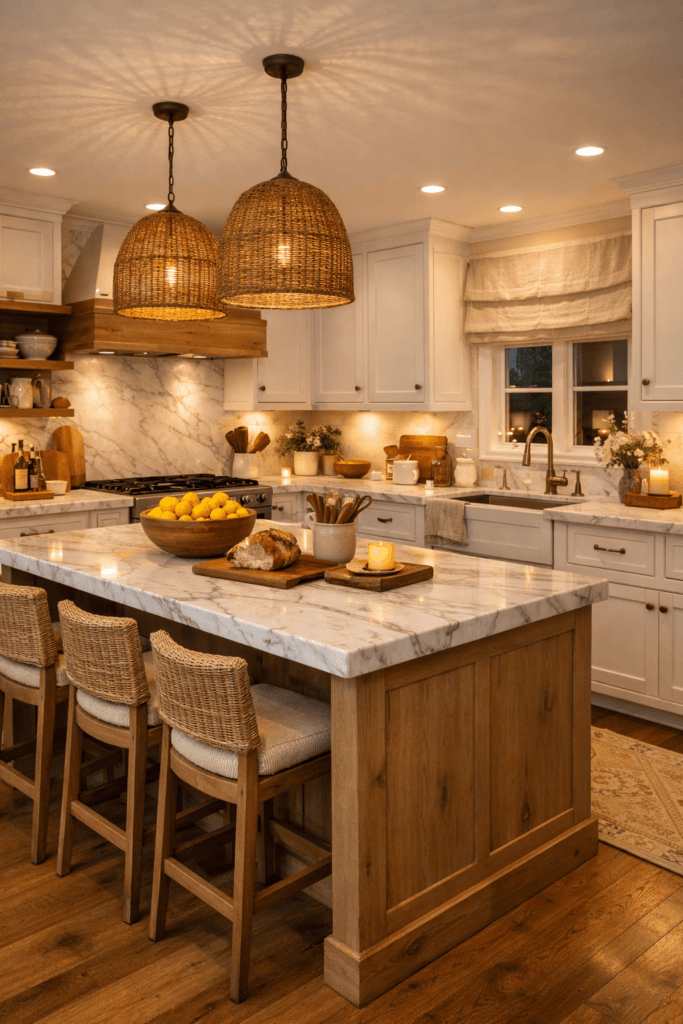
One of the most common concerns with a white kitchen aesthetic is that it might feel sterile or uninviting. Warmth comes not from color alone, but from contrast and balance.
Natural materials are key. Wood tones — whether light oak, walnut, or reclaimed finishes — instantly ground a white space. Stone surfaces with visible veining add organic movement. Even small touches, like a woven runner or textured roman shades, introduce softness.
Lighting also plays a critical role. Warm-toned bulbs, dimmable fixtures, and layered lighting prevent white surfaces from feeling harsh, especially in the evening. A kitchen that looks inviting at night is just as important as one that looks bright during the day.
Finally, imperfection adds warmth. Handmade tiles, unlacquered metals, and natural finishes that patina over time create a sense of authenticity that polished perfection cannot.
Common White Kitchen Mistakes to Avoid
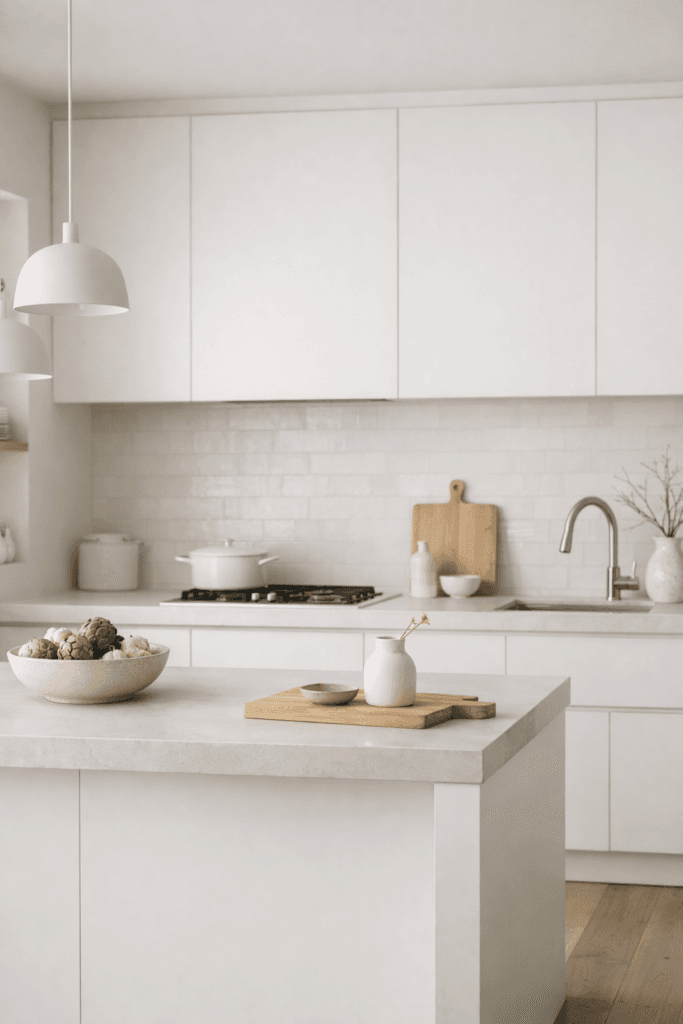
White kitchens are deceptively simple. Without intention, small missteps can undermine the entire aesthetic.
One of the biggest mistakes is relying on a single shade of white everywhere. Without variation, the space lacks depth and dimension. Mixing complementary whites creates subtle contrast that feels intentional.
Another common issue is ignoring undertones. A cool white next to a warm countertop can clash, making the kitchen feel disjointed. Always consider how materials interact rather than choosing elements in isolation.
Overusing glossy finishes is another pitfall. While some shine is welcome, too much gloss reflects light harshly and emphasizes fingerprints and wear. Matte and satin finishes tend to age more gracefully.
Finally, neglecting texture results in a flat, lifeless space. Even the most expensive white kitchen can feel underwhelming if everything is smooth and uniform.
White Kitchens and Long-Term Design Confidence
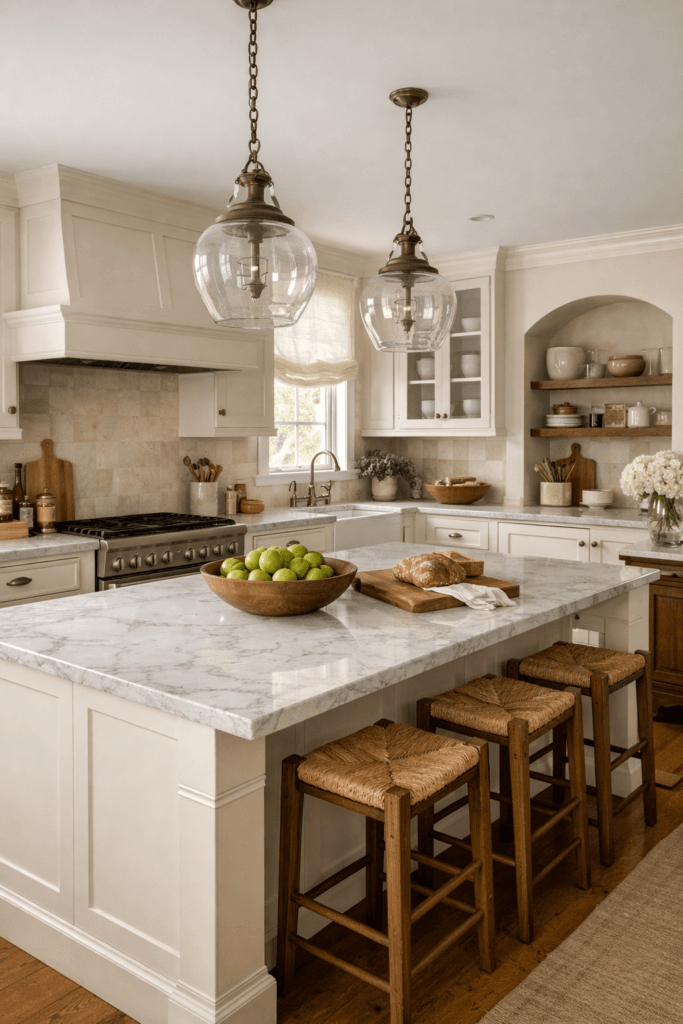
The true appeal of the white kitchen aesthetic lies in its longevity. Trends come and go, but a well-designed white kitchen adapts without losing relevance.
As tastes evolve, a white kitchen allows you to refresh the space through smaller updates — swapping hardware, updating lighting, or changing accessories — without starting over. This flexibility makes white kitchens both practical and emotionally reassuring.
A timeless kitchen isn’t one that avoids personality. It’s one that allows personality to evolve.
Final Thoughts
The white kitchen aesthetic endures because it balances beauty with flexibility. When designed thoughtfully, it feels both elevated and approachable — a space that welcomes daily life while remaining visually refined.
The most successful white kitchens aren’t defined by trends or perfection. They’re defined by intention. By choosing the right whites, layering texture, prioritizing materials, and designing for real life, you create a kitchen that feels timeless rather than temporary.
A white kitchen doesn’t need to shout to make an impression. When done right, it speaks quietly — and that’s what makes it last.