
10 Living Room Moodboards for Instant Style Inspo
March 17, 2026
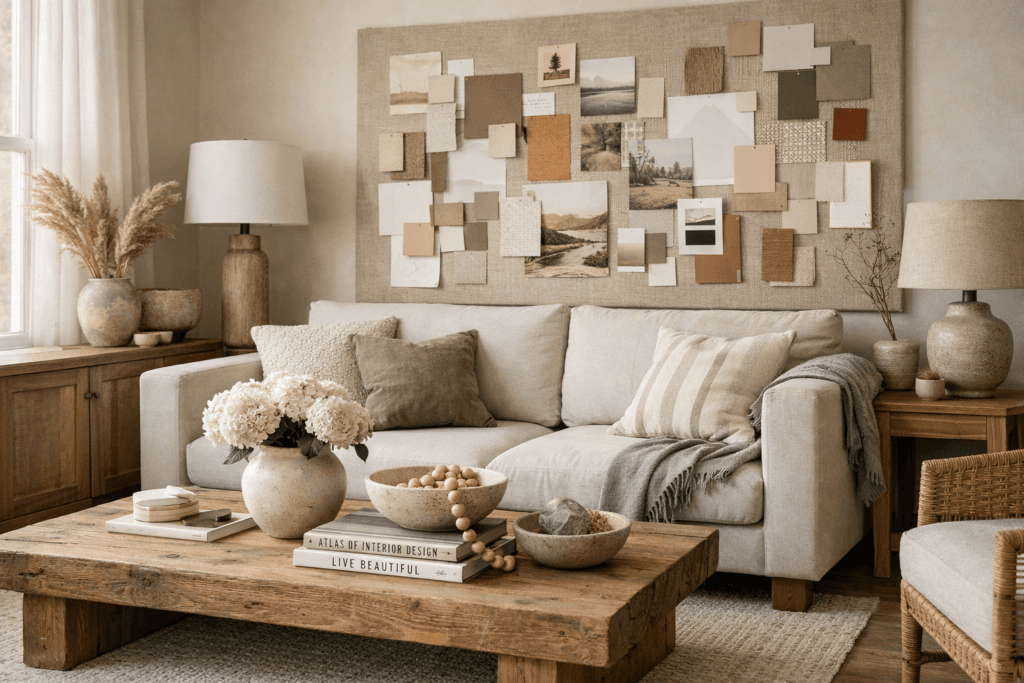
Introduction: Why Moodboards Create Instant Impact
Trending Finds Readers Are Loving
Explore affordable luxe discoveries people are clicking on right now.
See What's TrendingWhen a living room feels off, it’s rarely because of one bad choice. More often, it’s because the space lacks a clear visual direction. Colors compete instead of cooperate. Textures feel disconnected. Furniture exists, but it doesn’t feel intentional. This is where moodboards become powerful.
Living room moodboards create instant style inspiration because they remove guesswork. Instead of reacting to trends or buying pieces in isolation, moodboards allow you to see how a space could feel before anything changes. They translate ideas into visuals and emotion into structure.
A good moodboard doesn’t overwhelm. It clarifies. And when clarity is present, even small changes can completely transform a room.
What Makes a Living Room Moodboard Actually Work
Not all moodboards are useful. Some are simply collections of pretty images without cohesion. A functional living room moodboard does more than inspire—it guides decisions.
A strong moodboard:
- Establishes a clear color direction
- Shows how textures interact
- Creates emotional consistency
- Helps you edit instead of accumulate
Instant style inspo doesn’t come from adding more. It comes from understanding what belongs together.
Moodboard 1: Soft Neutrals with Elevated Texture
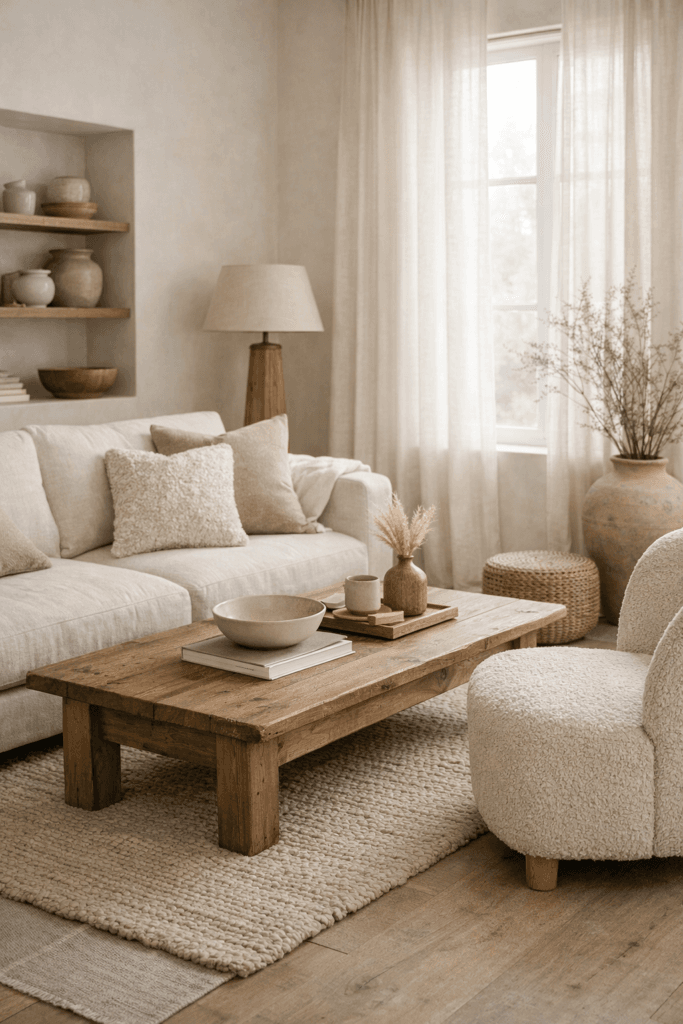
This type of moodboard focuses on calm, restraint, and tactile interest. Instead of relying on contrast, it uses variation in texture to create depth.
Key elements include:
- Creamy whites and warm beiges
- Linen, boucle, and natural wood
- Soft curves rather than sharp edges
This moodboard works instantly because it removes visual noise. The living room feels lighter, calmer, and more cohesive without feeling empty.
Best for:
- Small living rooms
- Spaces with limited natural light
- Anyone craving visual calm
Moodboard 2: Warm Earth Tones for Cozy Balance
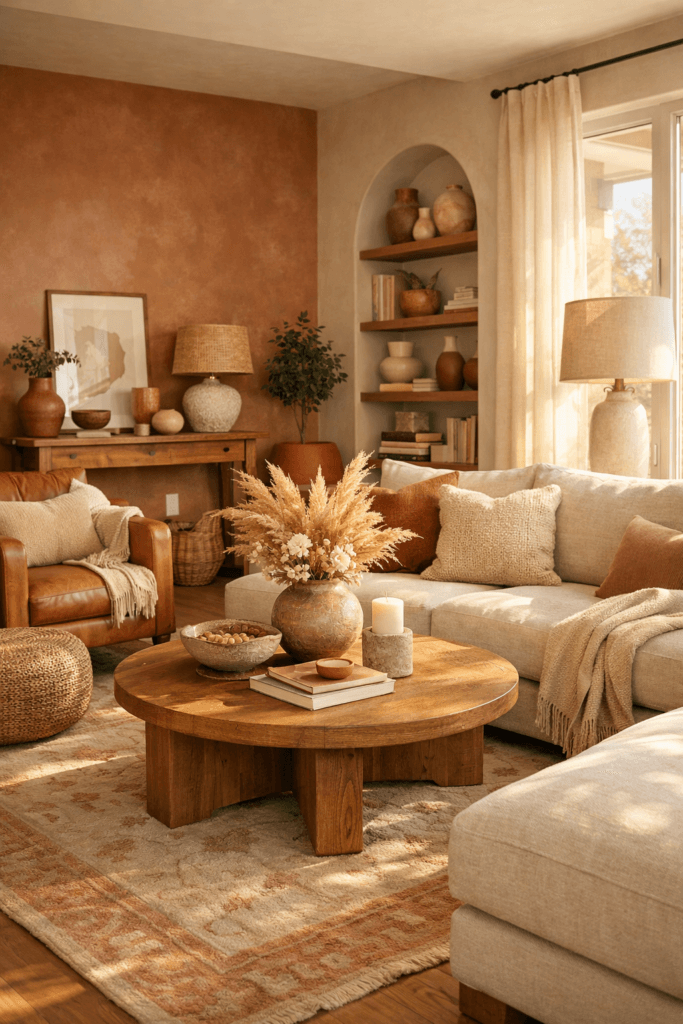
Earth-toned living room moodboards create instant warmth, but they must be curated carefully to avoid heaviness.
This moodboard might include:
- Muted terracotta
- Soft clay and caramel tones
- Warm wood finishes
- Neutral anchors to keep balance
When done right, this palette feels grounded and inviting rather than dated. The instant style shift comes from emotional warmth, not bold color.
Best for:
- Open-concept living spaces
- Homes that feel visually cold
- Anyone wanting a cozy but elevated feel
Moodboard 3: Modern Monochrome with Depth
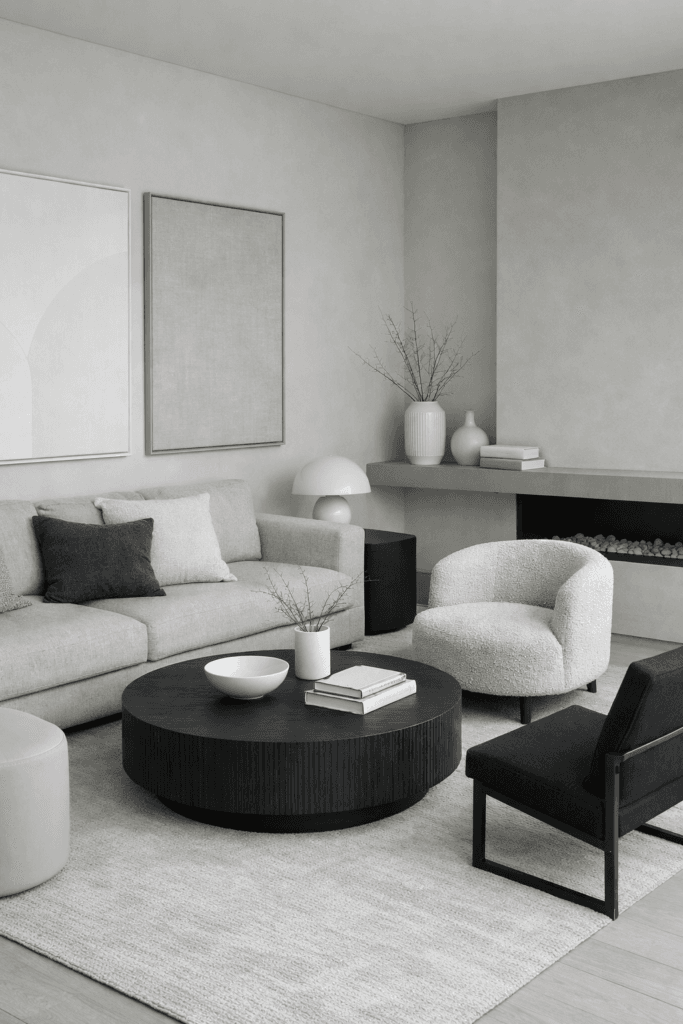
Monochrome doesn’t mean boring. A modern monochrome living room moodboard explores a single color family while layering shade, texture, and finish.
A gray-based monochrome palette, for example, might include:
- Soft gray walls
- Charcoal accents
- Light stone textures
- Black used sparingly
The instant inspo comes from cohesion. Everything feels connected, which immediately elevates the space.
Best for:
- Modern or minimalist homes
- Clean architectural spaces
- Anyone who loves structure
Moodboard 4: Light Neutrals with Organic Accents
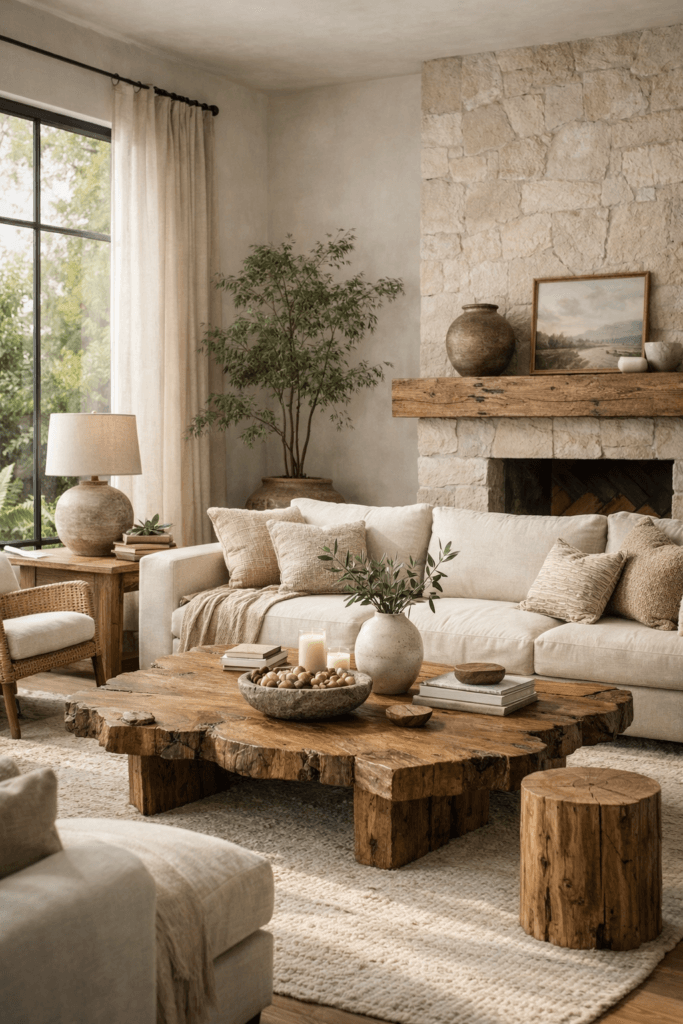
This moodboard blends softness with natural character. It uses light, airy neutrals as a base and introduces organic elements to prevent the space from feeling flat.
Key features include:
- Soft off-whites and pale taupe
- Natural wood and stone
- Subtle greenery or botanical references
The room feels fresh, calm, and lived-in without appearing styled. Instant inspiration comes from balance rather than contrast.
Best for:
- Homes with lots of natural light
- Relaxed, modern interiors
- Anyone wanting effortless style
Moodboard 5: Muted Color for Subtle Personality
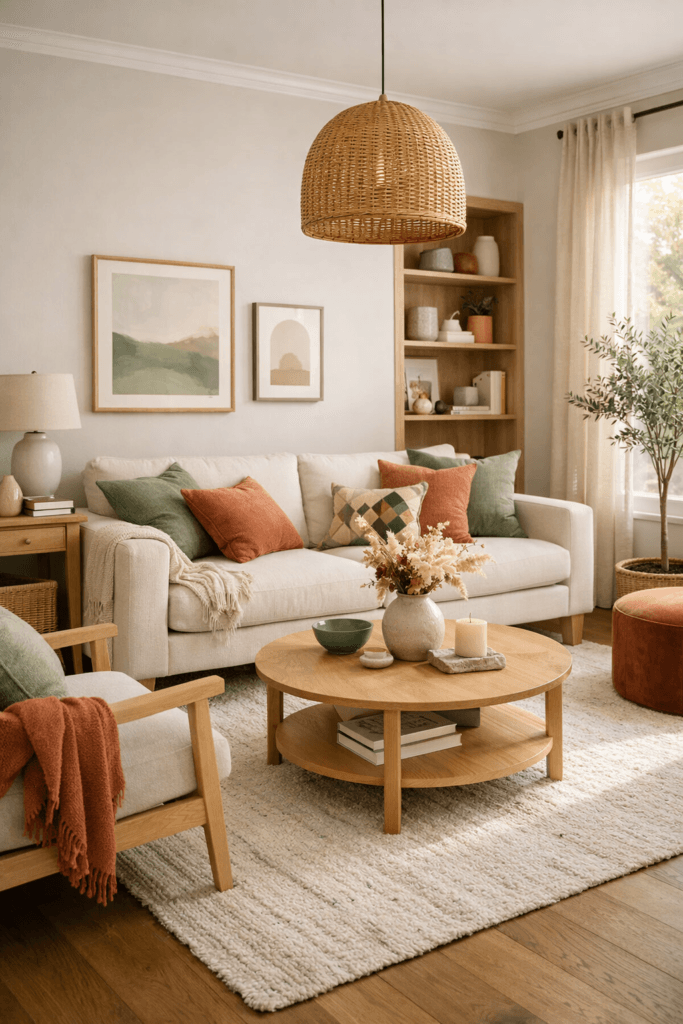
Muted color moodboards add personality without overwhelming the room. These palettes rely on softened hues rather than saturation.
Examples include:
- Dusty blue
- Muted sage
- Soft blush or clay
The key is restraint. Color appears intentionally and repeats across the room in small ways. This creates instant interest without chaos.
Best for:
- People who want color without commitment
- Transitional living rooms
- Spaces that feel too neutral
Why Instant Style Inspo Comes from Editing, Not Adding
The biggest misconception about moodboards is that they exist to help you buy things. In reality, they’re far more powerful when used as editing tools.
Once a moodboard is established, it becomes easier to see:
- What feels out of place
- What no longer supports the direction
- What can be removed instead of replaced
Instant transformation often happens when you subtract, not when you add.
How to Use These Moodboards in Real Life
You don’t need to recreate a moodboard perfectly for it to work. Think of it as a guide, not a checklist.
Use it to:
- Evaluate what you already own
- Choose accent pieces intentionally
- Maintain consistency over time
When decisions are filtered through a moodboard, the living room starts to feel cohesive almost immediately.
Moodboard 6: Quiet Luxury Neutrals with Refined Contrast
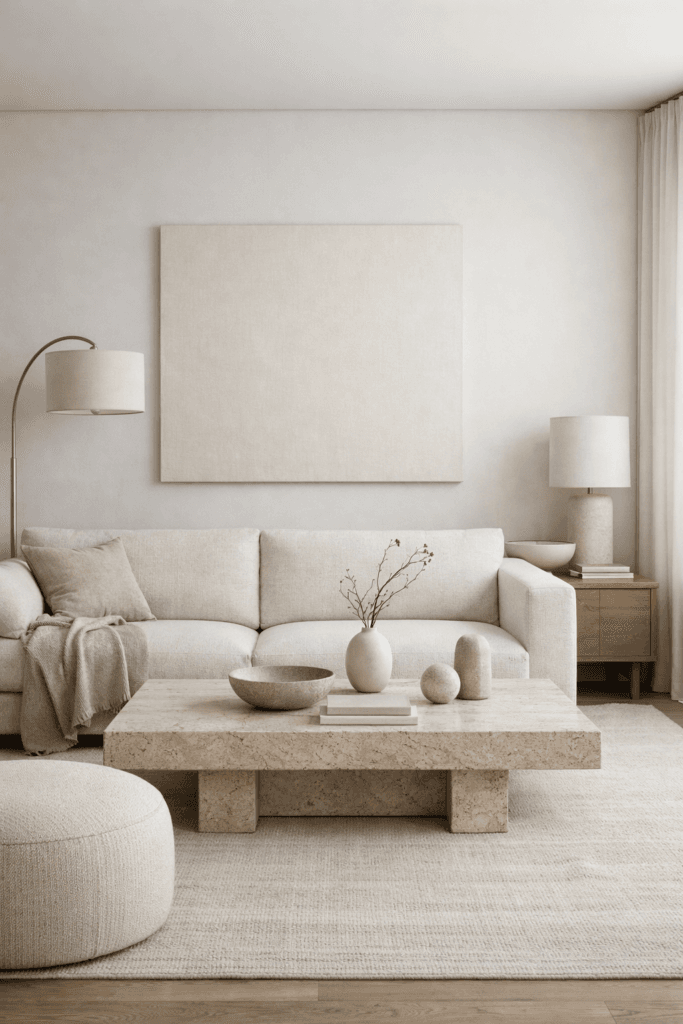
Quiet luxury living room moodboards focus on subtle distinction rather than statement pieces. This style relies on high-quality materials, intentional contrast, and restraint. The inspiration feels immediate because nothing competes for attention.
This moodboard often includes:
- Soft taupe, stone, and ivory tones
- Matte finishes mixed with gentle sheen
- Clean-lined furniture with elegant proportions
- Minimal décor chosen for form and texture
The instant style impact comes from clarity. The room feels elevated not because it’s full, but because everything in it belongs.
Best for:
- Timeless interiors
- Homes that already feel refined but unfinished
- Anyone drawn to understated elegance
Moodboard 7: Warm Minimalism with Visual Softness
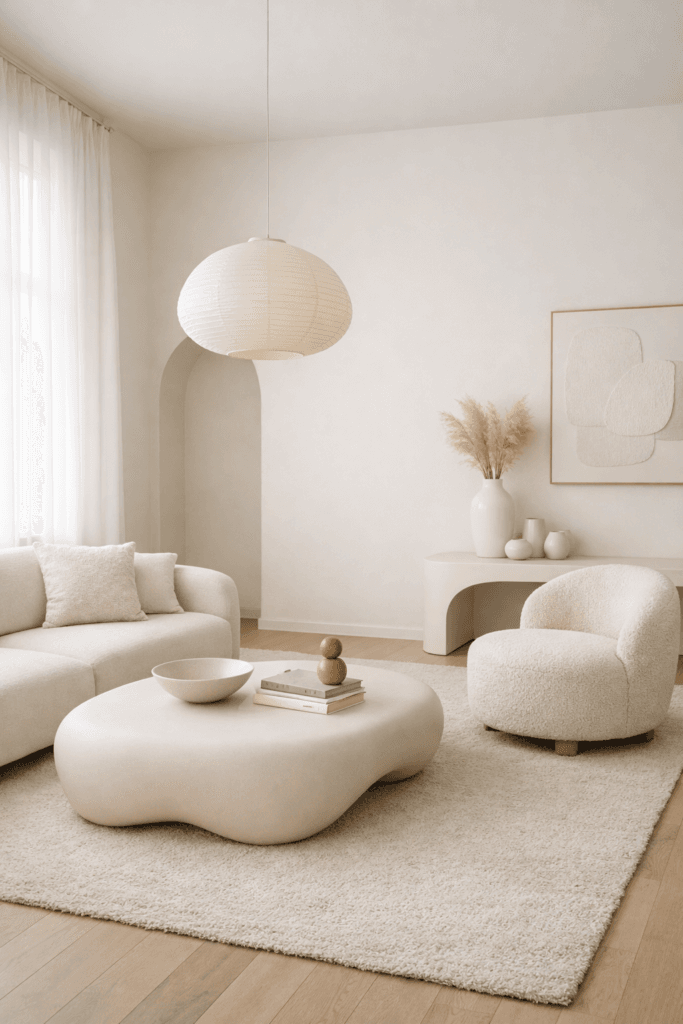
Warm minimalism brings instant calm by blending simplicity with comfort. Unlike stark minimalism, this moodboard feels approachable and lived-in.
Key elements include:
- Soft warm whites and light sand tones
- Rounded silhouettes and tactile fabrics
- Minimal décor with intentional spacing
The inspiration is instant because the room feels lighter and more breathable. There’s space for the eye to rest, which immediately improves how the room feels.
Best for:
- Busy households
- People who want calm without coldness
- Living rooms that feel visually crowded
Moodboard 8: Layered Neutrals with Subtle Depth
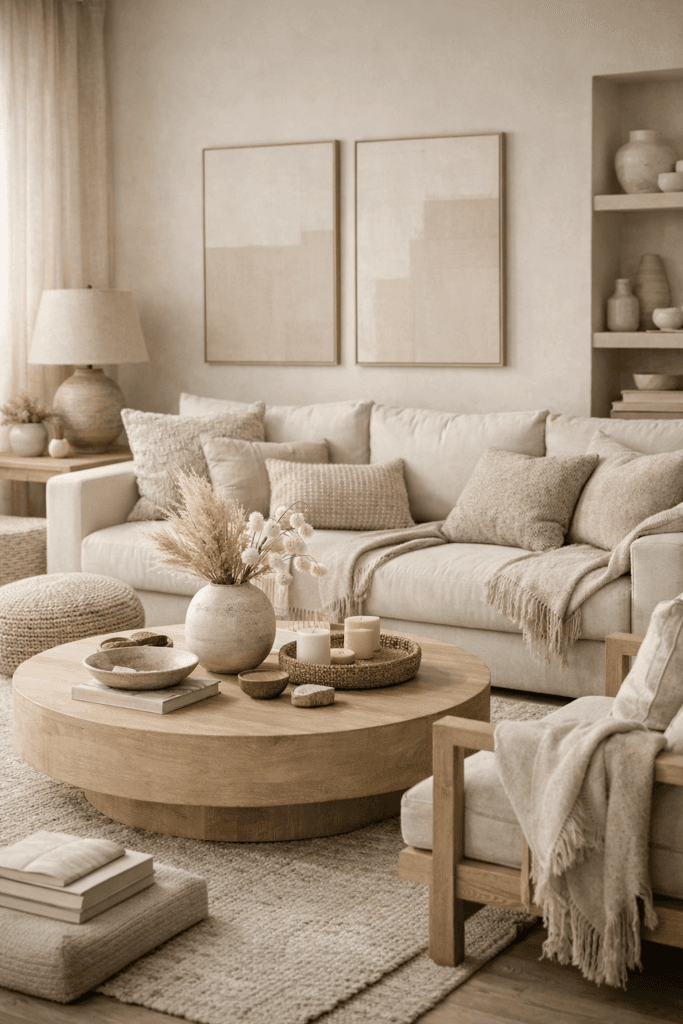
This moodboard focuses on depth through repetition rather than contrast. Similar tones appear in varying intensities, creating visual interest without disruption.
You might see:
- Beige layered with camel and mushroom
- Repeated tones across rugs, pillows, and art
- Texture doing more work than color
The instant inspo comes from cohesion. The room feels finished because everything speaks the same language.
Best for:
- Open-plan living spaces
- Homes with mixed furniture styles
- Anyone struggling with visual balance
Moodboard 9: Soft Color Accents Anchored by Neutrals
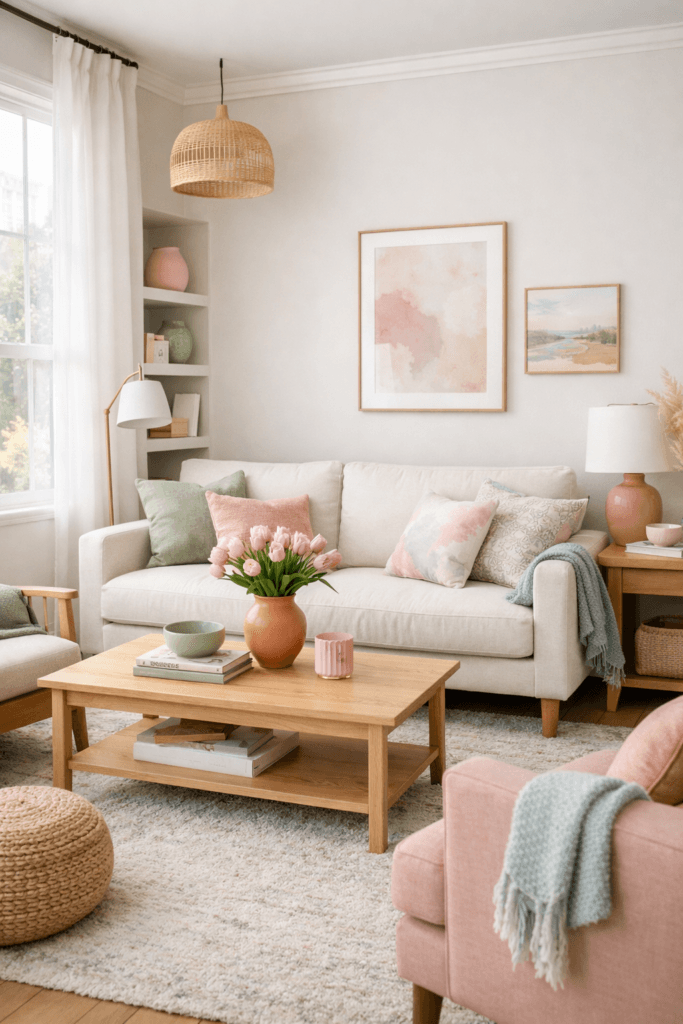
This moodboard introduces color intentionally rather than generously. The base remains neutral, while accents add personality.
Common approaches include:
- One primary accent color repeated subtly
- Neutral furniture grounding the palette
- Color used in art, textiles, or ceramics
The style shift feels instant because the color feels purposeful, not scattered. The living room gains character without losing calm.
Best for:
- People who love color but fear overwhelm
- Transitional or eclectic spaces
- Living rooms that feel too safe or flat
Moodboard 10: Natural-Inspired Calm with Organic Flow
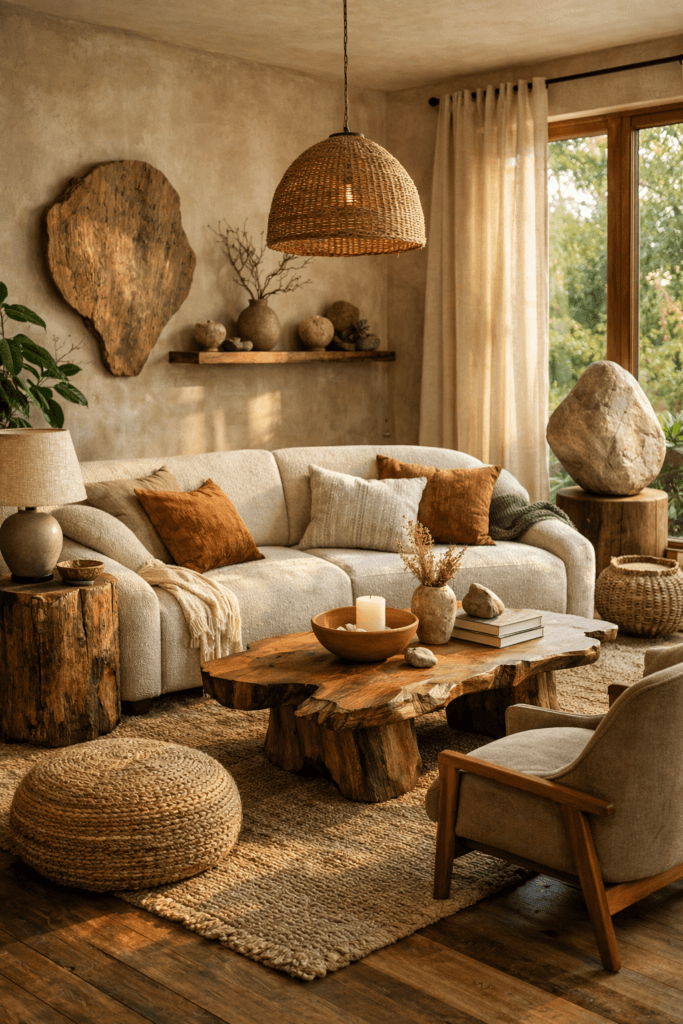
This moodboard draws inspiration from nature without becoming themed. It focuses on organic shapes, natural materials, and earthy undertones.
Elements often include:
- Soft stone and clay tones
- Natural wood and woven textures
- Gentle curves and relaxed layouts
The instant inspiration comes from emotional comfort. The room feels grounded and welcoming almost immediately.
Best for:
- Homes seeking warmth and authenticity
- Relaxed, modern interiors
- Anyone craving a restorative living space
Why Moodboards Create Instant Style Confidence
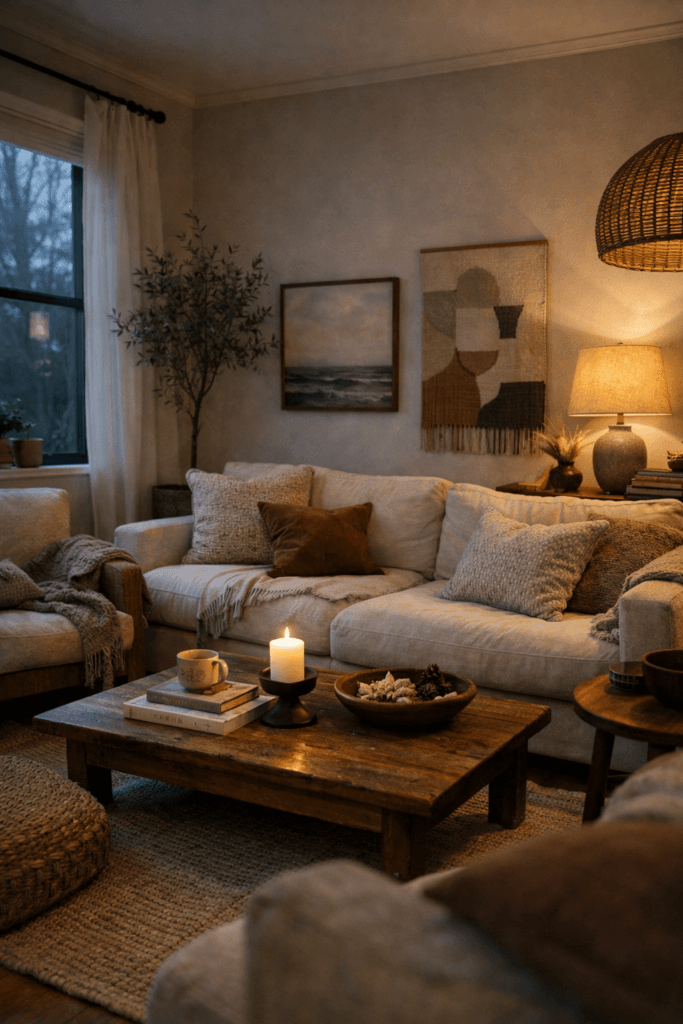
One of the most underrated benefits of living room moodboards is confidence. When you have a clear visual direction, decisions become easier. You stop second-guessing every choice.
Moodboards:
- Reduce impulse purchases
- Prevent mismatched décor
- Help you trust your instincts
Instant style inspo isn’t just visual—it’s emotional. Confidence changes how you experience your space.
How to Move Between Moodboards Without Starting Over
Living rooms evolve, and moodboards allow that evolution to happen intentionally. Because each moodboard is rooted in structure rather than trend, you can shift from one to another without replacing everything.
For example:
- Swap textiles to warm or cool a palette
- Edit décor rather than overhaul furniture
- Adjust lighting to change mood
The room stays cohesive even as it changes.
Final Thoughts: Why Moodboards Are the Fastest Way to Reset Style
Living room moodboards work because they give structure to creativity. They allow you to see relationships between color, texture, and mood before making changes.
Instant style inspiration doesn’t come from copying a look—it comes from understanding how design elements work together. When that understanding is in place, the living room resets itself naturally.
A good moodboard doesn’t just inspire. It guides. And that’s what makes the transformation feel effortless.