
7 Designer Styling Rules That Make Any Room Look Expensive
July 26, 2026
Trending Finds Readers Are Loving
Explore affordable luxe discoveries people are clicking on right now.
See What's TrendingExpensive-looking rooms are not built from expensive items alone.
They are built from structure, proportion, repetition, and restraint.
Designers do not rely on guesswork. They follow repeatable styling rules that quietly elevate a space.
If your home feels slightly unfinished or visually off, the issue is rarely budget. It is usually discipline.
Rule 1: Anchor Every Seating Area
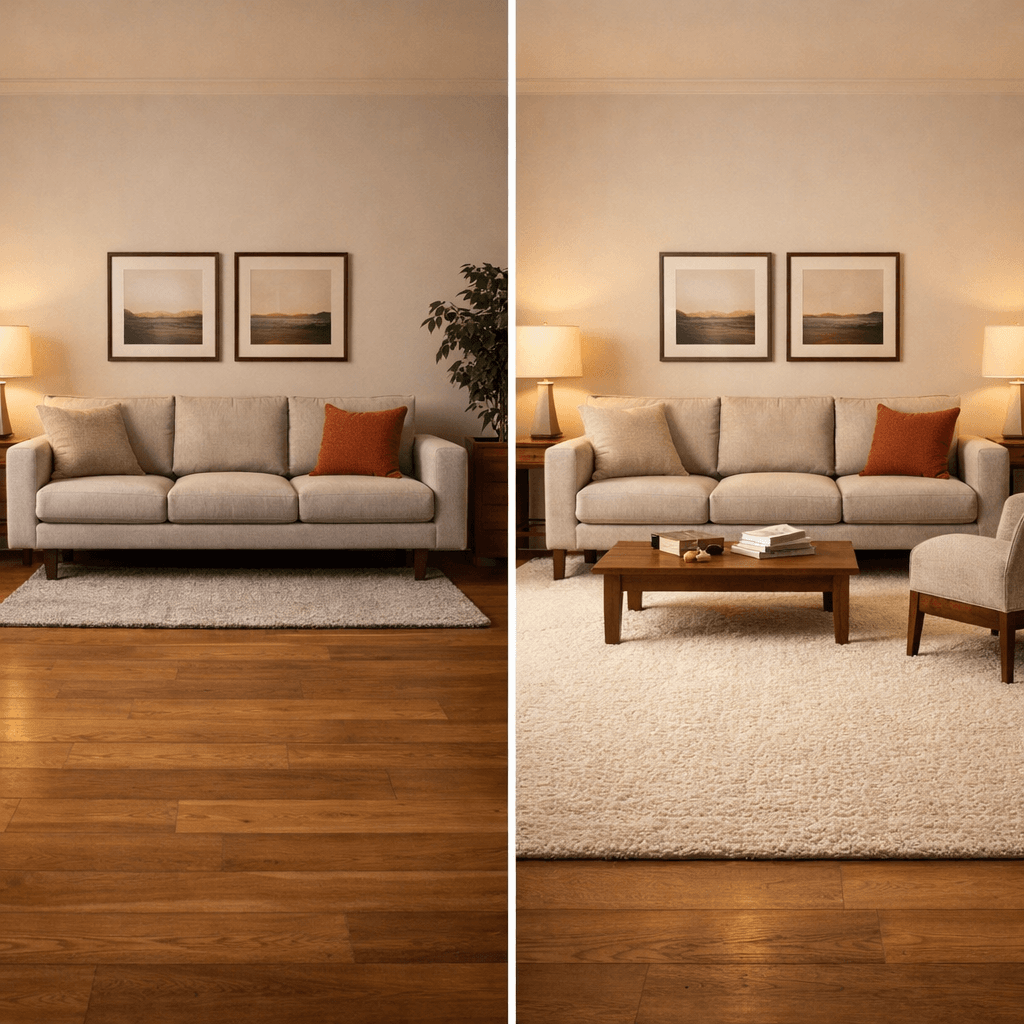
Floating furniture lowers perceived value instantly.
Every seating zone should sit on a properly scaled rug that extends beneath the front legs of sofas and chairs.
When furniture touches only bare flooring, the room fragments visually.
For a deeper breakdown of correct rug scale, review our guide on the designer rug rule that instantly elevates any room.
Rule 2: Layer Lighting at Three Heights
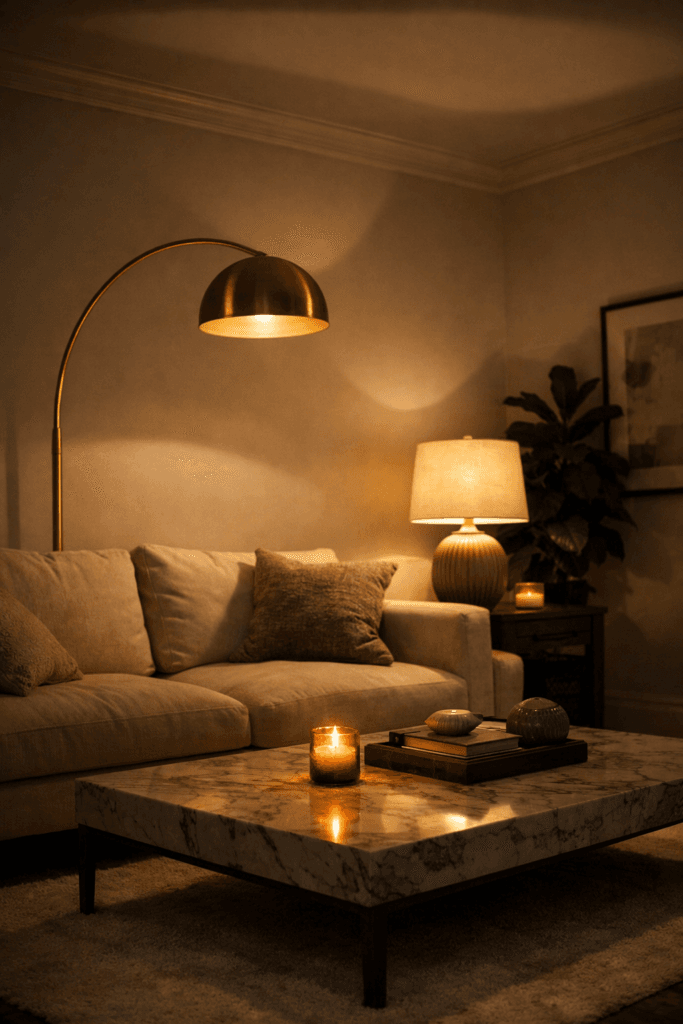
Luxury interiors avoid reliance on overhead lighting alone.
Rooms should include lighting at floor level, table height, and eye level.
This layering creates depth and shadow gradients that feel architectural rather than flat.
Our full breakdown of the designer lighting rule explains how this transforms a space immediately.
Rule 3: Control Color Repetition
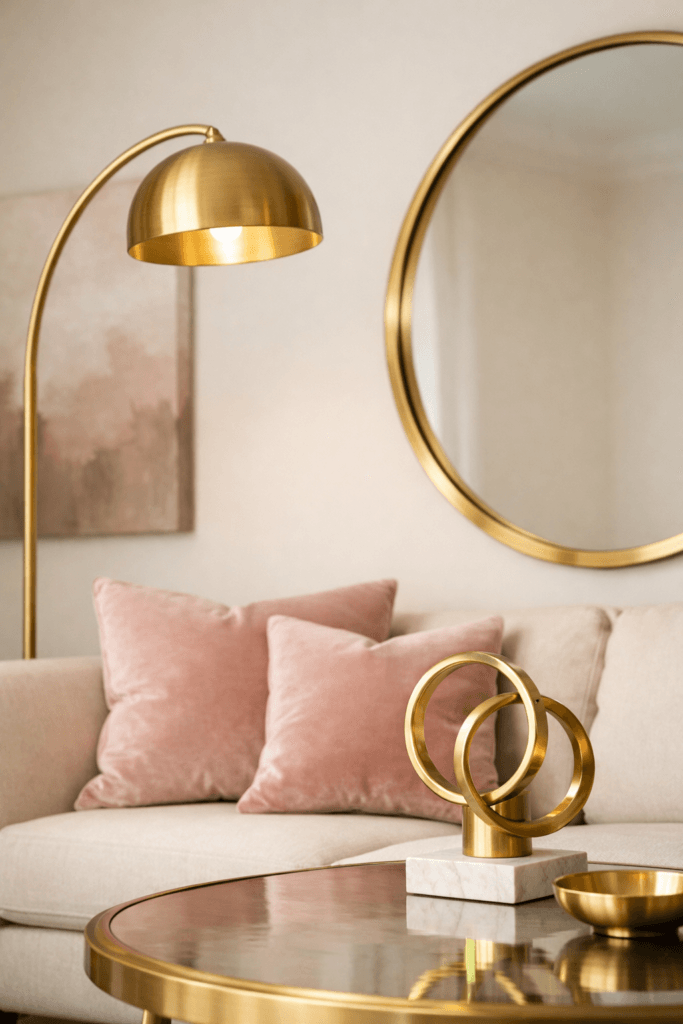
High-end rooms repeat finishes intentionally.
If brushed gold appears in lighting, it should appear elsewhere in the space.
When finishes feel random, the room loses cohesion.
Publications like Architectural Digest consistently emphasize repetition as a defining luxury principle.
Rule 4: Edit Surfaces Aggressively
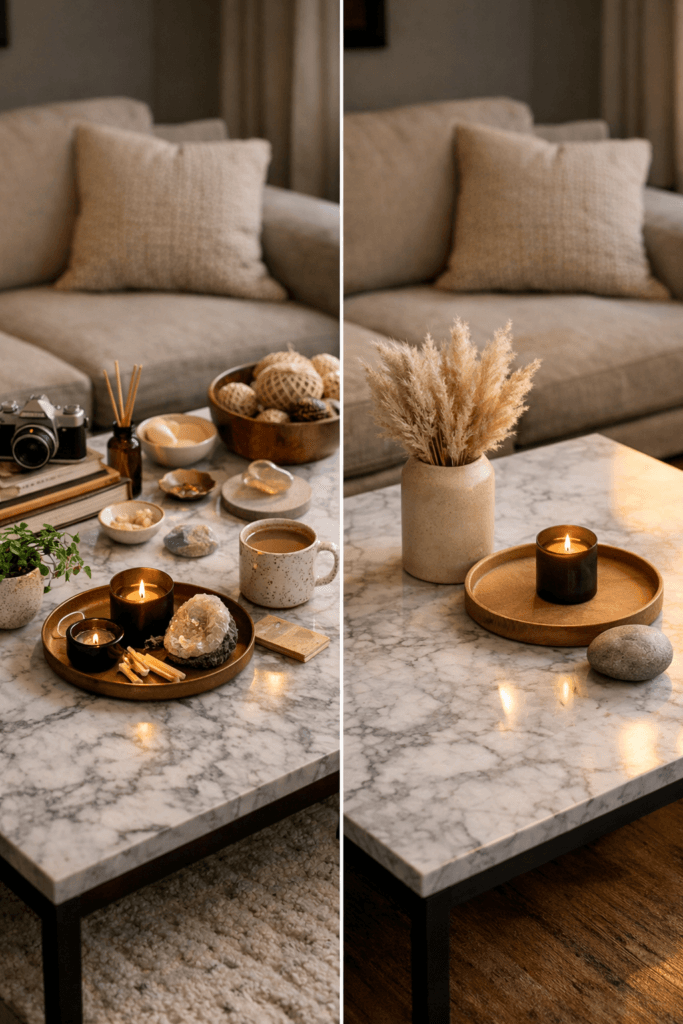
Clutter lowers perceived value faster than inexpensive materials.
Coffee tables should not hold more than 3–5 objects grouped intentionally.
Shelves should breathe.
If a surface feels busy, remove one item. Evaluate again.
The Rules That Make a Room Feel “Designed” Instead of Decorated
Styling becomes luxury when it looks intentional.
Designers create that effect by controlling scale, spacing, and visual rhythm.
These next rules are less about buying new pieces and more about making existing pieces look curated.
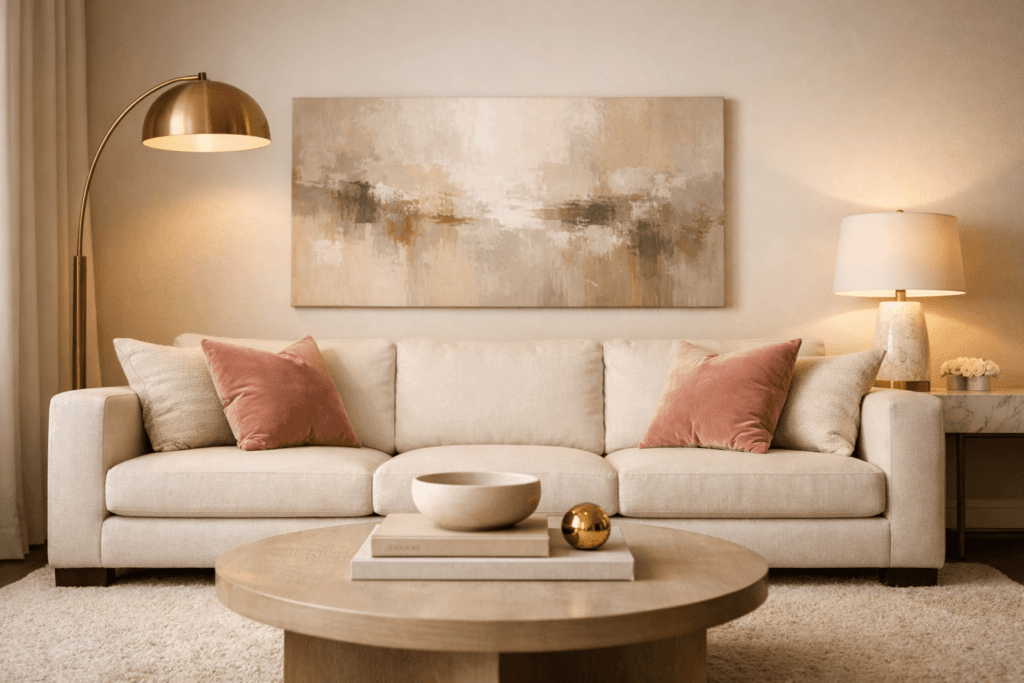
Rule 5: Scale Art to the Furniture Beneath It
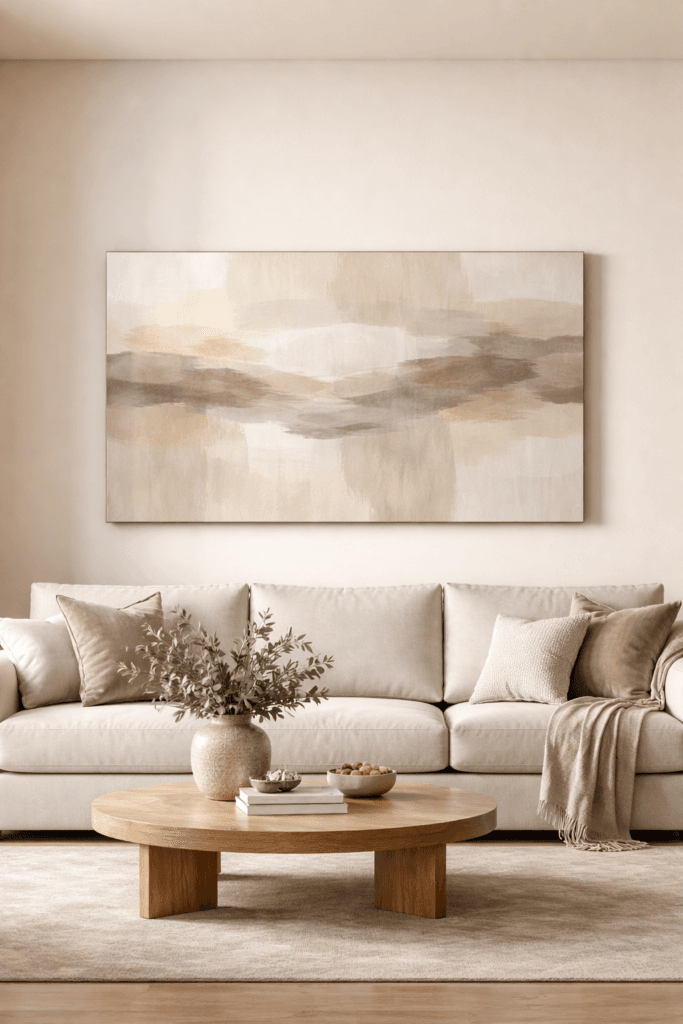
Undersized wall art quietly lowers a room’s perceived value.
Designers use a simple proportion guideline: artwork above a sofa should span roughly two-thirds the width of the furniture below it.
Placement matters too. A consistent 6–8 inches between the bottom of a frame and the top of a sofa keeps art anchored rather than floating.
If you want a deeper breakdown of measurements, spacing, and gallery wall structure, use our guide on wall art size rules designers use.
Rule 6: Use “One Statement + Supporting Basics”
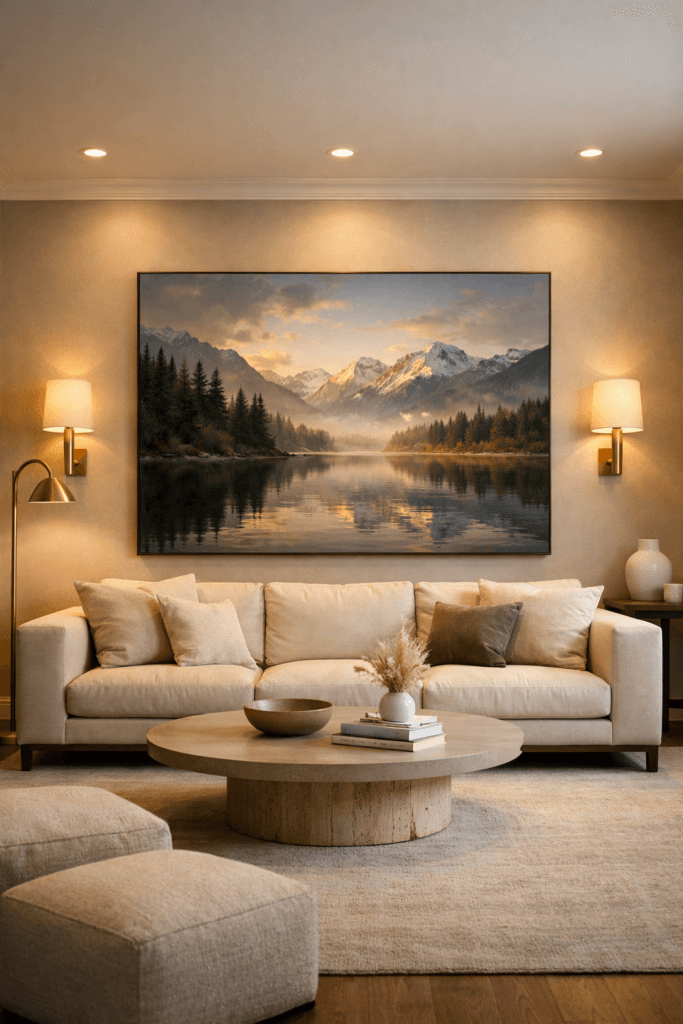
Luxury rooms rarely rely on multiple competing focal points.
Designers choose one statement piece, then support it with quieter layers.
A statement could be an oversized mirror, a sculptural floor lamp, a dramatic artwork piece, or a unique coffee table.
Everything else becomes the supporting cast: neutral textures, repeated finishes, and clean silhouettes.
When multiple items fight for attention, the room loses clarity. Visual clarity is a luxury signal.
Elle Decor frequently highlights the power of a clear focal point in creating high-end impact: Elle Decor.
Rule 7: Build Depth With Texture, Not Extra Color

High-end rooms read expensive because they feel layered.
That layering is created through texture more often than bold color.
In a blush and gold soft glam palette, texture does the heavy lifting: linen upholstery, wool rugs, velvet pillows, brushed metals, matte ceramics, and marble.
When textures vary, the room looks dimensional under both daylight and warm evening lighting.
If your room feels flat after sunset, the issue is usually missing texture or missing lighting layers. The lighting framework is covered in our article on the designer lighting rule.
How to Apply These Rules Without Buying Anything New
Luxury is often achieved through editing, not adding.
Start with what you already own.
Reposition your rug to anchor seating.
Turn off overhead lighting and layer lamps.
Remove excess objects from surfaces.
Scale your wall art correctly.
Then repeat finishes, such as brushed gold, throughout the room.
If you want an additional checklist of mistakes to remove first, review things that quietly make a home look cheap.
Why These Styling Rules Signal Luxury
Luxury is not created by excess.
It is created by alignment.
When scale, lighting, repetition, and editing work together, the room feels intentional rather than accidental.
The eye reads proportion before it registers price.
A balanced layout feels custom. An unbalanced layout feels temporary.
Design publications such as House Beautiful consistently highlight proportion and restraint as defining characteristics of elevated interiors.
The Compounding Effect of Discipline
Each rule on its own improves a room.
Together, they transform it.
A properly scaled rug grounds the furniture.
Correctly sized art balances the wall.
Layered lighting adds dimension after sunset.
Controlled repetition builds cohesion.
Editing surfaces restores clarity.
If proportion in one area feels slightly off, review our foundational breakdown on how to make a home look expensive on a budget to evaluate the full system together.
The Evening Test
Luxury becomes most visible at night.
Turn off overhead lights.
Leave only layered lamps on.
Observe the walls, the art scale, the rug coverage, and the surface styling.
If the room feels calm, dimensional, and balanced, the rules are working.
If it feels flat or fragmented, adjust one element at a time.
Structure first. Accessories later.
The Designer Styling Checklist
- Seating areas are fully anchored on properly scaled rugs
- Artwork spans roughly two-thirds the width of furniture beneath it
- Centerline height for art sits at 57–60 inches from the floor
- Lighting exists at multiple heights and uses warm bulbs (2700K–3000K)
- Metal finishes repeat consistently throughout the space
- Surfaces contain 3–5 intentionally grouped objects
- Negative space is deliberate, not accidental
If even one of these elements is missing, the room may feel subtly unfinished.
Styling Is Structure
Many homeowners treat styling as decoration.
Designers treat styling as architecture.
Correct proportion before purchasing additional decor.
Adjust placement prior to replacing furniture.
Refine texture before introducing new color.
Luxury is controlled layout, layered light, cohesive repetition, disciplined editing, and confident scale.
Follow the rules.
The room will elevate without increasing the budget.
Bellencinista Notes
Anchor the layout before adding decor. Scale art to two-thirds of furniture width, layer lighting at multiple heights, repeat finishes consistently, and edit surfaces aggressively. Luxury is structure first, styling second.